Delhi's Rs 104-Crore Bet On Private Firms To Cut Pollution At 40 Locations
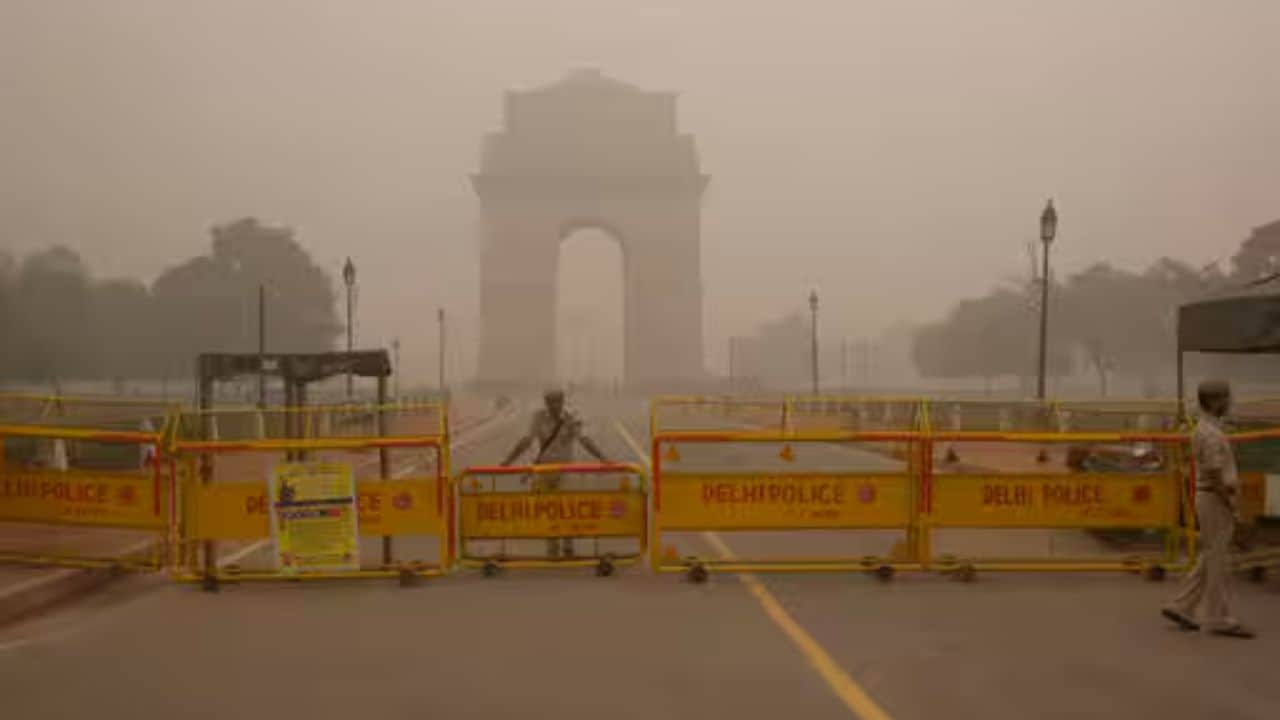
Delhi has tested air-cleaning machines at a bus terminal, outside a hotel and at a petrol pump. Now the government wants private firms to take on a much bigger job: cut pollution at 40 locations under a Rs 104-crore plan.
There is a catch. Companies will be paid for days when their machines achieve at least a 20% reduction in both PM2.5 and PM10, the tiny particles that make Delhi's air dangerous to breathe. Missing the target for two consecutive months could mean losing the contract, after notice and a chance to respond.
Delhi has tried this before. Private trials showed local gains, but Connaught Place's smog tower struggled to clean air beyond its immediate surroundings.
Private Firms Have Tested Machines Before
Outdoor air purifiers were tested at Anand Vihar bus terminal in 2023, outside the Taj Ambassador hotel near Khan Market and at New Moti Bagh in 2024, and at a petrol pump in Jangpura in January 2025. The purifiers used technology developed by private company Umeandus Technologies.
Last year, the government also proposed installing about 150 purifiers in Nehru Park through a corporate social responsibility partnership. But the plan was dropped in August after feedback from park users. None were installed there.
In May this year, Chief Minister Rekha Gupta inspected 21 filterless air purifiers installed along Satguru Ram Singh Marg, along with other devices being tested in west Delhi.
What Did The Earlier Experiments Show?
The Commission for Air Quality Management recorded average reductions of 30% in PM2.5 and 25% in PM10 during the Anand Vihar trial. The improvements were local, not neighbourhood-wide.
The results of Delhi's 2021 Connaught Place smog tower were less encouraging.
Delhi's Economic Survey 2025-26 recorded a 48% fall in PM2.5 and a 56% drop in PM10 within 20 metres of the tower. At 100-199 metres, those reductions fell to 12% and 13%. Its table recorded no reduction beyond 500 metres.
A parliamentary report recorded the Union Environment Ministry's view that smog towers should not be considered for future outdoor air-cleaning projects. The new scheme does not mandate smog towers.
Baba Kharak Singh Marg, where the tower stands, is on the new site list.
How Will The New Plan Work?
The Delhi Pollution Control Committee (DPCC) has divided the project into 40 packages, each estimated at Rs 2.6 crore. The lowest eligible bidder will be chosen for each site, with a 10-site cap per company.
The locations include Connaught Place, Khan Market, Chandni Chowk, Defence Colony, major bus terminals, hospitals, tourist spots and Delhi University's North Campus. Each covers roughly 1-1.5 acres.
Firms can offer different pollution-cutting technologies, subject to safety checks. The tender calls the work air-quality monitoring, though DPCC's public notice makes pollution reduction the objective.
Companies will have four weeks from the later of site handover and the effective start date to install the equipment. They must also bear operating and maintenance costs.
The real test comes after installation.
An independent agency will compare pollution readings inside and outside the area covered by the machines. A day counts for payment only if both pollutants meet the 20% reduction target. Payments will be calculated monthly on the basis of such days.
A contract will initially run for one year and may be extended twice by a year each, but only with approval and at least 300 days of successful performance in the preceding year.
Who Can Get The Work?
Bidders ordinarily need an average annual turnover of Rs 1 crore. For experience, they can qualify with three similar completed projects meeting 40% of the relevant estimated cost each, two meeting 50%, or one meeting 80%.
Government-recognised startups can seek relaxations. The tender offers no purchase preference for micro and small enterprises.
Firms must provide Rs 5 lakh as bid security for every site they bid for, unless exempt. Winners must furnish a 3% performance bank guarantee, valid for 14 months.
Payments are to be processed within 45 days after service acceptance and online billing. The government may also expand the scope and value of lump-sum contracts by up to 50%, with the company's consent.
(Except for the headline, this story has not been edited by NDTV staff and is published from a syndicated feed.)
KioskNews shows a cleaned-up reading view extracted from the publisher’s page — the original always lives on their site, not ours.