Keppel planning for subsea cable to transmit solar energy from Indonesia to Jurong Island plant
SINGAPORE - A subsea cable linking Jurong Island to a solar plant in Indonesia could soon shore up Singapore’s ability to import low-carbon electricity from its neighbours, as part of plans by asset manager Keppel.
The company is planning for the transmission cable from the Riau Islands solar facility to land at the Keppel Merlimau Cogen power plant, said Keppel Infrastructure’s managing director for power and renewables, Janice Bong.
She was speaking to the media during a Sept 18 tour of the firm’s two power plants on Jurong Island.
The planned cable is subject to detailed development and regulatory approvals, noted Keppel, which had in 2024 received a conditional licence from the Energy Market Authority (EMA) to import 300 megawatts (MW) of solar power from Indonesia.
Keppel Energy was among five firms given conditional licences to import electricity from Indonesia. Conditional licences are given to electricity import projects in an advanced developmental stage that are assessed to be technically and commercially viable.
If the deal goes through, Keppel will be able to supply electricity to the national grid from a variety of low-carbon energy sources.
Other than being a landing point for electricity imports from Indonesia, the Keppel Merlimau Cogen power plant, operational since 2007, will also be equipped to handle emerging forms of low-carbon fuel for electricity generation.
Keppel is exploring ways to tap biomethane, ammonia and hydrogen, according to Bong. Such fuels are considered more sustainable than fossil fuels as they either do not produce planet-warming carbon emissions, or have a lower carbon footprint, when burned.
The Keppel Merlimau Cogen plant now produces electricity by burning natural gas. About 95 per cent of Singapore’s electricity needs are currently met by this fuel form.
But Singapore is exploring more pathways to power the country, including through electricity imports, and tapping emerging forms of lower-carbon fuel.
Singapore is aiming to import about 6 gigawatts (GW) of low-carbon electricity by 2035. This is anticipated to meet about one-third of the Republic’s energy needs by then.
As at August, the Republic has awarded conditional approvals to 13 projects to import clean power from Australia, Cambodia, Indonesia, Malaysia, and Vietnam.
Bong noted that upcoming data centres on Jurong Island could benefit from their proximity to Keppel Merlimau Cogen facility and the Keppel Sakra Cogen power plant, which began operations in May.
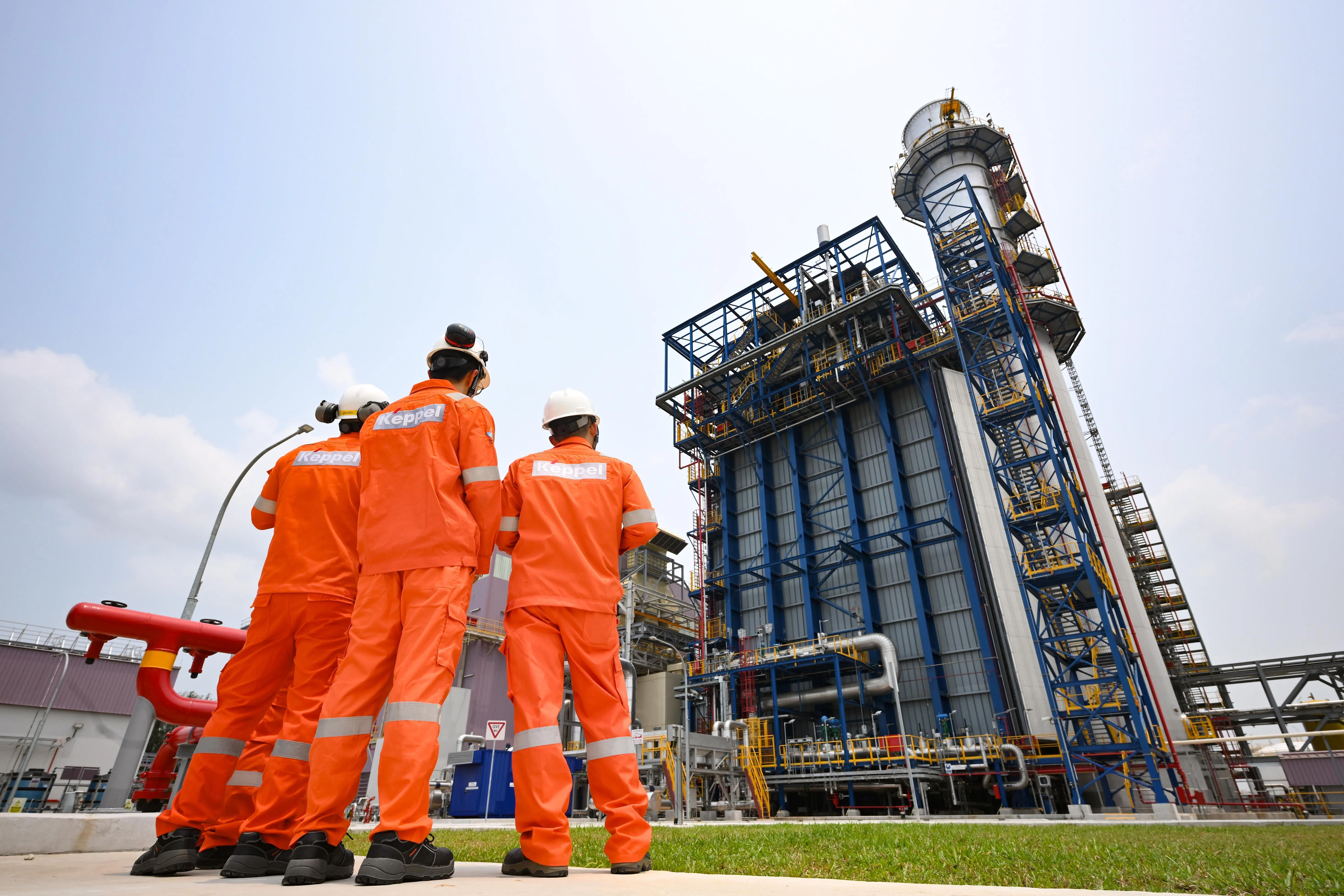
A heat recovery steam generator at the Keppel Sakra Cogen power plant.
ST PHOTO: LIM YAOHUI
Jurong Island will host Singapore’s largest low-carbon data centre park on 20ha of land, amounting to about the size of 25 football fields.
The Keppel Sakra Cogen power plant, also located on Jurong Island, will be capable of tapping low-carbon hydrogen, biomethane and ammonia.
When combined, both plants account for up to a quarter of Singapore’s total power generation capacity.
Bong said these plants can help supply data centres and tech giants that operate large-scale cloud networks, which have committed to use green energy for at least half of their power needs for new data centre capacity.
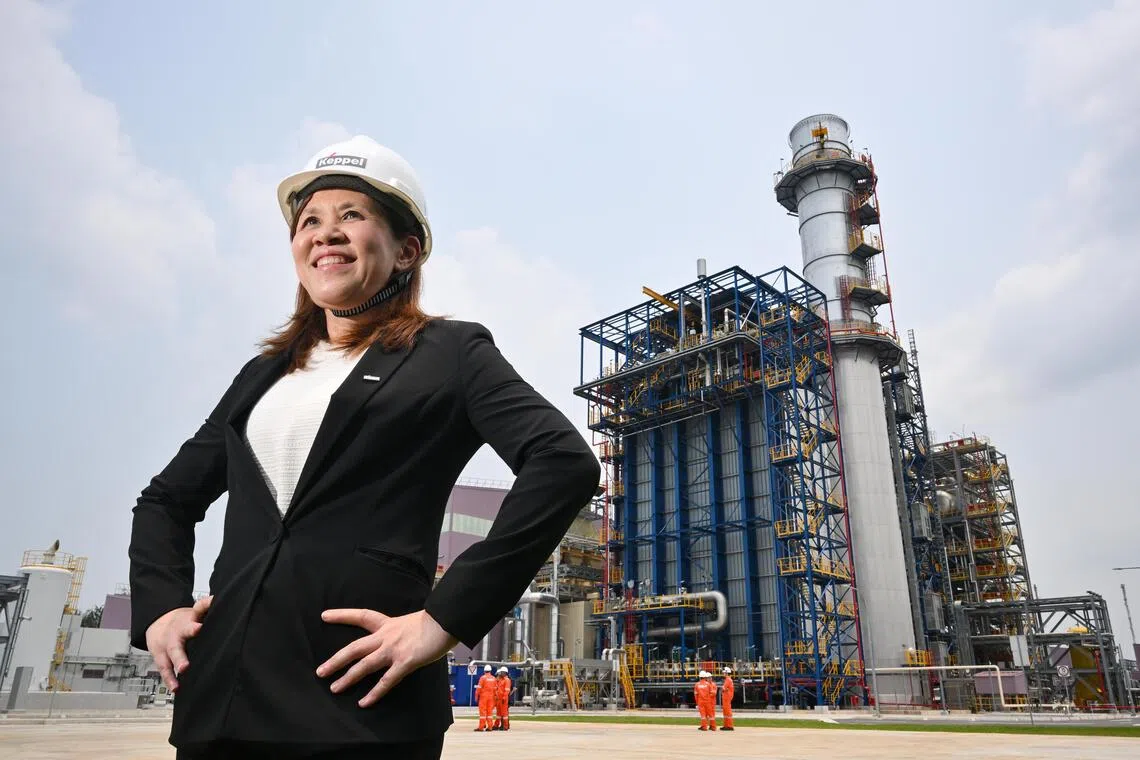
Janice Bong, Keppel Infrastructure’s managing director for power and renewables, noted that upcoming data centres on Jurong Island could benefit from their proximity to Keppel Merlimau Cogen facility and the Keppel Sakra Cogen power plant.
ST PHOTO: LIM YAOHUI
Bong said the company is also exploring the potential of zero-carbon power from ammonia, as well as bioenergy and sustainable fuel opportunities in countries such as Indonesia and Malaysia.
Of the green energy pathways, biomethane ranks top in terms of commercial viability and the ease of transporting the source to Singapore, she added.
KioskNews shows a cleaned-up reading view extracted from the publisher’s page — the original always lives on their site, not ours.