Stars vs. warning labels: Inside packaged food dispute and what the SC ruling means
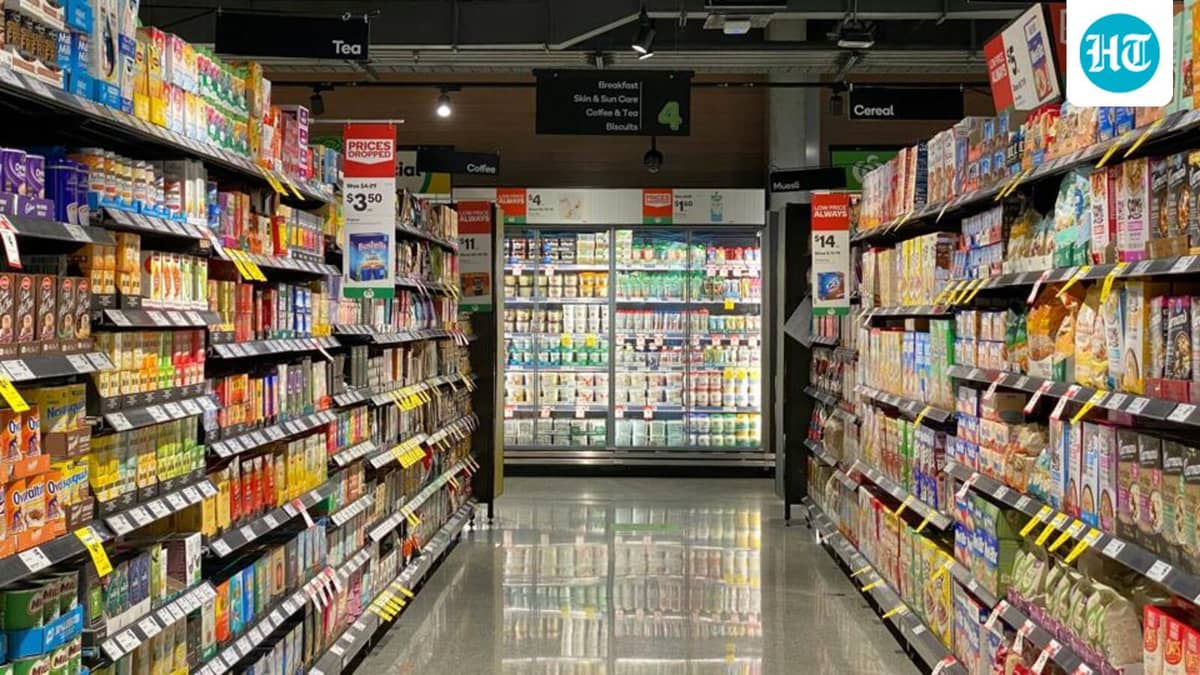
“We have issued some directions which we feel, if implemented, will lead to healthier children. If taken in the right spirit, it will take the country to healthier times,” the SC said

The Supreme Court on Thursday ordered the Food Safety and Standards Authority of India (FSSAI) to introduce prominent red warning labels on packaged foods high in sugar, saturated fat or salt across a sector estimated by the food ministry to be worth ₹2.24 lakh crore in 2023–24.
A bench of justices JB Pardiwala and K Vinod Chandran said the warnings must carry standardised pictorial representations alongside the words “high fat, “high sugar” or “high salt” in bold, rejecting the regulator’s proposal to place all three warnings within a single hexagon.
“We have issued some directions which we feel, if implemented, will lead to healthier children. If taken in the right spirit, it will take the country to healthier times,” justice Pardiwala said, reading out the operative part of the verdict.
The ruling asked FSSAI to examine science-based warning labels used in countries such as Chile, Mexico, Singapore and across Europe to help curb consumption of high-sugar products. It also invoked people’s right to make an informed food choice as a constitutional right under Article 21 of the Constitution, and pulled up the regulator for delays in deciding on front-of-pack nutrition labelling (FoPNL) since 2022.
The context
According to the Indian Council of Medical Research, non-communicable diseases cause roughly six million deaths each year, accounting for about 63% of annual mortality and projected to reach nearly 75% by 2030.
An Indian Council of Medical Research–India Diabetes study estimated that in 2021, 101 million people had diabetes, 136 million were pre-diabetic, 315 million had hypertension, 254 million had generalised obesity, 351 million had abdominal obesity, 231 million had hypercholesterolemia and 185 million had elevated LDL cholesterol.
The top court cited an analysis of recent National Family Health Survey data, 2023-2024 (“NFHS-6”)4, which underlined that the situation had progressively worsened compared with the numbers recorded by NFHS-5 2019-2021. Obesity in women has increased from 24% to 30.7% and in men from 22.9% to 27.3%, respectively. Diabetes in women has increased from 13.5% to 17.8% and in men from 15.6% to 20.9%, respectively.
According to the World Health Organisation (WHO), the rise in NCDs is due to four major behavioural risk factors -- tobacco use, unhealthy diets including the consumption of foods high in saturated fat, sugar and/or Salt (“HFSS foods”), harmful use of alcohol and insufficient physical activity. “While smoking, imbibing spirits and eschewing exercise are essentially personal choices and a healthy diet comes only with heightened awareness, consumption of toxic shelf-foods is driven by visual appeal and product advertising,” the Supreme Court said, pointing out that any targeted action to prevent the NCD public health crisis had to focus on the consumption of HFSS foods and ultra-processed foods.
In India, the court said, the ultra-processed food (UPF) sector grew by 13.37% in retail sales between the years 2011 and 2021 despite the daily consumption share of UPFs being lower than that of home-cooked.
Star rating versus warning label
In 2022, the FSSAI published draft rules for FoPNL proposing a star-rating system, from five stars for the least harmful items to one star for the most, based on added fat, sugar and salt. By contrast, warning labels alert consumers directly when a product contains high levels of fat, sugar or salt, or a combination of them.
The Supreme Court order noted that FSSAI received close to 14,000 comments on the draft. The food industry favoured the star rating, while consumers opted for the warning labels. More than 7,000 industry submissions warned that FoPNL would hurt livelihoods.
The bench observed that feedback leaned toward warning labels and awareness campaigns, as ultra-processed foods displace traditional foods, noting a lack of consensus on the proposed Indian Nutrition Rating system. It cited evidence that warning labels such as those in Chile and Europe outperform star ratings in shifting consumer habits. The government told FSSAI to withdraw the draft notification after a meeting chaired by the cabinet secretary in October 2025.
While the FSSAI and the health ministry argued that star ratings would simplify nutritional data and encourage product reformulation, the court said the insistence of the petitioner and scientific data helped the cout decide on settling for the warning labels.
Constitutional right
The court underlined that while the Constitution did not explicitly provide for right to food but food consumption could be be covered under right to live with human dignity. “Article 47, which also speaks of the State’s primary duty to raise the ‘nutrition level’ of the people at large, would infuse the right to food guaranteed within Article 21 as well,” the 131-page verdict said.
The bench said the state must ensure both quantity and quality of food, noting that the right to health extends beyond clinical care to broader determinants of health and conditions congenial to good health. Ensuring access to safe and nutritious food requires regulation of the general food environment to a large extent, it said, underlining that the words “raising the level of nutrition” in Article 47 should mean that sufficient attention should be given to “ensure the right to quality food” for all.
Invoking the right to live with dignity, the court said it includes the right to make informed choices, and it was the State’s responsibility to ensure that an individual can make a free and informed choice for public health rather than being influenced by marketing, dense and unreadable information. “Therefore, the State in giving full respect for the individual right to free and informed choice must ensure a social and informational order in which consumer interests and public health is prioritised,” the court said.
The court said it was within its jurisdiction under Article 32 as the issue concerns fundamental rights of citizens and was trying to fill the legislative vacuum on important public health issue.
Arun Gupta, head of Nutrition Promotion Network of India, a petitioner in the case, said the court had done something remarkable. “It has reminded the State that public health is not a bargaining chip. Anchored front-of-pack labelling in Article 21—the right to health, food, and informed choice,” said Gupta.
Giving FSSAI clarity
On the threshold limits for nutrients of concern such as salt and sugar, the court said thresholds should be determined by science, not by implementation difficulties. The court also rejected the FSSAI proposal to base the label only on salt, added sugar, and added fat on two counts. First, measuring added nutrients of concern was not possible, and therefore, it would be difficult for FSSAI to take action against the food industry for wrong labelling, as a “warning criterion that cannot be tested cannot be enforced.” Second, the court said that the impact on human health is from total nutrients of concern, and not just the added ones.
The warning levels have to be dynamic. “The FSSAI must also earnestly work towards the progressive reduction of these threshold levels over time, in a phased manner, to ensure that the food environment is constantly improved upon,” the court said, directing the regulator to bring a comprehensive definition of High Fat Salt Sugar (HFSS) foods.
Gupta said FSSAI must now choose science-based thresholds used by countries such as Chile and Mexico, as well as WHO.
The 2022 draft notification set the threshold levels at 21g for total sugar, 5g for saturated fat, and 450 mg for sodium/salt (the values provided under the DGI, 2024) per 100 gram/litre of packaged food. In 2024, the health ministry found that 94.1% of products exceeded at least one threshold nutrient-of-concern level, while 85.3% exceeded two or more threshold nutrient-of-concern levels.
The top court told FSSAI to ensure that these numbers are neither set too low nor too high. “If they are set too low, then almost all packaged food products in the market would carry a warning label. The saturation of the labels in the market would quickly desensitise the consumers and induce ‘label fatigue‘... On the other hand, if it is set too high, then most products would escape regulatory scrutiny,” the bench said. The FSSAI has four months to decide the threshold limits and the hexagon pictorial warning label for each nutrient of concern.
KioskNews shows a cleaned-up reading view extracted from the publisher’s page — the original always lives on their site, not ours.