The 10 Greatest Hard Sci-Fi Books of the Last 5 Years, Ranked

Luc Haasbroek is a writer and videographer from Durban, South Africa. He has been writing professionally about pop culture for eight years. Luc's areas of interest are broad: he's just as passionate about psychology and history as he is about movies and TV. He's especially drawn to the places where these topics overlap.
Luc is also an avid producer of video essays and looks forward to expanding his writing career. When not writing, he can be found hiking, playing Dungeons & Dragons, hanging out with his cats, and doing deep dives on whatever topic happens to have captured his interest that week.
Sign in to your Collider account
The label "hard sci-fi" refers to science fiction stories that aim for scientific accuracy, or at least plausibility. They emphasize the nitty-gritty of their speculative technologies, drawing on realistic physics and engineering principles and taking these concepts to extreme conclusions. With these stories, rigor and logic are the order of the day.
As our real-world technology morphs and twists in bizarre directions, so too has hard sci-fi writing gotten more inventive. The last half-decade has been a solid era for this subgenre, producing more than a few modern classics. These are the best hard sci-fi books of the last five years, further proving that few subgenres are as prolific or celebrated.
10 'Eversion' (2022)

"Everyone's getting very excited, but in that educated way of not showing it." Dr. Silas Coade is a physician aboard a 19th-century sailing ship attempting to reach a mysterious structure called the Edifice, but the expedition ends disastrously. Then Coade finds himself aboard another vessel in another era, accompanying suspiciously familiar people toward another version of the same destination. Something is clearly wrong with reality, and discovering exactly what is happening becomes the book's central puzzle.
This is a very cool "Russian Doll" mystery structure, playing cleverly with time-loop tropes and paying homage to Victorian Gothic horror and H.P. Lovecraft, stylistically. At the same time, the book draws on a wealth of real-world concepts from math and physics (the title refers to a concept in geometry), and also paints a vivid picture of the evolution of science over the centuries.
9 'Upgrade' (2022)

"I had extraordinary dreams, and an ordinary mind." Upgrade (no relation to the Leigh Whannell film) takes place in a near future where disastrous experiments with gene editing have made genetic modification heavily restricted. Logan Ramsay works for the Gene Protection Agency, partly because his family history is intimately connected to the catastrophe that helped create those laws. Then an operation exposes him to a genetic payload that begins changing his body and brain.
This book was written by Dark Matter's Blake Crouch, a technothriller virtuoso, and his signature tense pacing and punchy speculative concepts are once again on display here. Crucially, the pulpier elements are grounded in plausible-seeming technology. Crouch heavily researched the actual mechanics of CRISPR gene editing, and his depiction of cognitive hacking also comes across as believable, all while engaging with the ethics of all this biological tinkering.
8 'Light Chaser' (2021)

"Memory is identity." Light Chaser packs the conceptual weight of a much larger space opera into an impressively lean 173 pages. It centers on Amahle, a solitary (and functionally immortal) traveler who follows an enormous circuit through the galaxy. Piloting a starship, she visits human settlements separated by immense distances, distributing technology and collecting memory collars containing people's recorded experiences. But because her journey takes centuries, entire generations can rise and fall before she returns to the same world.
This premise allows for a cool exploration of time dilation. The authors don't rely on convenient, magical faster-than-light hyperspace shortcuts; instead, the sheer logistical difficulty of operating across light-years and millennia forms the backbone of the entire plot here. Likewise, they also touch on interesting ideas like post-scarcity boredom and advanced biometrics. Ultimately, though, while the technology is mind-bending and intense, the story is anchored by a relatable protagonist with emotions we can recognize.
7 'The Martian Contingency' (2025)

"I could stare at the stars forever." In the fourth installment in Mary Robinette Kowal's Lady Astronaut series, protagonist Elma York arrives on Mars as part of the effort to establish a permanent settlement, where survival depends upon turning an extraordinarily hostile environment into somewhere humans can actually live. In other words, the plot is driven by an endless succession of potentially deadly practical problems: habitats, life support, radiation, food, equipment, and the psychological demands of this weird new environment.
The whole series is pretty colorful and inventive; it actually takes place in an alternate version of the 1970s where the space race played out very differently. Still, it grounds these zanier ideas in concepts and theories from the real world. In particular, Kowal applies rigorous aerospace engineering principles to her fictitious timeline.
6 'Children of Memory' (2022)

"Life is rare, and needs to be studied and admired and encouraged to be itself." The third book in Adrian Tchaikovsky's Children of Time series arguably gets weirder even than its predecessors (and, considering the first novel involved a hyper-intelligent spider society, that's saying something). The plot focuses on a planet settled by descendants of a human ark ship. The colony was supposed to terraform its new home and establish another foothold for humanity.
Instead, generations later, its inhabitants occupy a struggling settlement where the expected technological progress never arrived. Indeed, the novel's presentation of space colonization is tough and grim (sorry, Elon). Along the way, Tchaikovsky also serves up juicy concepts like xenolinguistics and "simulation engines." Plus, he once again shows us various genetically "uplifted" nonhuman species, including a pair of evolved crows with human-level intelligence.
5 'Exordia' (2024)

"Kill one man, and you're a murderer. Kill everyone, and you're a god." Exordia is a nonlinear sci-fi epic narrated by a sprawling cast of characters. The plot kicks into gear after Anna Sinjari, a Kurdish refugee in New York, discovers an eight-headed alien rebel named Ssrin in Central Park. What starts as a first contact story rapidly spirals into an apocalyptic thriller, as an alien empire cripples Earth and an international task force investigates a reality-warping artifact hidden in Kurdistan.
The book is dense with speculative physics and ideas from pure mathematics, and these tie directly into the story. For example, alien weapons and artifacts function by directly manipulating these foundational mathematical laws. Author Seth Dickinson also gets thoughtful with the themes. The novel touches on everything from game theory and free will to utilitarianism, nationalism, the nature of consciousness, and the value of human lives.
Collider Exclusive · Sci-Fi Survival Quiz Which Sci-Fi World Would You Survive? The Matrix · Mad Max · Blade Runner · Dune · Star Wars
Five universes. Five completely different ways the future went wrong — or sideways, or up in flames. Only one of them is the world your instincts were built for. Eight questions will figure out which dystopia, galaxy, or desert wasteland you'd actually make it out of alive.
💊The Matrix
🔥Mad Max
🌧️Blade Runner
🏜️Dune
🚀Star Wars
01
You sense something is deeply wrong with the world around you. What do you do? The first instinct is often the truest one.
02
In a world of scarcity, what resource do you guard most fiercely? What we protect reveals what we believe survival actually requires.
03
What kind of threat keeps you up at night? Fear is useful data — if you're honest about what you're actually afraid of.
04
How do you deal with authority you don't trust? Every dystopia has a power structure. Your approach to it determines everything.
05
Which environment could you actually endure long-term? Survival isn't just tactical — it's physical, psychological, and very much about where you are.
06
Who do you want in your corner when things fall apart? The company you keep is the clearest signal of who you actually are.
07
Where do you draw the line — if you draw one at all? Every survivor eventually faces a moment that tests what they're actually made of.
08
What would actually make survival worth it? Staying alive is one thing. Having a reason to is another.
Your Fate Has Been Calculated You'd Survive In…
Your answers point to the world your instincts were built for. This is the universe your temperament, your survival instincts, and your particular brand of stubbornness were made for.
The Matrix
You took the red pill a long time ago — probably before anyone offered it to you. You're a systems thinker who can't help but notice the seams in things.
- You're drawn to understanding how the system works before figuring out how to break it.
- You'd find the Resistance, or it would find you — your instinct for spotting constructed realities is the machines' worst nightmare.
- You function best when you have access to information and the freedom to act on it.
- The Matrix built an airtight prison. You'd be the one probing the walls for the door.
Mad Max
The wasteland doesn't reward the clever or the well-connected — it rewards those who are hard to kill and harder to break. That's you.
- You don't need comfort, community, or a cause larger than the next horizon.
- You need a vehicle, a clear threat, and enough fuel to outrun it — and you're good at all three.
- You are unsentimental enough to survive that world, and decent enough — just barely — to be something more than another raider.
- In the wasteland, that distinction is everything.
Blade Runner
You'd survive here because you know how to exist in moral grey areas without losing yourself completely.
- You read people accurately, keep your circle small, and ask the questions others prefer not to answer.
- In a city where humanity is a legal designation rather than a feeling, you hold onto something that keeps you functional.
- You're not a hero. But you're not lost, either.
- In Blade Runner's world, that distinction is everything.
Dune
Arrakis is the most hostile environment in the known universe — and you are precisely the kind of person it rewards.
- Patience, discipline, and political awareness are your core strengths — and on Arrakis, they're survival tools.
- You understand that the long game matters more than any single victory.
- Others come to Dune and are consumed by it. You'd learn its logic and earn its respect.
- In time, you wouldn't just survive Arrakis — you'd begin to reshape it.
Star Wars
The galaxy far, far away is vast, loud, and in a constant state of violent political upheaval — and you wouldn't have it any other way.
- You find meaning in being part of something larger than yourself — a cause, a crew, a rebellion.
- You'd gravitate toward the Rebellion, or the fringes, or whatever pocket of the galaxy still believes the Empire's grip can be broken.
- You fight — not because you have to, but because standing aside isn't something you're capable of.
- In Star Wars, that willingness is what makes all the difference.
4 'Alien Clay' (2024)

"The universe is stranger than we imagine because our imagination is constrained by what we know." Adrian Tchaikovsky strikes again. In Alien Clay, dissident ecologist Arton Daghdev travels to Kiln, an alien planet where humanity has established a research camp. Arton isn't there voluntarily; instead, he has been exiled by the tyrannical Earth government, whose ideological certainty extends even to deciding which scientific conclusions its citizens are permitted to reach. Kiln presents a serious problem for that certainty.
The most striking element here is the book's treatment of alien symbiosis. The life forms on Kiln are completely compatible and interconnected, behaving almost like biological building blocks. Different organisms can physically latch onto and merge with one another to form entirely new, multi-species entities. As Arton conducts more research, he realizes that Kiln's fluid, collaborative ecology directly challenges his home world's hierarchical belief systems.
3 'There Is No Antimemetics Division' (2025)

"Welcome to the Antimemetics Division. No, this is not your first day." This book, which started out as a web serial, centers on Marie Quinn, the director of a secret organization that fights alien entities that threaten humanity. However, the monsters in this book aren't simple green-skinned aliens or laser-shooting tripods—they are antimemes: ideas, entities, and phenomena capable of preventing information about themselves from being remembered or transmitted. You can encounter one, investigate it, and potentially forget the entire experience afterward.
Naturally, this nature makes these creatures very tough to fight. The main characters are forced to consume dangerous drugs to prevent their memories of these entities from slipping away. They also devise ingenious ways of handling this problem, like pre-recorded diagnostic puzzles and automated systems that trigger when gaps in their memories are mathematically detected. In short, it's all catnip to fans of weird sci-fi.
2 'Leviathan Falls' (2021)

"If life transcends death, then I will seek for you there." Ending a beloved series is never easy, yet James S.A. Corey (the pen name of Daniel Abraham and Ty Franck) brought their Expanse saga to a graceful conclusion with this killer ninth installment. In the book, humanity has spread through the ring gates into more than a thousand star systems, but the technology enabling that expansion has attracted the attention of something capable of threatening human consciousness itself.
In other words, what we have here is very layered space opera. While some of the tech gets pretty out there, the books mostly hew to real-world constraints, which makes the speculative elements a lot more interesting. For example, the spacecraft obey inertia, acceleration matters, high-G maneuvers can kill people, communication is made difficult by staggering distances, and living beyond Earth has transformed human bodies and cultures.
1 'Project Hail Mary' (2021)

"I penetrated the outer cell membrane with a nanosyringe." Project Hail Mary has been at the center of the sci-fi conversation this year thanks to the incredibly entertaining movie adaptation, yet the original novel is still very much worth reading even if you've seen the film. In it, Ryland Grace wakes aboard a spacecraft, soon learning that the Sun is losing energy, and he has been sent to another star system as part of humanity's desperate attempt to understand the problem.
From here, author Andy Weir unleashes on our protagonist a succession of problems involving biology, chemistry, orbital mechanics, engineering, energy, and communication. Scientific problem-solving is the name of the game here, just as it was in The Martian, Weir's breakout novel. However, Project Hail Mary gets even more intriguing by throwing in the alien engineer Ryland names Rocky, turning this hard sci-fi thriller into a touching buddy comedy.
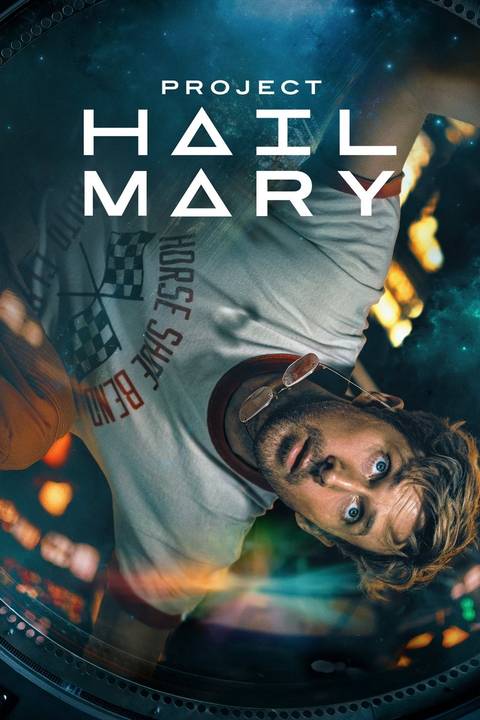
Project Hail Mary
9 10
- Release Date
- March 15, 2026
- Cast
- Ryan Gosling, James Ortiz, Sandra Hüller, Lionel Boyce, Milana Vayntrub, Ken Leung, Priya Kansara, Mia Soteriou, Annelle Olaleye, Bastian Antonio Fuentes, Alice Brittain, Michael Akinsulire, Travis Jay, Geoffrey Lumb, Paul Lambert, Orion Lee, Aaron Neil, Michelle Greenidge, Bernhard Schütz, Amira Ghazalla, Malachi Kirby, Liz Kingsman, Piotr Baumann, Eunice Huthart, Damien de Froberville
- Runtime
- 157 minutes
- Director
- Christopher Miller, Phil Lord
- Writers
- Drew Goddard, Andy Weir
KioskNews shows a cleaned-up reading view extracted from the publisher’s page — the original always lives on their site, not ours.