What’s fueling inflation? Fuel.
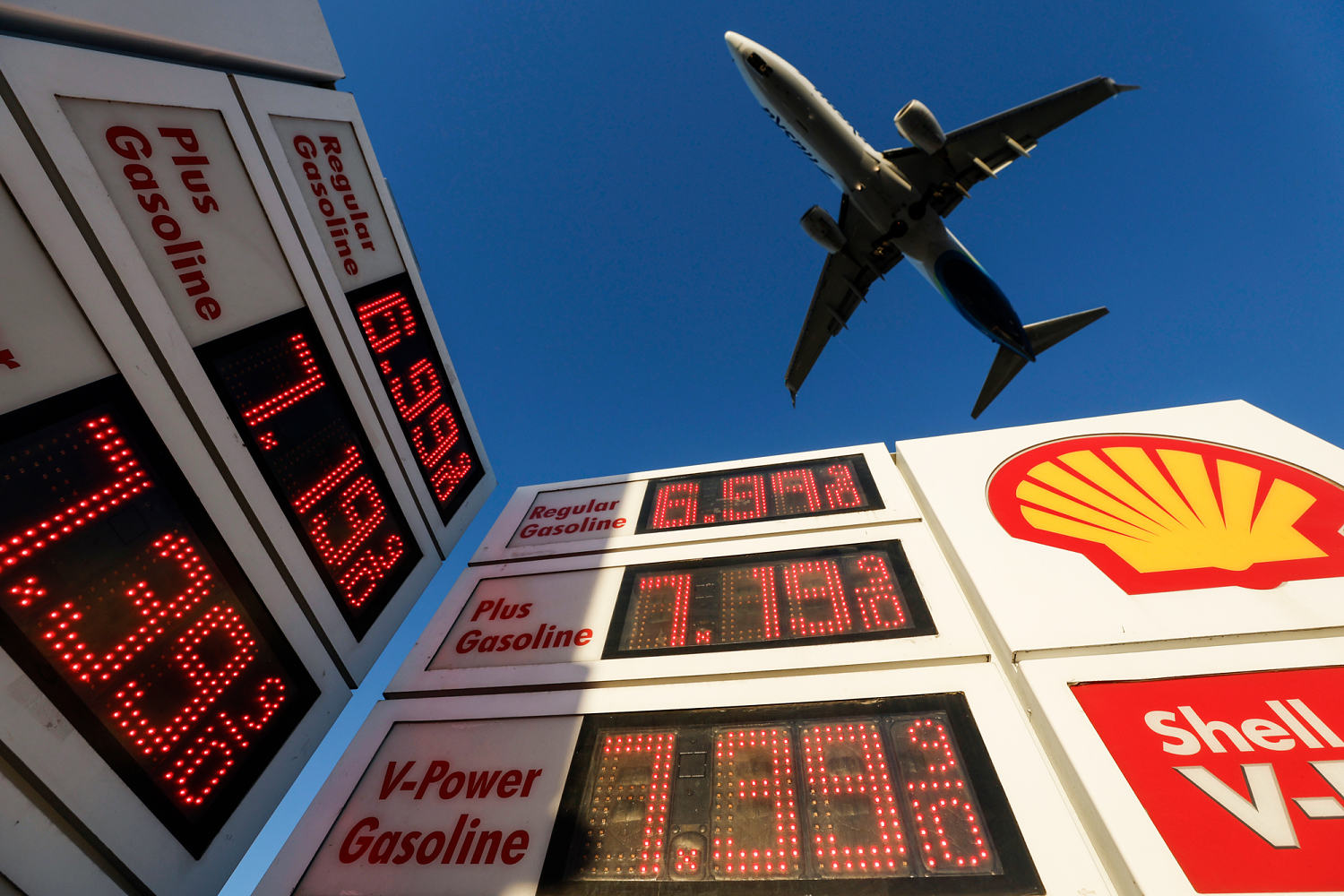
The price of the fuel, used by farmers and truckers, is up more than 75% since the start of the Iran war in late winter. Diesel costs have become a particular concern for economists, who say that higher diesel fuel costs trickle down into “just about everything.”
And the final government inflation report before November’s pivotal midterm elections will likely reflect how much of a headache it’s become for businesses and consumers.
The Bureau of Labor Statistics is set to release its September consumer price index report at 8:30 a.m. Wednesday. It’s expected to show the annual rate of inflation rose to 3.7% from 3.4%, according to a survey of economists from Dow Jones. From August to September, prices are expected to have risen by 0.6%. The monthly jump, if confirmed, would also be one of the largest in years.
Since August, oil prices have risen to more than $105 per barrel from about $80. The price of regular gas, which most consumers buy, also remains elevated by more than 45% since late February, when the Iran war was launched.
As early voting kicks off this week, a higher inflation reading would come at a precarious moment for Republicans defending majorities in the House and Senate. Polls consistently find that inflation and the high cost of living are top issues this year for voters in both parties.
Higher diesel prices this summer and fall have hit agricultural states like Kansas, Iowa and Texas especially hard. Long viewed as Republican strongholds, all three states have Democrats outperforming in Senate races with campaigns focused on the high cost of living.
In response to the outcry over the high cost of gas and diesel, President Donald Trump has pulled several policy levers in recent weeks aimed at pushing down prices. But so far, none of them has made much of a dent.
The Trump administration has pressured G7 allies to release more diesel stocks, issued an order to allow more widespread use of tax-free diesel, and announced a deal with Russian President Vladimir Putin that Russia release some diesel supplies and drop some of its export restrictions.
The latest action has drawn global backlash after Trump also eased some sanctions on Russia in order to facilitate the Russian diesel deal.
Core concerns
Consumers’ wages are still lagging behind the rate of inflation. As of September, wage growth was 3% and has not grown faster than inflation since March.
Still, despite the pressure on prices and wages, consumers continue to spend. The CEOs of the nation’s largest banks on Tuesday reported that consumers remain spending at a steady pace.
“While various headwinds, most recently higher energy prices, and tighter monetary policies have been challenging, the global economy has held up remarkably well in the U.S.,” said Citigroup CEO Jane Fraser. “While much has been made of the AI boom, the consumer is still driving much” of the economy’s momentum, she added.
“Our data shows that our consumer and business customers are doing well,” said Wells Fargo CEO Charlie Scharf. JPMorgan Chase CEO Jamie Dimon said the economy “continued to be fueled by strong business investment and ongoing consumer spending” over the last three months.
Core inflation, which is more closely watched by the Federal Reserve and which strips out food and energy prices, is expected to rise as well, to 2.5%. If confirmed, that would be its highest level since June.
One key sector fueling higher core inflation is airfare. “Airfares remain the core category most directly affected by higher oil prices,” said economists at Morgan Stanley. “Airfare CPI is already up 23% y/y, which raises the question of how much further prices can increase.”
They noted that jet fuel prices have risen 90% since this time last year, “and typically account for roughly 20-30% of airline operating costs.” As a result, “Airlines may already be approaching full pass-through of the increase in fuel costs to consumers.”
iPhones and interest rates
Another major consumer item that could impact September’s inflation rate: pricier iPhones.
Apple’s latest iPhone began selling on Sept. 12, and Morgan Stanley’s economists said “price increases were generally in the 10%-14% range across models.”
“Given Apple’s roughly 50% share of the U.S. smartphone market,” this could translate into what they said could be a small upside impact on overall inflation.
But while these higher iPhone prices are likely contributing to September’s inflation, they are also the product of inflation earlier his year — inflation that traces back to the ever-expanding buildout of AI data centers.
The race to build data centers and chips for AI has triggered a scramble for memory, in particular. Given that the supply of memory chips is limited, prices have soared at an unprecedented pace.
In June, Apple told NBC News that it has “never seen a component price increase this much, this quickly.”
Economists at Goldman Sachs also expect to see a jump in September in other key consumer categories.
“We expect a pickup in autos inflation, reflecting a 0.5% increase in used car prices, a 0.2% increase in new car prices, and a 0.2% increase in the car insurance category,” they wrote in a note.
Wednesday’s data could also “determine whether the Fed’s next hike is imminent, or simply still ahead,” said economists at UBS. Already, the central bank has interest raised rates once this year to try to slow inflation. A number of top Fed officials have also spoken about the need to raise rates even higher.
“If the economic data continue to come in as expected, I anticipate additional hikes to support a timelier return of inflation to our two percent goal,” said Federal Reserve governor Christoper Waller on Thursday. “But there is some flexibility about when those hikes will occur.”
The Fed is expected to raise rates one more time this year, most likely in December. But an inflation reading on Wednesday that comes in hotter than expected could increase that urgency and lead to a pre-Election Day rate hike at the central bank’s Oc. 27-28 meeting.
KioskNews shows a cleaned-up reading view extracted from the publisher’s page — the original always lives on their site, not ours.