10 Misunderstood Masterpieces Of The 21st Century

Some movies are simply way ahead of their time. Others are masterful works of art misunderstood by many and erroneously derided as pretentious, convoluted, or offensive. The recent release and subsequent divisive reception to Digger highlights how a single film can be lauded by some and loathed by others.
Over the years, numerous movies, like Digger, have been met with vitriol upon their initial release, only to be embraced years later by cinephiles who vocalize their appreciation for movies they perceive to be woefully misunderstood, overlooked, or underrated.
To date, the 21st century has had its fair share of such films, from ambitious takes on decades-old franchises to existential odysseys that pushed the limits of what audiences can tolerate.
Star Wars: The Last Jedi
Few movies of the 21st century have sparked such heated debates, online reactions, and passionate devotees and detractors that Rian Johnson’s Star Wars: Episode VIII - The Last Jedi. The Last Jedi received criticism for its characterization of a grumpy, reclusive Luke Skywalker, the reveal that Rey’s parents were nobodies, and Snoke’s premature death, but all of these claims overlook just how masterfully crafted Johnson’s film is.
A superhero-esque, lightsaber-wielding Luke Skywalker ripped out of Legends / EU is what many fans expected and wanted from Mark Hamill’s return to the franchise, yet Johnson understood that putting the series’ lead character in an uncomfortable corner and exposing the cracks in his psychology and philosophy made for far more interesting viewing.
The same can be said for the decision to make Rey unrelated to any prominent family, a decision J.J. Abrams chose to reverse in the subsequent film. The reveal everyone expected was that Rey came from important lineage, which would, in turn, mirror Luke’s arc in the original trilogy. Johnson flipped this idea on its head, however, by thematically conveying that people can be extraordinary and important even if they don’t descend from key figures.
The Fountain
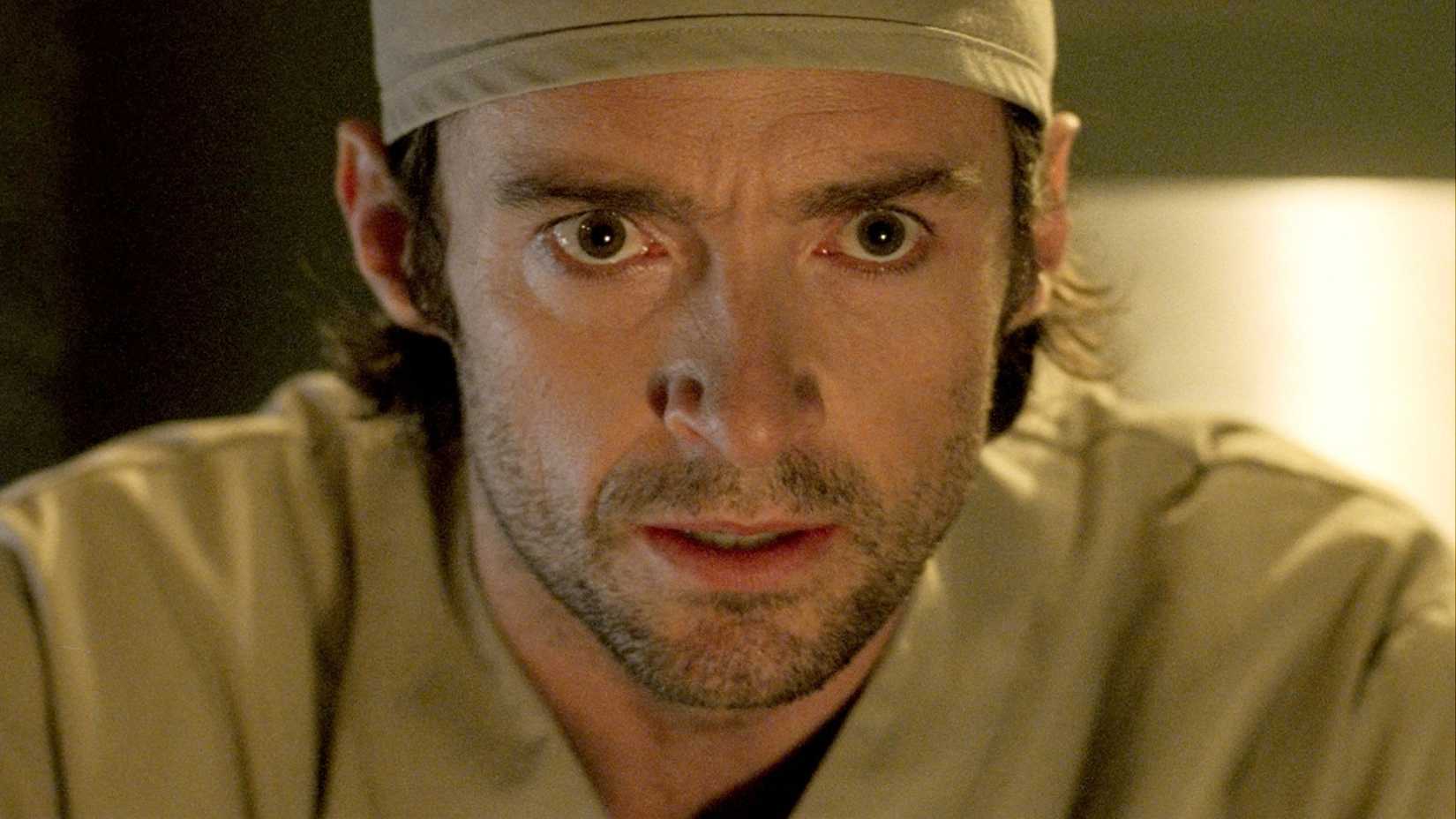
Darren Aronofsky's The Fountain is perhaps one of the most ambitious explorations of love, grief, and mortality in modern science fiction. Starring Hugh Jackman and Rachel Weisz, the 2006 film interweaves three seemingly connected narratives: a Spanish conquistador searching for the Tree of Life, a modern-day scientist desperately attempting to cure his wife's cancer, and a futuristic traveler journeying through space inside a mysterious sphere.
Its nonlinear storytelling and abstract imagery confused many viewers upon release, particularly those expecting a conventional science-fiction adventure with clear explanations and a straightforward narrative.
Through its three timelines, The Fountain explores the idea that accepting mortality does not diminish love but allows people to recognize the importance of the time they share. Rather than functioning as a mystery with an answer at the end of an investigation, the film operates as an emotional meditation on grief and the human desire to escape loss.
mother!

Few films have provoked audiences as aggressively as Darren Aronofsky's mother!. Released in 2017, the psychological horror film stars Jennifer Lawrence as a woman whose peaceful life with her poet husband, played by Javier Bardem, is disrupted by the arrival of increasingly intrusive strangers. What begins as an unsettling domestic drama gradually transforms into a nightmarish spectacle of violence and destruction. Many viewers dismissed the film as pretentious and excessively provocative.
Beneath its disturbing surface, however, mother! functions as an elaborate allegory concerning religion, humanity's destructive relationship with nature, and the exploitation of women. Lawrence's character represents both a woman whose identity is steadily erased by those around her and a natural world subjected to humanity's endless demands.
Bardem's poet, meanwhile, embodies a creator whose desire for admiration repeatedly takes precedence over the well-being of the person closest to him. The film's biblical parallels become increasingly explicit as the story progresses, transforming the house into a symbolic representation of creation, religious devotion, and humanity's capacity for destruction.
Joker

Todd Phillips' Joker became one of the most controversial comic book films of the 21st century upon its release in 2019. Inspired by the psychological character studies of 1970s American cinema, particularly Taxi Driver and The King of Comedy, the film follows Arthur Fleck, played by Joaquin Phoenix, as he struggles with mental illness, economic insecurity, and persistent social rejection.
Its bleak atmosphere and eventual embrace of violence prompted concerns that the film romanticized dangerous behavior, while others criticized its portrayal of class conflict as overly simplistic. Nevertheless, its willingness to abandon conventional superhero spectacle in favor of an intimate psychological portrait made it a striking departure from the genre's established formula.
Arthur's transformation into the Joker is presented within a broader picture of institutional neglect and social indifference. His access to mental-health services is cut off, his attempts to connect with others repeatedly fail, and his desire for recognition becomes inseparable from resentment. Phoenix's Academy Award-winning performance captures this deterioration through nervous movements, strained laughter, and painfully awkward attempts at human connection.
Babylon

Damien Chazelle's Babylon arrived in 2022 as an enormous, deliberately excessive love letter to Hollywood's transition from silent cinema to sound. Featuring Margot Robbie, Diego Calva, and Brad Pitt, the film follows several ambitious figures navigating an entertainment industry that continually reshapes who gets to remain relevant. Its chaotic opening sequence, graphic humor, extravagant running time, and unflattering depiction of Hollywood excess divided audiences, while its commercial disappointment reinforced the perception that Chazelle had produced an overblown passion project.
The film's central characters illustrate how quickly Hollywood can discard the people it once celebrated. Robbie's Nellie LaRoy possesses the charisma and ambition necessary for stardom, yet the transition to sound cinema threatens to undermine her position within the industry. Pitt's Jack Conrad, meanwhile, struggles to accept that his status as a major silent-film star is becoming increasingly irrelevant.
Calva's Manny Torres enters Hollywood believing that proximity to cinematic greatness will transform his life, only to discover the compromises and sacrifices required to survive within its machinery. Their experiences reveal an industry that sells dreams while treating the people who pursue them as disposable.
Prometheus

Ridley Scott's Prometheus returned to the Alien universe in 2012 with ambitions that extended far beyond conventional science-fiction horror. The film follows archaeologists Elizabeth Shaw and Charlie Holloway as they lead an expedition to a distant moon in search of the extraterrestrial beings they believe created humanity. Rather than simply revisiting the formula that made the original Alien a classic, Scott uses the premise to explore the origins of life, the relationship between creators and their creations, and the possibility that humanity's existence has no comforting explanation. Its unanswered questions, occasionally implausible character decisions, and philosophical ambitions divided audiences who expected a more straightforward prequel.
At the center of the film is the android David, played with chilling precision by Michael Fassbender. As a creation who resents the limitations imposed by his creators, David reflects the same questions that motivate humanity's search for the Engineers. His relationship with his maker, the industrialist Peter Weyland, suggests that creation does not necessarily produce affection or responsibility.
Although the screenplay has glaring weaknesses, particularly with its characters' inexplicably reckless behavior, the film remains visually extraordinary and thematically poignant. Its monumental alien architecture, immense landscapes, and atmospheric production design create a universe in which humanity appears insignificant. Scott's decision to leave certain questions unresolved can frustrate viewers, but the film's philosophical uncertainty is central to its identity.
Watchmen

Zack Snyder's Watchmen faced an enormous challenge when it brought Alan Moore and Dave Gibbons' iconic graphic novel to the screen in 2009. Its visual faithfulness to the source material impressed some viewers, while others argued that Snyder reproduced the graphic novel's imagery without fully capturing its criticism of superhero mythology. The film's changes to the original ending and its stylized depictions of violence further complicated its reception.
What makes Watchmen so compelling, however, is its refusal to present superheroes as uncomplicated moral authorities. Rorschach's uncompromising pursuit of justice frequently becomes indistinguishable from fanaticism, while Dr. Manhattan's near-omnipotence gradually separates him from ordinary human concerns. Adrian Veidt, meanwhile, embodies the terrifying conviction that extraordinary intelligence grants an individual the right to determine humanity's fate. The film offers no easy resolution, instead exposing the disturbing compromises that can emerge when individuals believe they alone understand what is best for the world.
Cloud Atlas

Tom Tykwer and the Wachowskis' Cloud Atlas is one of the most structurally ambitious films of the 21st century. Released in 2012, the adaptation of David Mitchell's novel interweaves six narratives spanning several centuries, from a 19th-century voyage across the Pacific to a distant future in which humanity has undergone catastrophic social and technological transformations. The stories feature an ensemble cast, with performers appearing in multiple roles across different timelines.
Its rapid transitions between historical periods, elaborate makeup, and refusal to follow a single protagonist made it a demanding experience for audiences expecting a conventional narrative. The film's interconnected stories explore recurring themes of oppression, freedom, identity, and the consequences of individual choices. A composer's struggle for artistic independence, a journalist's investigation into corporate wrongdoing, a publisher's escape from institutional confinement, and more make up its story.
The film suggests that acts of courage and compassion can reverberate across generations, even when those responsible never witness their consequences. Its structure reinforces this argument by repeatedly juxtaposing moments of despair with acts of liberation, creating thematic connections that transcend chronology and geography.
Beau Is Afraid

Following the success of Hereditary and Midsommar, Ari Aster abandoned the familiar framework of supernatural horror with Beau Is Afraid, a 2023 psychological odyssey starring Joaquin Phoenix as an anxious, guilt-ridden man whose attempt to visit his mother becomes an increasingly surreal nightmare.
Beau's journey takes him through a dangerous urban neighborhood, the home of an apparently benevolent suburban family, an elaborate theatrical fantasy, and a final confrontation with the mother whose influence has shaped his entire existence. Its three-hour running time, grotesque imagery, and episodic structure alienated viewers who expected a more conventional horror film.
Beau Is Afraid is the cinematic equivalent of a panic attack. Beau appears to have internalized the belief that every misfortune is evidence of his own inadequacy. The environments he encounters continually reinforce this skewed worldview. Phoenix's performance captures this psychological condition through nervous movements, hesitant speech, and a perpetual sense of impending punishment.
Digger

Alejandro G. Iñárritu's Digger, starring Tom Cruise as an enormously powerful oil tycoon, provides a fitting contemporary example of the tension between artistic ambition and audience expectations. The film uses dark comedy and environmental satire to examine the consequences of unchecked power, corporate greed, and the human tendency to present oneself as a savior even when one's own actions have helped create a catastrophe.
The film's environmental satire suggests that catastrophic problems cannot be resolved through theatrical displays of leadership alone, particularly when the economic systems responsible for creating them remain intact. Cruise's performance, the best of his entire career, gains an additional satirical dimension from the contrast between his established screen image as a resourceful hero and a character whose greatest obstacle is his own ego.
Whether Digger ultimately deserves to be considered a misunderstood masterpiece will depend on how its ideas and artistic choices endure beyond the controversy surrounding its release. Its excesses may strike some viewers as evidence of a filmmaker pushing satire beyond its natural limits, while others may appreciate its willingness to challenge powerful institutions and familiar movie-star conventions.
An ambitious, scathing satire of American arrogance and ignorance, Digger is exceedingly layered, punctuated by a career-best Cruise, and feels destined to go down as a misunderstood masterpiece of 2026.

Digger
- Release Date
- October 2, 2026
- Runtime
- 128 minutes
- Director
- Alejandro González Iñárritu
- Writers
- Alejandro G. Iñárritu, Sabina Berman, Alexander Dinelaris, Nicolás Giacobone
- Producers
- Alejandro G. Iñárritu, Mary Parent, Michael Sharp, Tom Cruise
Cast
-

Digger Rockwell
-

Ganesh
Digger Rockwell is the most powerful man in the world but, after unleashing a catastrophe, he must now prove to be its savior as well.
KioskNews shows a cleaned-up reading view extracted from the publisher’s page — the original always lives on their site, not ours.