'They will use you and throw you away': Netanyahu warns haredi parties away from Eisenkot-led bloc
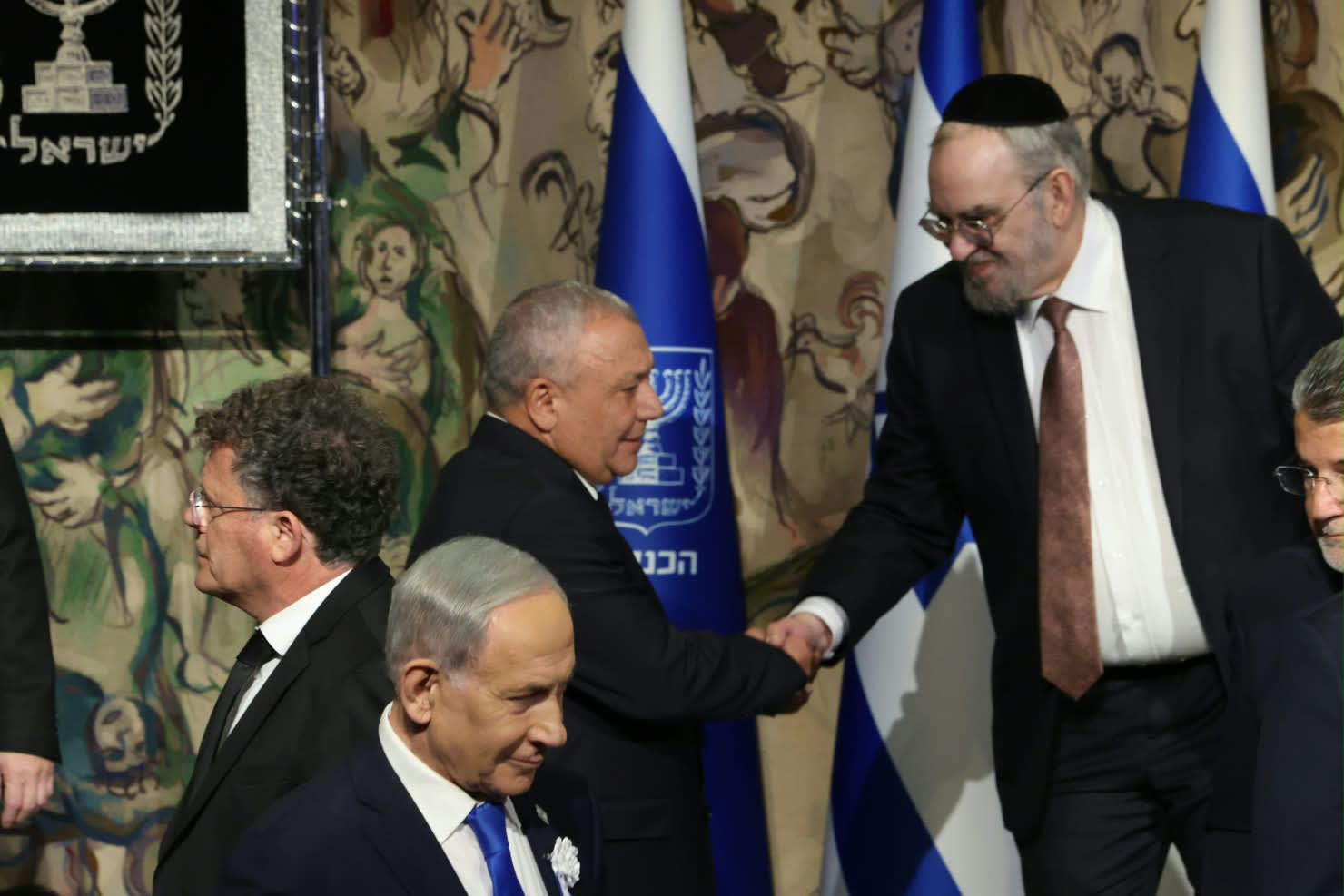
While Yashar party leader Gadi Eisenkot and his bloc partners are trying to bring the haredi (ultra-Orthodox) parties on board to form a government, Prime Minister Benjamin Netanyahu is working to thwart the effort and keep the haredi parties out.
According to a source familiar with the negotiations, Netanyahu is personally speaking with rabbis, sending emissaries to the haredi leadership, and attempting to reach rabbis outside the senior leadership circle.
At the same time, he is warning the haredi parties that an Eisenkot government could rely on their support to take office, only to turn to the Arab parties after passing the budget, leaving the haredi factions with little real influence.
The haredi parties are listening to these warnings, but they are demanding an answer from Netanyahu: What government can he offer them instead of an Eisenkot government, without triggering another election?
According to the sources, Netanyahu believes that efforts should not be limited to persuading Rabbi Dov Lando and the senior leadership of the Ashkenazi haredi community. In private conversations, he has emphasized the need to reach other rabbis, including those in the second tier of leadership.
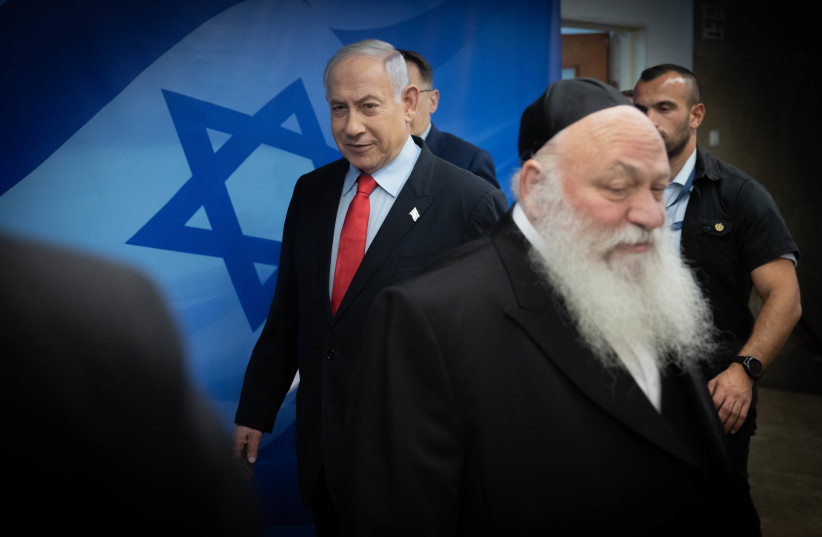
Netanyahu believes some of these rabbis are more closely aligned with the Right and that their communities are also opposed to cooperating with liberal left-wing parties.
The source described how Lando's position is perceived in Netanyahu's circle: The rabbi does not consider himself automatically committed to the right-wing bloc and wants to evaluate the available options based on the needs of the haredi community.
"Even if, from Rabbi Lando's perspective, there is no commitment to the Right, we need to reach additional rabbis, perhaps from the second tier," the source said, describing Netanyahu's message.
According to the source, the assumption is that "they have an affinity for the right-wing bloc because it is much closer to religion and tradition."
Within United Torah Judaism (UTJ), decisions are influenced by several rabbis and senior political operatives.
Lando, the spiritual leader of Degel HaTorah, is represented by his close associate, haredi political operative David Shapira, and MK Yakov Asher, chairman of Degel HaTorah. Other influential figures include senior members of Agudat Yisrael and the Gerrer Hassidic movement.
At the same time, different factions within the haredi political establishment are pursuing negotiations in several directions.
Moti Babchik, an influential figure in Agudat Yisrael and a close associate of the Gerrer Rebbe, is working to advance the possibility of joining Eisenkot's government while demanding guarantees that would protect haredi interests.
Other figures in Agudat Yisrael, including MK Meir Porush, are emphasizing the need for concrete achievements rather than promises alone.
They believe the haredi parties should demand that the Eisenkot-led bloc pass a military conscription law, either in full or in part, as a condition for signing a coalition agreement.
The question is what the haredi parties can secure from Eisenkot and how much they can trust the commitments he makes.
Likud says haredi parties cannot trust Eisenkot promises
Netanyahu and his associates are warning the haredi leadership that agreements reached with Eisenkot and his partners may not hold once the government is formed and its first budget is approved.
According to Likud sources, the concern they are raising is that once the government is firmly established and its dependence on the haredi parties diminishes, it could backtrack on its commitments, struggle to advance a conscription law in the form demanded by the haredi parties, or promote legislation on religion and state that contradicts their positions.
"Even if the 'change bloc' promises you the conscription law you want, don't trust them. They will use you and throw you away, at the latest after the first budget is approved, because they have a safety net from Ra'am and the Joint List," reads the message Likud is conveying to the haredi parties.
According to this warning, even if the haredi parties subsequently withdraw from the government, their departure would not necessarily bring it down.
If the Arab parties provide outside support, the government could continue operating without the haredi factions, depriving them of their main source of political leverage.
United Torah Judaism is particularly concerned about the possibility of joining the government without Shas, which would leave it as the only haredi coalition partner alongside secular and liberal parties.
In such a scenario, if disputes arise over the conscription law or legislation concerning religion and state, UTJ's ability to force its coalition partners to honor their agreements would be limited.
UTJ officials worry that even if agreements are reached at the outset, coalition partners could later pursue policies that conflict with haredi demands.
For this reason, the party considers Shas's participation important, believing it could help block such measures.
According to a source familiar with the negotiations, opposition within UTJ is growing over the possibility of joining a government that relies on support from Arab parties without Shas participating in the coalition.
Eisenkot aiming to bring UTJ into bloc first, have Shas join later
Eisenkot and his associates want to move forward with UTJ first, with the possibility that Ra'am will abstain in the vote to establish the government, and bring Shas into the coalition later.
Yisrael Beytenu leader Avigdor Liberman, however, would prefer Shas to be involved from the beginning.
Shas chairman Arye Deri has yet to make a decision.
According to the source familiar with the negotiations, the haredi parties are taking Netanyahu's warnings seriously. Nevertheless, they want to know what he can offer them as an alternative to an Eisenkot government.
"What alternative can you offer us?" the source said, describing the question the haredi parties are putting to Netanyahu.
Can he form a government? Would Eisenkot or another party in the change bloc agree to a unity government under Netanyahu's leadership?
At this stage, there is no indication that Eisenkot is willing to pursue such an arrangement.
KioskNews shows a cleaned-up reading view extracted from the publisher’s page — the original always lives on their site, not ours.