Children have a fundamental right to internet access, blanket bans disproportionate: Supreme Court
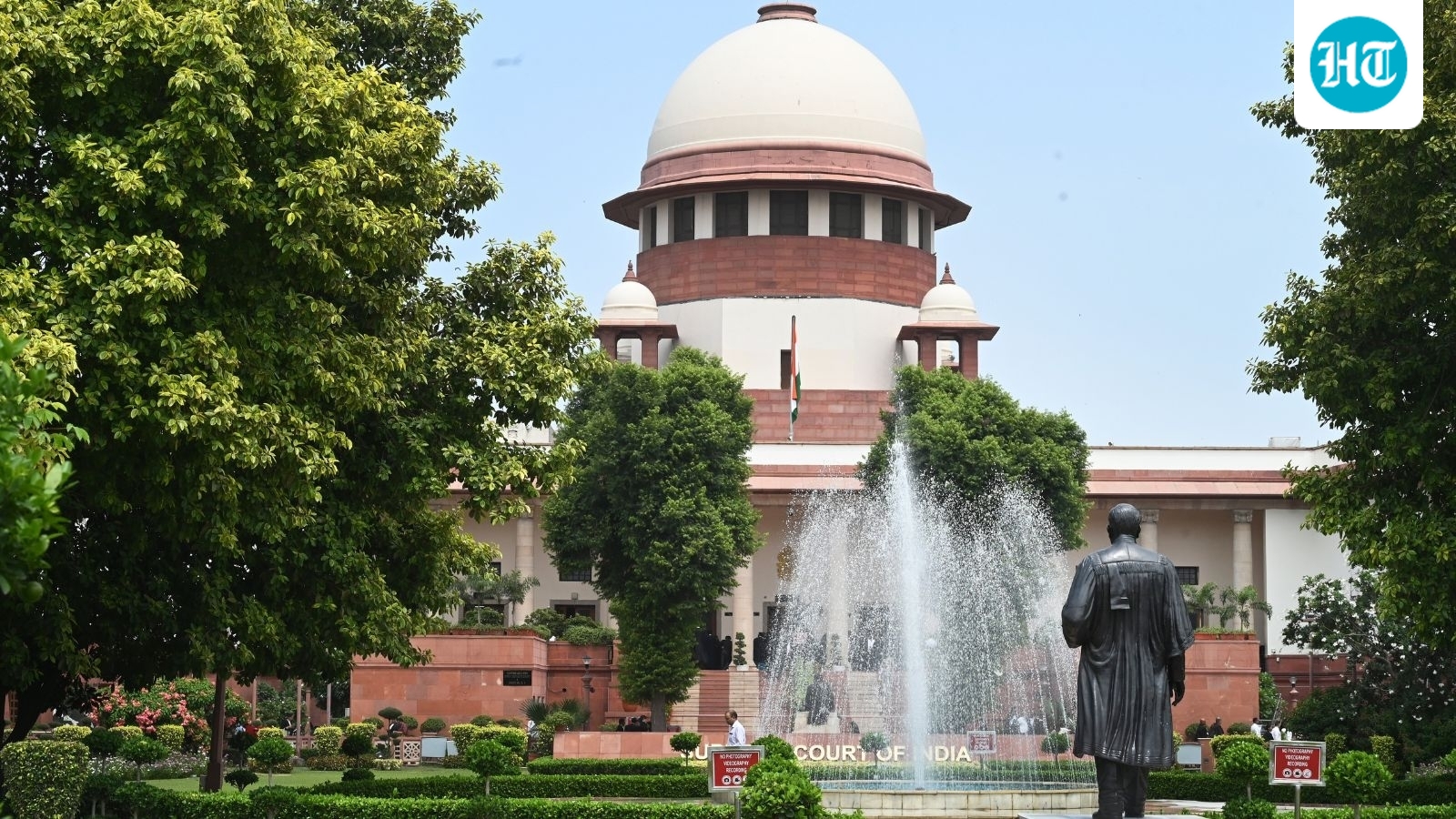
The right to access and use the internet is a fundamental right of every individual, including children irrespective of their age, the Supreme Court has held, cautioning that blanket restrictions on children’s internet access in the name of safety risk undermining their freedom, privacy and ability to seek help when they encounter online abuse.
“The safety of our children and their freedom are not at odds with each other. Our children are entitled to both,” a bench of justices JB Pardiwala and KV Chandran said in an order dated October 15, released now, holding that the right to access and use the internet flows from Article 21, read with the freedom of speech and expression guaranteed under Article 19(1)(a) of the Constitution.
The court was examining measures to detect and remove child sexual exploitative and abuse material (CSEAM) from the internet when it turned to the growing international debate over restricting children’s access to social media.
While acknowledging the genuine concerns underlying such proposals, the bench consciously chose not to endorse a blanket prohibition, reasoning that protecting children cannot mean shutting them out of a medium that has become integral to education, information and social participation.
The court’s observations assume significance amid growing calls for governments to restrict children’s access to social media, including through minimum-age requirements. The bench held that such prohibitions were not only of questionable efficacy but could also prove counterproductive by driving children towards less regulated and potentially more dangerous online spaces.
“We have no hesitation in saying that the right to access and use the internet is a fundamental right of every individual under Article 21 read with Article 19(1)(a) of the Constitution. Our children, irrespective of their age, enjoy the same rights, and to deny the same altogether would be as absurd as saying children below a certain age do not have a conscience worth protecting or a freedom of speech worth expressing,” it said.
The judgment traced the constitutional protection for digital access through earlier Supreme Court rulings. In Anuradha Bhasin Vs Union of India (2020), the court recognised that freedom of speech and expression, as well as the freedom to carry on trade and business, could be exercised through the internet and were constitutionally protected. However, it had left open the question of whether access to the internet, in itself, constituted a fundamental right.
Extending that constitutional reasoning to children, the bench stressed that the internet’s value lay not merely in the information it contained but also in the access it provided to learning, expression and human connection.
“For many children, particularly in remote areas, it is often the only source of learning and information. Likewise for children with special needs, the internet is often the only place where they are able to find company in others like them,” the court said.
The bench also questioned the assumption that prohibiting children from using the internet would necessarily make them safer. Drawing on the experience of other jurisdictions, it said that children did not stop accessing the internet simply because the law prohibited it. Instead, they could move to other unregulated platforms and websites that were even more unsafe.
Such restrictions, the court warned, could also discourage children who were being enticed, threatened or exploited online from reporting the incidents to their parents, guardians or other trusted adults for fear of being punished for having accessed the internet in the first place.
“This would significantly undermine the safety of our children, who are already apprehensive about confiding such incidents, even without such restrictions, and defeat the avowed object of the POCSO Act,” it said.
The court underlined that keeping children away from social media would not, by itself, curb the circulation of abusive material or deter those who produced, distributed and consumed it. Without effective safeguards and concerted efforts by platforms, law enforcement agencies and regulatory authorities to detect and remove such content, the problem would persist.
The bench was particularly critical of an approach that placed the burden of online safety on children rather than on those responsible for exposing them to harm.
“Any measure for the safety of children must be directed at the harmful material and those responsible for the same, and not at the children themselves,” said the court, adding that keeping a child away from the internet because of the failures of platforms and authorities would amount to mistaking the victim for the problem.
The court also raised concerns about the implications of age-based restrictions for privacy. It observed that implementing such restrictions would inevitably require identifying and ascertaining the age of every user, entailing continuous collection and monitoring of sensitive data and creating a disproportionate risk of surveillance and misuse.
At the same time, the bench clarified that rejecting blanket bans did not mean there was no place for age-based safeguards. It envisaged a framework that places greater emphasis on parental consent, guidance and oversight, alongside a dedicated “child mode” for social media accounts.
Such accounts could, for instance, be private by default, restrict contacts and messages from unknown adults, and moderate the advertising and content accessible to children. For pre-teens, these safeguards could be accompanied by proportionate mechanisms to verify parental consent, the court said, leaving the modalities to the Union government.
The bench further clarified that its observations did not preclude the government from restricting children’s access to specific categories of content or services that are inherently harmful to them, such as adult-content websites.
The bench also emphasised that the responsibility for online safety could not end with technological interventions or the removal of abusive material. Children needed to be equipped to recognise risks, understand consent and healthy relationships, protect their personal information and know whom to approach when something went wrong.
The court said digital safety and sex education were not separate subjects but “two sides of the same coin”, stressing that children must be taught, in an age-appropriate manner, about safe and unsafe touch, consent, respect for others, online privacy, sexual extortion and the channels available to report abuse.
The observations come at a time when the Supreme Court is separately considering a plea seeking age-based restrictions on children’s social media use.
On Friday, a bench of Chief Justice of India Surya Kant and Justice Joymalya Bagchi issued notice to the Centre, the Union ministries of women and child development and law and justice, and the National Commission for Protection of Child Rights on a petition filed by Indore-based Emerald Heights International School and its director, Siddharth Singh.
This petition seeks a comprehensive and enforceable regulatory framework to protect children from cyberbullying, online grooming, sexual exploitation, exposure to harmful content and other risks associated with social media. Among other reliefs, it seeks a direction to the government to prohibit social media use by children below a prescribed age and regulate access for older children, as well as enforce age-based restrictions on the creation and use of accounts.
KioskNews shows a cleaned-up reading view extracted from the publisher’s page — the original always lives on their site, not ours.