Xi greets Takaichi with a smile – but no words – as China-Japan freeze lingers
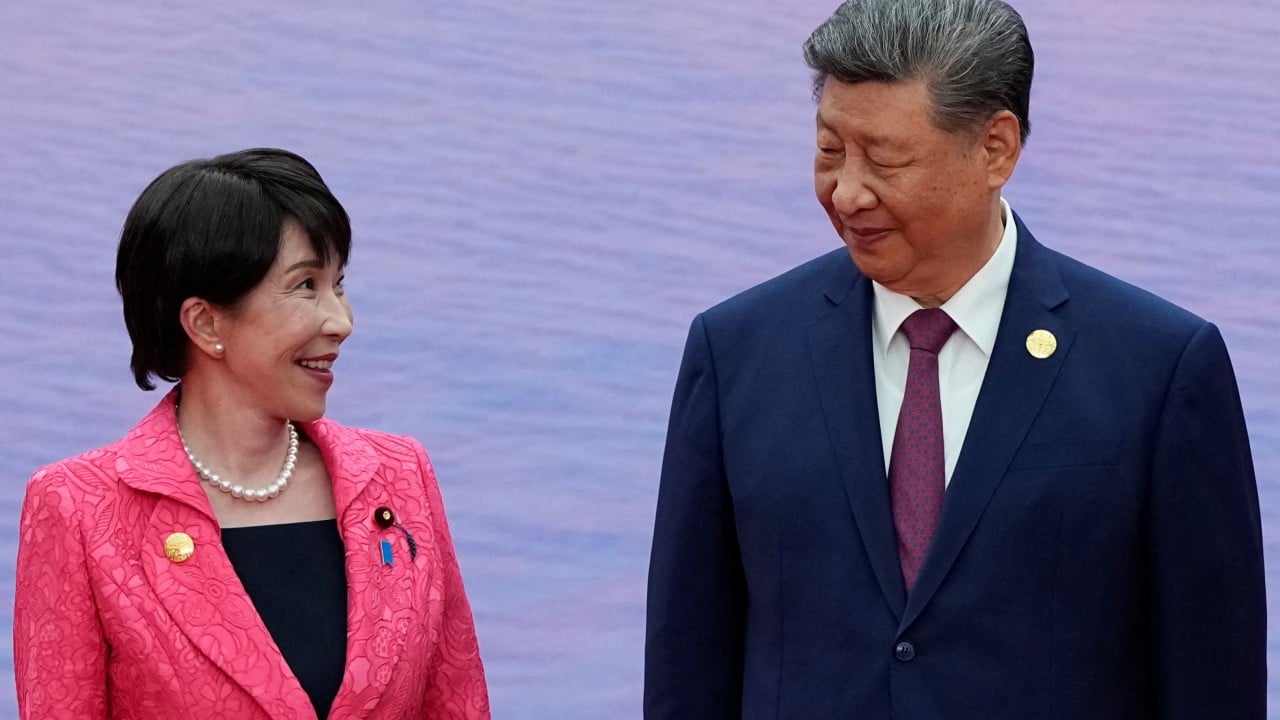
Japanese Prime Minister Sanae Takaichi and Chinese President Xi Jinping had their first in-person interaction in Shenzhen since last autumn, when ties froze due to her controversial remarks on Taiwan.
Takaichi shook hands with Xi and his wife, Peng Liyuan, as they posed for greeting photos ahead of the customary Asia-Pacific Economic Cooperation (Apec) “family photo” on Wednesday evening, according to a live feed of a welcome dinner for the Apec gathering.
Takaichi, dressed in a fluorescent pink blazer, said a few words to Xi after their handshake, to which Xi responded only with a smile.
Peng likewise appeared to remain silent after greeting her. After posing for the photograph, the trio exchanged nods, and the Japanese leader walked away. There was no interpreter on the stage with them.
This marked the first interaction between the two leaders since bilateral ties plunged to a historic low following Takaichi’s remarks that a crisis in the Taiwan Strait could constitute a “survival-threatening situation” for Japan, potentially paving the way for military intervention.
It was the first time a sitting Japanese leader had spoken so explicitly about how the country might react in such a situation, drawing fierce rebukes from Beijing, including repeated demands for a retraction, export restrictions and the cancellation of flights, multiple high-level engagements and cultural events.
Beijing regards Taiwan as part of China to be reunited – by force if necessary. Most countries, including the United States, do not recognise the island as an independent state, though Washington is committed to supplying it with defensive weapons and opposes any forcible takeover.
Earlier in the day, Takaichi made a low-key arrival in Shenzhen, beginning the first China visit by a Japanese leader in seven years.
She was greeted by retired Chinese diplomat Zhang Qiyue and Japanese ambassador to China Kenji Kanasugi on the tarmac before nodding briefly to ground staff.
Upon her arrival, there were no young Chinese greeters waving bouquets or national flags and chanting “welcome”. It was a stark contrast to the receptions given to other leaders, including South Korea’s presidential couple, who received a warm and exuberant welcome even at midnight, and US President Donald Trump, who was met with a historic greeting by Xi as fighter jets trailed colourful smoke overhead.
KioskNews shows a cleaned-up reading view extracted from the publisher’s page — the original always lives on their site, not ours.