Forget ‘Doctor Who,’ This 28-Episode Sci-Fi Series Is the Perfect Replacement

Amanda M. Castro is a Network TV writer at Collider and a New York–based journalist whose work has appeared in Newsweek, where she is an Associate Editor, and The U.S. Sun, where she previously served as a Senior Consumer Reporter.
She specializes in network television coverage, delivering sharp, thoughtful analysis of long-running procedural hits and ambitious new dramas across broadcast TV. At Collider, Amanda explores character arcs, storytelling trends, and the cultural impact of network series that keep audiences tuning in week after week.
Born and raised in Puerto Rico, Amanda is bilingual and holds a degree in Communication, Film, and Media Studies from the University of New Haven.
If you miss Doctor Who, television has no shortage of time-travel shows to fill the void. But few match NBC's Timeless in its mix of adventure, historical spectacle, comedy, and genuinely complicated mythology. The series ran for only two seasons and a two-part finale, but that was part of its appeal. Timeless masters found the right niche and succeeded without wasting time on unnecessary episodes.
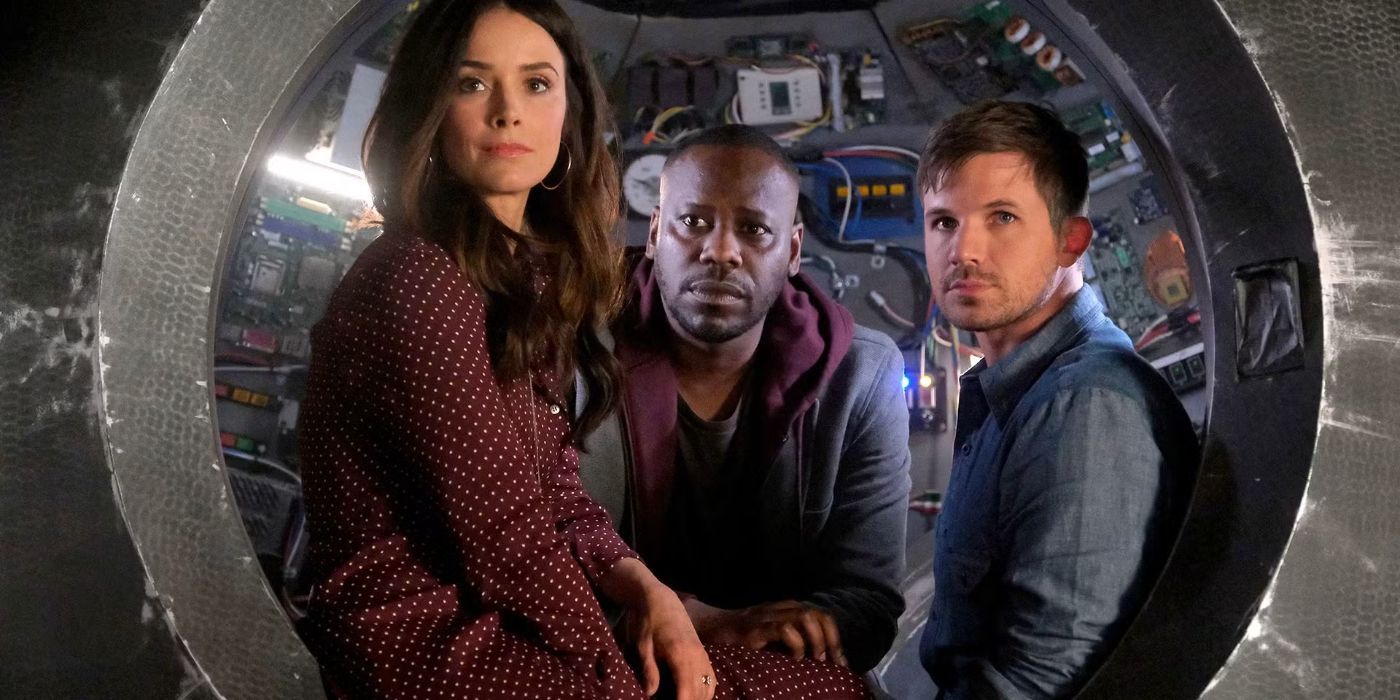
Shawn Ryan and Eric Kripke produced the series, which follows three unlikely heroes tasked with hunting a mysterious fugitive through history. Lucy Preston (Abigail Spencer) is an ancient history expert, Wyatt Logan (Matt Lanter) is a Delta Force soldier, and Rufus Carlin (Malcolm Barrett) is an engineer reluctantly assigned to pilot the time machine. The fugitive they hunt is Garcia Flynn (Goran Višnjić), a former government agent who stole the experimental time machine and is trying to change history.
‘Timeless’ Turns History Into Its Own Adventure Playground

The biggest reason Timeless works as a Doctor Who replacement is its willingness to make the past feel like the show’s playground. Rather than spending every episode in the present and treating time travel as an occasional gimmick, the series sends its characters into some of America’s most recognizable historical moments.
In season one alone, the show covers events such as the Hindenburg disaster, the assassination of Abraham Lincoln, the Alamo, the Watergate scandal, the Apollo 11 mission, Bonnie and Clyde’s life history, Benedict Arnold’s treason, and the Chicago World’s Fair. The second season adds more important events, such as the Salem witch trials, John F. Kennedy’s life and assassination, the life of Robert Johnson, and the story of Harriet Tubman.
That structure gives Timeless an almost anthology-like quality. Every episode gets a new setting, new costumes, new historical figures, and a new problem to solve. It has the same “where are we going next?” appeal that makes Doctor Who so easy to binge, while giving the series a distinctly American identity.
The Butterfly Effect Actually Plays a Part in ‘Timeless’

Lucy, Wyatt and Rufus' interventions can alter the world they return to, sometimes in surprisingly personal ways. The three travelers remember the original timeline, while everyone around them experiences the revised version as if it has always been reality.
Lucy, in particular, quickly discovers that changing history can reshape her own family, Rufus has to confront the reality of being a Black man traveling through periods of American history when racism and segregation weren’t merely historical concepts but immediate threats to his safety, and Wyatt carries his own grief and becomes increasingly obsessed with whether the past can be changed enough to save someone he loves.
The show doesn’t always execute these ideas perfectly; some of its time-travel logic can become wonderfully ridiculous under close scrutiny, and the weekly adventures occasionally prioritize momentum over plausibility, but the emotional consequenceskeep the premise from collapsing under its own complexity.
‘Timeless’ Has a Team Worth Traveling Through Time With

For all its elaborate mythology, Timeless ultimately succeeds because its central trio becomes the series' heart. Lucy begins as the obvious academic of the group, but her knowledge of history doesn’t make her emotionally detached. Watching famous events unfold firsthand thrills her, even as she learns that knowing history and experiencing it are two very different things. Wyatt starts as a straightforward action hero, but his personal history gradually adds depth. Rufus, meanwhile, becomes one of the show’s secret weapons.
Unlike many television programs that get cut short and never get to tie up their mythos satisfactorily, Timeless had that experience. NBC canceled the show after its first season, then reversed the decision three days later. Eventually, NBC canceled it again after the second season; however, fans got a two-part finale in December 2018 that closed out the main storyline and tied up some of the show’s plot arcs.
It may not have the eccentricity of Doctor Who or its decades of mythology, but that’s precisely why Timeless works as an alternative rather than an imitation. It’s a brisk, funny, occasionally surprisingly emotional science-fiction adventure about people trying to keep history from falling apart — one disastrous trip through time at a time.

Timeless
- Release Date
- 2016 - 2018-00-00
- Network
- NBC
- Showrunner
- Eric Kripke
KioskNews shows a cleaned-up reading view extracted from the publisher’s page — the original always lives on their site, not ours.