NEET-UG 2027 may remain in pen-and-paper mode as Nilekani-led panel gets extension
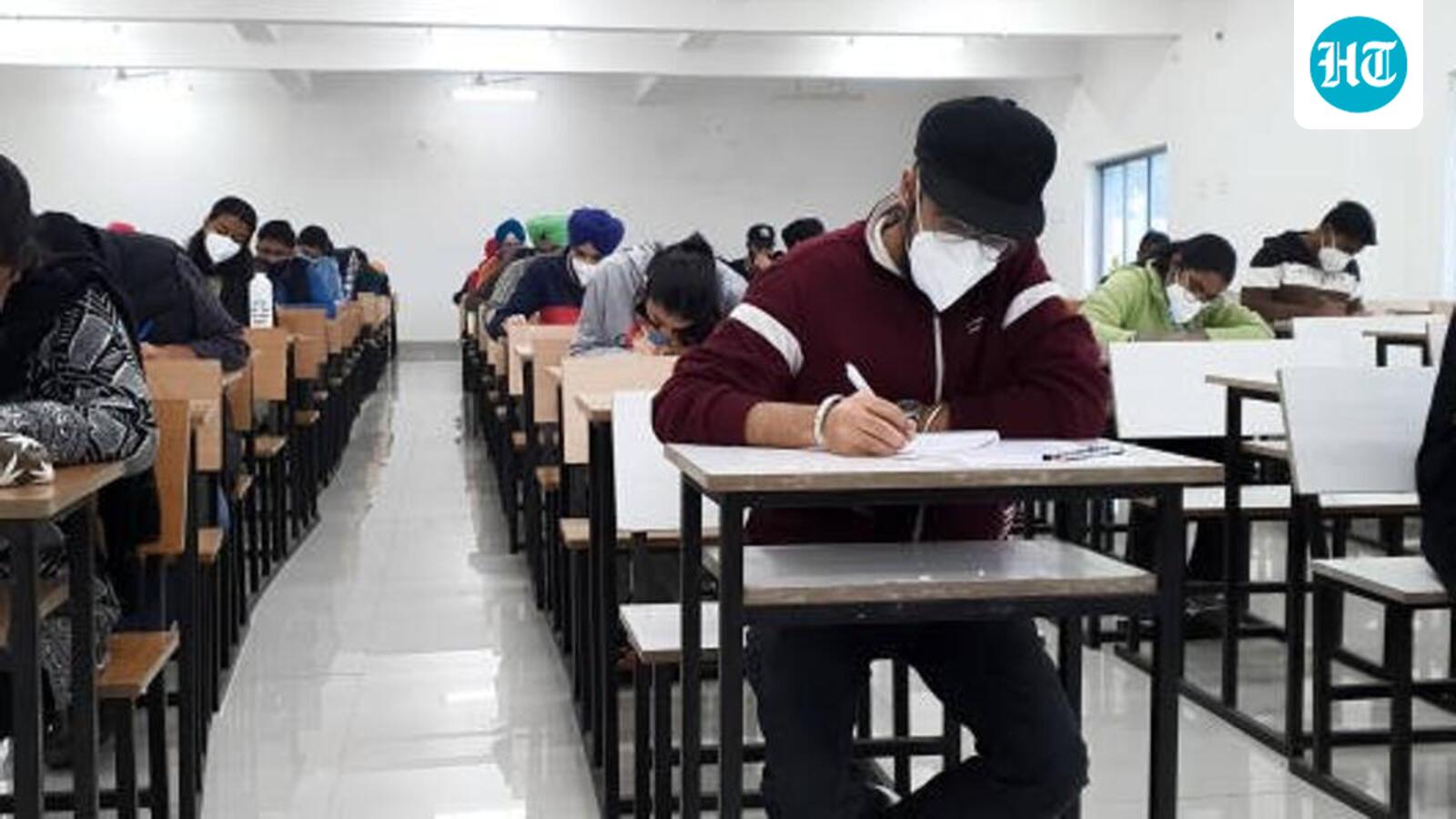
The National Eligibility-cum-Entrance Test for Undergraduate (NEET-UG) may continue in the pen-and-paper test (PPT) format in 2027, with a full transition to computer-based testing (CBT) appearing “unlikely” before 2028, officials and people familiar with the developments said.
The development comes as the Centre has extended the tenure of the Nandan Nilekani-led examination reform task force until January 27, 2027.
The extension comes amid reservations from southern states, particularly Karnataka, Tamil Nadu and Kerala, over infrastructure gaps, transparency, state representation in the National Testing Agency (NTA), and the impact of online examinations on rural candidates. States have also flagged concerns over the weightage given to school board marks and disparities among different education boards while submitting suggestions to the High-Powered Task Force (HPTF), people aware of the matter said.
“The health ministry, NTA and education ministry can decide on their own how they will conduct the examination in 2027 after assessing infrastructure and other requirements. The HPTF is unlikely to suggest any changes in the method for NEET-UG 2027, as it will take time to prepare its report and finalise it for submission to the government,” a person familiar with the developments told HT.
NEET-UG is conducted in May, with preparations beginning at least five to six months in advance. The task force’s recommendations are, therefore, more likely to be implemented from 2028, the person added.
The six-member task force, chaired by Infosys co-founder Nandan Nilekani, was constituted on July 27 with an initial three-month mandate to recommend measures to strengthen the country’s examination system and prevent question paper leaks.
The Centre told the Supreme Court in an October 5 affidavit that the panel had held 18 meetings and more than 40 consultations with ministries and departments and was on track to submit its report. It has also received more than 54,000 suggestions and feedback from stakeholders.
“It has now been given an extension until January 27 to complete consultations with states and build consensus on examination-related reforms,” the person quoted above said.
Southern states flag concerns
Tamil Nadu and Kerala have raised concerns over the proposed transition from PPT to CBT, particularly its implications for rural and marginalised students, the weightage given to school board marks and equivalence among different state boards.
Tamil Nadu, in its submission to the HPTF, is learnt to have shared findings of the 2021 Justice AK Rajan committee report on NEET’s impact in the state. The report highlighted that NEET admissions had disproportionately disadvantaged students from Tamil-medium backgrounds, government schools and state-board institutions, besides candidates from disadvantaged social groups.
Other submissions have sought greater consideration of school board scores and mechanisms to ensure equivalence across boards. Concerns have also been raised that students from non-CBSE boards could be disadvantaged because national-level entrance examinations such as NEET and JEE largely follow the NCERT-aligned curriculum.
Tamil Nadu has consistently opposed NEET and sought the restoration of states’ powers to conduct medical admissions. The state legislative assembly passed a resolution in August seeking to do away with the common entrance test. The government led by chief minister C Joseph Vijay has reiterated its position that medical admissions should be based on Class 12 examination marks, an argument also advanced by the previous Dravida Munnetra Kazhagam (DMK) government.
Karnataka, too, has called for greater state involvement in medical admissions and examination-related decisions.
A state government official told HT that Karnataka had been a pioneer in conducting engineering and medical seat allotments since 1992 and should be involved in any proposed overhaul.
“Our system was working fine. If they want to change anything, they should involve the state government,” the official said, adding that states had neither been consulted nor given representation in the NTA.
Also Read: Government, NTA officials may not be named in CBI charge sheet over NEET-UG paper leak
“The NTA should be made a statutory body and states must be given their place in the exam conducting body”, the official added.
The official also flagged the logistical challenges of conducting the examination across multiple CBT sessions, including preparing different question papers and ensuring comparable difficulty levels.
“Logistically, it is very difficult,” the official said.
Another state official stressed the need for accountability at every stage, from question paper preparation to the conduct of the examination, particularly in view of repeated paper leaks. All stakeholders, including state governments, needed to be consulted to ensure a transparent system, the official said.
Why the CBT transition remains challenging
The debate over shifting NEET-UG to CBT has continued despite repeated recommendations in favour of the online format. In October 2024, a committee headed by former Indian Space Research Organisation (ISRO) chairman K Radhakrishnan described CBT as the “sure way forward” to prevent paper leaks and recommended a nationwide network of standardised testing centres.
Also Read: Nilekani panel’s mandate largely overlaps Radhakrishnan committee’s NTA reform report
On May 15, 2026, three days after the cancellation of NEET-UG 2026, then education minister Dharmendra Pradhan announced that the examination would move to CBT from 2027. However, on August 4, the Centre told the Supreme Court that the transition had not been finalised and remained “under active consideration”.
The health ministry and National Medical Commission (NMC) flagged infrastructure constraints and score normalisation during an HPTF meeting on August 20, indicating that preparations for a CBT transition remained at an early stage.
“While all possible attempts are being made to work out the nitty-gritty of conducting exams in CBT mode, major challenges remain, including the infrastructure required to examine around 2.5 million students and the issue of normalisation. It will take at least two years to be able to conduct the exam in CBT,” a health ministry official aware of the discussions told HT, requesting anonymity.
The official said the ministry was providing inputs on normalisation to ensure fairness across examination shifts.
“While the health ministry does not have much role in conducting the exam, it has experts who can provide inputs on the normalisation process to ensure fairness to all students,” the official added.
An NMC official said the proposal remained under deliberation.
“We have provided our suggestions to HPTF regarding conducting NEET-UG in CBT mode. The proposal is at the deliberation stage due to infrastructure issues. The focus is on how NEET-UG 2027 should be conducted to make the exam fair and ensure candidates do not face difficulties,” the official said.
More than 2.2 million candidates registered for NEET-UG 2026. Accommodating them through CBT would require multiple examination sessions unless testing infrastructure is substantially expanded.
Also Read: HC declines plea for 1% quota for senior citizens in NEET admissions
NTA director general Abhishek Singh had told HT in May that around 20 shifts would be required to accommodate approximately 2.2 million candidates.
Multiple sessions would require a robust normalisation system to account for differences in question-paper difficulty. The process adjusts candidates’ scores based on their relative performance across shifts. This is particularly sensitive in NEET-UG, where even a single mark can determine admission to a government or private medical college.
Separately, a 31-member parliamentary standing committee on education, headed by Congress MP Mukul Wasnik, recommended a phased transition to CBT in its October 9 report on strengthening the NTA. It called for at least 1,000 secure government-owned testing centres, at least one centre in every district and mock examinations to familiarise students with the digital format. It also recommended an independently audited normalisation system, with its methodology made public before the transition.
The committee suggested a hybrid arrangement in areas lacking adequate computer and internet infrastructure, under which encrypted question papers could be transmitted electronically and printed locally at examination centres under security protocols until full CBT readiness is achieved.
The NTA, Union education ministry and members of the task force did not respond to HT’s requests for comment. The copy will be updated whenever it is received.
KioskNews shows a cleaned-up reading view extracted from the publisher’s page — the original always lives on their site, not ours.