EU weighs sweeping new trade powers against China before make-or-break October
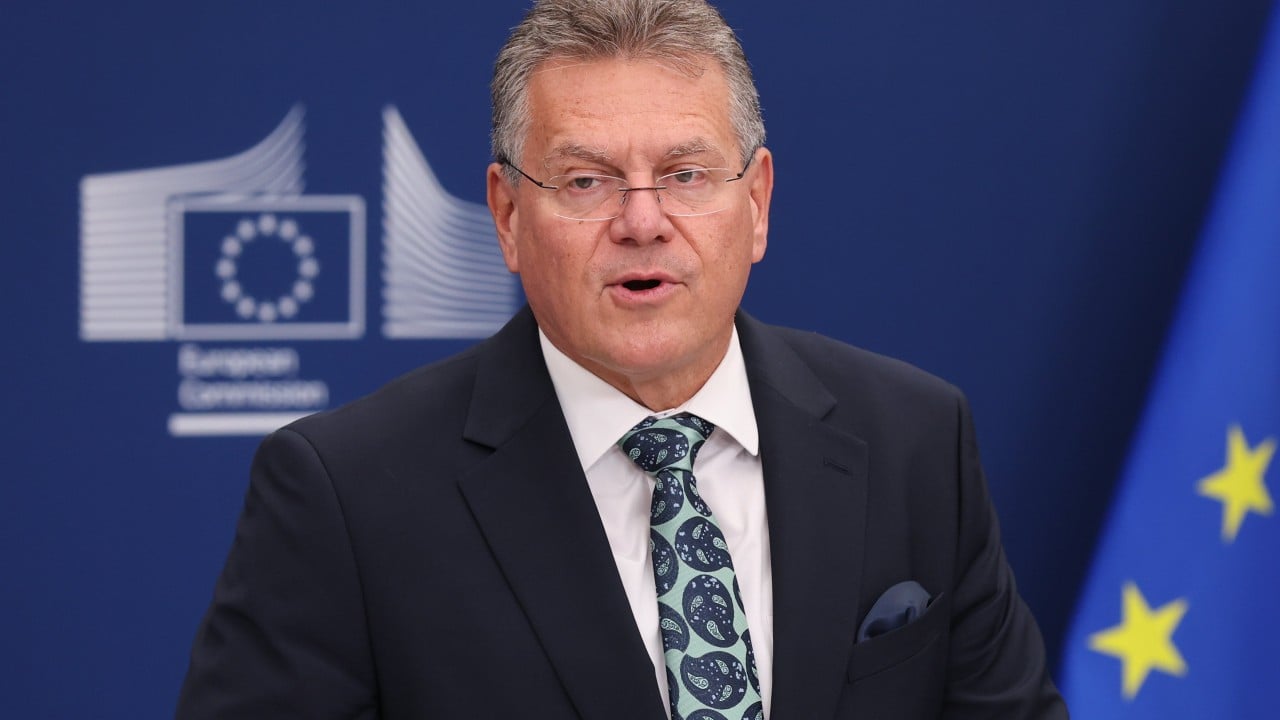
The bloc wants to put the brakes on a surge of Chinese imports that, combined with sluggish EU exports to China, has extended a gaping trade deficit.
09:10
Can the Middle East war turbocharge China’s global EV ambitions?
Officials said talks have been progressing surprisingly well, and there may well be some deliverables from next week’s meetings. Nonetheless, Beijing has publicly rebuked any suggestion that it would curb its shipments.
These meetings will inform the agenda of an EU national leaders summit in Brussels the following week. The European Commission will present the outcome of its China negotiations and expects to receive the green light to propose new weapons in early-December.
Official and diplomatic sources say China is not expected to be named in the customary written conclusions of the European Council summit, as the bloc hopes to maintain diplomatic decorum with Beijing and draw less retribution.
However, multiple sources said that firm action is now expected this year, regardless of the outcome of next week’s meeting in Beijing.
“Nothing is going to happen in the meeting next week that prevents this train from leaving the station,” one official source said.
In her state of the EU speech this month, European Commission President Ursula von der Leyen asserted that while “some say the second China shock is looming … it’s already here”.
Fears abound that unfair trading Chinese practices are contributing to a deindustrialisation of Europe’s manufacturing heartland, including in Germany but spreading through Central and Eastern Europe.
SCMP Plus is a new premium news platform that gives you an
all-inclusive edge to stay ahead on China news.
To access our exclusive content you’ll need to subscribe.
Already a subscriber?
LOG IN
In recent weeks, Berlin has come closer to the long-standing view in Brussels and Paris that the trading situation is unsustainable and that something has to change.
“There is a sense of emergency … Germany has changed dramatically. There is this total destruction of employment, of factories. There is a lot of stress,” a diplomatic source said.
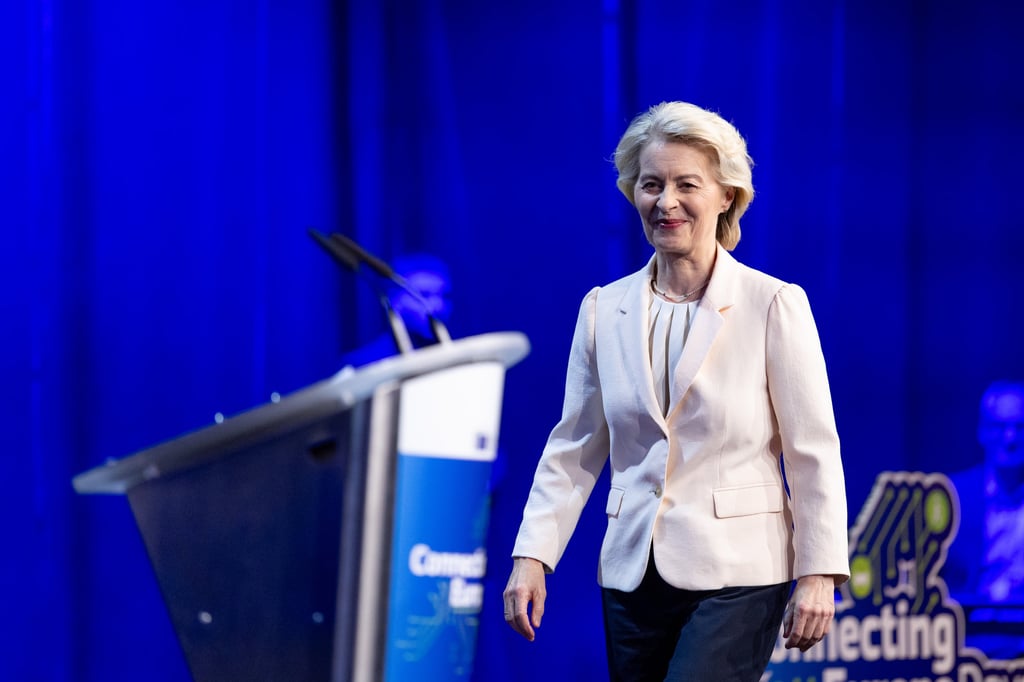
Among the planned tools are a diversification instrument, that would oblige firms in critical sectors to have at least three suppliers spread across several countries, and a solidarity fund to compensate companies hit by retaliation from China or any other trading partner.
Speculation has been mounting in recent days that a third weapon is also in the works, one which could afford broad tariffing powers to the European Commission, akin to those used by the US government through its Section 301 tool.
Various reports have described a Commission-controlled emergency trade power that could rapidly restrict Chinese imports when dependency or overcapacity crosses a systemic threshold, without waiting for traditional product-by-product investigations or a positive vote from member states.
Two newsletters, Dossier Bruselas and Watching China in Europe, reported that a joint paper on China from France and Germany will propose achieving this through reworking the dormant anti-coercion instrument, which provides broad retaliatory powers but has a high bar to be activated.
Diplomatic sources confirmed that the paper is to be presented to the European Commission ahead of the European Council summit.
“It is basically finalised … the instrument that we are calling for would allow us to cut China off from the European market within 24 hours,” one official was quoted as saying in the Watching China in Europe newsletter, written by analyst Noah Barkin.
A new 301-like tool would “risk weaponising trade policy”, the China Chamber of Commerce to the EU said in a statement on Wednesday.
“European industry has also experienced the negative impact of similar unilateral trade measures. International trade instruments should not become subject to a ‘race to the bottom’, nor should unilateral measures replace multilateral rules,” the chamber said, urging the EU to avoid “beggar thy neighbour approaches”.
In recent weeks, with German Chancellor Friedrich Merz under huge pressure from the electoral gains of the far-right Alternative for Germany, Berlin appears to have shifted decisively on China.
Previously the main proponent of engagement, it is now signalling support for protectionist measures.
On Tuesday, the German government notified the European Commission of tighter telecoms security and certification rules aimed at further restricting certain vendors’ access to German networks.
Huawei Technologies is not named, but the Chinese company is widely understood to be the main target.
01:08
Chinese cooling units in high demand amid Europe’s deadly heatwave
Some of the country’s most significant business lobby groups have come out in favour of a more protectionist trade stance towards Beijing, including those that have previously warned against action.
In a policy paper last week, the Federation of German Industries (BDI) – which has previously backed harsher policies on China – warned that the cost of doing nothing would outweigh that of any Chinese retaliation.
“Even if de-risking entails costs, including in the form of counter-reactions, passivity would in the long term be economically considerably more costly and irresponsible from a security policy perspective,” the BDI wrote.
While the group said it favoured WTO-compatible solutions, it also signalled that some flexibility might be required.
“Given the critical situation, particularly China’s state-induced massive overcapacities … WTO-compatible temporary defensive measures sometimes take effect too late or are insufficient,” it wrote.
“The advantages and disadvantages of possible instruments such as local-content requirements, tariff-rate quotas, sector-wide or even general tariffs must be carefully examined and weighed against each other.”
In contrast to the BDI, the German Association of the Automotive Industry (VDA) has been a strong opponent of defensive trade action against China, with its views proving influential across the German government. Now, however, it appears to have had a change of heart.
According to German business daily Handelsblatt, an internal VDA note said “imbalances have arisen in trade with China in recent years” and that “trade defence instruments” can be used “from a certain point of distortion of competition”, for example in cases of “proven unfair practices”.
“Germany, which has long been known for its opposition to a hardening of trade policy towards China, is beginning to shift its stance,” wrote Pascal Canfin, the European Parliament trade committee’s lead rapporteur on China, in an article for Le Grand Continent, a French magazine.
“The Germany that blocked tariffs on electric vehicles in 2024 is different from the Germany that is today open to discussions, alongside France, on how to respond to China’s aggressive industrial policy.”
KioskNews shows a cleaned-up reading view extracted from the publisher’s page — the original always lives on their site, not ours.