8 War Movie Masterpieces Praised By Real-Life Veterans


Josh is a film critic and journalist with over nine years of experience in the entertainment industry. Entering the field at just 17 years old, Josh went on to make his own website, The HoloFiles, and social media brand Star Wars Holocron, the most followed Star Wars fan account on Twitter/X.
A member of both the Chicago Indie Critics and the Hollywood Critics Alliance, Josh has covered major industry events including Star Wars Celebration and, most recently, CinemaCon for ScreenRant. His work has appeared in outlets such as Game Rant and Comic Book Resources (CBR), and he has been featured in publications including the BBC and The New York Times.
Sign in to your ScreenRant account
War movies movies have been a consistent genre throughout the history of cinema. Hollywood has repeatedly tapped into the stories of real-life conflicts, showing dramatized versions of what really happened. These efforts came with great rewards, too, as countless war movies have been hugely successful at the worldwide box office.
Audiences typically look for a lot of things when choosing their next war movie to watch — action, drama between characters, and potentially world-defining stakes. Yet, there’s another element that typically comes into play, too, and that is what real-life veterans think of a given film. After all, getting their stamp of approval is mightily important to any war movie, as it shows that the story they told is (for the most part) accurate to what really happened.
Some war movies have been praised for their portrayal of the conflict at hand. Andrew Garfield’s Hacksaw Ridge, which tells the story of a soldier who, due to his strong religious beliefs, opts not to carry a weapon of any kind during battle, is one war film that has been praised repeatedly. These accolades have come not only from historians who have spent their entire careers studying the conflict, but veterans who were actually there, too.
War films praised by veterans aren’t just limited to World War II, either. Movies that have centered on more recent conflicts, such as the wars in the Middle East, have also been lauded by those who served for their accuracy of their portrayal of history. Regardless, war movies remain an incredibly popular subgenre in Hollywood today, and if they’re praised by real-life veterans, then chances go up that it’s an excellent film as well.
Hacksaw Ridge
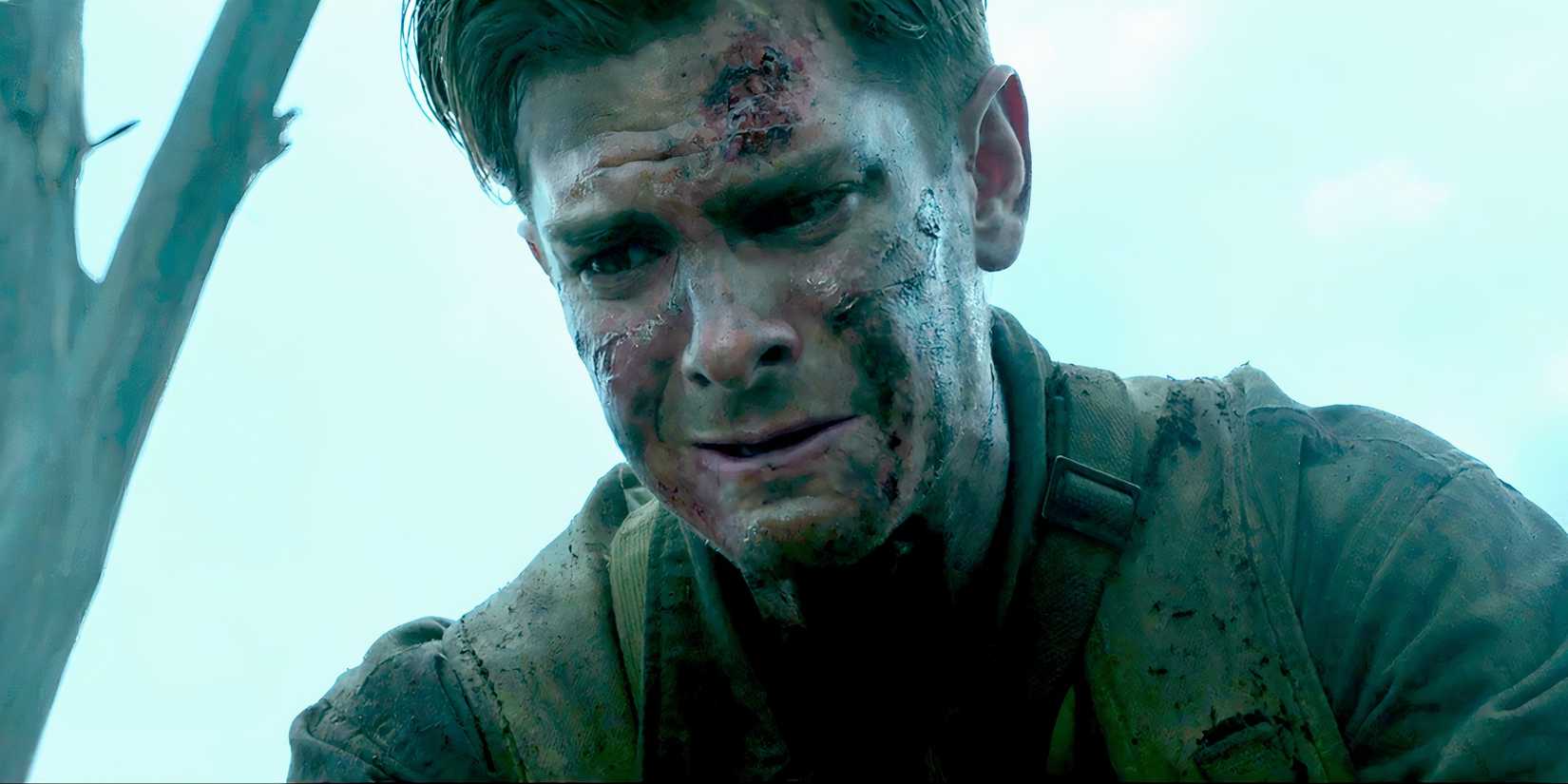
Andrew Garfield’s Hacksaw Ridge is one war movie that has consistently been praised by real-life veterans. As stated, the film tells the story of Desmond Doss, a Seventh-Day Adventist who objected to conflict of any kind. However, when drafted into the United States military, he was forced to either forgo his religion or risk criminal punishment for not fighting.
Miraculously, Doss found a solution to this problem — not carrying a weapon at all. During combat, such as at the Battle of Okinawa (he later received a Medal of Honor for his actions during the battle), Doss had no weapons on him. He had no rifle, no pistol, and nothing that could cause harm to another human being, as Doss was adamant that he wouldn’t hurt anyone. Instead, he served as a medic, thus saving the lives of those on the battlefield, and earning a reputation as one of the bravest soldiers in history in the process.
When Hacksaw Ridge released in theaters in 2016, the question naturally arose about how much of the film’s story was accurate to real events. After all, while some war movies are based in realism, others also take plenty of story liberties. Garfield’s Hacksaw Ridge wasn’t one of these films, however, and has instead been praised by several veterans.
For example, the film’s director, Mel Gibson, showed the finished product at the Disabled American Veterans national convention in Atlanta, Georgia. The film received great applause upon its conclusion, with many veterans praising its accuracy. Dan Clare, an Iraqi war veteran, noted that Hacksaw Ridge was a surprise hit with the crowd.
“These were people who avoid war movies because they fear they will either be unrealistic or that they will trigger post-traumatic stress. To their surprise, most people felt that it was a realistic depiction of combat — one of the most accurate ever — and, by and large, they appreciated the way it portrayed PTSD. Bottom line? Unlike most Hollywood movies, this one felt like it represented us.”
Black Hawk Down
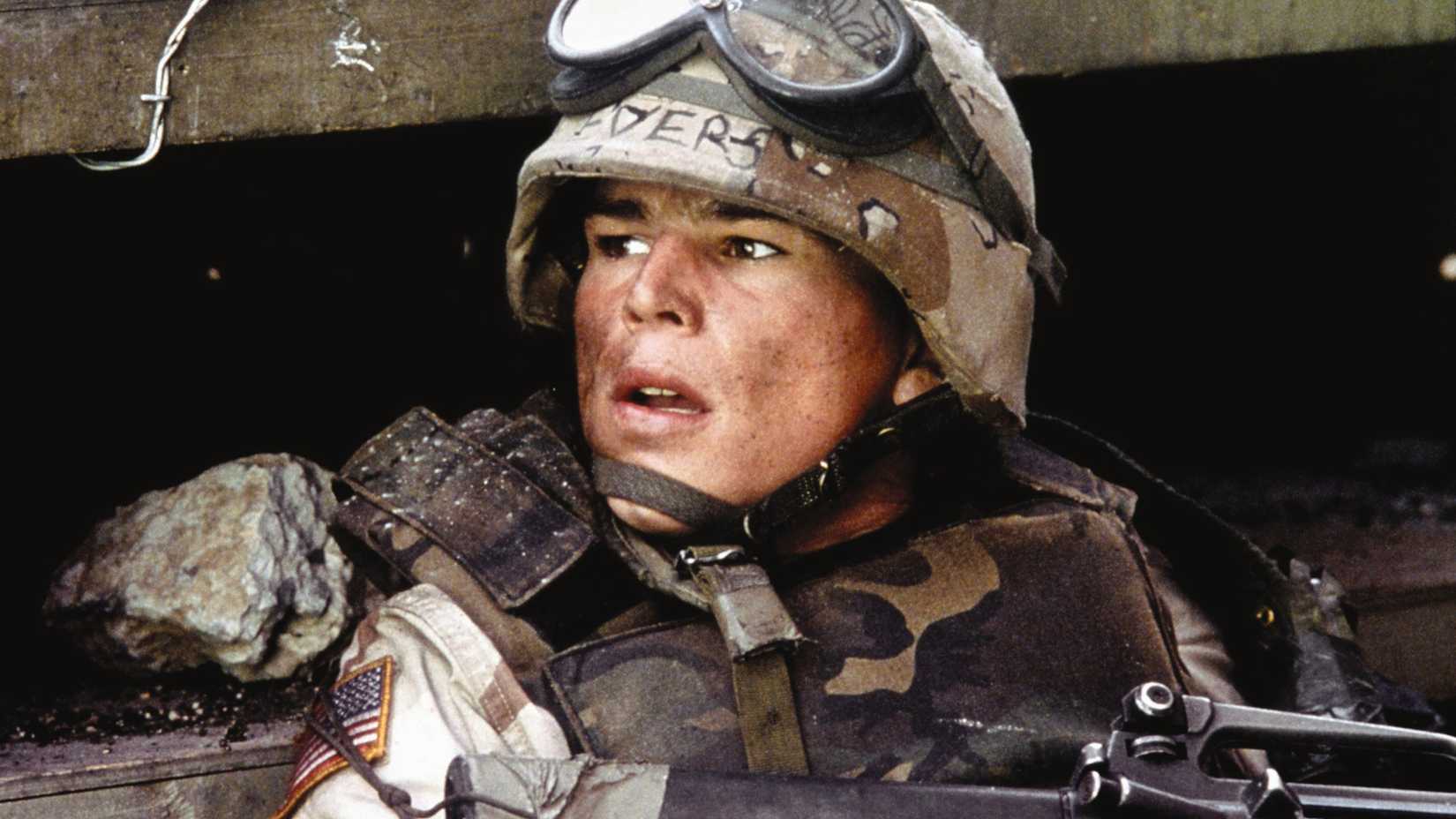
Ridley Scott’s 2001 film Black Hawk Down tells the story of two Black Hawk helicopters that were shot down during the Battle of Mogadishu. Once again, this film was praised for its depiction of the battle that its based on, with many veterans who fought during this conflict noting the film’s accuracy. Not only that, but one veteran stated that “90–95% of the film” is accurate, a high number that shows just how much attention to detail went into this movie.
The Outpost

Another more recent title, The Outpost is based on a non-fiction book by newscaster Jake Tapper. The film tells the story of the Battle of Kamdesh and the United States soldiers stationed at the Combat Outpost (COP) Keating in Afghanistan. A fatal design flaw of the base meant that the soldiers were vulnerable to ambush from the surrounding mountains, and the film then shows their desperate fight to survive.
One of the things that makes The Outpost such a unique film is that it not only received praise from veterans, but was actually worked on by veterans, too. Director Rod Lurie is a graduate of West Point and served in the U.S. Army, and not only that, but the film also recruited several survivors from the actual events to serve as advisers on the story. This helps to make The Outpost feel raw, lived in, and true to real-life events.
Warfare

Another recent film with plenty of veteran involvement is Warfare, which tells the story of an encounter that a group of Marines had shortly after the Battle of Ramadi in 2006. Interestingly, the film is told in real time, with each second passing at the same rate for both the audience and the characters. Not only that, but the script was also based solely on personal accounts that survivors gave after the attack occurred.
These methods were praised by veterans, including survivors, for adding to the film’s overall authenticity. In particular, veterans praised the “smaller moments” for depicting the quiet moments of battle, which many war films skip over. The performances of the cast were also praised, as actors like Joseph Quinn and Will Poulter did extensive research to make their portrayals as accurate as possible.
The Best Years Of Our Lives

One of the earliest films on this list is The Best Years of Our Lives, which released just one year after the conclusion of World War II, in 1946. The film tells the story of three United States soldiers who return to their small towns after serving, but find the transition back to civilian life especially difficult. For example, Al Stephenson (played by Frederic March) struggles with alcoholism upon his return and, at the same time, also has a very difficult job at a bank, in which he is given the task of approving or denying loans for fellow veterans.
The Best Years of Our Lives is timeless in this regard. The film may focus on World War II veterans, but it can just as easily translate to virtually every conflict in modern human history, with soldiers struggling to find their footing after returning home. The realistic-ness of this portrayal was praised by veterans upon its release, many of whom felt seen by the film. Amazingly, many of the film’s actors were veterans themselves, including Harold Russell, who, just like his character, lost both his hands during the war.
The head of Veterans Affairs at the time, General Omar Bradley, praised this film upon its release. In fact, he was such a fan of the movie that he organized a showing for VA headquarters staff, and later went on to write to the film’s producer to express his appreciation.
Saving Private Ryan

Steven Spielberg has directed so many iconic films in his career, and Saving Private Ryan is right up there among the very best. The film, which released in 1998, tells the story of a battalion of U.S. soldiers who set out on a mission to rescue Private James Francis Ryan (after his brothers had already tragically been lost in battle). Tom Hanks plays Captain John Miller, the leader of the rescue mission, and Matt Damon takes on the role of Private Ryan.
Many World War II veterans, some of whom actually fought in the specific battles that Saving Private Ryan depicts, praised Spielberg’s film. D-Day veterans noted that the Omaha Beach sequence captured the true violence of the war, with paratrooper Jack Evans saying: “A lot of people will see this and think it's gruesome, but that's the way it was. There were a lot of times it was a lot worse."
Atonement

One of the most recent films on this list, Atonement tells the true story of a deadly battle during the Iraq War and its longstanding aftermath. Starring Kenneth Branagh and Boyd Holbrook, Atonement begins with an extended sequence showing American soldiers patrolling the streets of a populated Iraqi village. They hear gunfire, however, and this quickly sends them into action.
On the civilian side of things, an Iraqi family similarly hears the gunfire and decides to make a run for it and escape to their hometown. What happens, though, ends up being a tragedy in every sense of the word, as the family is caught in the crossfire between Iraqi militants and the U.S. Army. Their attempts to inform the latter that they aren’t a threat prove to be fatal, however, as several of the family members are killed by U.S. soldiers, who mistakenly think of them as a threat.
Atonement is based directly not just on real events, but on real people, too. The Khachaturian family were the ones impacted by this tragedy, and Boyd Holbrook’s Lou D'Alessandro was (one of) the real soldiers in question. Meanwhile, Kenneth Branagh’s Michael Reid was the journalist who covered the events (and who facilitated a meeting between both parties years later).
When the film premiered at the Toronto International Film Festival in September, director Reed Van Dyk stated that he wanted to honor those in this story by depicting the events as accurately as possible. During the Q&A after the film’s premiere, Van Dyk noted that he and his team had received the stamp of approval from veterans who served during the War in Iraq, with particular praise going to the intensity of the combat sequence that then sets up the rest of the movie.
Gettysburg

The 1993 film Gettysburg tells the story of the Battle of Gettysburg during the American Civil War in the mid-1800s. The film, which is written and directed by Ronald F. Maxwell, was originally filmed as a miniseries but was released for a limited run in theaters after positive reception. Because of this, it remains the longest film released in theaters in U.S. history.
Because of how long ago this war was, no direct veterans were around to see this movie. However, veterans of future conflicts noted that Gettysburg has a surprising commitment to depicting all aspects of war. Not only that, but historians praised Maxwell for including real battlefield formations, re-enactors, and for filming near the real locations where key battles took place.
KioskNews shows a cleaned-up reading view extracted from the publisher’s page — the original always lives on their site, not ours.