7 Agatha Christie Books Inspired by Real Crimes


Beatriz (Bea) Valero de Urquia is a Books & Literature author at Collider, where she focuses on Lists surrounding recent bestsellers, classical novels, and everything in between. She is a historian by training and a bilingual reader, moving between English and Spanish literature.
Beatriz began her career as a technology writer at a startup in the UK. Almost a decade later, journalism has taken her to five cities across three continents and into business reporting, cultural criticism, and live TV commentary. She joined Collider in 2026.
Beatriz has a passion for travelling and loves keeping an eye on the books headed to the screen. One of her favorite pastimes is critiquing the historical accuracy of period movies. She also once volunteered for the Charles Dickens Museum. Beatriz also has a core belief that a book is always better than the movie, but she has been happy to have been proven wrong in a couple of occasions.
When she isn’t reading, Beatriz is watching musicals, stage managing Shakespeare plays with a local theater group or doing historical research. She enjoys tracing family trees for her history and genealogy TikTok, creating databases for historical analysis and sifting through 17th-century stories for the novel she is currently in the process of writing.
Sign in to your Collider account
Agatha Christie did not write true crime. Instead, her talent was imagining complex and compelling puzzles surrounding a murder. Several of them were inspired by experiences from her own life, such as working as a nurse during WWI or traveling through the Middle East, accompanying her archeologist second husband to excavation sites. But not even the Queen of Crime could avoid the coverage of real crimes in newspapers and media. Although the stories and characters are always her own, some of Christie's most famous murder mysteries take inspiration from real-life cases.
Many real crimes and criminals are explicitly mentioned in Agatha Christie's novels and short stories. "Remember the long-continued successes of Jack the Ripper," Hercule Poirot tells Captain Arthur Hastings in the 1936 novel The ABC Murders. It is often believed the story of the Victorian serial killer inspired the plot of the book. Christie also held a deep fascination for the 1892 Lizzie Borden case, and the rhyme inspired by it is recited in After the Funeral. Other times, Christie did more than just borrow the general idea of a crime, and incorporated specific details related to a murder for her stories. Here are some of the most fascinating cases.
'The Mysterious Affair at Styles' (1920)

In 1916, during World War I, Agatha Christie was working in a hospital dispensary and was bored. Christie decided to use this time to write a detective novel. "Since I was surrounded by poisons, perhaps it was natural that death by poisoning should be the method I selected," Christie herself wrote in her autobiography. Inspired by the detective book tradition, she created her own iconic investigator. He would be Belgian, like many of the refugees she was interacting with. His name would be Hercule Poirot.
The Mysterious Affair at Styles was inspired by not one but two real murder cases. The fictional death of wealthy Emily Inglethorp at her Essex country house, Styles Court, has many parallels to that of Frances Garnett Orme. The 49-year-old spiritualist was found dead from poison in her locked room in the Savoy Hotel in Mussoorie, India, in 1911. Orme's companion was the main suspect. The book also echoes the story of William Palmer, an English doctor convicted in 1856 of poisoning his friend, John Cook, with strychnine, the same poison Agatha Christie uses in the book. It was suspected that Palmer had also killed several members of his family, including four of his children. In addition to the murder method, Agatha Christie's novel also includes several key details from the Palmer case, such as coffee left in a hallway, an inquest at the village inn and a pharmacist who sold the poison thinking it would be used to kill a dog.
'The Affair at the Victory Ball' (1923)

Billie Carleton was a British musical comedy actress in WWI London. By 18, she was a star. Four years later, and days after the end of the war, Carleton was found dead of an apparent drug overdose. The night before, she had attended the Victory Ball at the Royal Albert Hall dressed in a scandalous semi-transparent dress designed by her friend Reggie de Veulle. An investigation found De Veulle had provided Carleton with the substances and revealed he had been part of a secret underground London cocaine trafficking ring. He was sentenced to eight months in prison.
Agatha Christie's The Affair at the Victory Ball, one of the first Hercule Poirot short stories, takes readers to the inside of British high society. It is set during this luxurious celebration of the end of the war, which a group of people attended dressed in the costumes of the Italian commedia dell’arte. During the ball, Lord Cronshaw, dressed as Harlequin, is stabbed to death. The morning after the ball, his fiancée, actress Coco Courtnay, is found dead in her bed from a cocaine overdose. Christie never said the story was based on Billie Carleton’s death, but the details speak for themselves.
'Mrs. McGinty's Dead' (1952)

On the evening of 31 January 1910, Cora Crippen, an extravagant music hall singer, disappeared from her London home. Her husband, the quiet American homeopath Hawley Harvey Crippen, claimed she had left him and moved to the U.S. Soon after, his mistress, Ethel Le Neve, moved into his house and began wearing Mrs Crippen's clothes and jewelry. When the case caught the police's attention, Dr. Crippen and Le Neve fled on a ship to Canada, with Le Neve disguised as a boy. However, the ship's captain recognized the pair and notified his superiors using wireless telegraphy. It was the first time this technology was used to track a criminal. In their absence, the police had searched the home and found human remains. Police officers then jumped onto a faster ship and chased the doctor and his mistress. They were arrested, and Dr. Crippen was found guilty of the murder. Le Neve was acquitted and later changed her name to distance herself from the case.
The story of the Crippen murder made international headlines, and even caught Agatha Christie's eye. She borrowed many details from the crime for her witty novel Mrs. McGinty's Dead, in which James Bentley is convicted of killing the elderly Mrs. McGinty. Hercule Poirot is asked to take on the case. The trail leads him to a newspaper clipping Mrs. McGinty kept that profiles women connected to notorious murder cases. One of them is Eva Kane, the mistress in the fictional "Craig case". Like Le Neve, Kane was found not guilty of the murder of her lover's wife. In the book, Kane changes her name and leaves the country. Her story is the key to the case.
'Three Blind Mice and Other Stories' (1950)
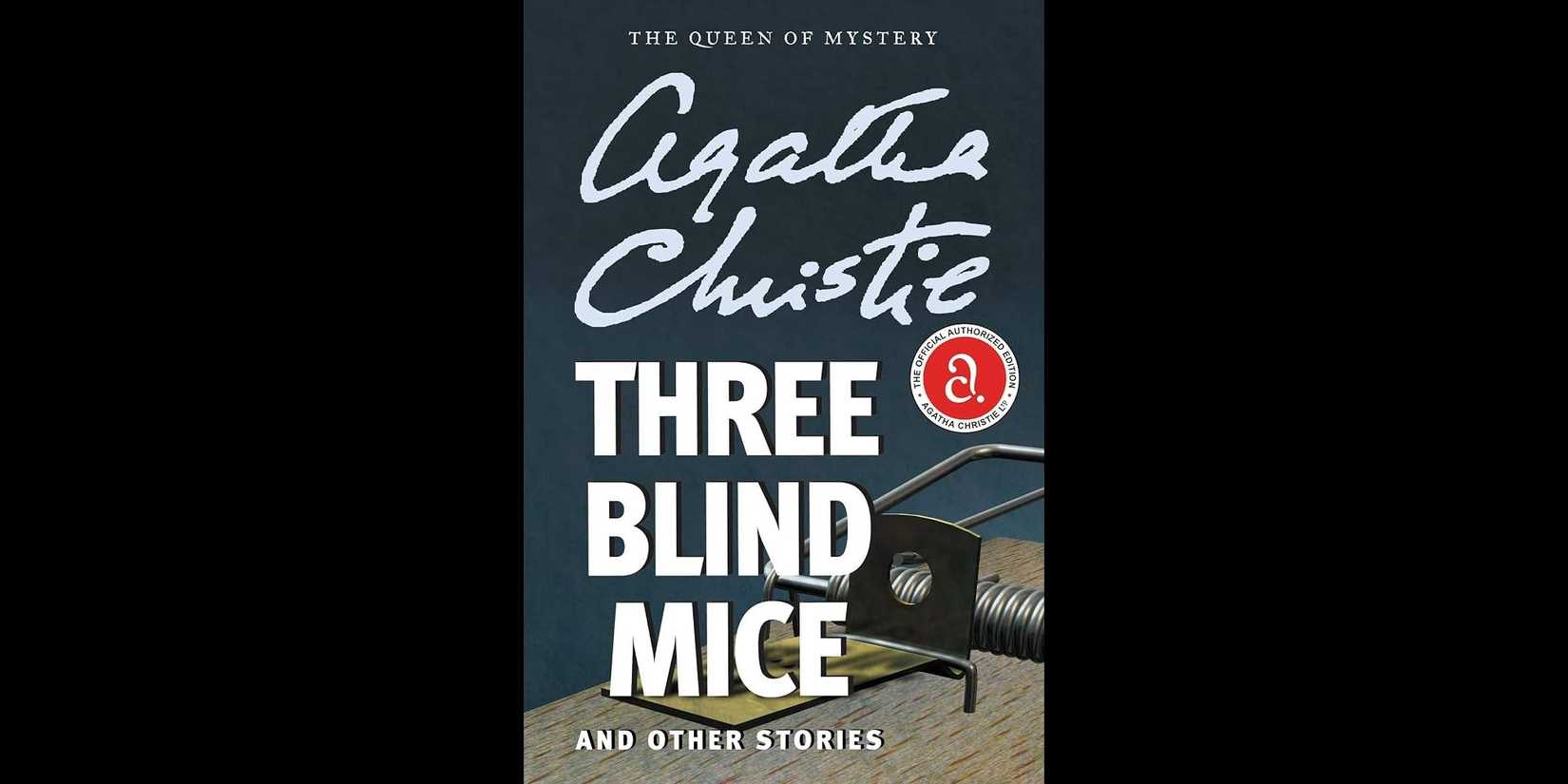
The Mousetrap still holds the record for the longest-running play in the world. The production, which first opened in 1952, is the same that can be seen today in London's West End. It is based on a radio play written by Agatha Christie as a birthday present for Queen Mary, titled Three Blind Mice. Christie then expanded the plot into a short story, but she requested that it not be published until the play had closed. Since The Mousetrap is still running, this has not happened yet in the UK, although the story has been published in the U.S.
Both The Mousetrap and Three Blind Mice are based on the same case, the tragic death of 12-year-old Dennis O'Neill in 1945. Little Dennis and his younger brother, Terence (Terry) O'Neill, aged 9, were placed in foster care and sent to live with Reginald and Esther Gough on a remote English farm. Under their care, the children were beaten and barely fed. Less than a year later, Dennis died after being struck on the chest and beaten. The couple was charged with manslaughter and neglect in a grueling case made worse when young Terry was asked to act as a witness in the couple's trial. Terry's testimony angered the whole country and helped bring about the Children Act of 1948. The case became a clear inspiration for Agatha Christie's story, in which three fictional foster care children are sent to live in Longridge Farm, where one of them dies. Years later, one of their siblings takes revenge.
Collider Exclusive · 8 Questions · 2 Minutes Which Agatha Christie Character Are You? Poirot · Marple · Ariadne Oliver · Hastings
Answer eight quick questions and we will tell you which one you are. Christie is the best selling novelist in history and she only ever needed about four kinds of person to do it, all of whom are still turning up on screen a century later.
🥚Poirot(33 novels)
🧶Miss Marple(12 novels)
🍎Ariadne Oliver(8 novels)
🎖Hastings(8 novels)
01
How tidy is your home? Pick the one that sounds most like you.
02
How would your friends describe you? Be honest.
03
How do you work out what somebody is really like? One answer only.
04
Pick a snack. No wrong answers here.
05
How do you handle a long train journey? Pick the closest answer.
06
How do you feel about being underestimated? Pick the closest answer.
07
What is your role in a group project? Think about work.
08
How would you want to be described in a book? Last one. This is the one that decides it.
The Drawing Room, After Dinner You Are…
Toni Collette and Kit Harington are shooting a new Miss Marple and 20th Century has several more Christies in development, so the drawing room is busier than it has been in decades. Here is which of them you are, and the case for yours being the best.
Hercule Poirot
Order, method, and a quiet confidence that you are the cleverest person present. Poirot is a retired Belgian police officer who solves murders by sitting still and thinking, and who is vain enough to make the reveal a performance every single time.
- You need things to be in their right place and you are not remotely sorry about it.
- David Suchet played him for twenty four years and filmed every single Poirot story Christie wrote.
- Kenneth Branagh has made three as director and star, from Orient Express in 2017 to A Haunting in Venice.
- Your flaw is that the performance of being right can get in the way of simply being helpful.
Miss Marple
People tell you things because they cannot imagine you being a threat. Marple solves murders by comparing everybody to somebody she once knew in St Mary Mead, which sounds like a joke until you notice it works every time, because human beings are not as original as they think.
- You are the quietest person in the room and you leave knowing the most.
- Joan Hickson is still the definitive television Marple, and Christie herself wrote to her hoping she would one day play the part.
- Toni Collette and Kit Harington are making a new Marple film, announced this summer.
- Your risk is that people only work out how formidable you are once it is far too late.
Ariadne Oliver
You have far too many ideas and roughly a fifth of them are excellent. Ariadne Oliver is a successful crime novelist who is sick of her famous foreign detective and keeps saying so, which is Christie writing about Christie and getting away with it completely.
- You think out loud, change your mind twice, and arrive somewhere nobody else would have found.
- She was Christie's own stand-in, right down to being tired of the detective who made her rich.
- Tina Fey played her opposite Branagh in A Haunting in Venice and gave her the comic timing the part always wanted.
- Your flaw is that fourteen ideas take as long to sort through as they do to have.
Captain Hastings
You are steady, decent and the reason the difficult genius has anybody at all. Hastings narrates the early Poirot novels, misses most of the clues, and is the only character in the books that Poirot is unambiguously fond of, which tells you what he is really for.
- You are the one who turns up, which sounds small and is not.
- Christie gave him the narrator role so readers would have somebody to be as lost as they were.
- Hugh Fraser played him across the ITV series and made him warm rather than slow, which earlier versions never managed.
- Your weakness is taking people at their word, which is lovely right up until it is not.
'The Murder on the Links' (1923)

The second Poirot story Agatha Christie wrote takes the detective to France. When he and Captain Hastings arrive, they are met with the news that the man they came to see, Paul Renauld, has died. His widow, Eloise Renauld, claims a group of masked men broke into her villa in the middle of the night, tied her up to the bed, and dragged her husband to the golf course, where they stabbed him to death. The investigation takes a turn when a second body is discovered, killed in a nearly identical way.
The setup of Murder on the Links follows that of one of France's most notorious murder trials. In May 1908, Marguerite Steinheil was found gagged and bound to a bed. Like Mrs. Renauld, Marguerite claimed she was attacked by intruders who killed her mother and husband, the painter Adolphe Steinheil. Marguerite was already infamous in Paris. Years before, she had been the mistress of French President Félix Faure, who had died in her arms after suffering a stroke. Marguerite tried to frame several people for the murder of her family members, but she was found out. It was widely believed that she herself had staged the intrusion to murder her husband. With no proof to back the accusation, a French jury acquitted Marguerite Stenheil in 1909 after an extremely sensationalistic trial.
'The Pale Horse' (1961)

Just as with a good murder-mystery, a list can take a turn. In this case, it is worth highlighting The Pale Horse as the only Agatha Christie book that inspired a crime, helped solve another, and saved several lives. In the novel, Mrs Davis gives her last confession to Father Gorman along with a list of names. Shortly after, the priest is murdered, and the people on the list begin dying from what seem to be natural causes.
At the heart of this book is a poison. It is made from an odorless heavy metal called thallium, which, if ingested in small doses, can cause symptoms such as hair loss and gastrointestinal distress that doctors routinely misdiagnose. The poison is said to have inspired Graham Young, known as "The Teacup Poisoner". In 1972, Young was accused of lacing his coworkers' tea and coffee with thallium and antimony, killing two colleagues. Some accounts say Young was caught thanks to a doctor who had read Agatha Christie's novel and became suspicious. Thallium was also the method used by George Trepal to poison his neighbors, the Carr family, killing Peggy Carr. An undercover detective who had been in Trepal's home recalled seeing a copy of The Pale Horse.
Agatha Christie's book also saved lives. In 1975, more than a decade after the novel was published, Christie received a letter from a reader in South America who had noticed a friend suffering from unexplained hair loss and pain. The reader remembered the plot of The Pale Horse and alerted the woman's physicians, who confirmed she had suffered thallium poisoning. Two years later, a one-year-old Qatari girl was flown to London. She was in a coma caused by an illness no doctors could diagnose. It was Marsha Maitland, a nurse in the hospital who had been reading The Pale Horse, who suggested thallium poisoning. The test came back positive, allowing doctors to find the treatment that saved the toddler's life.
'Murder on the Orient Express' (1934)

One child was kidnapped. Six people died as a direct consequence. This is the tragic arc at the heart of what is perhaps Agatha Christie's most famous novel, Murder on the Orient Express. In the book, Hercule Poirot is tasked with investigating the murder of American businessman Samuel Ratchett aboard the luxurious Orient Express. All the suspects in the murder are staying inside the same train, trapped in Yugoslavia in the middle of a snowstorm. Poirot soon finds that the murder is connected to an older tragedy: the kidnapping and murder of little Daisy Armstrong. The conclusion to the story is what makes it so compelling. It is tragic and simply brilliant.
In the book, Agatha Christie aims to give a sense of justice to a real-life tragic crime. In 1932, 20-month-old Charles Lindbergh Jr, was taken from his crib in his New Jersey home. He was the son of the most famous aviator in the world, whose name he shared. The authors of the crime requested a $50,000 ransom. The parents paid. Soon after, the baby's body was found in the woods near the house. Weeks later, a young maid, Violet Sharpe, killed herself after being questioned by the police as a suspect. The crime was so famous it led to the passing of the Federal Kidnapping Act (the "Little Lindbergh Law"). Agatha Christie's fictional Armstrong case reproduces the Lindbergh case almost point for point. Except, of course, real crimes are rarely clear-cut. In 1934, a carpenter named Bruno Richard Hauptmann was arrested for the crime. Hauptmann was executed in 1936, although his guilt continues to be called into question even today.

Murder on the Orient Express
- Release Date
- November 10, 2017
- Runtime
- 114 minutes
- Director
- Kenneth Branagh
- Writers
- Michael Green, Agatha Christie
-

Hercule Poirot
-

Tom Bateman
Bouc
- Producers
- Judy Hofflund, Mark Gordon, Michael Schaefer, Ridley Scott, Simon Kinberg, Aditya Sood
- Main Genre
- Mystery
- Budget
- $55 million
- Studio(s)
- 20th Century
- Distributor(s)
- 20th Century
- Executive Producer(s)
- James Prichard, Matthew Jenkins
KioskNews shows a cleaned-up reading view extracted from the publisher’s page — the original always lives on their site, not ours.