China launches direct shipping route to Mekong Delta's largest city via new river-to-sea canal
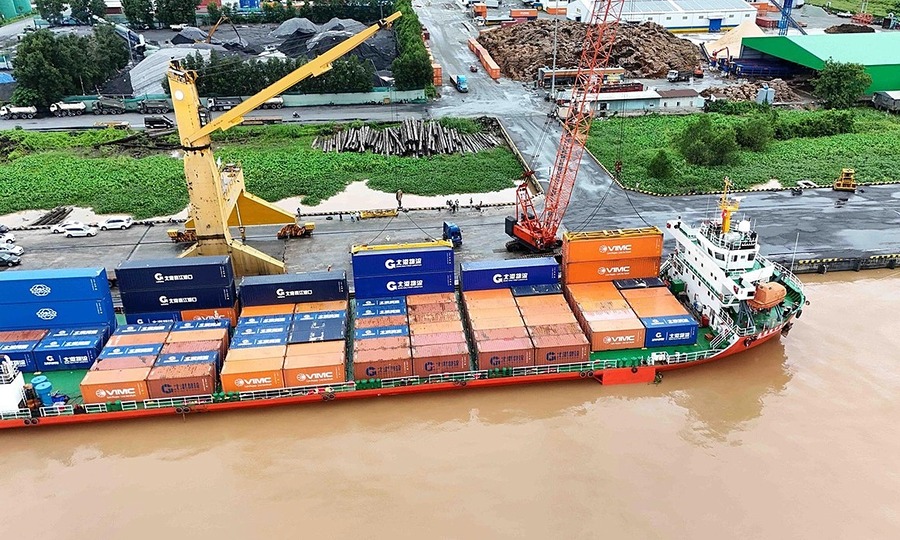
A new container shipping route connecting Nanning Port in China's Guangxi Province to Cai Cui Port in Can Tho, the largest city in Vietnam's Mekong Delta, via the newly opened Pinglu Canal has begun operations.
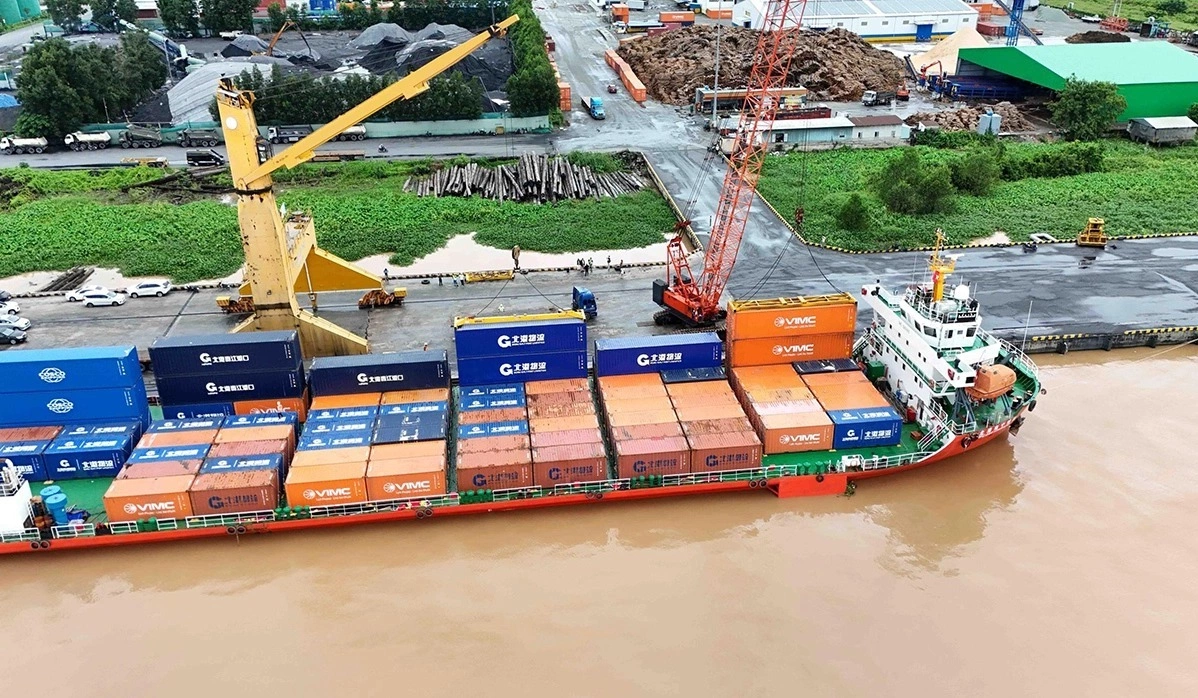
Can Tho Port JSC, Vietnam National Shipping Lines, and China's Beibu Gulf Port Group held a ceremony on Sept. 24 to welcome the route's first vessel to the Mekong Delta.
The vessel, the BBG Nan Ninh Bo Run, boasts a deadweight of 4,900 tons and a carrying capacity of 500 containers.
The route will operate two trips per month with an average voyage time of about seven days, and up to 25% of each ship's capacity can be dedicated to refrigerated containers.
 |
|
The first container ship from Nanning Port in China’s Guangxi Province arrives at Cai Cui Port in Can Tho City on Sept. 24, 2026. Photo by Trung Pham |
The new trajectory links Nanning Port through the Pinglu Canal, which opened to navigation just last week, to Beibu Gulf Port before continuing directly to Cai Cui Port.
Compared to the traditional maritime route requiring vessels to travel via the Pearl River, the new inland waterway shortcut reduces the journey by more than 560 kilometers.
This reduction cuts overall transportation time by seven to 10 days and slashes total logistics costs by 18% to 30%.
The route facilitates two-way trade, streamlining the export of agricultural products and seafood from Vietnam’s Mekong Delta to China.
In return, it speeds up the import of machinery parts and chemicals from southwestern China into Vietnam.
Le Cong Ly, standing vice chairman of the Can Tho People’s Committee, said the route establishes a regular, direct connection between two major production hubs.
"The Mekong Delta has strengths in rice, seafood, and fruit, while Guangxi and southwestern China have large consumer markets and diverse distribution networks," he said.
He noted that the new shipping service provides regional businesses with an excellent alternative for imports and exports, offering more competitive costs and shorter transit times.
Can Tho officials stressed that while launching the route is a major milestone, it is only the first step.
To maintain long-term success, operators and partners must secure stable two-way cargo volumes, provide seamless end-to-end services, and continuously improve the route based on operational feedback.
The 134-km (83-mile) Pinglu Canal is a major link in the New International Land-Sea Trade Corridor, connecting western China with Southeast Asia and international markets, according to Viory.
The network now links 166 stations across 18 provincial-level regions in China with nearly 600 ports in more than 120 countries and regions. By Sept. 10, trains on the corridor had carried about six million TEUs cumulatively, across more than 1,100 categories of goods.
Vessels crossing the newly opened 134.2-km canal, with aerial views of the waterway stretching south from Hengzhou to the Beibu Gulf in China. Other shots show freight trains, container terminals, industrial facilities and vessels operating across the wider trade corridor. Video by Viory
KioskNews shows a cleaned-up reading view extracted from the publisher’s page — the original always lives on their site, not ours.