Commentary: Troubled AirAsia needs some government indulgence, not a blank cheque
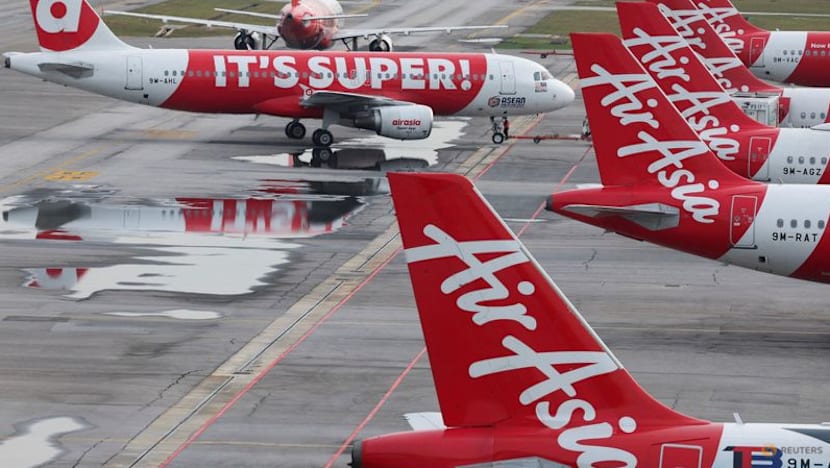
Malaysia has repeatedly used public funds and government-backed financing to support troubled corporations. AirAsia's financial woes offer an opportunity for a fresh template, writes CNA’s Leslie Lopez.
New: You can now listen to articles.

This audio is generated by an AI tool.

22 Oct 2026 06:00AM
KUALA LUMPUR: Few countries bail out so-called national corporate champions with Malaysia’s consistency.
Since the 1980s, the Malaysian government has repeatedly intervened to support major domestic corporations facing financial distress, often citing their strategic importance to the national economy. These interventions have come at substantial public cost, with mixed results.
The now defunct Bank Bumiputra Malaysia Bhd, national carmaker Proton and national air carrier Malaysia Airlines (MAS) have in the last four decades absorbed billions of dollars in public bailouts.
The results speak for themselves.
Bank Bumiputra suffered a series of devastating crises beginning in 1983 before being finally absorbed into what is now called CIMB Group in 1999. Over a 15-year period, the bank received several rounds of state bailouts, with the interventions estimated to have cost about RM11 billion (US$2.7 billion).
Proton remained for years as a state-sponsored project, protected by tariffs and direct financial injection before a 49.9 per cent stake in the company was acquired by China’s Geely.
MAS has been bailed out several times as well. There was a 2002 bailout by the government, a RM6 billion delisting and rationalisation in 2014, with a subsequent reboot as Malaysia Airlines Bhd.
But Malaysia’s proclivity for rushing to the rescue of troubled firms is running into a structural wall because of the country’s rising debt burden, which includes direct federal government debt that stands at RM1.38 trillion and off-budget debt or guarantees for infrastructure operating companies at about RM195 billion.
This is not to mention the roughly RM42 billion the state has already spent to settle debts arising from the 1Malaysia Development Bhd (1MDB) fiasco. There have also been other financial missteps, such as the troubles in state-owned Tabung Haji, the Muslim pilgrims’ fund.
The era of blank-cheque bailouts is over because the fiscal arithmetic no longer works.
AIRASIA COULD BE THAT BREAK
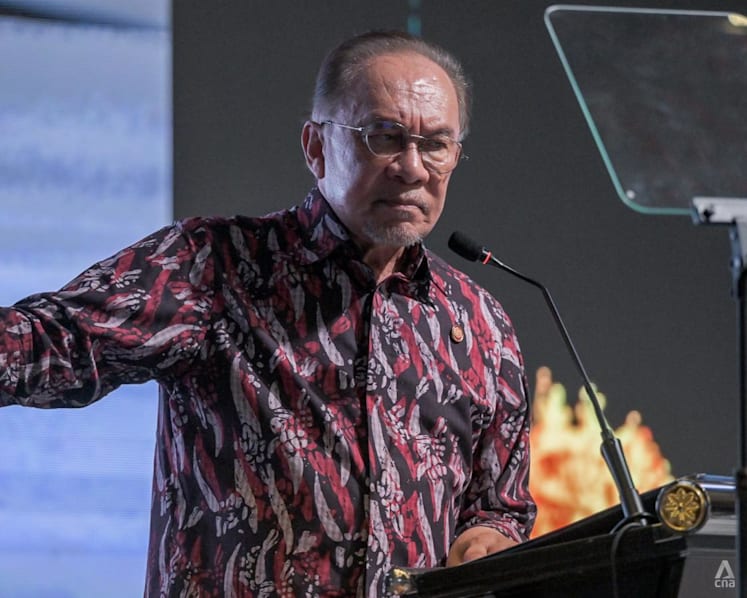
So how does the Anwar Ibrahim government deal with the financial crisis rocking budget carrier AirAsia?
Amid media reports that AirAsia’s emergency fund-raising efforts are being backed by Prime Minister Anwar Ibrahim’s administration, the Ministry of Finance clarified on Monday (Oct 20) that the government has not made any commitment to provide financial support to the airline.
In a statement in parliament, the ministry said that any request from companies in any sector would be assessed based on national and public interests, fiscal sustainability and the protection of public funds.
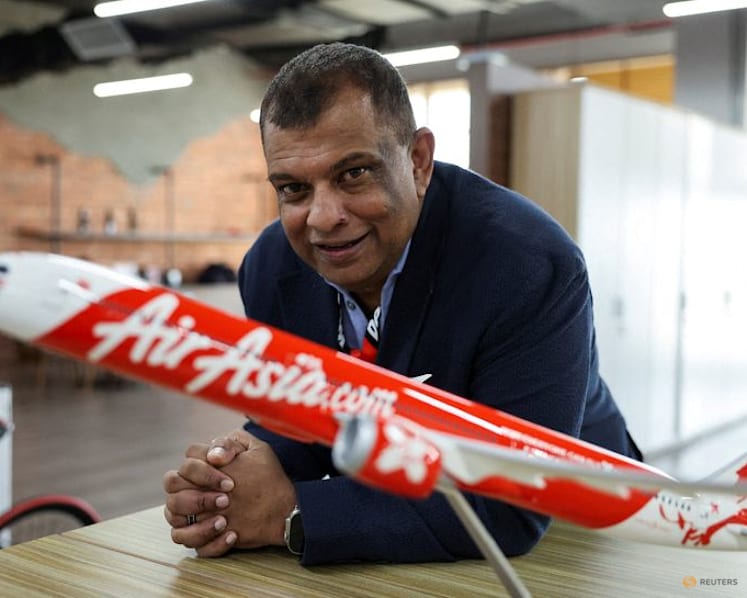
To be sure, AirAsia’s co-founder and major shareholder Tony Fernandes has dismissed any suggestions of a government bailout.
Even stockbroking houses have maintained buy recommendations on AirAsia shares because the losses are largely due to the surge in jet fuel prices arising from the conflict in the Middle East. Hong Leong Investment Bank has suggested that the stock is an attractive recovery trade for investors because of the geopolitical de-escalation with the airline, so far, responding with the right countermeasures: raising fares, cutting capacity and removing unprofitable routes.
But the AirAsia financial jam offers Malaysia a unique opportunity to break away from the financially corrosive template of bailouts.
The case for intervention in the AirAsia crisis is persuasive.
It is no ordinary airline. It represents a backbone of connectivity in Malaysia and the region. A collapse would hurt tourism receipts and leave a hole no competitor can quickly refill. The Anwar government acknowledges the knock-on effects AirAsia’s troubles could have on the tourism sector.
By adopting a benevolent approach to the problems facing the airline, the Anwar government could show responsible management of a hugely important sector of the economy.
AirAsia has been hit by a sharp rise in jet fuel prices amid the conflict in the Middle East, alongside foreign-exchange losses and operational pressures in several markets.
It is not a broken airline but it is hobbled financially.
AirAsia, which carries an estimated 60 per cent of Malaysia’s domestic passengers, posted a net loss of RM830.5 million in a single quarter. It is saddled with current liabilities of RM18.4 billion - obligations that are due or expected within a year - and holds just about RM954 million in cash and bank balances.
Its equity is also thin at RM483 million and unless the state provides some sort of insurance, AirAsia’s campaign to secure new funding to refinance its debt-load is likely to be protracted.
Kuala Lumpur has written a similar policy before.
In 2021, a government-linked financial guarantee insurer known as Danajamin Nasional arranged a RM500 million facility for AirAsia that was priced on commercial terms and largely served as what bankers described as a “backstop” to help manage its cash flow and liquidity woes during the pandemic recovery phase. AirAsia did not take it up due to objections to some conditions attached to it.
Bankers tracking the AirAsia financial crisis say the options before the Anwar government include guaranteeing a slice of the refinancing on commercial terms, a move that would give potential lenders confidence to participate in the airline’s financial restructuring.
The government could also impose other conditions, such as only providing assistance with shareholders agreeing to withhold dividends and bonuses as long as the guarantees are in place.
Done this way, Malaysia would still be protecting its skies without the risk of repeating past mistakes.
KioskNews shows a cleaned-up reading view extracted from the publisher’s page — the original always lives on their site, not ours.