Trump touts US$200 billion South Korean energy deal ahead of US midterms
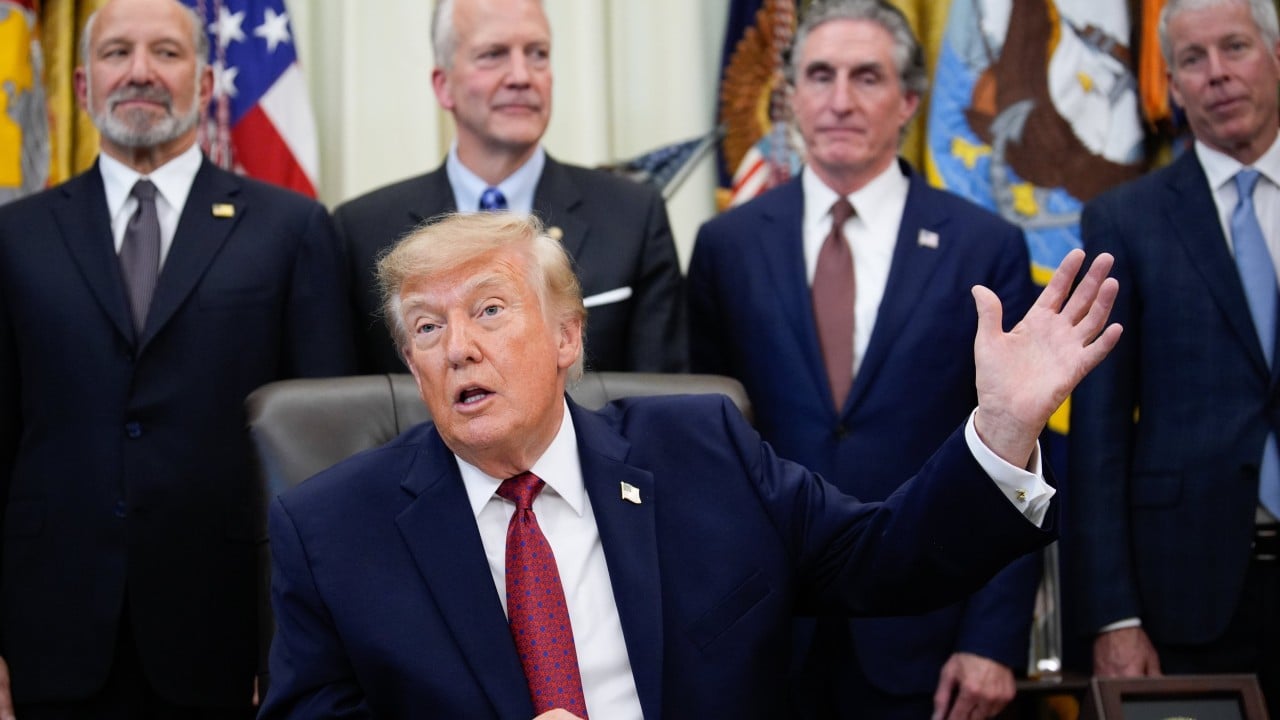
US President Donald Trump has announced US$200 billion in energy investments from South Korea, including US$54 billion towards a long-discussed liquefied natural gas project in Alaska and more than US$100 billion in planned longer-term nuclear power investments.
Besides the Alaska LNG project and pipeline and the nuclear plants, the Trump administration announced a US$22.3 billion natural gas-fired power project in Texas that would be supported by Seoul.
“The colossal package of investments we are announcing today is a major step towards securing our critical energy supply chain, ensuring American energy dominance and making our partnership with South Korea and the entire Pacific region stronger than ever before,” Trump said during a White House event on Wednesday, joined by energy industry executives.
South Korea had agreed to invest US$350 billion in the United States and boost its purchases of US energy as part of a July 2025 trade deal with Trump that set 15 per cent tariffs on South Korean goods imported into the United States.
The announcements come amid deep voter dissatisfaction with the cost of living and Trump’s stewardship of the US economy, putting his fellow Republicans in danger of losing control of Congress in the November midterm elections. Trump in recent days has sought to tout investments in states with vulnerable Republicans, seeking to bolster his party’s election hopes.
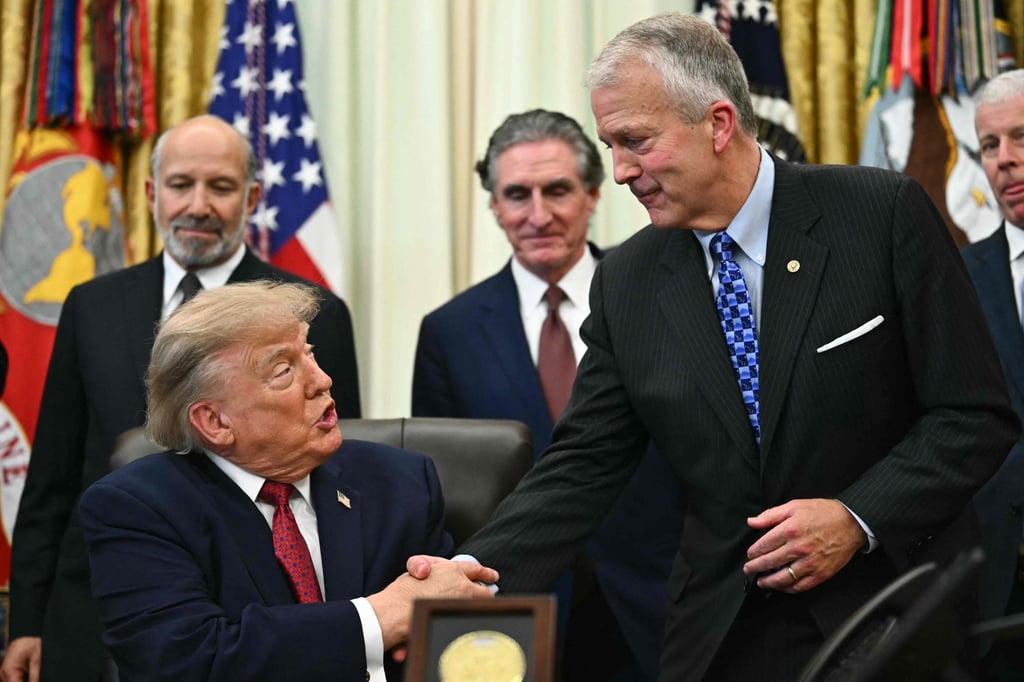
The president was joined by Senator Dan Sullivan, an Alaska Republican locked in a tight re-election contest with former Democratic representative Mary Peltola. Trump hailed Sullivan as an ardent champion of Alaska LNG, saying the venture would be “one of the largest energy projects in American history and a gigantic win for the people of Alaska”.
“You know, I won Alaska by a lot, many, many points,” Trump said. “So we shouldn’t have a problem. But one of the reasons I won is we’ve done more for Alaska than anybody in history times 10.”
Asian interest
The Alaska project, championed by industrial project developer Glenfarne Group, envisions the construction of a 1,300km (800-mile) pipeline to transport natural gas from the Alaska North Slope to a liquefaction facility near Anchorage to prepare for export to Asia.
Alaska officials have considered such a project in the past, but have not moved ahead due to questions about project costs and consumer demand for the LNG.
While Alaska has decades of history as a petroleum producer, environmental concerns have historically constrained some developments. But the Trump administration has largely brushed aside environmental concerns, cancelling regulations to reduce emissions that cause global warming while pursuing an “energy dominance” agenda that favours fossil fuel development.
Trump has repeatedly touted the planned venture, and his administration has sought to lure foreign capital – and contracts – to back it. It is also benefiting from renewed interest from Asian buyers looking to further diversify their energy supplies as conflict in the Middle East curbs roughly a fifth of the world’s LNG production and flows.
The US is already the world’s largest LNG exporter, and it is set to double its capacity through the next decade with massive projects under construction and slated to expand.
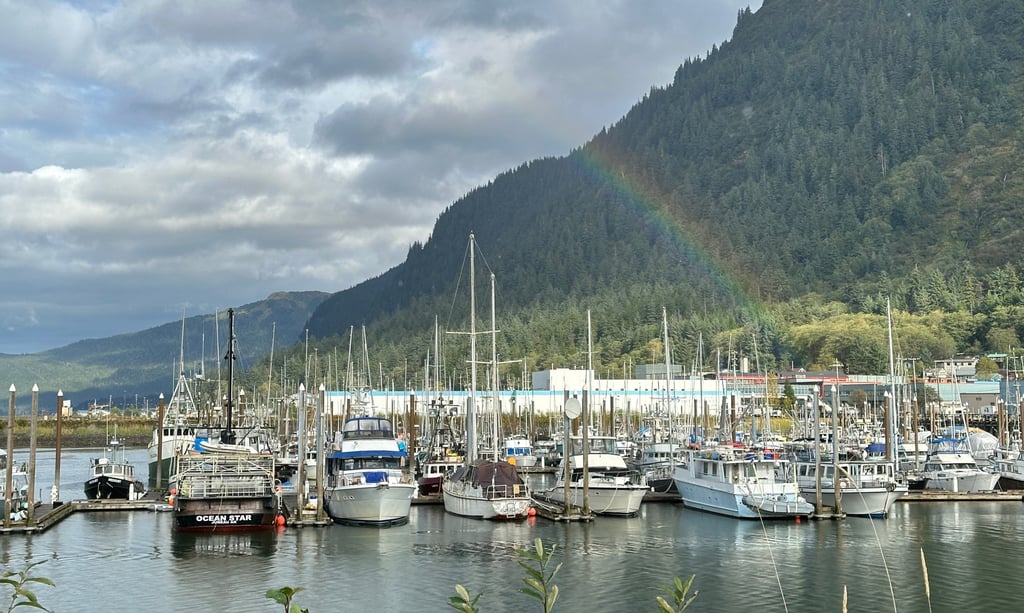
While Alaska LNG is closer to potential Asian markets than US Gulf coast rivals, it would join “an already saturated field of new LNG projects”, said Ira Joseph, senior research associate at the Centre on Global Energy Policy at Columbia University.
The natural gas power facility in Texas will provide 6,472MW of energy to data centres located at the same site in the town of Encinal, a US Commerce Department statement said. The facility is expected to come fully online by 2032.
The investment deal’s nuclear power component sets aside US$120 billion under “a broad agreement to reach a finalisation for investment projects in the US nuclear power sector”, according to the Commerce Department.
That figure includes US$100 billion for construction costs and US$20 billion in contingency reserves. The department said that US$10 billion would be made available by the end of the year for the projects.
Trump’s industrial ramp-up envisioned for his widespread energy projects faces a potential labour shortfall, according to experts.
The United States needs to fill an estimated 1.7 million skilled trade openings through 2035, according to a report released on Wednesday by the Alliance for America’s Skilled Trades, an organisation made up of Ford, Blackstone, Nvidia and other large companies.
The report found the current training programme produced just 55 workers for every 100 needed.
KioskNews shows a cleaned-up reading view extracted from the publisher’s page — the original always lives on their site, not ours.