6 Best Classic Books of All Time, According to Goodreads

Sign in to your Collider account
Every reader has a pile of classics they keep meaning to get to. These are the books that show up on every must-read list, and let’s be honest, all the hype makes picking them up feel a little intimidating. Part of the problem is that many people first meet them as school assignments, where they are the means to a rushed report rather than stories to actually appreciate and enjoy. In fact, it is almost easy to forget that these books became classics because readers simply couldn’t put them down.
That’s where Goodreads comes in. Its ratings come from millions of everyday readers instead of critics or professors, so a classic only scores highly if people genuinely love reading it today. The books at the top of that list prove that great storytelling doesn’t age. Here are six of the best classic books of all time, according to the platform.
6 ‘The Brothers Karamazov’ (1880)

The Brothers Karamazov is Fyodor Dostoevsky’s last novel and widely considered his greatest masterpiece. The story centers on the Karamazov family and its selfish patriarch, Fyodor Pavlovich, who neglected his sons for most of their lives. Dmitri is passionate and reckless, while Ivan is a brilliant skeptic who has lost his faith in just about everything. Their youngest brother, Alyosha, on the other hand, is a gentle novice at the local monastery who tries to hold the family together. Things take a major turn, though, when Dmitri and his father begin fighting over money and the same woman. That’s when tensions explode, and the old man is soon found murdered.
The Brothers Karamazov begins as a family drama, but underneath its personal narrative, the novel provides commentary on how differently humans see the world. Each brother represents a completely different ideology, and through them, the author raises questions of faith and responsibility. In fact, Ivan’s parable of the Grand Inquisitor is still one of the most debated passages in all of literature. The book is definitely a long, demanding read, but it rewards patience, and everyone who finishes this story can’t help but feel as though they have been changed by it. Over a century later, The Brothers Karamazov remains the gold standard for the philosophical novel.
5 ‘The Count of Monte Cristo’ (1844)

The Count of Monte Cristo is the ultimate revenge story, and Alexandre Dumas makes every one of its 1,000-plus pages count. It’s no wonder that the classic has suddenly taken over BookTok, which has led to a completely new demographic of readers being introduced to it. The story follows young sailor Edmond Dantès, who has a bright future and a fiancée he adores, until a group of jealous rivals frames him for treason on the day of his engagement feast. He is thrown into the island prison of the Château d’If without a trial and spends 14 years there. During that time, a fellow prisoner, the Abbé Faria, gives him an education and reveals the location of a hidden fortune. After a daring escape, Dantès reinvents himself as the wealthy and mysterious Count of Monte Cristo and sets out to destroy the men who ruined his life.
Dumas originally published the novel in installments, and it still reads like the most addictive page-turner imaginable. Nearly every chapter ends on a hook, and watching Dantès set his elaborate traps in motion is addictive. The novel doesn’t just tell a story for pure thrill, though, because the author also examines whether revenge can ever truly heal a wound. By the end, Dantès has to face how much of himself he lost along the way, and that is the real point of the book. The Count of Monte Cristo is a rare classic that feels like pure entertainment and is proof that a great story never goes out of style.
Collider Exclusive · 8 Questions · 2 Minutes Which Iconic Romance Is Your Favorite? Harry & Sally · Love & Basketball · Heated Rivalry · Titanic
Four great love stories, and four completely different ideas of what love actually is. One is a friendship that took twelve years to admit itself. One is two people who refuse to stop competing. One happens entirely behind closed doors. And one lasts five days and never stops mattering. Eight questions decide which one is really yours.
🍂Harry & Sally(1989)
🏀Love & Basketball(2000)
🏒Heated Rivalry(HBO Max)
🚢Titanic(1997)
01
How does your love story start? The first scene tells you what kind of story this is going to be.
02
What do the two of you keep arguing about? Every great romance has one fight it has over and over.
03
How do you show somebody that you love them? Grand gestures are easy to write. This is the harder question.
04
What is actually standing in the way? There is always something. Which something tells you the genre.
05
Which romantic moment gets you every single time? Be honest. There is one that works on you and you know which.
06
What would you actually risk for the right person? Every romance asks this. Most people find out far too late.
07
Where are the two of you in ten years? Some love stories are about the meeting. Some are about the staying.
08
Which of these sounds most like something you would say? Eight questions in, this is the one that decides your romance.
Roll The Credits Your Romance Is…
Four love stories, four completely different ideas of what it means to be somebody's person. This is the one that matches how you actually fall, and what it would ask of you.
Harry & Sally
You do not fall for strangers. You fall for the person you have already been talking to for years, which is the slowest and by some distance the most durable way anybody has found to do this.
- When Harry Met Sally made the case that the best romance is an argument you enjoy, conducted over a decade, by two people refusing to admit what is happening.
- You want to be known rather than swept away. Somebody who remembers your worst story is doing better work than anybody arriving with flowers.
- The film is unusually honest about timing. These two are wrong for each other repeatedly until suddenly they are not, and neither of them engineered it.
- You would still be talking about everything at eighty. That is the entire promise.
Love & Basketball
You want a partner, not an audience. Somebody who wants their own life as badly as you want yours, and who would never ask you to be smaller to make the relationship easier.
- This is the rare romance where both people have a real career and the film takes both of them equally seriously.
- You would rather be pushed than protected. The right person for you is also a bit of a rival, and that never entirely goes away.
- It understands the actual problem in ambitious relationships. Not whether you love each other, but whose turn it is this year.
- You would still be competing at forty. That is how you would know it was working.
Heated Rivalry
The intensity was never the problem. The secrecy is. You are drawn to a love that lives entirely in private, and to the particular ache of wanting somebody you are not supposed to want.
- Heated Rivalry runs on the oldest engine in romance: two people on opposite sides, meeting in secret, getting far more attached than either of them planned.
- You keep your private life genuinely private, and something in you finds hidden things more real than public ones.
- The tension is not only between the two of them. It is between what they have and what it would cost either one to say it out loud.
- Years of this, and the whole story is really about whether either of them will finally stop hiding.
Titanic
You do not do this cautiously. When it happens for you it is immediate and total and it rearranges everything, and you would not accept a smaller version of it.
- Titanic gave us the biggest romance in film history and then made it last about five days, which is precisely the point of it.
- You measure love by intensity rather than duration. A few days of the real thing beats decades of something merely comfortable.
- The film is not only about the romance. It is about a woman who went on to live an enormous life afterwards because of it.
- You would still be telling this story at a hundred years old, and telling it exactly the same way.
4 ‘Pride and Prejudice’ (1813)

Pride and Prejudice is the blueprint for nearly every romantic comedy that followed it. Jane Austen’s brilliant novel follows Elizabeth Bennet, the sharp-witted second of five daughters in a family that desperately needs at least one of them to marry well. When the wealthy but completely aloof Mr. Darcy arrives in the neighborhood, he and Elizabeth clash almost immediately. Her first impression of him as an arrogant snob only grows worse after she hears troubling stories about his past. As misunderstandings pile up, both of them are forced to confront their own flaws in the best of ways.
Austen’s way of writing is what has kept Pride and Prejudice so beloved more than two centuries later. Her dialogue is funny and sharp, and she uses that tone to make fun of the silly social norms of her time without ever making her characters feel frustrating. Elizabeth is easily one of literature’s great heroines — a woman who refuses to marry for anything less than love, even when settling would be far easier. Beneath the romance, the novel is a thoughtful look at how quickly people judge each other and how hard it is to admit being wrong. Pride and Prejudice is the definition of a timeless classic, and it’s just as delightful on the tenth read as it is on the first.
3 ‘To Kill a Mockingbird’ (1960)

To Kill a Mockingbird is one of the most widely read American novels ever written, and for good reason. Harper Lee’s story is set in the small Alabama town of Maycomb during the Great Depression, and it’s told through the eyes of Scout Finch, a curious and outspoken young girl. Her father, Atticus, is a lawyer who agrees to defend Tom Robinson, a Black man falsely accused of assaulting a white woman. The trial completely divides the town, which is how Scout and her brother, Jem, begin to see the prevalent racism that their community hides beneath their niceties. At the same time, the two grow increasingly fascinated by their mysterious neighbor, Boo Radley, whom the whole town fears because of rumors.
To Kill a Mockingbird’s point of view gives the novel its power. Seeing the injustice of the trial through a child’s eyes makes it even more shocking, since Scout hasn’t yet learned to accept the way things are. Atticus stands as a symbol of moral courage, and his belief that people should be understood from their own perspective sits at the heart of the novel. By the end, Boo becomes the key to the novel’s message about seeing the world through someone else’s eyes. The book also has surprising warmth and humor, which keeps it from ever feeling like a lecture. It won the Pulitzer Prize and remains a staple of classrooms around the world. However, To Kill a Mockingbird is far more than required reading.
2 ‘The Lord of the Rings’ (1954–1955)
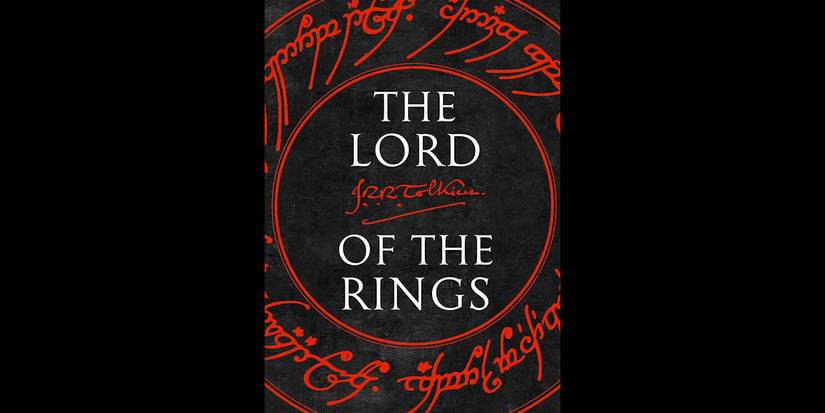
The Lord of the Rings is the book that defined modern fantasy. The story is often split into three volumes, but J.R.R. Tolkien always considered it a single novel. The novel follows Frodo Baggins, a humble hobbit from the Shire who inherits a mysterious ring from his uncle, Bilbo. Now, the Ring belongs to the Dark Lord Sauron and can only be destroyed in the fires of Mount Doom, deep inside his kingdom of Mordor. This leads Frodo on a perilous journey with a fellowship of companions, including the wizard Gandalf and his loyal friend Samwise Gamgee, as war spreads across Middle-earth.
The Lord of the Rings is defined by its world’s sheer depth. Tolkien was a master of storytelling who invented entire languages and centuries of history for Middle-earth, so everything feels like it existed long before the story began. Yet, for all that scale, the emotional core of the novel is surprisingly personal. The Lord of the Rings is about friendship and the courage ordinary people can show in moments of need. The slow pace and long detours might test some readers, especially in the beginning, but the payoff is well worth it. Decades and countless imitators later, The Lord of the Rings is still the standard every fantasy story is measured against. Literature has never seen anything like it.
1 ‘East of Eden’ (1952)

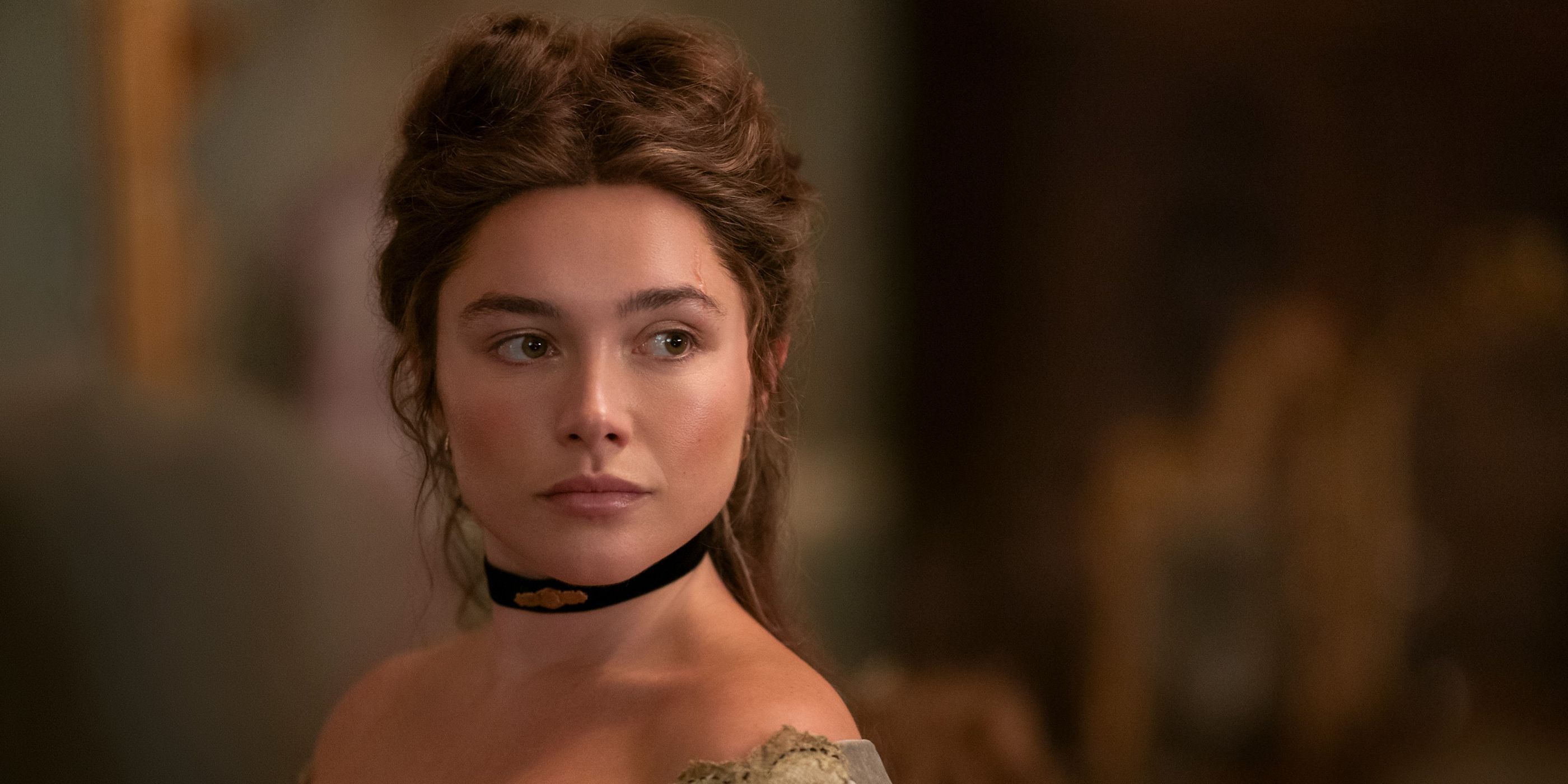
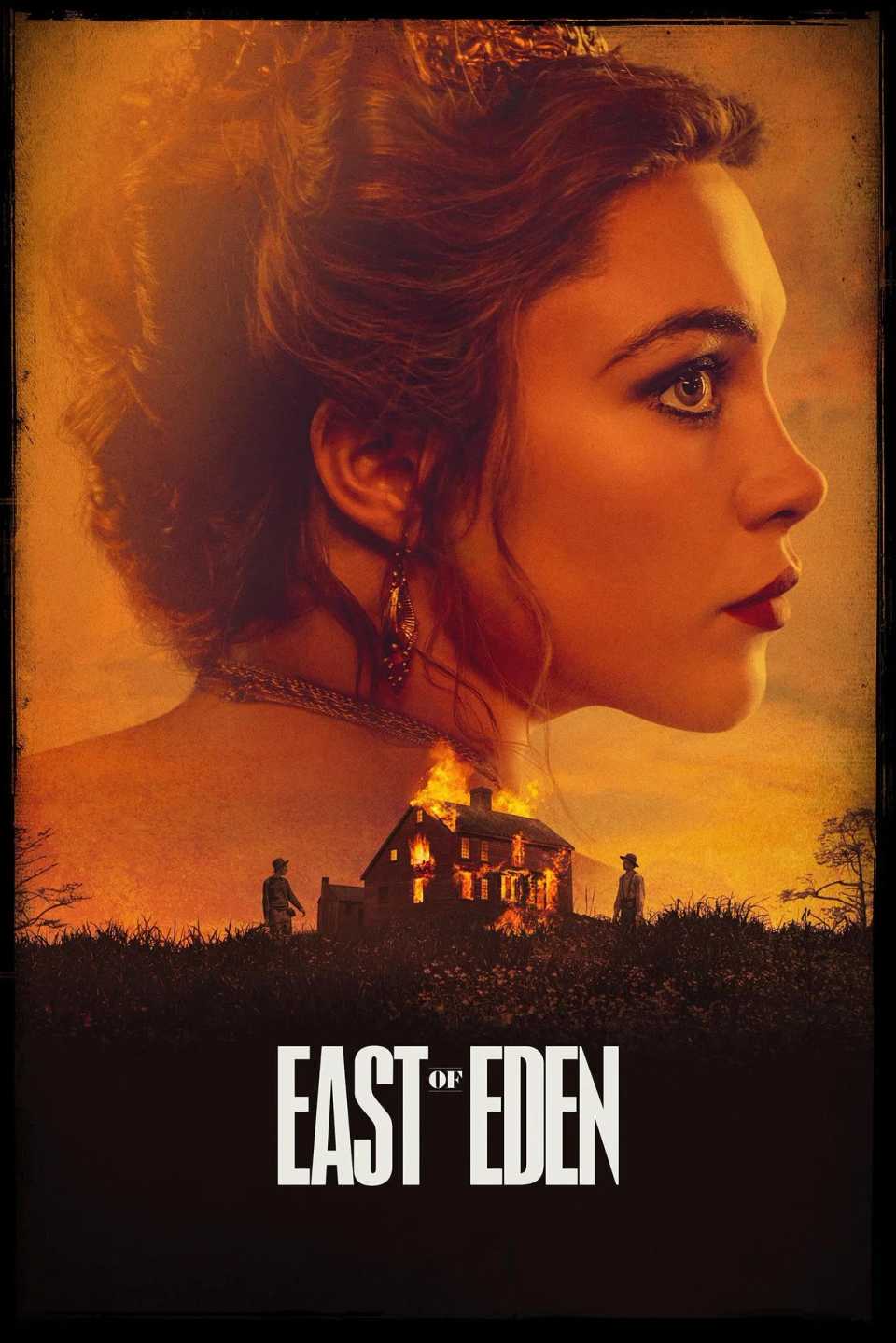
John Steinbeck poured everything he had into East of Eden, and it’s great to see the classic novel making a major comeback thanks to Netflix’s 2026 adaptation. The sprawling novel is set mostly in California’s Salinas Valley and follows two families across generations, from the Civil War to World War I. The story centers on Adam Trask, a gentle man who settles in the valley with his new wife, Cathy, a woman much more dangerous than she appears. Alongside the Trasks, the novel follows the Hamilton family, based on Steinbeck’s own grandparents. Years later, Adam’s twin sons, Cal and Aron, find themselves competing for their father’s love in a story that deliberately mirrors the biblical tale of Cain and Abel.
The narrative of East of Eden is driven by the Hebrew word timshel, which the characters come to understand as “thou mayest.” It is essentially Steinbeck’s way of saying that people are not doomed by their families or their past and that everyone has the power to choose good over evil. That idea gives the novel its enormous emotional weight, especially through Cal, a young man desperate to believe he isn’t destined to become like his mother. Cathy, meanwhile, remains one of the most chilling characters in American fiction, the very counterpoint to timshel. East of Eden is a big, ambitious novel about what it means to be human, and it’s no surprise that readers keep placing it at the very top of the list.
- Release Date
- 2026 - 2026-00-00
- Network
- Netflix
- Directors
- Garth Davis
KioskNews shows a cleaned-up reading view extracted from the publisher’s page — the original always lives on their site, not ours.