SBS Transit to roll out new AI tool in 2027 to tackle uneven bus timings
SINGAPORE – An artificial intelligence co-pilot will soon be deployed by SBS Transit as part of efforts to tackle issues like bus bunching, when two or more buses arrive together instead of at regular intervals.
The AI tool, called FlowOS, is now undergoing trials on bus service 70 and 145. It will undergo trials on seven other bus routes over time before the trial wraps up in March 2027.
It will then be deployed to the entire SBST bus fleet in the second quarter of the year.
The AI tool combines historical data – including any observable patterns across different days and times – with live information, such as the current location of a bus.
If two buses plying the same route get too close to each other, the system alerts a service controller to signal that steps need to be taken, and provides suggestions on what steps can help solve the problem.
The person manning the controls makes the final decision, and can choose to accept the AI tool’s suggestions, reject it or modify it before giving out instructions to bus drivers on the road.
SBS Transit group chief executive Jeffrey Sim said the tool is meant to help its service controllers make better-informed decisions and respond more effectively when there are any issues.
“Keeping buses running at regular intervals is one of the most complex aspects of bus operations, especially when conditions on the road can be dynamic and unpredictable,” he added.
On Sept 24, reporters were given a first-hand look at how FlowOS works during a visit to Seletar Bus Depot in Yio Chu Kang.
Senior service controller Calvin Chan, 45, said he had to manually scan his screen to check if buses were bunching up before the AI tool came along.
Chan, who usually oversees between 60 and 80 buses spread across five different routes, said the tool has been a great help.
Ong Jack Sen, the head of operations control and support for SBS Transit’s bus business, said: “Feedback from service controllers was that it was cognitively challenging to monitor so many buses.”
Chan said the sheer volume of vehicles meant he sometimes missed those that needed him to take action, especially since he also needed to contact the drivers and ask them to slow down or stop for a few minutes.
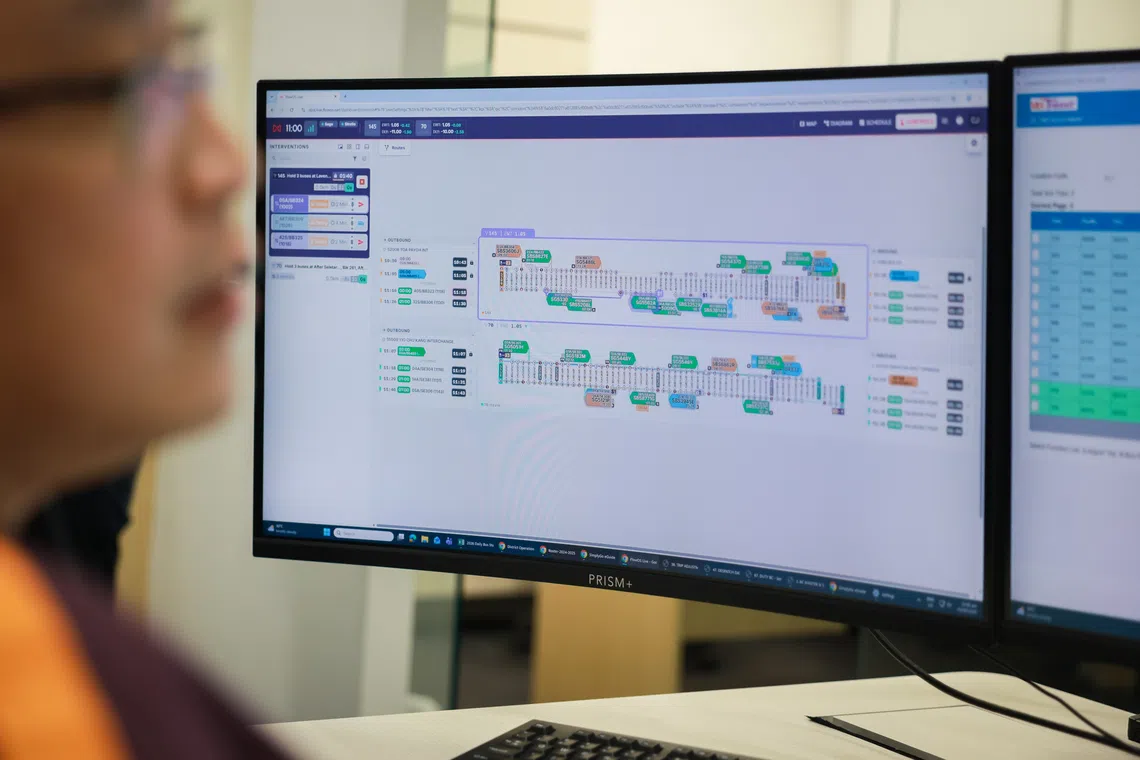
An SBS Transit service controller monitors live bus operations using FlowOS Live at the SBS Transit Operations Control Centre at Seletar Depot on Sept 24.
ST PHOTO: GAVIN FOO
FlowOS, however, automatically identifies buses that need attention, listing them on the extreme left of the screen, and thus removing the need for constant manual monitoring.
It also suggests when buses should be deployed from interchanges.
With 10 years of experience under his belt, Chan said there are times when he chooses to reject the AI tool’s suggestions.
He said: “I use my experience and judgement to decide the best response for the service.
“If the algorithm recommends slowing a bus down by four minutes, I might ask the driver to slow down by two minutes, depending on my instinct.”
Aqil Hamzah is a transport journalist at The Straits Times. He is also interested in issues related to crime and technology.
KioskNews shows a cleaned-up reading view extracted from the publisher’s page — the original always lives on their site, not ours.