Pope Leo praises ‘spiritual bond’ uniting Catholic Church and people of Israel
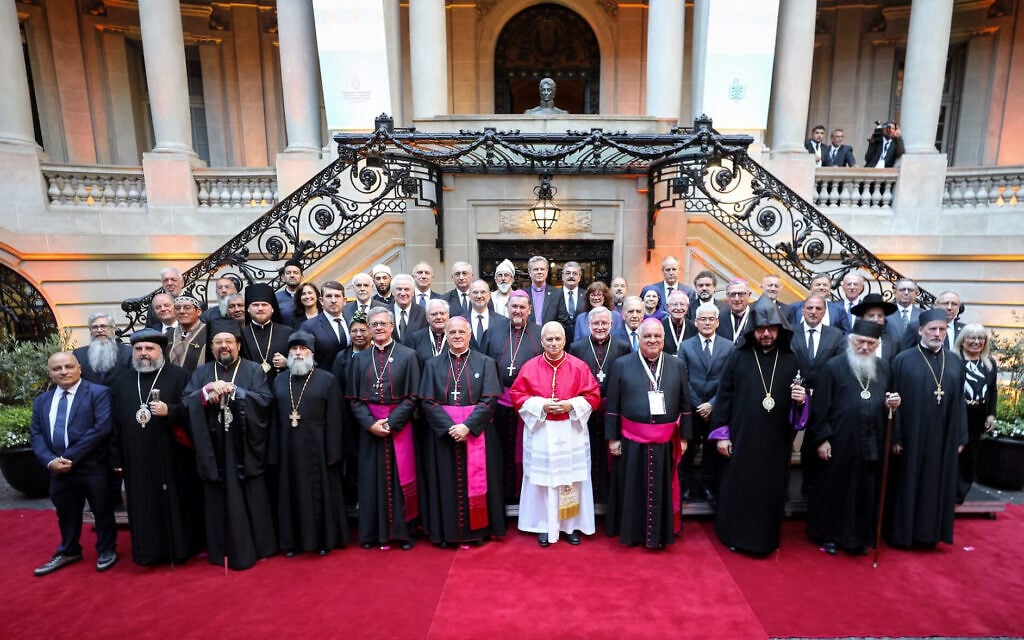
BUENOS AIRES, Argentina (JTA) — Pope Leo XIV reaffirmed the Catholic Church’s spiritual bond with the people of Israel during an interfaith gathering in Buenos Aires, a statement that drew particular attention from Jewish leaders amid growing antisemitism in Europe and elsewhere.
“Following the teachings of the Second Vatican Council, I wish to reaffirm the spiritual bond that unites the Church with the people of Israel,” and “our sincere respect for what is holy and true in the different religious traditions,” the Pope said on Monday during a meeting with representatives of various religious communities at San Martín Palace, Argentina’s foreign ministry headquarters. The Second Vatican Council, from 1962 to 1965, shaped the church’s strategies for dealing with the modern era.
“The statement was a pleasant surprise to us, especially at a time when antisemitism is resurfacing, as it is in Europe,” Isaac Sacca, chief rabbi of the Sephardic Community of Buenos Aires, told the Jewish Telegraphic Agency. “That is very meaningful to our people.
0:00 / 0:00
“Promoted: Theatron Hotel and Residences – Luxury Jerusalem Residences with Five-Star Hotel Amenities.
“The meeting was moving on several levels,” added Sacca, who also is the president of Menora, a Jewish youth organization. “All the different religious communities that coexist in harmony and peace in Argentina came together and showed themselves as they truly are before the pope.”
Addressing around 100 religious leaders, Leo highlighted Argentina’s history of religious and cultural diversity, describing the country as a meeting point of different peoples and traditions.
Get The Times of Israel's Daily Edition by email and never miss our top stories
By signing up, you agree to the terms
“Hearing those words from Pope Leo himself, just a few meters away, was very comforting,” Rabbi Marcelo Polakoff, commissioner for interreligious dialogue of the World Jewish Congress in Latin America, told JTA. “Moreover, his use of language about honoring the People of Israel struck me as significant, since I don’t think that terminology is commonly used in Church documents. It gives his approach an even greater sense of closeness. He is clearly continuing the strong legacy of interreligious dialogue established by Pope Francis, Benedict XVI, and especially John Paul II.”
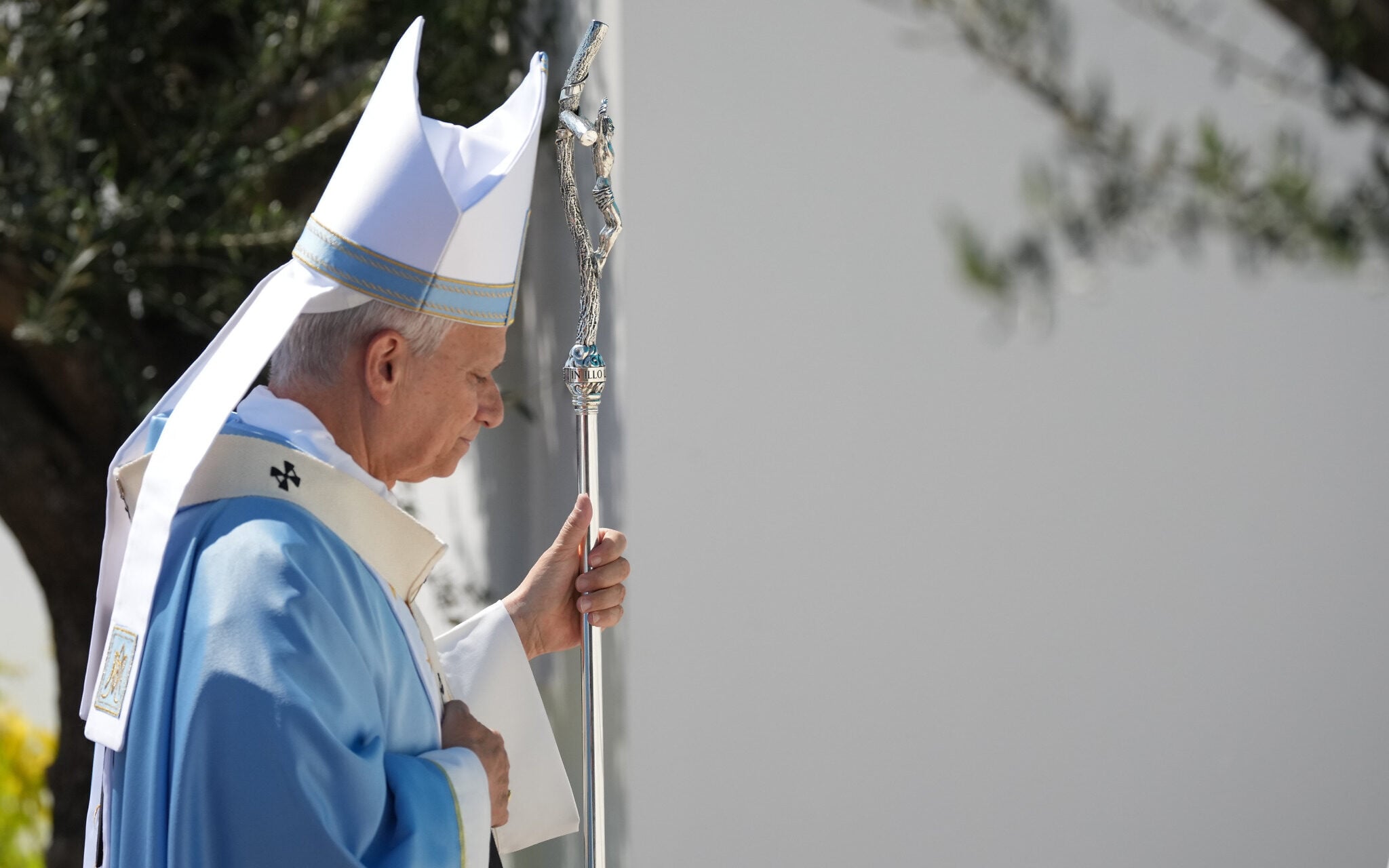
Leo praised Argentina’s tradition of welcoming immigrants. “Argentina’s national identity has taken shape as a melting pot of races, cultures and religions, formed by its Indigenous peoples and the many immigrants from different parts of the world who arrived in this land over the centuries, bringing with them their dreams and their faith,” Leo said.
“At first, they were Catholics, Protestants and Jews, and later many others. Despite their differences, they all learned to work together, to form families and communities, and to build settlements and villages, in an admirable blending of their traditions with local customs,” he added.
Rabbi Ariel Stofenmacher, rector of the Latin American Rabbinical Seminary, drew a connection between Nostra Aetate, the historic 1965 Vatican recalibration of the church’s relations with other religions, and Leo’s speech.
“The pope emphasized the need to strengthen relations with the people of Israel and with Judaism. He revisited the ideas behind Nostra Aetate, particularly the relationship between the Church and Judaism. He also expressed his gratitude for the spirit of brotherhood,” Stofenmacher said.
“I think Pope Leo is showing that he is a leader on a global scale, someone who is not afraid to address difficult issues and who puts social and family issues at the forefront,” added Stofenmacher, who is also rector of the Isaac Abarbanel University Institute.
In addition to religious authorities and leaders of rabbinical institutions, the pope also invited prominent representatives of Argentina’s Jewish community. Among those present were representatives of AMIA, the main Jewish community center in Buenos Aires, and DAIA, the political umbrella organization representing Argentina’s Jewish community.
“The pope emphasized at the meeting that religions are guardians of human integrity — that is, each person’s dignity in its spiritual, social, and communal dimensions,” AMIA chief rabbi Eliahu Hamra said. “We are united in defending that dignity and in upholding the value of every human being.”
The interfaith gathering opened with a live orchestra playing a tango song from iconic composer Astor Piazzolla as religious leaders assembled and waited for the pope. It was a distinctly Argentine musical choice, rather than music associated with any particular religious tradition.
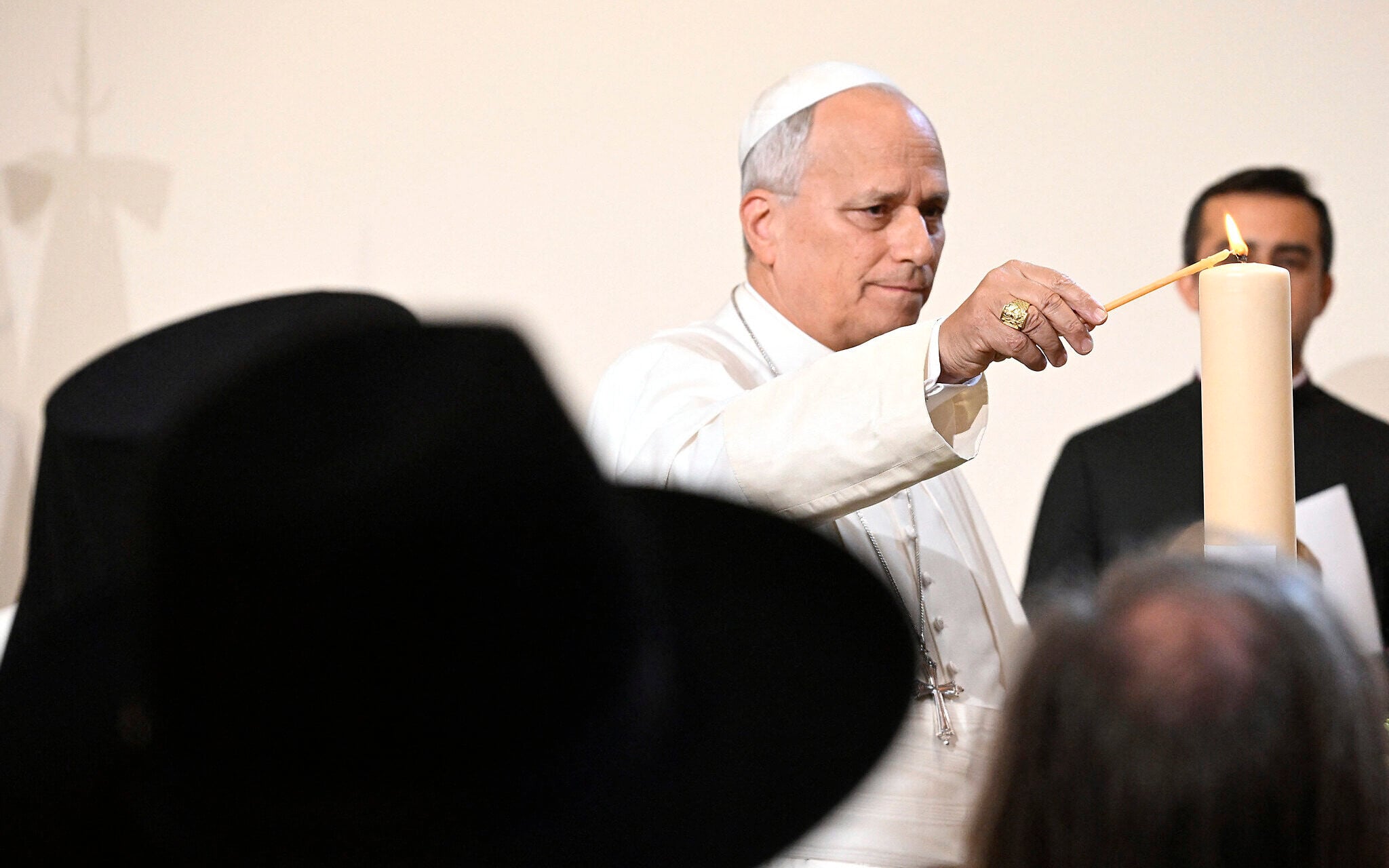
“There was a tango performance at the beginning, so there were no religious elements in the ceremony, precisely out of respect for all faiths, as I understand it. The whole event was a real pleasure, ” Rabbi Sacca told JTA.
“I believe we must remain engaged in this effort,” said Rabbi Polakoff. “At the World Jewish Congress, we presented the document Kishreinu, which was conceived as a Jewish response to Nostra Aetate. That was in November 2022. I believe we must continue working along those lines, and I think we have an exceptional partner in Leo XIV to do so.” The meeting concluded with a minute of silence for world peace and the victims of violence.
Monday’s meeting followed two earlier events in Buenos Aires. Pope Leo XIV first visited a residential care facility for people with disabilities on the outskirts of the city. He then celebrated Mass at Palermo Park, drawing an estimated crowd of more than 2 million people.
The pope’s four-day visit to Argentina began Sunday, Nov. 8, following his visit to Uruguay. It continued Tuesday in Córdoba province, where he celebrated Mass before returning to Buenos Aires. On Wednesday, he plans to visit the city of Luján for another Mass before departing for Lima, Peru, the final stop of his South American tour.
Your next read: ToI Editors' Picks

LIMITED TIME OFFER: Join The Times of Israel Community today and you'll receive a physical book of your choice, carefully curated by our editors.
Choose between two must-reads: When We See You Again by Rachel Goldberg-Polin, a searing portrait of a mother’s grief and strength following unthinkable tragedy;
Or Out of the Sky: Heroism and Rebirth in Nazi Europe by Matti Friedman, the gripping and surprising tale of a forgotten moment during World War II.
As a Community member, you’ll also enjoy our DocuNation series of outstanding Israeli documentary films, an ad-free experience of our site and podcasts, commenting privileges, and more.
CHOOSE YOUR BOOK CHOOSE YOUR BOOK Already a member? Sign in to stop seeing this
KioskNews shows a cleaned-up reading view extracted from the publisher’s page — the original always lives on their site, not ours.