10 Sci-Fi Books About Space That Are 10/10, No Notes

Diego Pineda has been a devout storyteller his whole life. He has self-published a fantasy novel and a book of short stories, and is actively working on publishing his second novel.
A lifelong fan of watching movies and talking about them endlessly, he writes reviews and analyses on his Instagram page dedicated to cinema, and occasionally on his blog. His favorite filmmakers are Andrei Tarkovsky and Charlie Chaplin. He loves modern Mexican cinema and thinks it's tragically underappreciated.
Other interests of Diego's include reading, gaming, roller coasters, writing reviews on his Letterboxd account (username: DPP_reviews), and going down rabbit holes of whatever topic he's interested in at any given point.
Sign in to your Collider account
There are many places where a great sci-fi novel can be set, as well as many subjects it can potentially deal with. Throughout history, many of the genre's best classics have taken place on either a parallel or futuristic version of our own planet, exploring humanity's relationship with things like technology, science, and the environment. However, for every great sci-fi book set on Earth, there's a sci-fi book about space that's a total 10/10.
Whether it's a sweeping classic that perfectly laid the foundations for the space opera genre, such as Foundation; or a book which shows that not all sci-fi books set outside Earth need to be space operas, such as Rendezvous with Rama, history's most perfect sci-fi books about space should all be considered essential reading for anyone who loves stories about humanity traveling through the stars. That sense of wonder and discovery is a big part of why science fiction will forever be one of the most timeless narrative genres out there.
'Rendezvous with Rama' (1973)

Only a handful of authors throughout history have been able to craft a book so incredible that it won the Hugo, Locus, and Nebula Awards. It should come as no surprise that one of those authors is the legendary Arthur C. Clarke, whose Rendezvous with Rama is, indeed, one of the greatest sci-fi novels of its time. It's told from the point of view of a group of human explorers, who detect a massive interstellar object hurtling through the Solar System at incredible speeds.
The "Big Dumb Object" trope, referring to a mysterious object of unknown origin and immense power, is one of the most timeless in the modern history of sci-fi—and though it didn't invent the concept, Rendezvous with Rama certainly re-defined it. It's one of those sci-fi books better than most movie blockbusters being released today, thanks to Clarke's faultless understanding of how to transmit the profoundly terrifying and awe-inspiring nature of the vast cosmos and its mysteries.
'Children of Time' (2015)

Winner of several prestigious awards and almost universally praised as one of the best modern masters of science fiction and fantasy, Adrian Tchaikovsky has delivered several masterpieces over the course of his career, and many would point to Children of Time as the very best. It follows two plot lines: One about a population of jumping spiders evolving into a technologically-advanced civilization thanks to an accelerated nanovirus, and another about the desperate survivors of a dying Earth traveling through space as they search for a new home.
Dual narrative structures are tough to nail quite as masterfully as Tchaikovsky did in Children of Time, one of the greatest space opera books of all time. With Tchaikovsky treating the scientific realism of his world with special care and his nuanced exploration of evolution and the passage of time, the author created one of the most essential space opera books of the 21st century so far.
'Project Hail Mary' (2021)
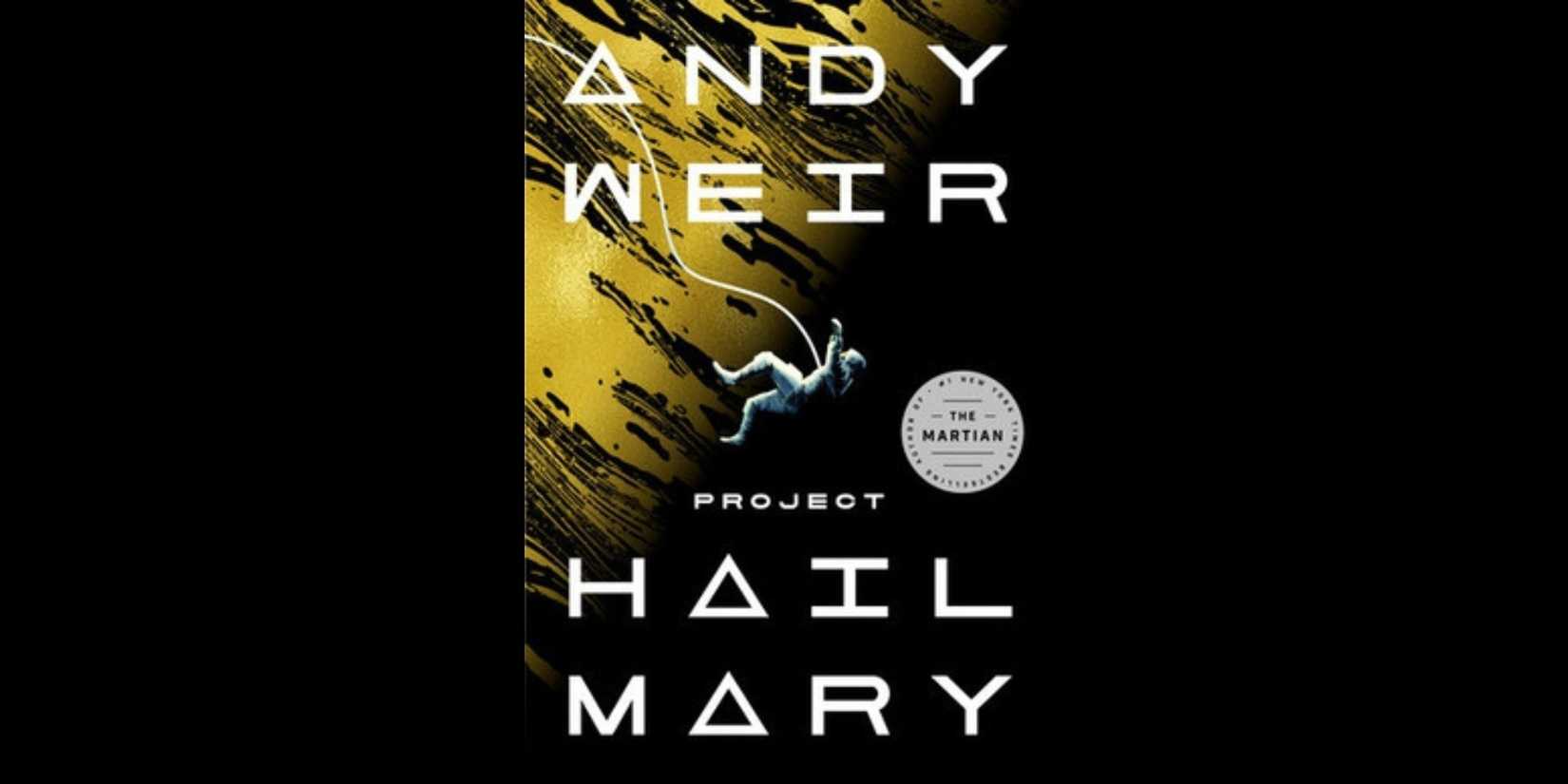
Andy Weir has only written three main published novels so far in his career, but that has been more than enough to establish him as one of the most exciting voices working in the field of hard sci-fi nowadays. His latest also happens to be his magnum opus: Project Hail Mary, about a man who wakes up alone on a spaceship with amnesia, having to save Earth from an extinction-level solar crisis while working to regain his memories.
Thanks to Weir's delectably accessible prose and the arrival of a certain alien character nicknamed Rocky, Project Hail Mary quickly turns into one of the most fun sci-fi books of all time. Its narrative momentum is propulsed by Weir's spotless understanding of everything that makes hard science fiction fans tick, but the hugely entertaining and vivid way in which he describes space also makes this a hugely accessible introduction to hard sci-fi for those unfamiliar.
'The Hitchhiker's Guide to the Galaxy' (1979)
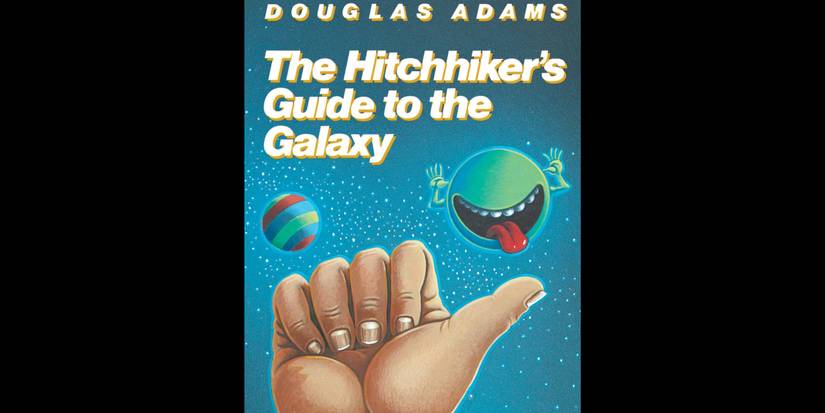
Every science fiction fan loves a great sci-fi epic which understands that the genre deserves to be taken seriously when it wants to; but every now and then, a good sci-fi comedy becomes irresistibly tempting, and when it comes to those, it doesn't get much better than Douglas Adams' The Hitchhiker's Guide to the Galaxy series. The best of the bunch is the first book, about the last surviving Earthling being cast into absurd interstellar adventures.
It's one of the best cult classic books of all time, a hilarious gem adapted from the first four parts of Adams' radio comedy series of the same name. But for a book so delectably and consistently hilarious, it's surprising just how much philosophical depth there is to the way Adams explores the concept of space. His use of absurdist and over-the-top humor really highlights the ridiculous insignificance of human existence, making for a book that's deeply thought-provoking just as often as it is laugh-out-loud funny.
Collider Exclusive · 8 Questions · 2 Minutes Which Star Wars Faction Do You Belong To? Rebels · Empire · Mandalorians · Crimson Dawn
Eight honest questions about how you actually are: how you feel about rules, where your loyalty goes first, what you do when somebody criticises you in front of other people. Answer them and we will tell you whose side you would really have ended up on. Four factions are recruiting: the believers, the organisation, the ones with a code, and the ones with a price.
✊Rebel Alliance(Andor)
🛰️The Empire(Original Trilogy)
🪖Mandalorians(The Mandalorian)
🌅Crimson Dawn(Solo)
01
How do you feel about rules at work? This one sorts people faster than anything else.
02
What is your relationship with money? Nobody answers this the way they think they will.
03
What makes you respect somebody? Whatever you pick, you apply it to yourself too.
04
How do you behave under real pressure? Your friends would probably answer this for you.
05
Where does your loyalty go first? Everybody has an order, even if they never say it out loud.
06
Somebody criticises you in front of other people. What happens? Be honest about the first thing you feel.
07
What does a good life look like in ten years? Pick the one you would actually be happy with.
08
What do you want more than anything else? Eight questions in, this is the one that picks your side.
The Transmission Is Decoded Your Faction Is…
Four sides, four completely different answers to the same question about how a galaxy should work. Here is where you would have signed up, what it would ask of you, and what it would give you back.
Rebel Alliance
You belong with the side that has almost nothing and keeps going anyway. The Rebellion is not a glamorous posting, and anybody who tells you otherwise has not seen what it actually costs the people inside it.
- You are wired to notice when something is wrong and to say so, which makes you useful here and awkward almost everywhere else.
- Andor is the best thing Star Wars has made in years precisely because it shows the unglamorous half, which is the meetings, the paperwork and the people who never get a medal.
- Your kind of courage is the ordinary kind, done repeatedly, by somebody who is fully aware of the odds.
- The Alliance wins because enough people decided separately that they were finished being quiet about it.
The Galactic Empire
You belong to the machine, and the uncomfortable truth is that the machine mostly runs on people who are competent, orderly and convinced they are doing their job properly. Very few of them think of themselves as villains.
- You want structure, clear expectations and a way to measure whether you are doing well, none of which the other three factions can offer you.
- The Empire is frightening because of how ordinary it is on the inside, which is the single smartest thing Star Wars has ever done with it.
- Your risk is the quiet one, which is looking at something wrong and deciding it is somebody else's department.
- You would be genuinely good at this, and that is exactly the part worth thinking about.
The Mandalorians
You belong to the people who lost their planet and kept their code anyway. Mandalorian culture is not a nationality so much as a promise, and anybody who makes that promise and keeps it is one of them.
- You are loyal to people rather than to institutions, which is why an organisation chart has never once told you who you actually owe.
- A code only counts when it costs you something, and you are the sort of person who would pay rather than bend it.
- Mandalorians spend the whole saga arguing about what being one even means, and that argument is far more interesting than the armour.
- The Mandalorian and Grogu took the creed to cinemas over Memorial Day 2026, the first Star Wars film in seven years.
Crimson Dawn
You belong to the syndicate, where nobody wastes your time pretending the galaxy runs on ideals. Crimson Dawn deals in leverage, and it is the only faction on this list that would tell you so to your face.
- You read a room for who owes what, and you are usually right, which is a talent that makes people slightly wary of you.
- Qi'ra is the most interesting thing to come out of Solo, because she is the one character who learned the actual lesson about power.
- You would rather be the person setting the terms than the person being told what the terms are.
- The catch is simple enough. In a syndicate, everybody is leverage, including you, and the smart ones never forget that part.
'Foundation' (1951)
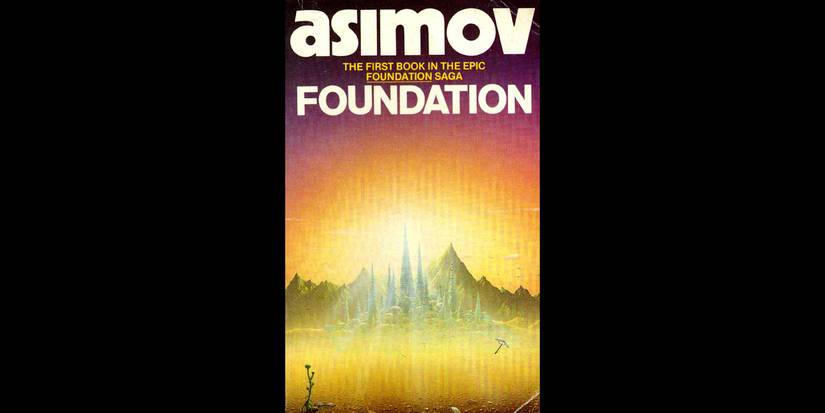
Isaac Asimov is generally regarded as one of the greatest and most important authors of science fiction literature in history, and there's no better book to understand the reasons why than Foundation. It was the beginning of one of the best sci-fi book trilogies of all time, and what a way to kick things off it was. In it, a brilliant mathematician uses a new form of science to predict the total collapse of the Galactic Empire, and a subsequent 300 centuries of a barbaric Dark Age.
Thanks to its tremendous scope and scale, Foundation proves why sci-fi is the best possible genre to explore macro-stories on such a tremendous galactic scale. In Asimov's magnum opus, space is seen as a gargantuan canvas for sociology, history, and philosophy. Asimov here is interested not so much in grand spaceship dogfights and blaster battles, but rather in how a civilization could evolve across the galaxy over the course of millennia.
'Ender's Game' (1985)

As controversial of a figure as Orson Scott Card may be due to his vocal homophobic views, there's simply no denying that Ender's Game is one of the greatest masterpieces in the history of science fiction literature. After all, this military sci-fi blueprint about a young boy being recruited by Earth's military to train for an existential alien war is one of the highest-rated sci-fi books ever on Goodreads.
Anybody who has ever read Ender's Game should find that entirely unsurprising, seeing as it truly is one of the most near-perfect examples of military sci-fi and space sci-fi that the world has ever been treated to. On top of its riveting depictions of zero-gravity combat and space travel, the book is fascinating thanks to how it leverages the concept of the alien and the unknown of space to convey its nuanced messages about radical empathy.
'Leviathan Wakes' (2011)

Written by James S. A. Corey (the pen name of Daniel Abraham and Ty Franck), Leviathan Wakes delivered the world's introduction to the Expanse books, one of those sci-fi book series that are a masterclass in world-building. The first installment in the series is a hard sci-fi masterpiece where Earth and Mars are powerful military rivals. An interplanetary Cold War is thus pushed to its limits after the discovery of an alien biological weapon.
For one, it's always absolutely engrossing to find a hard sci-fi space opera that's as committed to scientific realism as Leviathan Wakes. By stripping the genre away from tropes like artificial gravity and faster-than-light travel, Abraham and Franck leave their characters to deal with the raw physics of actual space. And as for the reading experience, it results in an irresistibly entertaining process of growing to understand the book's world while contending with the natural brutality of space.
'The Left Hand of Darkness' (1969)

It is no exaggeration of any sort to say that Ursula K. Le Guin is one of the most important and influential authors in the history of speculative fiction. Talking about science fiction in particular, she helped lead the genre away from its pulpier, more male-dominated days and prove that it could serve as a vehicle for serious philosophical and sociopolitical meditations. Case in point: The Left Hand of Darkness, about a human envoy sent to convince the inhabitants of the planet Gethen to join an intergalactic alliance.
It's largely thanks to how radically different to what sci-fi usually did back then that Left Hand of Darkness is one of those sci-fi books that marked the end of an era. In lieu of that, it was awarded the Hugo and Nebula Awards for Best Novel. Quite refreshingly, Le Guin treats space not as a new frontier waiting to be conquered, but as a powerful network of diverse societies that she explores with a keenly sociological and anthropological eye.
'Hyperion' (1989)
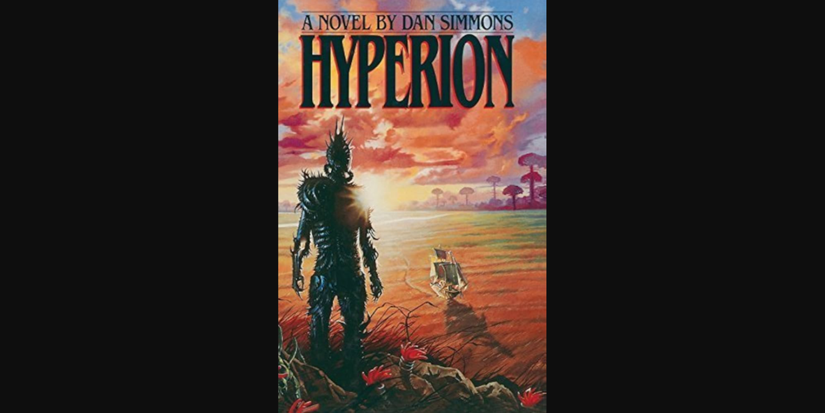
Dan Simmons' Hyperion Cantos series is one of the most acclaimed book series in the 20th-century history of science fiction, and there's a solid argument to be made that the best of the bunch is the first book in the series, Hyperion. It's one of the most perfectly-written sci-fi book masterpieces, a Hugo Award winner that follows seven pilgrims traveling to a distant, dangerous world on the brink of an interstellar war.
By borrowing the structure of Geoffrey Chaucer's The Canterbury Tales, Simmons crafted one of the most timeless space opera narratives that the printed page has ever seen. Thanks to his commendable eye for richly detailed world-building, Simmons makes space feel like a fascinating reflection of humanity's evolution and hubris, serving as the perfect backdrop for this deeply moving and thought-provoking genre-blending tale.
'Dune' (1965)

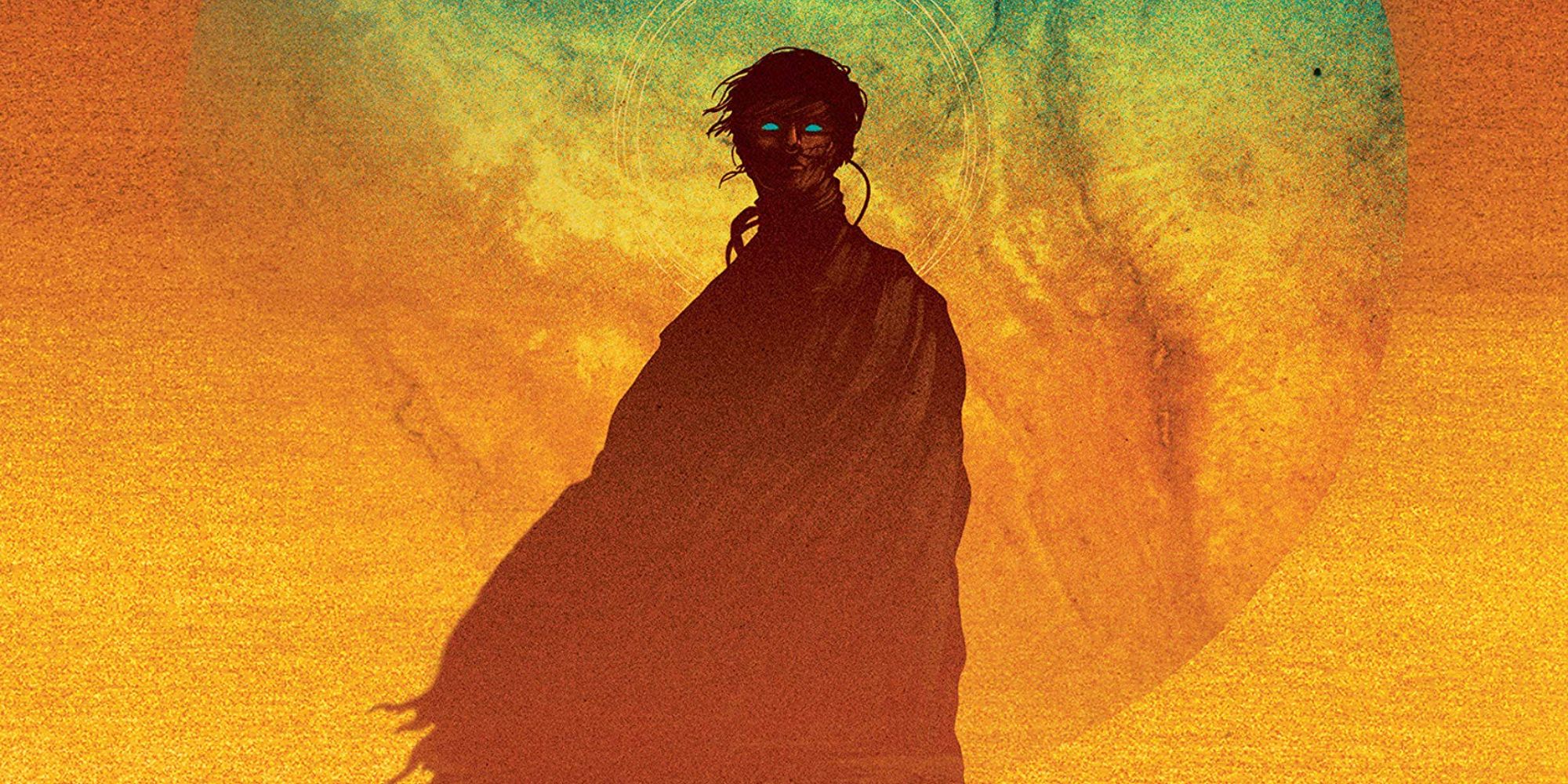
Many book series peak with their first entry, and as far as science fiction goes, there is no such book series more notorious than Frank Herbert's Dune saga. The first novel in the series may very well be the single most foundational and universally praised sci-fi book of the 20th century, and for good reason. It's the story of young Paul Atreides, a prince whose noble family takes stewardship of a harsh desert planet that's the universe's only source of a key resource.
Dune is a powerful cautionary tale against the dangers of messianic leaders, as well as a thought-provoking critique of environmental exploitation. On top of that, Herbert adds a level of depth and geopolitical layers to his version of space that it becomes impossible to put the book down. Cosmic expansion is always a gripping subject in a sci-fi book, but by placing the focus on the characters rather than the expansion itself, Herbert created what some would confidently call the best sci-fi book the world has ever seen.
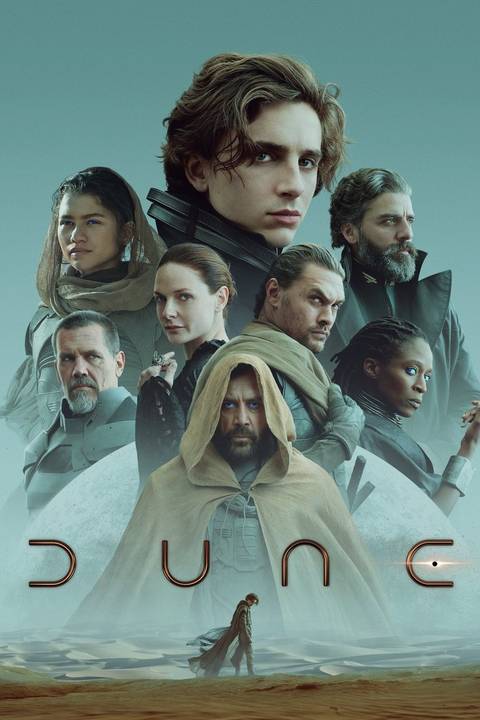
Dune
- Release Date
- September 15, 2021
- Runtime
- 155 minutes
- Director
- Denis Villeneuve
- Writers
- Denis Villeneuve, Eric Roth, Jon Spaihts, Frank Herbert
-

Paul Atreides
-

Lady Jessica Atreides
A noble family becomes embroiled in a war for control over the galaxy's most valuable asset while its heir becomes troubled by visions of a dark future.
- Producers
- Herb Gains, John Harrison, Joseph M. Caracciolo Jr., Mary Parent, Richard P. Rubinstein, Cale Boyter, Thomas Tull, Brian Herbert, Byron Merritt, Kim Herbert, Joshua Grode
- Main Genre
- Sci-Fi
- Studio(s)
- Legendary Pictures
- Distributor(s)
- Warner Bros. Pictures
KioskNews shows a cleaned-up reading view extracted from the publisher’s page — the original always lives on their site, not ours.