Their readers are ageing: Who will keep Maharashtra’s Diwali magazines alive?
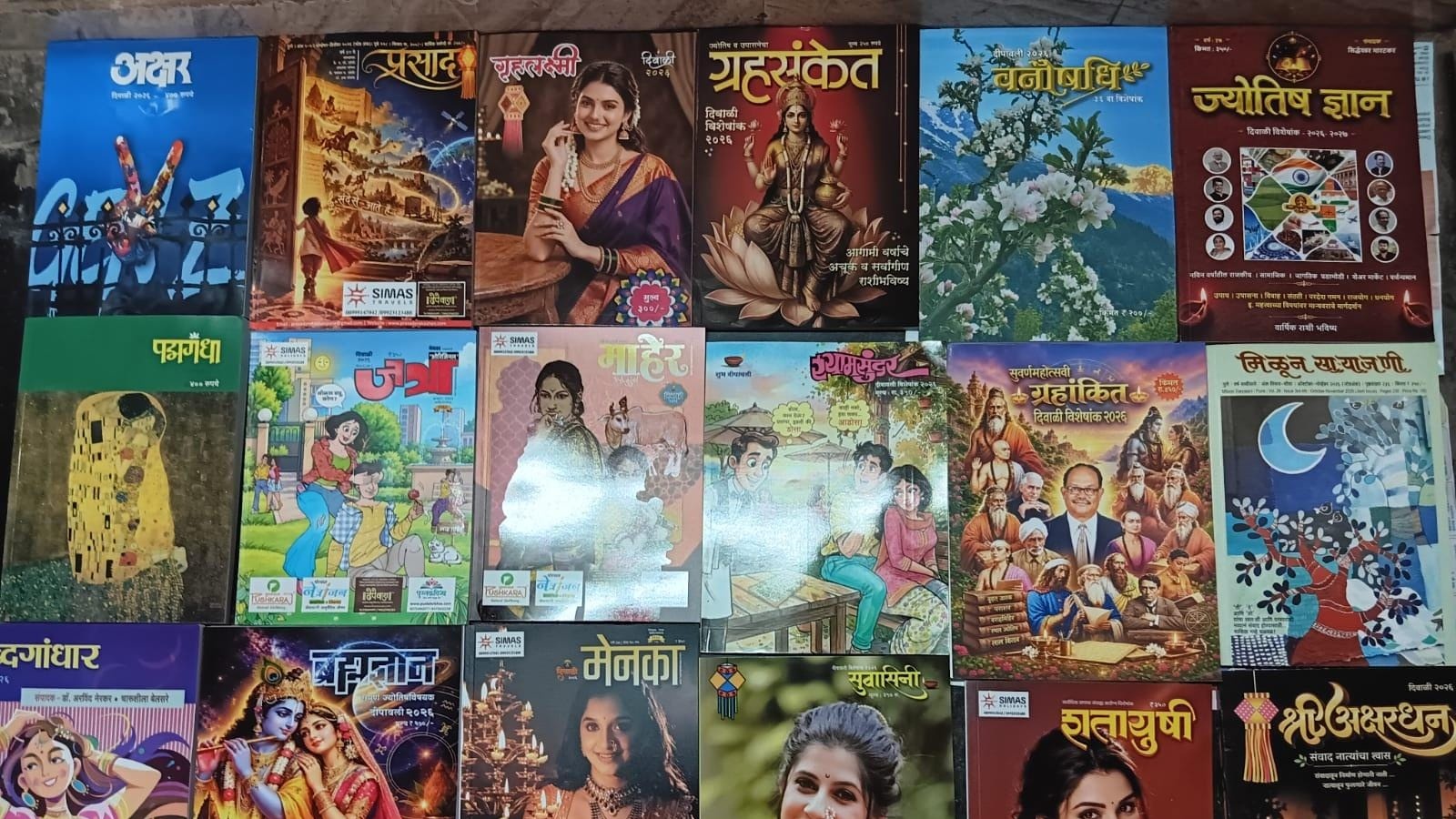
For generations of Marathi readers, Diwali has meant more than new clothes, sweets and lamps. It has also meant a thick volume of stories, poems, essays and satire arriving home around the festival. These special annual magazines, known as Diwali Anks, are a distinct part of Maharashtra’s literary and cultural life, bringing established authors and new writers together every year.
The tradition is more than a century old and it’s under strain. Publishing costs are up by nearly a fifth this year. Advertisers have pulled back as drought grips the state. And one of the best-known titles is printing half the copies it once did.
Most established publications are still bringing out their annual editions anyway. Their editors call it a cultural commitment, not a business.
Ads all but gone
Arun Shevate, editor of Ruturang Diwali Ank, said publishing costs rose by nearly 20 per cent this year, mostly because of higher paper prices. Advertising revenue has also taken a hit as businesses and regular advertisers cut spending. In September, the state government declared drought in 265 of its 358 talukas.
“Advertisements are nearly negligible this year. Most regular advertisers are trying to restrict expenditure due to drought conditions in the state. However, despite the challenges, almost all Diwali magazines are continuing this year. Some have decided not to depend on advertisements for revenue already, others will follow soon,” he said, adding, “It is an annual commitment to keeping Marathi literary culture alive.”
Half the print run
Monica Gajendragadkar, editor of Mauj, said her publication once printed more than 8,000 copies. It now prints around half that.
Publishers have tried audiobooks and digital editions to reach younger readers, but these haven’t brought in many more readers, she said. Combination offers and cultural programmes have worked better.
Story continues below this ad
Majestic Publishing House, for instance, sells four Diwali magazines together at a discount, along with a book of the reader’s choice.
Ashok Kothawale, director of Majestic Publishing House and editor of its Diwali Anks Deepawali and Lalit, said publishers were adapting to changing reading habits but remained committed to the tradition. He’s confident Diwali Anks will last at least another decade.
Work on each edition starts months before the festival, often as early as June. Editors commission contributions, pick manuscripts and bring established and new writers together.
“Diwali Ank has a long history. Mauj has been publishing for over 60 years, Lalit has a history of over 80 years. These publications have constantly tried to offer readers a variety of Marathi literature. We have had to adapt, through social media publicity, online bookings, digital editions, audiobooks. I don’t believe the love for literature and reading will disappear,” Kothawale said.
Story continues below this ad
Who reads them now
Hemant Bagwe, a prominent bookseller, is less certain. He said Diwali Anks had largely survived because of the passion and commitment of their editors and publishers.
“Whether the same enthusiasm will be carried forward by the next generation, not just of readers but also of publishers, remains a question,” he said.
Bagwe said reading habits were already declining and the number of Marathi readers had fallen further. A considerable section of today’s readers are above 50 or 60, he said. “Given their place in Maharashtra’s cultural heritage, the state government should consider steps to support and sustain the tradition,” he said.
The rural shift
Kothawale pointed to more writers and publishers coming from outside the state’s big cities. Diwali Anks, he said, were no longer made only in Mumbai, Pune and Nashik. Rural Maharashtra had become an important source of both writers and publishers.
Story continues below this ad
“There is tremendous potential emerging from rural Maharashtra, both in terms of writers and publishers. Marathi readership is also considerably strong in rural areas. With the right support, these publications can thrive,” he said.
KioskNews shows a cleaned-up reading view extracted from the publisher’s page — the original always lives on their site, not ours.