Israel has unprecedented air security, but flydubai incident raises key questions
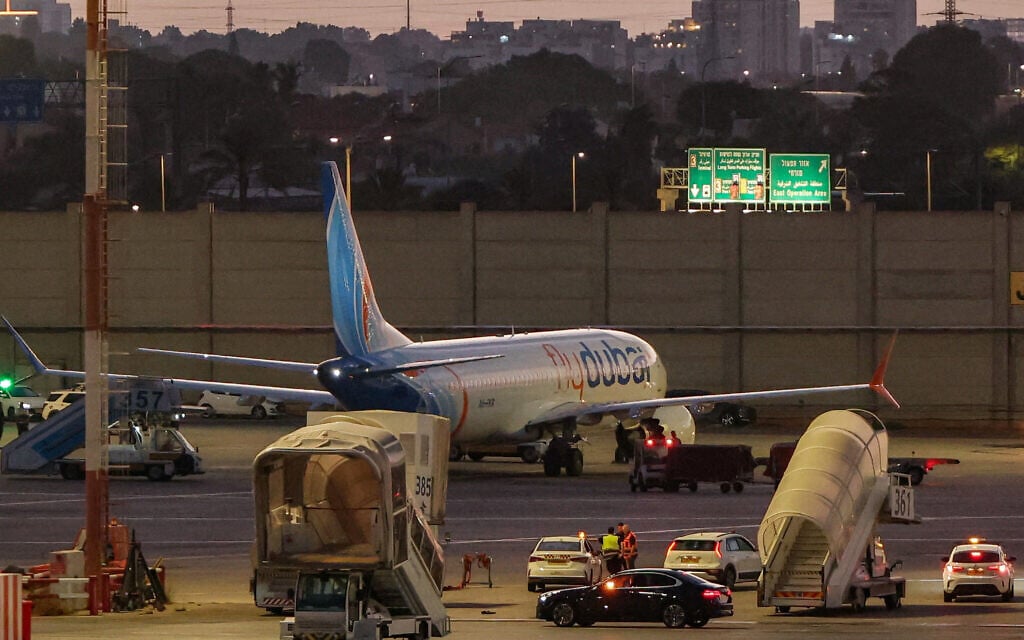
Wednesday’s flydubai flight that made an emergency landing in Saudi Arabia after the copilot apparently attempted to crash the plane appears to be the closest Israeli air travelers have come to being intentionally killed in over two decades.
Though some details remain hazy, the incident raises unsettling questions about vulnerabilities at a time when Israel’s enemies have ample incentive to try to carry out mass casualty attacks against its citizens.
Wednesday’s narrowly averted disaster evokes another attempted attack in 2002. On November 28 of that year — at the same time 10 Kenyans and three Israelis were killed and 80 others wounded when a car bomb went off at Mombasa’s Israeli-owned Paradise Hotel — a surface-to-air missile targeted, but missed, an Arkia plane carrying 271 people as it took off from Mombasa airport.
0:00 / 0:00
Promoted: Nefesh B'Nefesh - Aliyah is Now

That attempted mass murder of Israeli passengers came a little over a year after 78 passengers and crew, mostly Israelis, were killed when their flight from Tel Aviv to Novosibirsk, Russia, was accidentally shot down by the Ukrainian Air Force.
And the memory of a string of plane hijackings by Palestinian terror groups jumps to the mind of Israelis when their countrymen are targeted in the air.
Get The Times of Israel's Daily Edition by email and never miss our top stories
By signing up, you agree to the terms
The famous 1976 Entebbe raid in which Israeli commandos rescued 102 of 106 hostages after their Air France flight was diverted by terrorists to Uganda cost the life of the rescue operation’s commander, Yoni Netanyahu.

Four years earlier, his younger brother Benjamin — today Israel’s prime minister — was part of an elite Sayeret Matkal team that rescued 90 passengers from a Sabena flight that members of the Palestinian Black September organization hijacked and forced to land in Israel.
The era of high-profile Palestinian plane hijackings was set off in 1968, when PFLP terrorists carried out the only successful hijacking of an El Al flight, forcing it to land in Algeria. The 12 Jewish passengers were eventually freed 40 days later when Israel agreed to release 16 terrorists.
Unprecedented security
It is no secret that flights are an enticing target for enemy countries and terrorist groups. If the plane is taken over and forced to land in hostile territory, the hijackers have dozens, potentially hundreds of Israeli passengers as bargaining chips.
And if hijackers crash the plane, they are potentially killing more Israeli civilians than a dozen successful suicide bombings or rocket attacks.
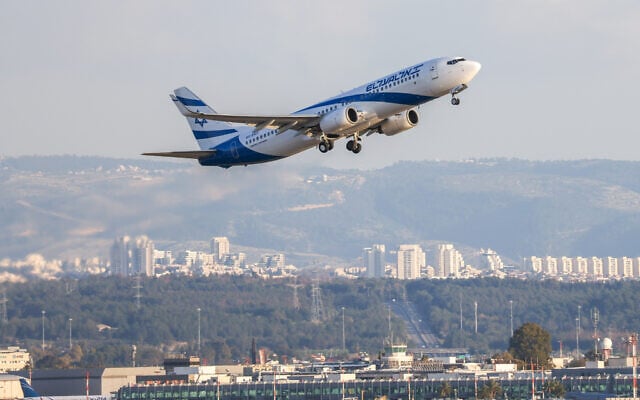
Israel has recognized this danger for much of its existence and takes unprecedented measures to keep its civilian planes safe.
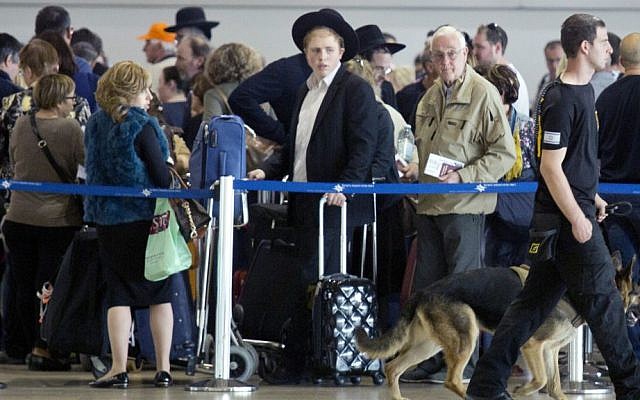
Before passengers can check in, they have to speak with security officials, who are trained to identify suspicious behavior and attempts to hide information.
Once onboard, more unique measures protect passengers.
All Israeli airlines have armed air marshals on every international flight.
El Al planes even have anti-missile systems installed to protect them from repeat attempts of the 2002 incident.
The cockpits, the target of plane hijackings, are carefully protected as well. Cockpit doors are bulletproof and must be locked at all times during the flight.
Pilots need to leave the cockpit at times to receive food and use the bathroom, so the cockpits have double doors, meaning one is locked at all times.
IAF protection
Israel’s military is also a key player in securing civilian flights.
Part of the Israeli Air Force’s role is to deal with unusual incidents involving civilian aircraft making their way to Israel, including preventing the possibility of an airborne terror attack.
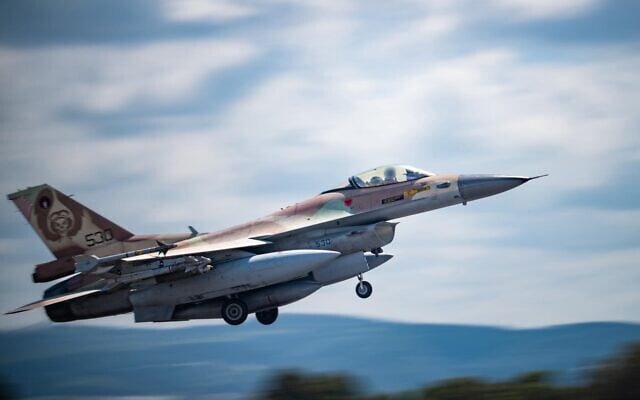
The IAF said it has a protocol that can be activated in a variety of scenarios, including an aircraft deviating from its planned flight path, failing to respond to radio calls, transmitting a distress signal, experiencing a technical malfunction, or a passenger suffering a medical emergency that requires an emergency landing.
When the protocol is activated, various measures are taken to protect Israeli airspace. If necessary, Israeli airspace is closed, and fighter jets are scrambled to identify and escort the civilian aircraft.
Meanwhile, the military conducts constant assessments until the circumstances of the incident are understood and the concern is resolved.
A military official said the IAF routinely drills the protocol, with an emphasis on resolving incidents within short periods of time and making rapid decisions.

Relevant IAF forces are required to know how to move, within a short period of time, from identifying an irregularity or suspicious sign to understanding the situation and activating the appropriate response.
The activation of the protocol does not necessarily indicate suspicion of a security incident, as it has occasionally been activated due to technical malfunctions, communication problems, deviations from a flight path, or human errors by aircraft crews making their way to Israel.
The military official said the IAF examines every unusual incident until the concern is resolved, adding that the IAF is prepared “at all times to defend the country’s airspace and borders against a variety of threats, in routine and emergency situations.”
“Forces remain on constant alert and work to maintain freedom of action and security in the airspace, while maintaining the ability to rapidly transition from routine operations to an operational response according to the development of the threat,” the official added.
Vulnerabilities
Even with the multi-layered security in place, there are always vulnerabilities.
Wednesday’s incident highlighted those connected to non-Israeli carriers flying in and out of the country.
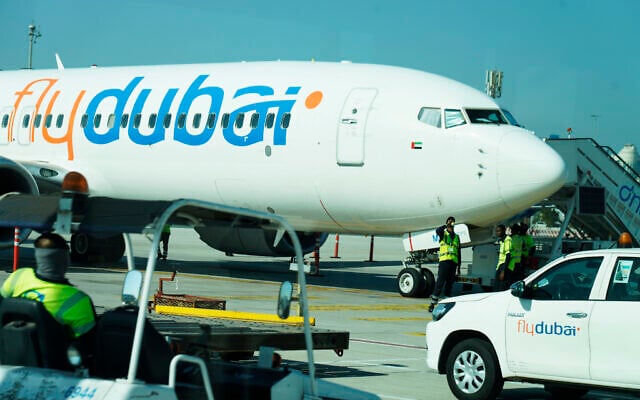
Foreign carriers, like flydubai, often fly to or from Ben Gurion Airport full of Israeli citizens, but don’t have the same security measures in place. Israel cannot mandate air marshals, cockpit security, or pre-boarding checks.
“It can be a flight of 400 people from Dubai with no air marshal on board,” an Israeli air security professional told The Times of Israel.
Surprisingly — and seemingly a major part of Wednesday’s incident — Israel can’t limit the nationality of foreign pilots flying into Israel, as long as they stay on the plane, said the expert.
The flydubai pilot who stabbed his partner was reportedly an Omani national, a country that does not recognize Israel.
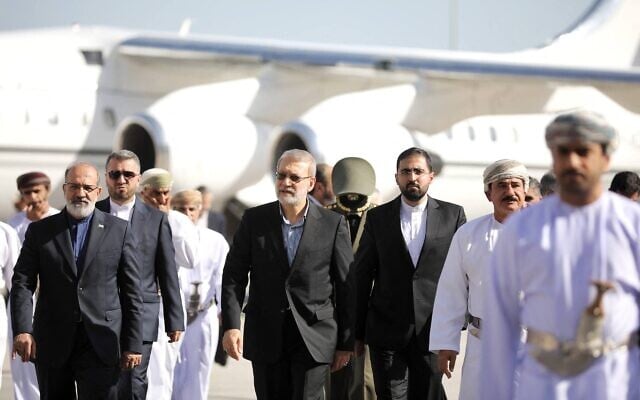
Israel often comes to agreements with other countries about preventing pilots from certain countries from flying into Israel, but, for reasons that have yet to surface, that didn’t seem to have kept a pilot reportedly from Oman from flying a plane full of Israelis toward Tel Aviv.
Other pressing questions remain unanswered, especially foreign involvement. Was the attacker acting alone, or was he operating at the behest of a foreign power, especially Iran?
The Islamic Republic has been behind numerous terror plots against Jewish and Israeli targets.
Numerous Iranian attempts to direct terror attacks inside of Israel in the past two years have been foiled, according to the Mossad.

In April, the Mossad and Shin Bet announced that Israel had exposed an Iranian terror network that targeted Israeli officials and assets around the world.
Prior to that, in October 2025, the Mossad revealed information about a transnational terror network run by the IRGC’s Quds Force that it said was behind a string of recent attacks on Jewish sites in Western countries.
In 2024, an Argentinian court placed the blame on Iran for ordering deadly attacks in 1992 on Israel’s embassy and the 1994 attack on the Argentine Israelite Mutual Association (AMIA) Jewish center.
No evidence has emerged linking Iran to the flydubai incident.
But it is one of several pressing questions that remains unanswered as Israel, the Emiratis, and other partners take stock of what could have been a national tragedy.
KioskNews shows a cleaned-up reading view extracted from the publisher’s page — the original always lives on their site, not ours.