Prescription charges in England should be scrapped, experts say
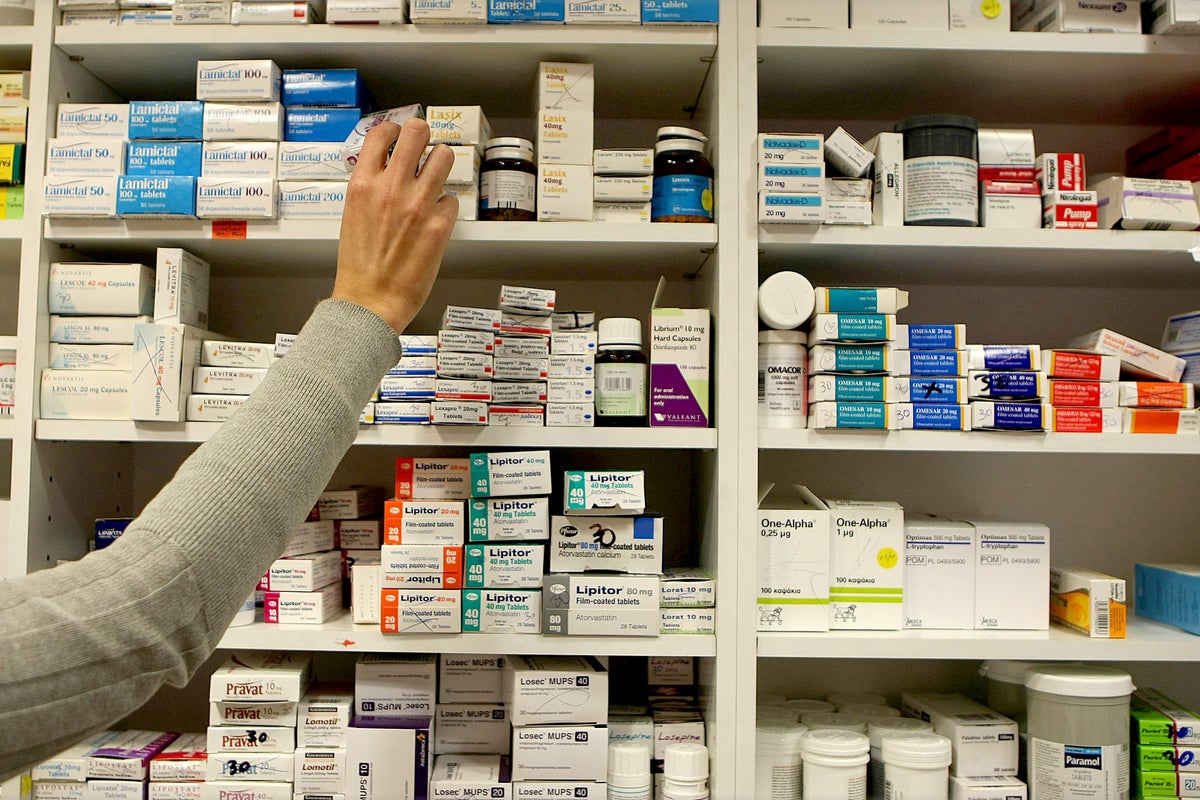
Prescription charges in England should be scrapped, pharmacy leaders have said.
A new survey indicates that 79% of the public consider it "unfair" that patients in England must pay for their medication, whereas those residing in Scotland, Wales and Northern Ireland do not.
The poll of 1,781 adults in England, carried out by Savanta for the National Pharmacy Association (NPA), also discovered that one in 10 people (10%) have gone without a prescribed medicine over the last year because of the cost involved.
Another 12% of respondents stated they had delayed collecting their prescriptions for the exact same financial reason.
Describing the policy as a "cruel tax on illness", the NPA urged the Chancellor to eliminate the charges in the upcoming Budget, stating that such a step would help relieve widespread cost of living pressures.
Phil Day, superintendent pharmacist at Pharmacy2U, said: “It’s concerning to hear that people are going without medication because of the cost of prescriptions, particularly those managing long-term conditions who depend on regular treatment.”
Prescription charges were abolished in Wales in 2007, in Northern Ireland in 2010 and in Scotland in 2011.
In England, the standard fee for an individual prescription item currently stands at £9.90.

Selected medications remain free, including contraception and hospital inpatient drugs, while exemptions apply to under 16s, those aged 16 to 18 in full-time education, individuals aged 60 and over, benefit claimants and patients who live with certain specific qualifying medical health conditions.
Mr Day added: “Prescription prepayment certificates can reduce costs for those paying for regular medication, but our research suggests only 8% currently hold one, and 30% of the population have never heard of one.”
NPA chairman Olivier Picard said: “No patient should ever see cost as being a barrier to accessing the medicines they need but this polling shows an alarming number do.
“It is a national scandal and deeply unfair that anyone could consider stopping vital medicines because of cost.
“This cruel tax on illness, where some patients are exempt but others are forced to pay simply because they have the wrong kind of illness, undermines the founding principles of the NHS.
“If the Chancellor wants to tackle the rising cost of living and health inequalities, he should bring England into line with the rest of the UK and scrap this unfair and complex prescription tax.”
The NPA, which has teamed up with a group of charities to call for the charge to be axed, has said it is a “national scandal” that people are deterred from buying medicines because of cost.
The Association, which represents around 6,000 community pharmacies, said pharmacists have reported that patients with multiple one-off medicines on a prescription have asked “which is the most important one to take?”
Sarah Sleet, chief executive of the charity Asthma and Lung UK, said: “For people with lung conditions like asthma and chronic obstructive pulmonary disease (COPD), being able to take medication shouldn’t come down to whether or not you can afford it.
“But because respiratory conditions aren’t included on the prescription charges exemptions list, people are left essentially paying for their right to breathe.”

The NPA said that an estimated 11.6 million patients paid prescription charges in 2025/26.
Some 3.3 million people paid for a prescription prepayment certificate which covers NHS prescriptions for a fixed fee and can reduce costs for people who need medicines regularly.
There is also a PPC for women taking hormone replacement therapy, with around 730,000 women using this in 2025/26.
Marianne Radcliffe, chief executive at Crohn’s and Colitis UK, added: “We support calls to scrap prescription charges in England.
“People with long-term conditions should not be forced to choose between their health and their finances simply because they need medication every day.”
Fiona Loud, from Kidney Care UK, said: “It’s simply not a fair system because it penalises ill health; everyone should be able to access the medication they need to stay well for free, without worrying about whether or not they can afford it.”
Laura Cockram, head of campaigns at Parkinson’s UK, added: “The upcoming Budget is an opportunity for the Government to take meaningful action. If they are serious about tackling the cost of living crisis and preventing avoidable ill health, the Government must scrap prescription charges in England, bringing us in line with the rest of the UK.”
The NPA has estimated that £732.8 million was raised by prescription costs in in 2025/26.
Dr James Davies, director of research and insights at Community Pharmacy England, said: “The Chancellor has an opportunity in this Budget to remove one of the most unfair costs facing patients.
“No-one should be forced to choose between paying for essential medicines and making ends meet, yet these figures show that too many people are doing exactly that.”
It comes as millions of NHS app users in England can now receive smartwatch and phone notifications when their prescriptions are ready for collection.
NHS England said the new service aims to prevent unnecessary calls and premature visits to the chemist to collect medication.
To receive these updates, individuals must turn on push alerts within the application settings.
The Department of Health and Social Care has been approached for comment.
KioskNews shows a cleaned-up reading view extracted from the publisher’s page — the original always lives on their site, not ours.