5 Classic Sci-Fi Books That Are Perfect From the First Page to the Last

Dyah (pronounced Dee-yah) is a Senior Author at Collider, responsible for both writing and transcription duties. She joined the website in 2022 as a Resource Writer before stepping into her current role in April 2023. As a Senior Author, she writes Features and Lists covering TV, music, and movies, making her a true Jill of all trades. In addition to her writing, Dyah also serves as an interview transcriber, primarily for events such as San Diego Comic-Con, the Toronto International Film Festival, and the Sundance Film Festival.
Dyah graduated from Satya Wacana Christian University in October 2019 with a Bachelor's degree in English Literature, concentrating on Creative Writing. On March 2026, Dyah graduated with Master's degree in English Literature Studies, with a thesis on intersectionality in postcolonial-feminist studies in Asian literary works.
Born and raised between Indonesia and Singapore, Dyah is no stranger to different cultures. She now resides in the small town of Kendal with her husband and four cats, where she spends her free time cooking or cycling.
Sign in to your Collider account
Long before space travel, time machines, and advanced technology became common story ideas, classic sci-fi writers were already imagining worlds far beyond their own. What makes these early stories even more impressive is that their authors had none of the technology we have today to help bring those ideas to life.
Some classic sci-fi can even feel strangely ahead of its time, with stories that imagined things that eventually became reality. Their ideas may be decades old, but they still feel surprisingly relevant today. From one of the earliest sci-fi novels, written by an 18-year-old, to stories that became global phenomena, here are classic sci-fi books that are worth reading from the first page to the last.
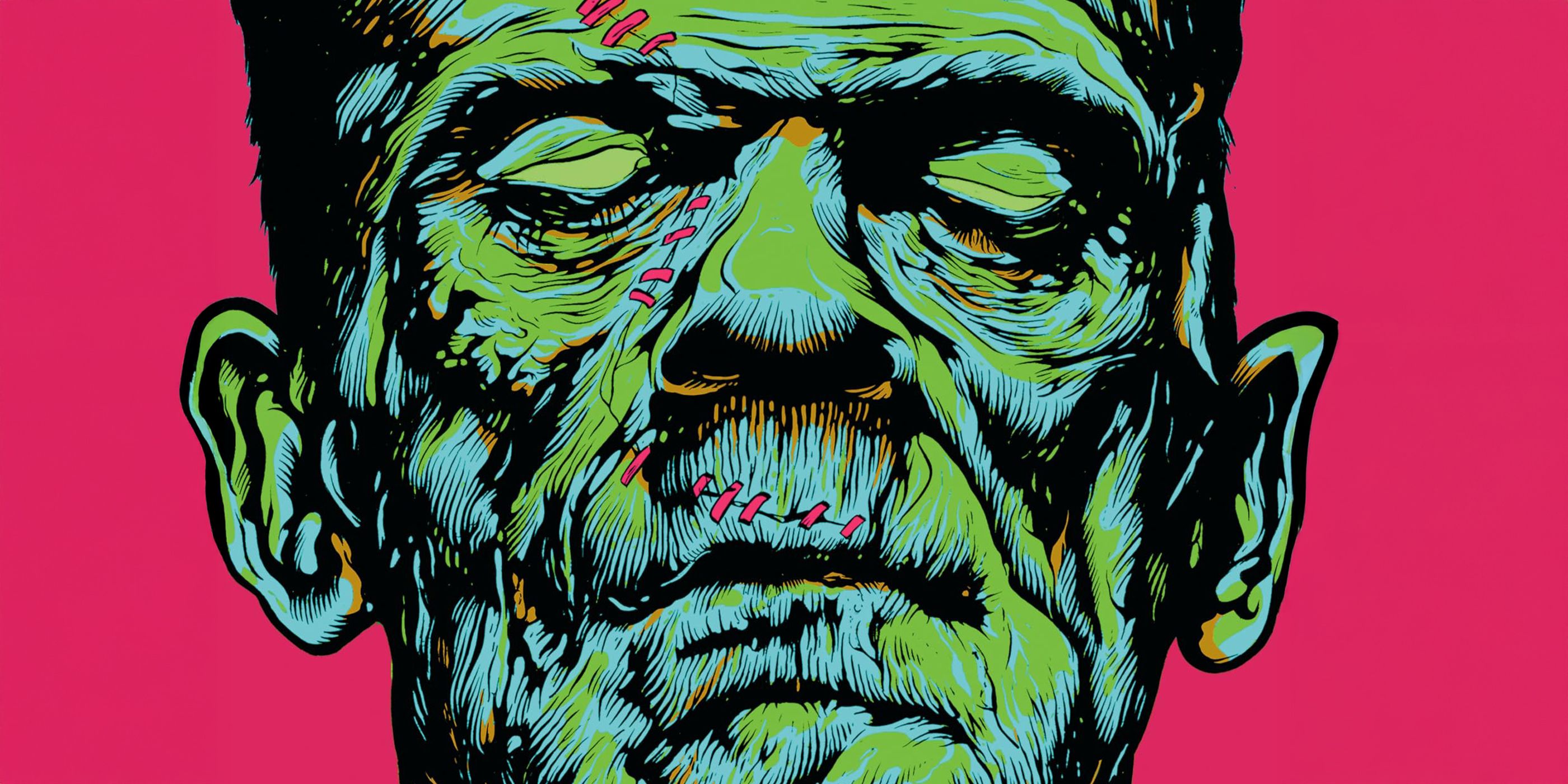
'Frankenstein' (1818)

Mary Shelley's Frankenstein follows Victor Frankenstein, a young scientist who becomes obsessed with creating life. After years of studying science, he finally brings a creature made from human remains to life. Horrified by what he has created, Victor runs away and leaves the creature to figure out the world on his own. The creature secretly watches a family and learns how to speak, read, and understand human feelings. But his attempts to connect with people end in rejection because of his frightening appearance. Angry and lonely, he sets out to find Victor, leading to a tragic conflict between creator and creation.
Although Frankenstein is usually seen as a Gothic horror classic, its ideas about science make it one of the earliest novels to play with sci-fi concepts. Victor doesn't just create life in a way that goes against nature; he also shows what can happen when someone makes a major scientific breakthrough without thinking about the responsibility that comes with it. Victor creates the creature, then immediately abandons it when things go wrong. That idea still feels relevant today, especially when new technology can be developed faster than people can figure out its consequences. The novel mixes science, ethics, and philosophy without feeling like a textbook, which makes it even more impressive knowing Shelley started writing it when she was just 18.
'The Hitchhiker's Guide to the Galaxy' (1979)
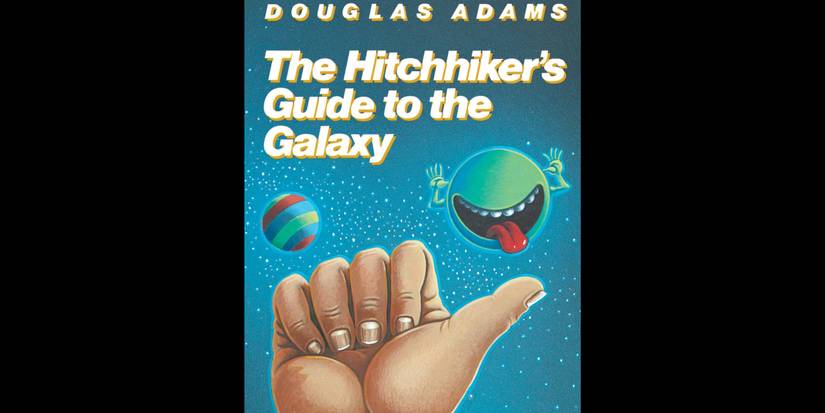
Before The Hitchhiker's Guide to the Galaxy sends Arthur Dent on a ridiculous trip across the universe, Douglas Adams starts the story with something surprisingly ordinary. Arthur is annoyed that his house is about to be demolished for a bypass, while his friend Ford Prefect knows Earth has a much bigger problem coming. Soon, the planet is destroyed by the Vogons, leaving Arthur to hitchhike through space. That makes for a wonderfully nonsensical plot, but Adams’ sharp, observational humor is what makes the book so memorable.
Nothing makes sense, and that is exactly the point. A boring argument about a house can suddenly escalate into an alien disaster, and somehow, Adams makes it feel completely natural. The jokes, dialogue, and narration remain just as ridiculous as Arthur travels from one bizarre situation to another. Even the book's ideas about the meaning of life are approached with the same playful humor, especially when its famous answer turns out to be hilariously disappointing. Yet beneath all the absurdity is a simple idea. Life does not always have a grand meaning, and people just have to roll with whatever weirdness comes their way. That balance between cosmic absurdity and everyday frustration gives the novel its kitschy charm, making even its strangest moments feel oddly relatable and funny throughout.
'Dune' (1965)

It's impossible to talk about classic sci-fi without mentioning Dune, which has become a global phenomenon thanks to Denis Villeneuve's films. The story follows Paul Atreides and his family after they are sent to Arrakis, a dangerous desert planet that holds the galaxy's most valuable resource — spice. What should be an important opportunity for House Atreides quickly turns into a fight for survival as they become caught between powerful enemies and a much bigger political game. At the same time, Paul begins having strange dreams that hint at a future he doesn't fully understand.
For such a fictional planet, Dune makes Arrakis feel so real because everything has a purpose. Water isn't just hard to find — it shapes how the Fremen dress, live, and survive. Spice isn't just a valuable substance either, since controlling it means having a say in travel across the galaxy. Even the giant sandworms feel like they are truly part of its ecosystem instead of a gimmicky shock factor. Herbert also gets you curious about Paul right away with his opening test, which hints at his abilities and the strange forces surrounding his family. The book can be dense, but that's part of what makes Arrakis so fun to explore. There's always another detail to discover.
Collider Exclusive · The Sorting Hat Awaits Which Hogwarts House Are You? Gryffindor · Slytherin · Hufflepuff · Ravenclaw
Four houses. One destiny. The Sorting Hat has considered thousands of students — now it's your turn. Answer honestly and discover where you truly belong at Hogwarts School of Witchcraft and Wizardry.
🦁Gryffindor
🐍Slytherin
🦡Hufflepuff
🦅Ravenclaw
01
What quality do you value most in yourself? Answer as honestly as you can — the Hat always knows.
02
A friend is being treated unfairly. What do you do? How you protect others says everything about who you are.
03
What does success look like to you? What you're working toward defines who you're becoming.
04
What is your greatest fear? Fear is the most honest thing about a person.
05
The rules say no. Your gut says go. What do you do? Every institution has rules. What you do with them is a choice.
06
What kind of friend are you? Who you are to the people you love is who you really are.
07
You look into the Mirror of Erised. What do you see? The mirror shows the deepest desire of your heart.
08
The Sorting Hat pauses. It whispers: "You could do well in any house. But what matters most to you — truly?" This is your tiebreaker. The Hat always listens.
The Sorting Hat Speaks Your House Has Been Chosen
After careful deliberation, the Sorting Hat has made its decision. This is the house your values, your instincts, and your particular way of being in the world were made for.
🦁 Gryffindor
You have nerve. Not the reckless kind, but the deep, quiet courage that shows up even when you're terrified — especially then.
- Gryffindors don't act because they're fearless — they act because they understand that some things are worth being afraid for.
- You stand up for people when it would be easier to look away.
- You charge toward what's right even when the odds are terrible.
- Harry, Hermione, Ron — the heroes of Hogwarts's greatest chapter — all called the tower with the scarlet and gold home. And now, so do you.
🐍 Slytherin
You are driven, sharp, and utterly clear-eyed about what you want and how to get there.
- Slytherin has long been misunderstood — painted as the house of villains when it is, at its best, the house of those who refuse to accept limits placed on them by others.
- You are resourceful, strategic, and you play the long game.
- You know your worth. You protect your own fiercely.
- The dungeon common room with its view of the Black Lake is yours — and the ambitions that will take you further than anyone expects are yours too.
🦡 Hufflepuff
You are the kind of person that makes the world genuinely better just by being in it.
- Hufflepuff is not the "safe" house or the "leftover" house — it is the house of those with the greatest heart and the most unwavering integrity.
- You show up. You work hard. You don't need glory or recognition — you do what's right because it's right.
- Your loyalty never wavers, even when tested.
- Nymphadora Tonks, Cedric Diggory, Newt Scamander — some of the wizarding world's finest. And now you join them.
🦅 Ravenclaw
Your mind is your greatest gift, and you've always known it.
- Ravenclaws are the thinkers, the questioners, the ones who find a puzzle irresistible and a good book better company than most people.
- Ravenclaw is not merely about intelligence — it's about the love of learning, the pursuit of truth, and the rare courage to admit you don't know something yet.
- You see the world with unusual clarity and depth.
- Luna Lovegood, Filius Flitwick, Rowena Ravenclaw herself — all extraordinary, all original. And so are you.
'Fahrenheit 451' (1953)

Ray Bradbury's Fahrenheit 451 follows Guy Montag, a fireman whose job is to burn books instead of putting out fires. He's pretty comfortable with his life until he meets Clarisse, a teenager who asks simple questions that make Montag notice how little he knows about his own world. Things get harder to ignore after he encounters a woman who refuses to leave her books behind, choosing to stay with them instead. The experience pushes Montag to secretly take books from the houses he visits and question why they are considered so dangerous in the first place.
Although it's a classic, it's amazing how much of Bradbury's imaginary world feels familiar today. Montag's world is packed with giant television screens, nonstop entertainment, and people who would rather stay distracted than sit with an uncomfortable thought. The weird part is that nobody has to force them to stop reading. They've simply gotten used to being entertained all the time, until thinking for themselves feels like a chore. That makes the book hit differently today, especially with endless scrolling, short videos, and phones constantly competing for our attention. Bradbury's warning isn't really about technology itself. It's about how easy it is to lose curiosity, and when people stop asking questions, nobody can be held accountable anymore.
'The Man in the High Castle' (1962)

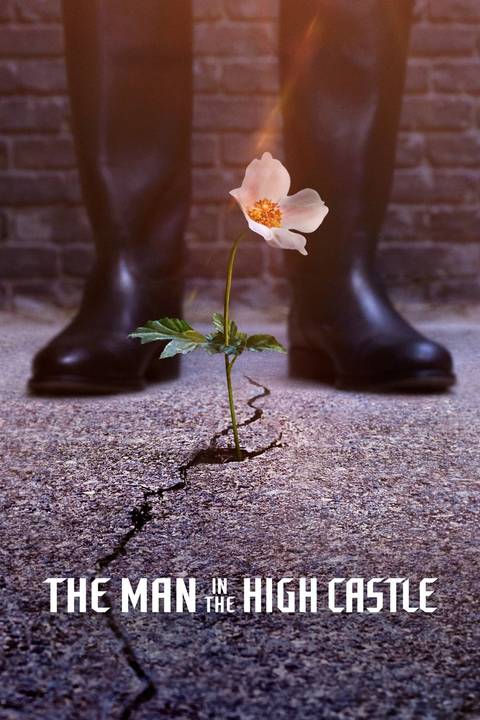
The Man in the High Castle starts with one of the creepiest alternate-history ideas: What if Nazi Germany and Imperial Japan had won World War II? Set in 1962, the novel takes readers into a United States divided between the two powers, with the Nazis controlling the East, Japan ruling the West, and a shaky Neutral Zone in between. But something even stranger is happening. A banned book tells a completely different version of history in which the Allies won the war, making people question whether their world is really the only possible reality.
Philip K. Dick makes this alternate America unsettling by showing how deeply the new world order has changed everyday life. In the Japanese-controlled West, Americans collect old American objects as antiques, while Japanese customs have become part of daily life. Even small details, like how people behave and what they value, show how thoroughly the occupation has shaped the culture. Juliana Frink, an American woman who has grown up under Japanese rule, becomes involved in the mystery surrounding the banned book. Meanwhile, Japanese trade official Nobusuke Tagomi struggles to balance his political position with his own beliefs. Their stories make this America feel lived-in, with its own habits, tensions, and ideas about identity, instead of simply being a flipped version of World War II.
The Man in the High Castle
- Release Date
- 2015 - 2019-00-00
- Network
- Prime Video
- Showrunner
- Frank Spotnitz
- Directors
- David Semel, Daniel Percival, John Fawcett, Alex Zakrzewski, Karyn Kusama, Nelson McCormick, Brad Anderson, Bryan Spicer, Charlotte Brändström, Chris Long, Colin Bucksey, Daniel Sackheim, David Petrarca, Ernest R. Dickerson, Fred Toye, Jennifer Getzinger, Ken Olin, Michael Rymer, Michael Slovis, Paul Holahan, Richard Heus, Deborah Chow, Steph Green, Meera Menon
-

John Smith
-

Juliana Crain
- Writers
- Wesley Strick, Rob Williams, David Scarpa, Erik Oleson, Jace Richdale, Rick Cleveland, Thomas Schnauz, Mark Richard, Chris Collins, Kalen Egan, Elizabeth Benjamin, Emma Frost, Eric Overmyer, Eric Simonson, Julie Hébert, Walon Green, William N. Fordes, Evan Wright, Lolis Eric Elie, Francesca Gardiner, Dre Ryan, Chris Wu
- Seasons
- 4
- Producers
- Jean Higgins, Jordan Sheehan, Michael Cedar
- Creator(s)
- Frank Spotnitz
- Story By
- Frank Spotnitz
- Streaming Service(s)
- Prime Video
- Executive Producer(s)
- Christian Baute, Christopher Tricarico, David W. Zucker, Frank Spotnitz, Isa Dick Hackett, Ridley Scott, Stewart Mackinnon
KioskNews shows a cleaned-up reading view extracted from the publisher’s page — the original always lives on their site, not ours.