The Best Books From the Last 10 Years That Hooked Me From the Opening Chapter

Luc Haasbroek is a writer and videographer from Durban, South Africa. He has been writing professionally about pop culture for eight years. Luc's areas of interest are broad: he's just as passionate about psychology and history as he is about movies and TV. He's especially drawn to the places where these topics overlap.
Luc is also an avid producer of video essays and looks forward to expanding his writing career. When not writing, he can be found hiking, playing Dungeons & Dragons, hanging out with his cats, and doing deep dives on whatever topic happens to have captured his interest that week.
Sometimes you know from the very first chapter that you're going to enjoy a book, and it's a great feeling. Maybe it's a particularly strong opening line or a vivid POV character that makes the action all the more immersive. No matter the reason, the pages fly by, and you find yourself drawn deeper and deeper into the story.
With that in mind, this list looks at some novels from the last decade that reel the reader in practically from page one. They span a variety of genres and tones, from historical epics and revisionist fantasy to dark character studies and tense nonfiction. The fact remains, all are finely written and always engaging, wasting little time immersing us in their characters and world.
'A Column of Fire' (2017)

"When a man is sure he knows God's will... he is the most dangerous person in the world." Ken Follett (best known for Eye of the Needle and The Pillars of the Earth) is a master of historical fiction, and this is one of his best. We're quickly thrown into the deadly dynastic and religious conflicts of the time, buoyed along by colorful characters and gripping, page-turning prose.
The third installment in his Kingsbridge series, A Column of Fire begins in 1558, as the young Ned Willard returns to his hometown after spending time abroad. Although Ned hopes to marry Margery, the woman he loves, their relationship becomes entangled in the bitter religious divisions threatening England. Meanwhile, the death of Queen Mary I and the accession of Elizabeth I create enormous political uncertainty, forcing individuals and families to choose sides.
'The School of Night' (2023)

'When we exist, death is not; and when death exists, we are not." Karl Ove Knausgård caused a literary sensation in the 2000s with his autobiographical novel series My Struggle, and has since explored even stranger, darker territory with his recent work. That includes The School of Night, which tells the story of Kristian Hadeland, an ambitious young Norwegian who moves to London in 1985 to study photography. Convinced of his exceptional artistic talent, Kristian approaches his new surroundings with a mixture of arrogance, insecurity, and contempt.
Eventually, he crosses paths with a mysterious Dutch artist named Hans, whose influence introduces increasingly disturbing complications into his life. Indeed, beneath the apparently conventional account of a young artist's experiences, a sense of unease begins to grow. The result is a subtle but damning character study, one with restrained but unmistakable supernatural undercurrents.
'King Sorrow' (2025)

"He's a bad dream with teeth." Yet another banger from Joe Hill, author of Horns and The Fireman (and son of Stephen King). The main character here is Arthur Oakes, a university student whose life becomes entangled in a dangerous criminal situation involving his mother. Desperate to protect her, Arthur turns to a group of friends who attempt to solve his problems through an extraordinary supernatural ritual. Their experiment involves summoning a powerful dragon-like entity known as King Sorrow, whose assistance comes at a terrifying cost.
From here, King Sorrow plays out as an epic, ambitious, character-driven dark fantasy, jam-packed with memorable scenes. We get phantasmagoric seances and summonings, shadowy government agencies attempting dastardly schemes, even a dragon going toe-to-toe with a pair of fighter jets. That said, even amidst all this sound and fury, Hill keeps the protagonists and their emotions front and center.
'What We Can Know' (2025)

"The humanities are always in crisis." In recent years, author Ian McEwan (author of the modern classic Atonement) has shifted his attention to subtle sci-fi stories like the AI-focused Machines Like Me and this one, which uses the vantage point of the future to comment on our present. Set in 2119, What We Can Know follows Thomas Metcalfe, a literary scholar living in a Britain transformed by environmental catastrophe and rising sea levels. He becomes obsessed with locating a legendary poem written in 2014 by the celebrated poet Francis Blundy.
Supposedly composed for Blundy's wife, the poem was read aloud at a private dinner party before mysteriously disappearing, leaving behind a collection of historical accounts and tantalizing clues. Metcalfe thus undertakes a kind of literary investigation, in the process piecing together a portrait of the madness and contradictions of the 2010s and 2020s. A brilliant, perceptive book.
'Piranesi' (2020)

"The Beauty of the House is immeasurable; its Kindness infinite." Susanna Clarke wrote one of the finest fantasy books of the 21st century to date with Jonathan Strange and Mr. Norrell, and her sophomore novel Piranesi is a real gem, too. The title character is a gentle and inquisitive man who lives in an enormous labyrinthine structure known simply as the House. Its seemingly endless halls contain thousands of statues, while its lower levels are flooded by a vast ocean whose tides periodically sweep through the building.
Slowly, however, Piranesi begins to question his surroundings and dig deeper. In the process, an initially dreamlike fantasy tale morphs into an increasingly compelling psychological puzzle. There are twists and turns and revelations aplenty, all of it elevated by the author's typically stellar worldbuilding and character development. A must-read for fantasy fans.
'London Falling' (2026)

"It is easy to charm a person who talks too much: all you have to do is listen." This is a work of nonfiction, but it's more gripping than most thriller novels. In November 2019, nineteen-year-old Zac Brettler, a seemingly ordinary middle-class teen, fell from the balcony of an expensive London apartment overlooking the River Thames. Although his death initially looks like suicide, every fact that emerges begins to complicate the picture.
Most striking of all, it turns out that Zac had been living a double life, presenting himself as the wealthy heir of a Russian oligarch. Author Patrick Radden Keefe (who also wrote the powerful book Say Nothing about the Troubles in Northern Ireland) doggedly chases the truth, eventually revealing far more than even the police. The result is not just a suspenseful true-crime story but a grim statement on modern London, a city besotted with wealth, no matter how dirty its origins.
'The Bright Sword' (2024)

"The king is dead." Author Lev Grossman subverted "wizard school" tropes with his Magicians series, and has played a similar trick with The Bright Sword, a wonderful reimagining of Arthurian legend. It's a grittier, more psychological take on the well-worn plot points involving quests and heroes. All in all, the book's mixture of melancholy, humor, and supernatural wonder feels faithful to the tradition and yet still refreshingly original.
The plot revolves around Collum, a young knight who arrives at Camelot hoping to join the fellowship of the Round Table. Unfortunately, his timing could hardly be worse. King Arthur has recently died, the kingdom is descending into political chaos, and most of its greatest defenders have either perished or disappeared. Indeed, instead of finding the glorious court he imagined, Collum encounters a diminished collection of surviving knights struggling to determine what remains of Arthur's extraordinary legacy.
'La Belle Sauvage' (2017)
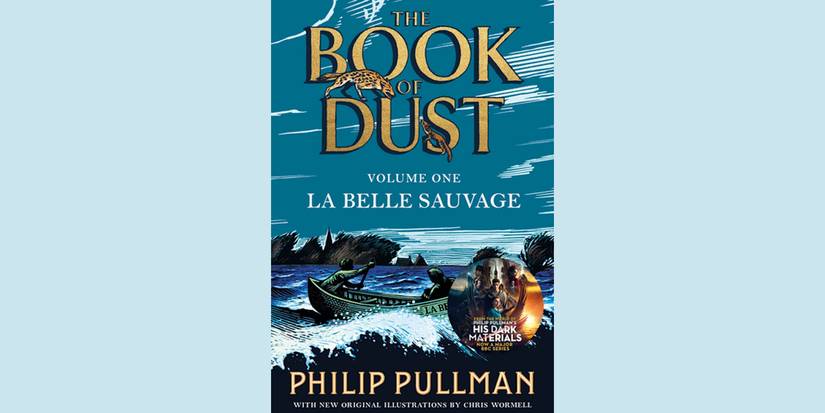
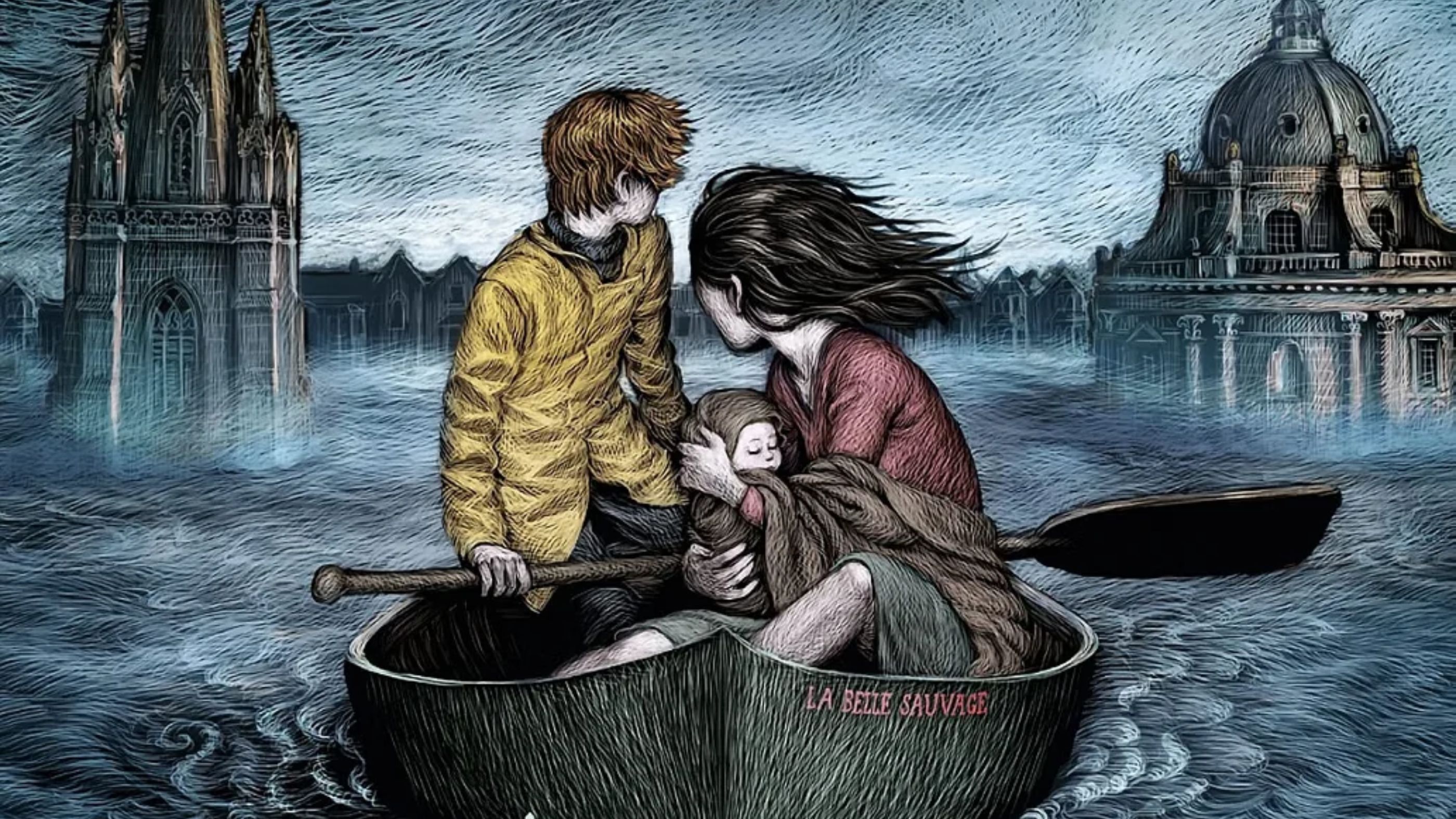
"If I told you half of what he's done to keep us alive and safe, well, you wouldn't imagine it could be true." His Dark Materials is rightly regarded as a landmark of children's fantasy, so expectations were sky-high for Philip Pullman's La Belle Sauvage, and yet the book arguably surpasses them. It takes place approximately a decade before the events of Northern Lights/The Golden Compass, following eleven-year-old Malcolm Polstead, who must keep the baby Lyra Belacqua safe during a devastating flood.
On top of the dangers of nature, our intelligent, observant young protagonist must also dodge political conspiracies, scheming religious authority, various secret organizations, and ever-present spies. Along the way, he crosses paths with a river giant and a fairy woman, and comes into possession of an alethiometer, the truth-telling device that will become central to the entire series. In short, a smart, entertaining tale that deepens Pullman's mythology.
KioskNews shows a cleaned-up reading view extracted from the publisher’s page — the original always lives on their site, not ours.