MND Local BCS: Stargazing, unchecked growth and an epic Baja 1000 hits the finish line
Dark sky tourism, or seeking out night skies whose brightness is undimmed by light pollution from cities, is a fast-growing travel category. Already estimated at US $10 billion worldwide each year, per Outside, its market value is expected to double within the next 10 years. Baja California Sur (BCS), home to the lowest population density in Mexico, is poised to be a major beneficiary, with skies perfect for stargazing in many locales.
Since December 2023, the astronomical societies Mira in La Paz and Merak in Mulegé, in collaboration with the Baja California Sur Council for Science and Technology, have been tracking the quality of night skies over BCS. Last year, they reported over 70 sites around the state with apparent visual magnitudes between 18 and 21, and seven more with magnitudes above 21.5, the threshold for a pristine “astronomical sanctuary” according to Dark Sky International.
As these regional vantage points from which to view cosmic glories have been increasingly recognized, so too have events celebrating them. The longest-running of these is “Noche de las Estrellas” (“Night of the Stars”), a national event observed in more than 120 destinations around the country, including La Paz, since 2009. The most recent edition of the astronomical fair, featuring over 20 participating organizations, took place on Nov. 14 in the state capital.

But for those who missed it, there’s another heavenly event upcoming in the state’s original capital, Loreto.
Festival Astronómico Cielo Mágico in Loreto
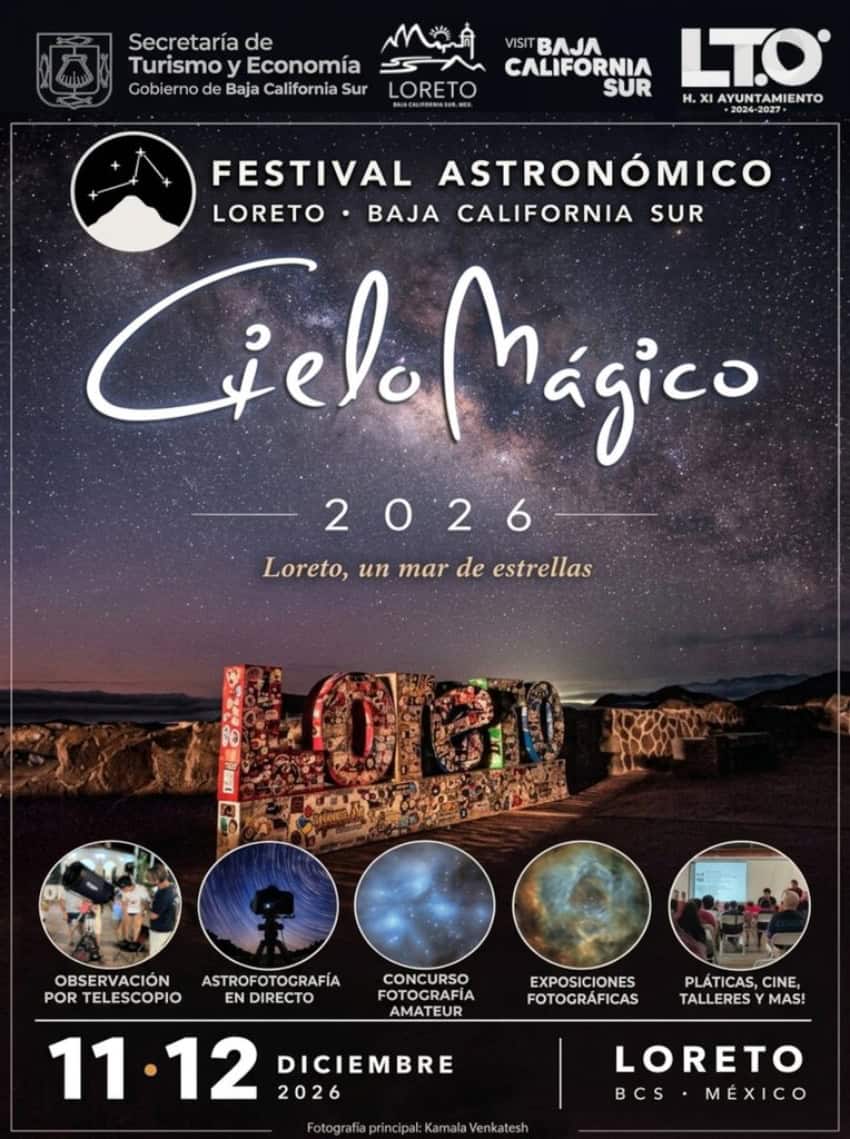
Loreto’s “Festival Astronómico Cielo Mágico“ (“Magical Sky Astronomical Festival”) brings together students and amateur stargazers, as well as scientists and astronomers — including David Rojas from the San Pedro Mártir Observatory in Baja California, Miguel Ángel Norzagaray from Mira, and Eduardo Sández Aguilar from Merak — for a two-day event in the Pueblo Mágico.
In addition to the telescopes set up for nighttime viewing (including at higher altitudes in the historic mountain community of San Javier), the festival will feature educational workshops, film screenings, visual exhibitions and astrophotography sessions that will help prep would-be entrants in the amateur night-photography contest.
Saturn, Jupiter, the Andromeda Galaxy and the Great Orion Nebula are all expected to be visible in Loreto in December.
Dates: Dec. 11-12
Location: Loreto and San Javier, Loreto Municipality, BCS
Cost: Free admission
Tackling unchecked growth in El Tezal
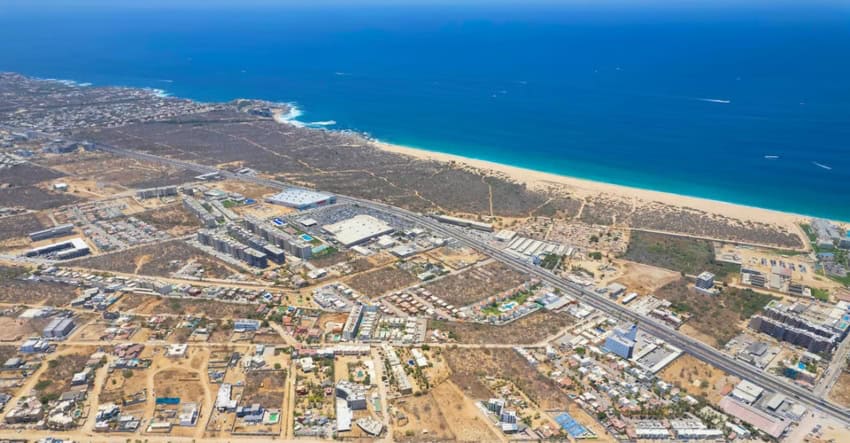
El Tezal emerged as a district composed of independent developments — from gated communities to condo complexes — about 20 years ago, and although outside the traditional boundaries of Cabo San Lucas, extraordinary growth since 2010 has brought the neighborhood within the expanding urban sprawl of the city.
Cabo San Lucas nearly tripled in population between 2010 and 2020 (soaring from 68,463 residents to 202,694), a massive leap that is still being felt in terms of the associated growing pains. This decade also saw boom times in El Tezal, as developments far outpaced infrastructure and public services. It’s not an uncommon situation in Los Cabos, but each rapidly-growing neighborhood develops its own unique collection of problems. In El Tezal, these include traffic bottlenecks, water scarcity, electrical grid overload, sewage issues and a lack of adequate parks, sidewalks and street lighting.
In an attempt to bring order to an increasingly chaotic situation, the Los Cabos City Council drafted a Partial Urban Development Plan (Programa Parcial de Desarrollo Urbano) for El Tezal in 2024, and recently opened the plan to public review and consultation before it progresses to final approval.
The consultation window runs from Nov. 12 to Dec. 2, with the first public hearing set for Nov. 17 (noon to 2 p.m.) at the Cabo San Lucas Delegation offices in Plaza León Cota Collins.
An epic finish to the 59th SCORE Baja 1000
MND Local BCS: Historic ‘Cabo to Cabo’ running of the Baja 1000 announced for November
The Baja 1000 has been run since 1967, so it took nearly 60 years for the iconic peninsular off-road race to take place entirely within the bounds of BCS, with the start and finish lines set in tourism hotspot Los Cabos (Avenida Centenario in San José del Cabo, to be exact).
It was worth the wait. The 59th SCORE Baja 1000 turned out to be one of the most remarkable in recent memory, thanks to the rugged yet picturesque routing and a record participation by Mexican drivers, with more than 121 competing, many hailing from the Baja California peninsula.
Ensenada native Alan Ampudia crossed the finish line first on elapsed time, but ultimately finished second after a post-race timing penalty. As a result, Bryce Menzies and co-driver Andy McMillin took the overall and Trophy Class crowns. Andy’s cousin Luke McMillin, who had already garnered Trophy Truck wins this year at the San Felipe 250, Baja 500 and Baja 400, finished third.
“It’s been incredible. San José del Cabo, the roads, the people,” Menzies said at the finish line. “At one point, it felt like we were racing through a forest … It was narrow and fast, with a great mix of technical terrain and wide-open stretches. That’s exactly the kind of racing I love.”
Chris Sands is a writer and editor for Mexico News Daily, and the former Cabo San Lucas local expert for the USA Today travel website 10 Best and writer of Fodor’s Los Cabos travel guidebook. He has also contributed to numerous other websites and publications, including The San Diego Union-Tribune, Marriott Bonvoy Traveler, Forbes Travel Guide, Porthole Cruise and Travel, and Cabo Living.
KioskNews shows a cleaned-up reading view extracted from the publisher’s page — the original always lives on their site, not ours.