More than 300 Russians killed as Moscow props up Mali’s junta, leaked data reveals
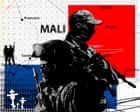
When the attack on Kidal began before dawn on 25 April this year, the Russian fighters were caught off guard. Within the first hour, checkpoints on the outskirts of the remote desert city nestled among the rocky hills of northern Mali had fallen to the insurgents, who pushed towards the police station where fierce fighting erupted.
“Everything was happening at once. Explosions were going off all around us, people were shouting,” recalled a former member of Russia’s Africa Corps who was stationed in Mali at the time and spoke on condition of anonymity. “Nobody knew where the enemy was coming from.”
The Kremlin-controlled forces and their Malian allies were facing a coordinated surprise assault by the al-Qaida-linked JNIM and the Tuareg-led Azawad Liberation Front (FLA), whose fighters used suicide car bombs and drones to break through the city’s defences.
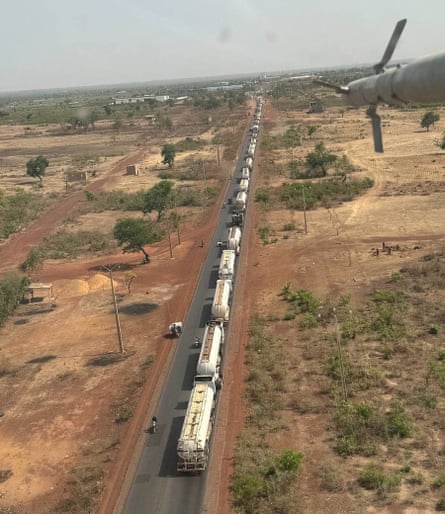
Leaked Russian state records suggest the losses were heavy that day. Death certificates of Russian fighters killed in Mali, held by Rosstat, Russia’s state statistics agency, were obtained by the hacker groups Cyber Partisans and Silent Crow and analysed by the Guardian.
The records show that 43 Russians died in Mali on 25 April, including six in Kidal and one in nearby Aguelhok. Others were recorded as dying in the capital, Bamako, and in Gao, where rebels shot down a Russian military helicopter that day.
By the following morning, the Russians had abandoned Kidal, which Russian mercenaries had helped capture in November 2023 and which Moscow had since held up as a showcase of its growing influence in Africa.
In all, the records list 349 Russian deaths in Mali between September 2023 and September 2026, most of which the Guardian was able to link to known battles with rebel groups.
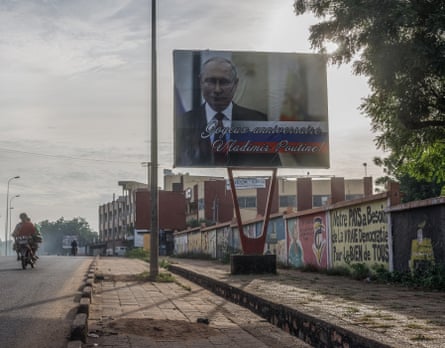
The figures offer a previously unseen glimpse into the human cost of Moscow’s efforts to prop up Mali’s military junta, in what has become Russia’s largest military deployment in Africa.
Two western officials who have travelled to Mali and were shown the data said the death toll was higher than previously estimated.
“That’s over 10% of Russia’s forces killed in action,” said one of the officials, speaking on condition of anonymity because they were not authorised to comment publicly.
Moscow does not publish its losses in Africa, and its foreign ministry did not respond to a request for comment.
The Wagner private military group, led by the warlord Yevgeny Prigozhin, first arrived in Mali in late 2021, a year after a military coup had toppled President Ibrahim Boubacar Keïta. French forces were ordered to leave the country as relations with the junta deteriorated, bringing an end to France’s decade-long counter-terrorism operation and leaving Russia as the regime’s main foreign protector.
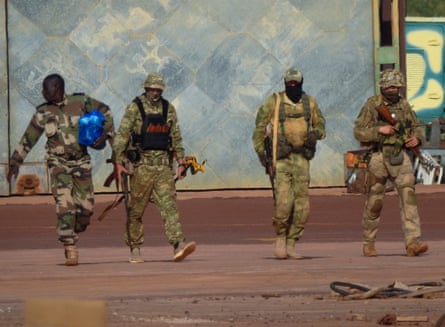
Wagner handed over its operations in Mali to the Africa Corps in June 2025, two years after Prigozhin led a failed mutiny on Moscow that discredited the group in the eyes of the Kremlin. By that summer, British intelligence estimated that about 2,000 Africa Corps personnel were deployed in the country.
The Africa Corps, closely overseen by Russian military intelligence, currently provides backing to several African governments in return for payment or lucrative contracts granting access to natural resources.
Despite the Russian presence, Mali’s security situation has continued to deteriorate. In late July 2024, Russian and Malian forces fought Tuareg separatists for several days near Tinzaouaten, on the Algerian border.
Wagner at the time issued a rare statement admitting losses, including the death of a commander, but gave no figure. Estimates from Russian sources ranged from about 20 to more than 80 dead.
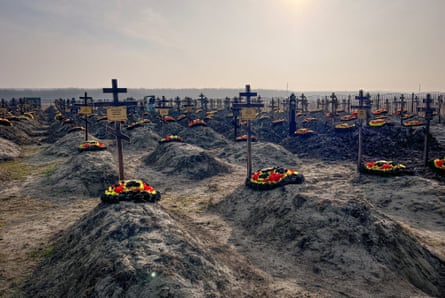
The Rosstat records list 70 Russians who died on 27 July 2024, all but one of them in the Kidal region. The figures make the battle of Tinzaouaten the deadliest single day for Russian forces in Africa since Wagner mercenaries first deployed to the continent in 2017.
The toll in Mali may have been driven up by Ukraine, which has extended its war against Russia to the Sahel. Kyiv has been assisting Tuareg rebels there, according to two people with knowledge of the operations. CNN has reported that about 15 Ukrainian specialists were deployed to Mali to help local rebel forces fighting Russian troops.
The records are probably an undercount. Registration often lags, and no Russian deaths in Mali are recorded for March 2026 although at least three Africa Corps fighters were reported killed in an ambush near Nampala that month.
The leaked data also sheds light on Russia’s military activity elsewhere in Africa. Central African Republic, where Wagner fighters guard the president, Faustin-Archange Touadéra, accounts for 30 deaths. While not all could be linked to known incidents, three men died on the night drones struck Wagner camps in Kaga-Bandoro in December 2023.
In Libya, where Russian forces back the eastern commander Khalifa Haftar and use his airbases as a supply route to their deployments in the Sahel, some of the recorded deaths were probably linked to a helicopter crash at the Maaten al-Sarra base in February 2026. On Sunday, Ukrainian drones sunk a Russian warship off the coast of Libya; it is unclear whether there were any casualties.
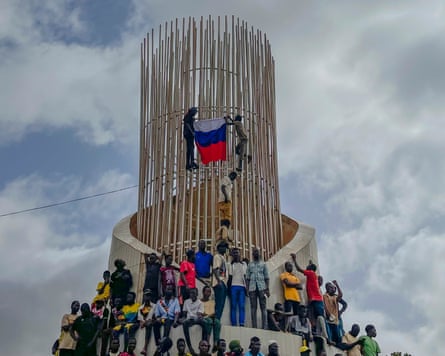
In Niger, where Russia’s Africa Corps moved in after the military junta expelled French and US troops, a Russian fighter died two days after Islamic State militants attacked Niamey airport in January, a previously unreported casualty.
Moscow has in recent months stepped up its effort to show it is back in control in Mali. On 6 October, Malian troops and the Africa Corps recaptured Kidal after what the army called an air and ground campaign.
A report this month by the US-based Conflict Insights Group (CIG) found that the Africa Corps had sharply increased its use of drones in Mali, including Lancet suicide drones, amid an intensifying air campaign.
The group wrote that the drone campaign had also targeted civilians, boostering support for the rebels. “Civilian deaths in the intensified air campaign, which the Africa Corps leads, are likely to aid insurgent recruitment,” it said.
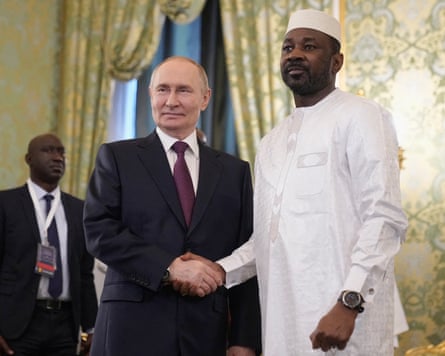
A western diplomat who works in the region said the attacks in late April had punctured the image of Russian military invincibility that Moscow and the junta had cultivated among Malians.
“Russia still wields considerable influence in Mali, but patience with its military performance is wearing thin.”
KioskNews shows a cleaned-up reading view extracted from the publisher’s page — the original always lives on their site, not ours.