‘Cash is king’: Sydney businesses lash government over surcharge ban
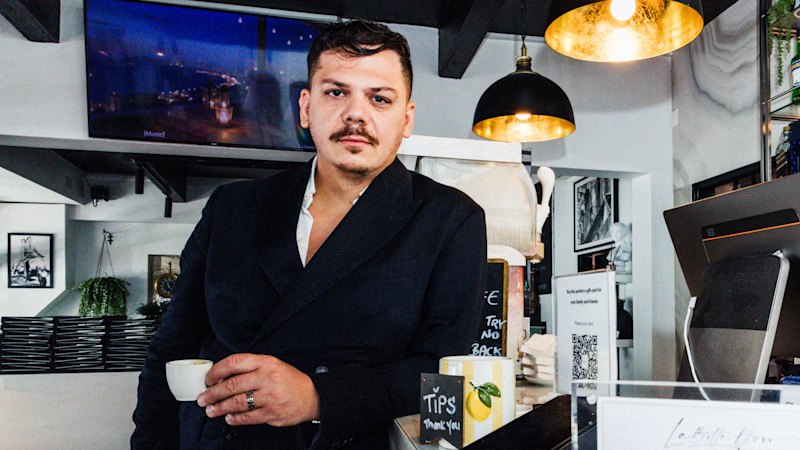
Small business owners across Sydney are reintroducing minimum amounts for card payments and putting up signs urging customers to pay cash as they face losing thousands of dollars each year due to the ban on card surcharges.
The Reserve Bank of Australia decided it was in the “public interest” to ban surcharges on card payments from October 1 and Prime Minister Anthony Albanese said it could make the cost of a cup of coffee cheaper.
But economists have since issued a warning that the new rules could be inflationary as businesses raise prices to recoup electronic payment costs under the changes, which were expected to save consumers $1.6 billion every year.
In Leichhardt, the owner of popular Italian trattoria La Botte Doro, Gabrielle Franco, has put up a sign saying “cash is king”, encouraging people to pay cash. That’s because he estimates he stands to lose between $12,000 and $16,000 should he absorb the costs of electronic payments, noting he declared all income to the Australian Tax Office.
“I can’t increase prices,” he said. “It is a small business. I work seven days like a dog. The government is taking $16,000 out of my pocket.”
He said the business was already squeezed by high inflation, while the surcharge ban would likely flow on to how much suppliers charged as they increased their prices to cover the cost of paying with a card.
“A lot of small businesses are going to shut – the suppliers are going to bring in extra charges for delivery,” he said.
“I worked so hard to start my business, get my visa, I work to pay my bills and make my customers happy. I am not angry, you just got to navigate things. It is what it is.”
“I need to perform for the government, they do nothing for me.”
At Cranes Newsagency in Marrickville, owner Geoffrey Ji put up a sign saying there was now a $10 minimum spend for EFTPOS payments, Opal card top-offs had a $35 minimum spend, and he would not be accepting any credit card payments whatsoever from October 1.
He estimates he stands to lose around $3000 a month should he carry on business as usual. “For the newspaper we make around 20¢,” he said. “If everyone uses the card, there is no profit.”
“This policy is a stupid policy.”
In response to the surcharge ban, the ATO said it would no longer accept credit card payments from small businesses that use them to pay tax bills in instalments to maintain cash flow. Following a backlash against that decision, the government said it would delay the ban for a year.
Owner of Alkalizer Café in Campbelltown, Shefali Pall, welcomed that announcement on Friday because she uses credit card payments to the ATO it as a cashflow management tool. But she said simply delaying the introduction of a credit card ban was not a solution.
“Businesses need flexibility. It is very simple: if you have a $30,000 to $50,000 ATO bill to pay, the credit card gives you that flexibility. They will have to find a middle ground. It is a cashflow management tool.”
As part of the reforms, the maximum fee a customer’s bank can charge to small businesses on a consumer credit card payment dropped from 0.8 per cent to 0.3 per cent of the transaction.
But the Australian Banking Association noted if costs did not decrease for small businesses, it was because other companies including Visa, Mastercard, Square or Tyro may have raised their fees while banks have reduced theirs.
On Saturday, Energy Minister Chris Bowen acknowledged different views but said ultimately, Australians, including small businesses, were better off with a reduction in fees and no surcharges.
“Australians will be better off because of the eradication of surcharges for credit card use. I think almost every Australian uses credit cards every day now, and we shouldn’t be charged for doing so,” he said.
Business NSW executive director Paul Nicolaou said rising costs and additional red tape was making it harder and more expensive to operate, noting 14,000 companies across the country entered external administration last financial year.
KioskNews shows a cleaned-up reading view extracted from the publisher’s page — the original always lives on their site, not ours.