As data centre power share heads for 21pc, Putrajaya moves to avoid ‘phantom demand’ hogging Malaysia’s grid
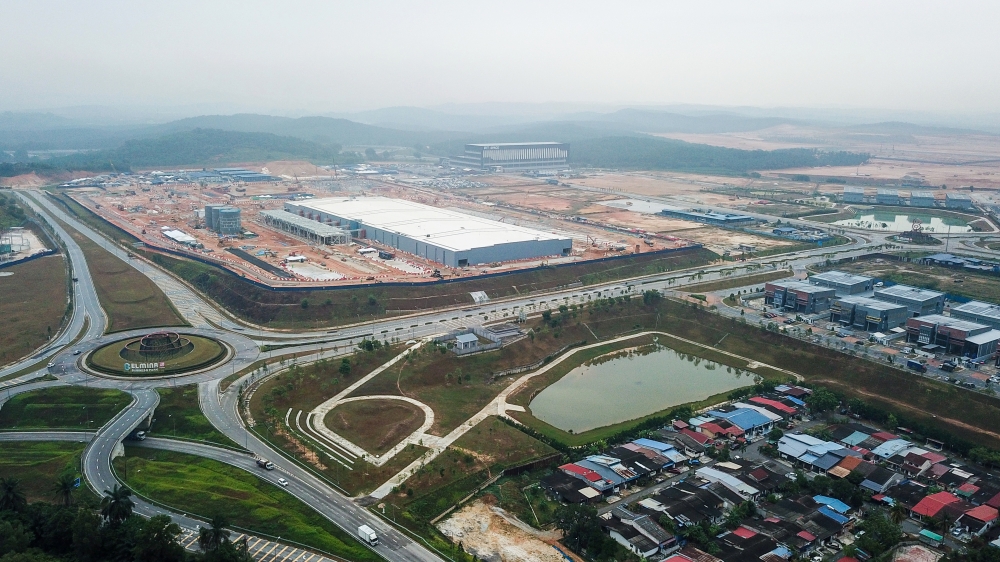

An aerial view shows Google’s first data centre under construction at Elmina Business Park, Selangor August 26, 2025. — Bernama pic
By Malay Mail
First Published: Wednesday, 04 Nov 2026 9:46 AM MYT
KUALA LUMPUR, Nov 4 — Data centre operators seeking grid connection in Peninsular Malaysia must now submit 10-year staggered energy projection plans and execute binding commercial pacts with Tenaga Nasional Berhad (TNB), as the federal government clamps down on speculative developers hoarding power capacity.
The regulatory conditions were detailed in a written parliamentary reply by the Ministry of Energy Transition and Water Transformation to Rompin MP Datuk Abdul Khalib Abdullah, who questioned the mounting electricity and water footprints of hyperscale computing facilities on domestic reserve margins.
Under the framework, grid access approvals now hinge on strict technical evaluations assessing actual load matching and localized transmission capacity. Rather than granting bulk allocations upfront, the government is releasing grid access in phases governed by binding Electricity Supply Agreements (ESA) to eradicate what the ministry termed “phantom demand”, referring to artificial capacity bookings that inflate reserve commitments without translating into operational consumption.
Official data highlights a widening disconnect between contracted grid allocations and real-world utilization. As of August 2026, contracted data centre capacity stood at 2,346 megawatts (MW), yet active facilities were drawing only 1,374 MW, representing 58.6 per cent of contracted volumes.
The discrepancy leaves nearly 970 MW of generation capacity ring-fenced on paper but unused in practice, though the ministry did not distinguish between standard phased facility ramp-ups and purely speculative bookings.
The power clampdown arrives as data centres claim an increasingly dominant share of national energy production. Computing facilities are forecast to triple their electricity consumption from 7 per cent of peninsular demand (10,544 gigawatt-hours) in 2026 to 21 per cent (39,289 Gwh) by 2030.
The ministry gave assurances that this expansion has been integrated into the Peninsular Generation Development Plan, projecting that the regional reserve margin will remain stable between 25 and 27 per cent through 2035 through phased renewable additions, new thermal capacity, and operational life extensions for existing power plants.
To prevent hyperscalers from crowding out domestic consumers on the public grid, the government is urging operators to tap green power through Third Party Access (TPA) under the Corporate Renewable Energy Supply Scheme (CRESS), which allows direct corporate procurement from independent green power producers.
Operators developing mega-scale campuses are also being pushed to incorporate dedicated on-site power generation, including micro gas turbines and industrial rooftop solar installations, to alleviate pressure on national baseload margins.
While the Energy Commission continues to monitor load growth alongside the Ministry of Investment, Trade and Industry’s Data Centre Task Force, the ministerial reply leaves key regulatory enforcement rules unresolved.
The government stopped short of detailing financial penalties for operators whose real-world energy draw falls short of their 10-year projections, or establishing formal mechanisms to claw back and reallocate stranded capacity to competing industrial users.
KioskNews shows a cleaned-up reading view extracted from the publisher’s page — the original always lives on their site, not ours.