Iran's Islamic regime continues war against secular entertainment industry
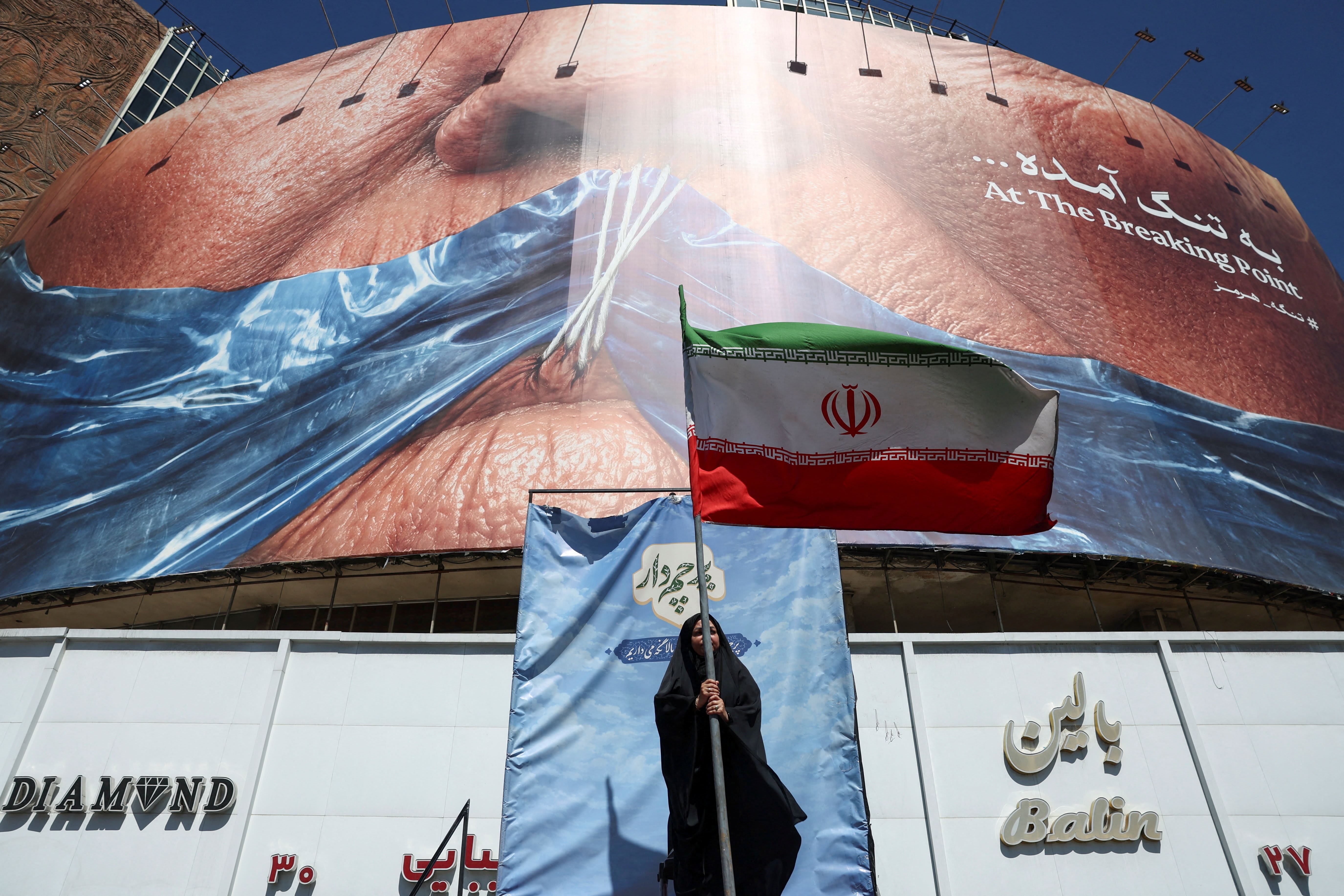
The Islamic Republic has continued targeting cafes and theaters in recent weeks, threatening closures or the loss of licenses if they allow female patrons or staff to go without the mandatory hijab, according to Iranian legal groups and media reports.
In one development, described as “bizarre” by the Iranian legal advocacy network Dadbaan, Ali Rafiee, commander of Tehran’s Public Places Police, defended the crackdown on cafes on Sanei and Iranshahr streets, arguing that they had become a hotspot for “pedestrian cruising.”
“Tehran’s Sanei and Iranshahr streets have become spots for setting up camp, and people come to these streets without knowing what they want and just take walks,”he said, while describing the music coming out from the venues as “vulgar.”
Dadbaan said that, from a purely legal perspective, “pedestrian cruising,” citizens’ gatherings in public spaces, live music performances, DJ sets, or playing backgammon, activities Rafiee complained of, are not criminal offenses and cannot serve as a legal basis for sealing a business.
“These statements indicate an arbitrary and extralegal approach that turns people’s presence on the streets and ordinary forms of social life into security issues,” the advocacy network wrote.

At least 42 businesses have been shuttered under new restrictions
“The police have no right to invent ‘red lines’ for citizens’ walking, music, or socializing in place of the legislator, and then punish business owners using the tool of sealing; such actions violate the principle of legality of crimes and punishments, the principle of proportionality, and citizens’ rights to freely use public spaces and engage in legitimate economic activities.”
According to Iran International, at least 42 businesses were sealed between late July and mid-August in different cities.
The diaspora site also reported that a theater company in Iran has been forced to announce that two actors are married, making their touch on stage permissible under Iran’s law.
“Dear spectator, in this performance a woman and a man embrace each other,” spectators were told before the play, Arash, could begin. “We have been asked to assure you that Sheida Khaligh and Keyvan Saketof have been married for years.”
The new announcement notably came after a criminal case was opened against a production company in the capital. Two actors, playing siblings in a drama titled Tehran Paris Tehran, embraced on stage, and the minor physical contact between actress Fatemeh Masoudifar and Mehrdad Sedighian was recorded by a spectator.
The Iranian judiciary’s Mizan news agency reported that the regime’s prosecutors acted over behavior that violated social norms and standards of propriety, while the Islamic Revolutionary Guard Corps-affiliated Fars News Agency complained that the scene was symptomatic of societal erosion and that there was no proper “supervision” over theaters.
The theater company has alleged that the camera angle is misleading, according to Iran International, and that the actors never made physical contact.
KioskNews shows a cleaned-up reading view extracted from the publisher’s page — the original always lives on their site, not ours.