Pakistan and the US factor as China looks to sell its J-35 stealth jets
Last month, the US published the fine print of a US$686 million upgrade deal for Pakistan’s F-16 fighter jets. The deal is for data link systems, new encryption gear and a refit that keeps the jets flying until 2040. The notice says Pakistan can protect the technology to “substantially the same degree” as the US government.
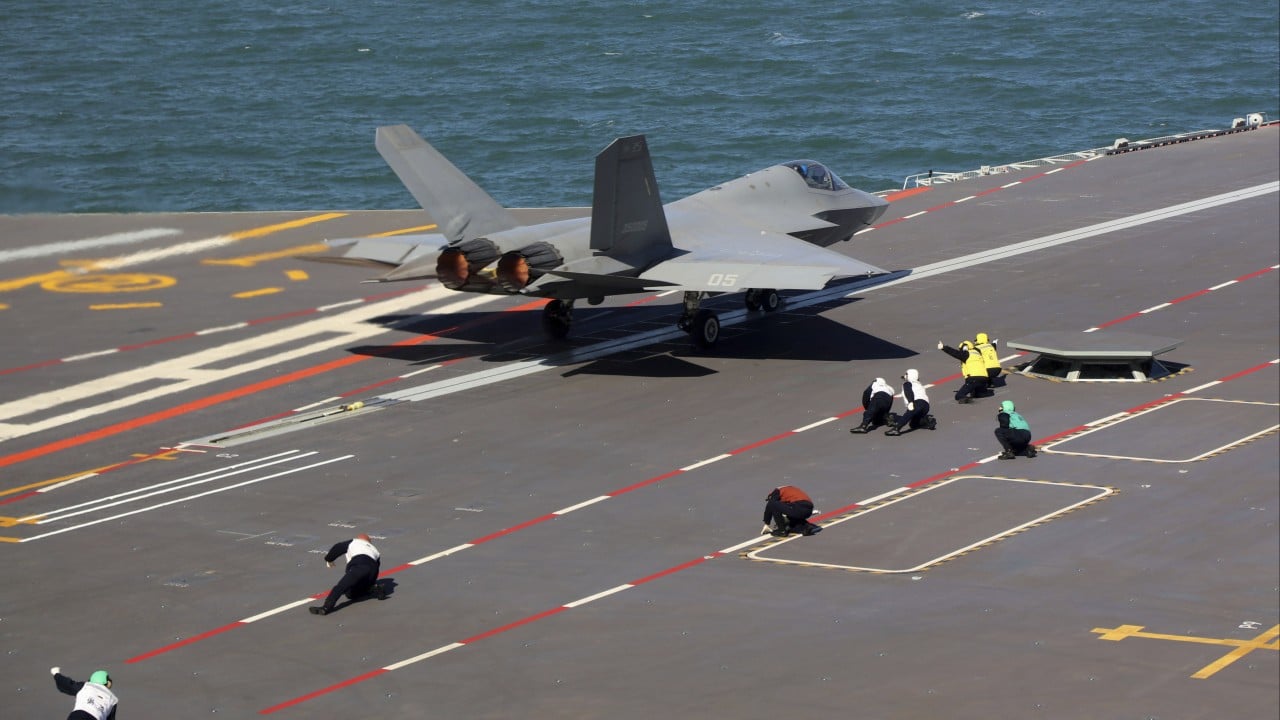
The Pakistan Air Force is also the only declared interested buyer of China’s J-35 stealth fighter, a generational leap in technology.
The Chinese jet first flew at the Zhuhai air show in 2024, and may well appear again when the biennial event returns in December. Aviation Industry Corporation of China (AVIC) has been pitching it as a cheaper F-35 – America’s stealth fighter jet.
In June last year, a Pakistani government social media post listed a Chinese offer of 40 J-35s, KJ-500 early-warning planes and HQ-19 air defences. It was taken down soon after. This May, the air force said it had signed an “initial collaborative agreement” to buy the J-35 but gave no details.
Last year, Defence Security Asia reported that the first J-35s would arrive by early 2026. None arrived; Pakistan Air Force sources dismissed online claims that some had. Neither government has announced a delivery, but the same site now says timing depends on how many jets can be spared after fulfilling domestic orders.
Then there is the money. Pakistan’s defence budget for this financial year is 3.01 trillion rupees (US$10.7 billion). The air force gets 573 billion rupees, and that has to pay salaries too. And all of it sits under a US$7 billion International Monetary Fund loan.
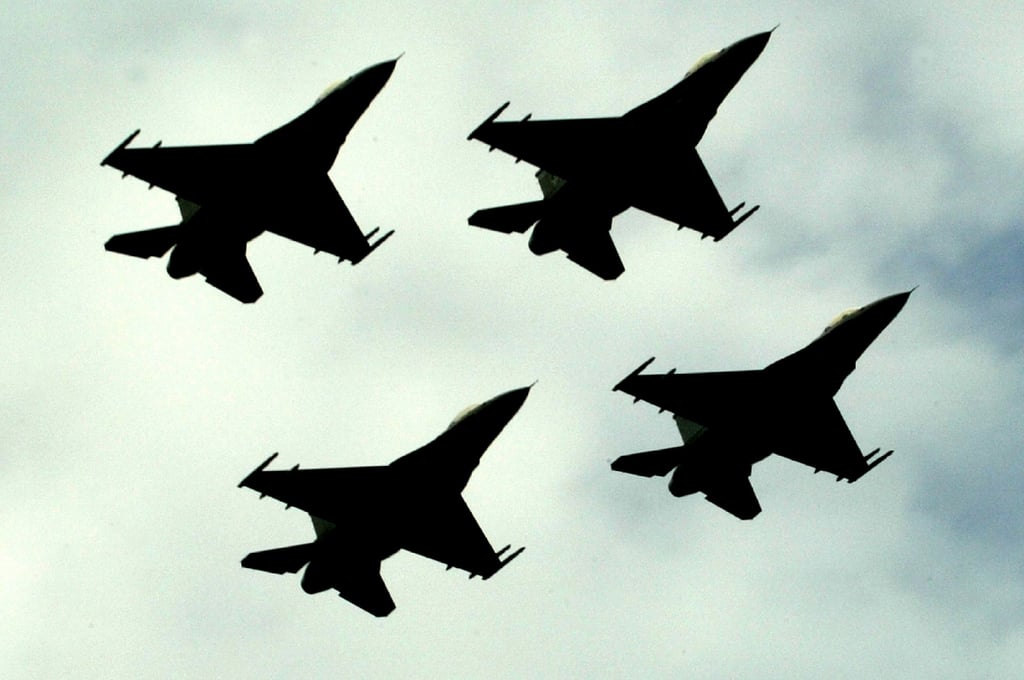
When Pakistan bought advanced American F-16s after September 11, the deal came with minders. Washington made Islamabad host and pay for a US technical security team at the Shahbaz and Mushaf airbases where the jets were to be deployed.
Because Pakistan also flies the JF-17, which it builds with China, those F-16s must be kept apart from other aircraft, with access tightly controlled. The programme still has money behind it. In February 2025, the Trump administration spared US$397 million for it from previously frozen foreign aid.
Washington takes this seriously. In July 2019, it threw Turkey out of the F-35 stealth jet programme for buying Russia’s S-400 air defence system. The US said the jet could not coexist with a Russian system that would be used to learn about it. As Ellen Lord, then the Pentagon’s acquisition chief, put it: “Turkey cannot field a Russian intelligence collection platform in proximity to where the F-35 programme makes repairs and houses the F-35.”
In July this year, US President Donald Trump said the US would lift sanctions on Turkey and consider restoring its participation in the Joint Strike Fighter programme. However, this month US Secretary of State Marco Rubio said a sale can’t go ahead until the S-400 issue is settled.
Pakistan has kept its fleets apart so far. Its Chinese-made J-10CEs, which first arrived in 2022, are kept at the Minhas airbase, well away from the F-16 bases.
The situation is more complicated when it comes to stealth jets. There is speculation that Pakistan’s air force, looking to eventually replace its ageing F-16 fighter jet fleet – the oldest ones turn 50 from 2030 – could turn to China’s J-35 stealth fighters.
Pakistan’s F-16 deal would see it fly the upgraded jets until 2040, keeping the US and Pakistan air forces closely linked for at least another decade. Pakistan is likely to keep the F-16s and J-35s separate as it has done with the J-10CEs.
But that arrangement has slipped once. After the 2019 clash with India, the US State Department rebuked Islamabad for moving F-16s to unapproved bases. Beijing would want guarantees of its own, and neither government has said where the J-35 will go or under what rules.
Pakistan’s aircraft complex at Kamra builds 58 per cent of the JF-17’s airframe and keeps the fleet flying. Yet the first jet to need a major overhaul had to go to AVIC in Chengdu in 2017. Buying complete Chinese systems leaves Pakistan less room for its own work on data links, weapons and integration.
With the J-35, the details that matter have not been published: who overhauls the engines, who gets into the software and who controls the mission data the sensors rely on.
Other buyers are likely to face the same test. China showed the J-35A at the Dubai Airshow last November, and the United Arab Emirates’ air force already flies China’s L-15 trainer jet.
The UAE has been here before: it shelved an F-35 deal in 2021 after Washington doubted it could protect American technology while working so closely with China. In December, the UAE’s Al Fursan aerobatic team is set to perform at the Zhuhai air show.
Selling to the UAE would mean Beijing deciding to trust its stealth secrets to an air force that nearly flew America’s F-35. By selling first to one of its closest partners, Beijing avoids that decision.
KioskNews shows a cleaned-up reading view extracted from the publisher’s page — the original always lives on their site, not ours.