Hajiji: Sabah setting high standards to protect carbon credit reputation
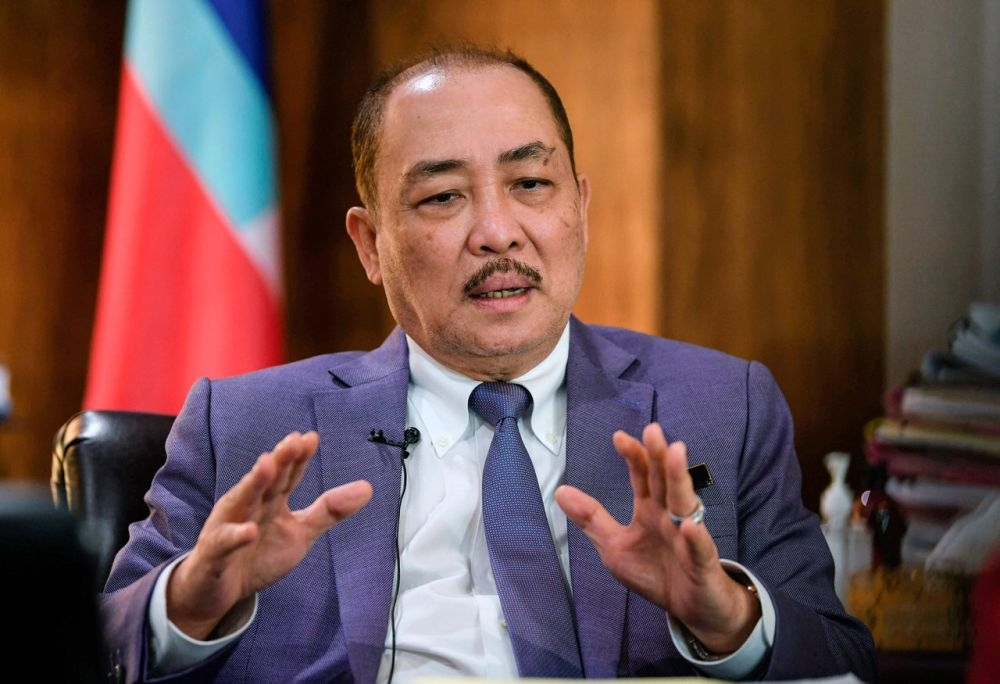

Chief Minister Datuk Hajiji Noor speaks during an interview at his office in Kota Kinabalu on September 14, 2021. — Bernama pic
By Julia Chan
First Published: Thursday, 24 Sep 2026 3:48 PM MYT
KOTA KINABALU, Sept 24 — Sabah will not permit unvetted projects or speculative trading to undermine its emerging carbon market, Chief Minister Datuk Seri Panglima Hajiji Noor said today, insisting that strong regulatory standards are vital to secure long-term investor confidence.
Hajiji warned that poorly structured initiatives, exaggerated climate claims, undervalued natural resources, and the exclusion of native indigenous communities would severely damage the credibility of Sabah’s carbon credits on the global stage.
“It is therefore in Sabah’s commercial interest to uphold the highest standards of environmental, social, financial, and governance integrity. Buyers will demand full transparency. We will not allow unvetted projects to be rushed to market or traded on speculation.
“Through strong regulatory discipline, we will protect Sabah’s reputation and brand,” he said.
His speech was delivered by Deputy Chief Minister II and State Finance Minister Datuk Seri Masidi Manjun during the Sabah Carbon Market Forum here today.
Hajiji highlighted that the forthcoming Sabah Climate Change and Carbon Governance Enactment 2025 will provide legal certainty by officially recognising the state government’s ownership of carbon rights, subject to statutory provisions.
The legislation will also establish clear operating rules for carbon-related activities, ranging from project approvals to credit trading.
While no enforcement date has been set, Hajiji noted that the framework will provide investors with a streamlined, coordinated regulatory gateway for project licensing and carbon registry entries.
Under the enactment, the newly established Sabah Climate Change Action Council will steer state climate policy, draft the state carbon budget for cabinet approval and gazettement, and harmonize inter-agency cooperation between state and federal authorities.
The council will be supported operationally and technically by a dedicated Climate Registry and Inventory Centre.
Acknowledging that high upfront development costs pose a significant hurdle to early-stage carbon projects, Hajiji called on the banking and investment sectors to step forward with innovative capital solutions.
“We therefore challenge the financial sector to develop or co-develop practical financing frameworks that can bridge this gap,” he said, directing his appeal to major market players including CIMB Bank Berhad, Bursa Malaysia, and institutional investors.
Hajiji stressed that Sabah must balance project credibility, commercial demand, and structured financing to ensure that nature conservation translates into sustainable economic returns.
He added that the state is actively pursuing a diversified portfolio of carbon assets, targeting high-potential sectors including the blue economy, sustainable agriculture, renewable energy, green technology, and carbon capture and storage (CCS).
Citing tangible progress, Hajiji cited the Kuamut Rainforest Conservation Project, which encompasses approximately 83,381 hectares of lowland and hill dipterocarp forests, as a premier example of Sabah’s potential. The project is projected to generate average emissions reductions of over 800,000 tonnes of carbon dioxide equivalent annually.
KioskNews shows a cleaned-up reading view extracted from the publisher’s page — the original always lives on their site, not ours.