Russia lifts plague lab-related measures. Should China – and the world – be relieved?
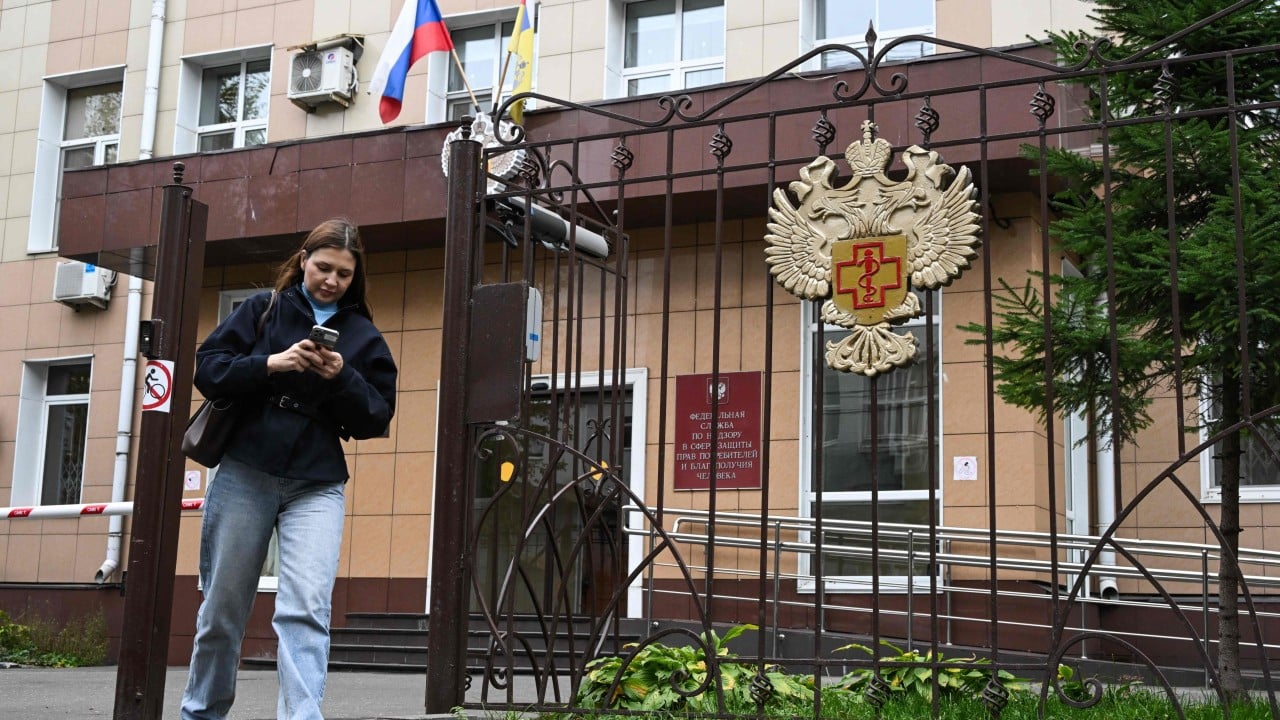
“No health issues related to infectious disease were detected. Laboratory analysis of nearly 5,000 samples revealed no dangerous pathogenic microorganisms,” Kobzev added. He did not indicate the cause of the lab worker’s pneumonia.

Experts stressed that even if plague had been involved as initially suspected, the risk of a broader outbreak would have remained low.
However, suspicions about the incident have continued to be aired across social media platforms, including in China, even after Russian authorities denied the pathogen’s involvement.
Russian consumer and health watchdog Rospotrebnadzor said over the weekend that the worker died of a “pneumonia of unknown aetiology”, according to Russian state news agency Tass.
The watchdog said samples taken from the patient found no microorganisms associated with the technician’s professional activities. It has yet to confirm the causative agent behind the pneumonia.
Kobzev said the employee “had been vaccinated and possessed immunity against the dangerous pathogens she worked with”.
Rospotrebnadzor also said no emergency incidents involving pathogenic microorganisms were identified at the institute, which was founded in 1934 to study the plague and now also works with anthrax and other infectious diseases.
Yuen Kwok-Yung, chairman of infectious diseases at the University of Hong Kong’s department of microbiology, noted that there was still little microbiological, epidemiological or clinical information available regarding the incident.
Based on a general understanding of infectious diseases, Yuen assessed that as long as the bacterial strain involved was not “bioengineered” to possess multidrug resistance or increased transmissibility, there should be no concerns about any effect on Hong Kong.
If the pneumonia was caused by the “natural” Yersinia pestis bacterium – denied by Russian authorities, Yuen noted – the outbreak would be contained if all lab, family and hospital contacts were properly quarantined and given antibiotics, he stressed.
“If the contact tracing, isolation of cases and quarantine of contacts are correctly done in this Siberian incident, there should not be any crossover into the Chinese mainland,” Yuen told the South China Morning Post in an email on Thursday.
Tedros Adhanom Ghebreyesus, director general of the World Health Organization (WHO), said on Wednesday that the agency had been in touch with Russia, which responded that no case of plague had been reported in the Irkutsk region.

According to the WHO chief, the Russian authorities also said they had placed about 200 contacts of the woman in quarantine.
Tedros said the agency had requested further information and more detail on what prompted the public health measures as well as the health status of the contacts.
“As we don’t yet have the full picture of this event, we are not able to conduct a full risk assessment,” he added.
Trump told US broadcaster NBC that he did not believe the incident was the result of biological weapons research.
According to several popular bloggers in China, suspicions over the incident and the official narrative may not be unfounded.
The concerns over bioweapons stem in part from a Telegram post by Siberian journalist and blogger Pavel Stepanov on October 2, which alleged that the infection potentially involved “military-grade strains”.
Stepanov’s post also speculated that the cause of the infection was the pneumonic plague and that the incident had occurred in a laboratory.
When asked about the outbreak on Tuesday, Chinese foreign ministry spokesman Guo Jiakun said “China and Russia maintain close exchanges and cooperation on the prevention and control of infectious diseases, including plague”.
Animals frequently move across the border between Russia and China, with the two countries establishing wildlife corridors to help the movement of species such as the endangered Siberian tiger.
WATCH: China-Russia presidential summit
According to the WHO, Yersinia pestis – the bacterium behind the infamous Black Death that swept through Europe in the 14th century – naturally occurs in wild animals, typically small mammals like rats, as well as their fleas, in Siberia and much of the world.
The form that began the outbreak that caused more than 50 million deaths in Europe was bubonic plague, which came about when the pathogen was transmitted from animals and fleas to humans.
Pneumonic plague is an especially contagious form that occurs when the bacteria infect the lungs. This can spread from human to human through respiratory droplets or contact with infected materials and is often fatal if left untreated.
However, pneumonic plague can be easily treated using antibiotics if administered early, according to the WHO.
Yuen said that since the advent of effective antibiotics along with improved hygiene and sanitation measures against rats and rat fleas, the risk of a plague epidemic or pandemic was “rather low”.
Brendan Wren, a professor with the London School of Hygiene and Tropical Medicine, told the Science Media Centre that while Yersinia pestis was “fairly transmissible”, it was not as transmissible as Covid-19.
In a statement posted by the centre on Monday, Wren said the plague remained endemic across the world. There were around 2,000 cases per year that could be treated with standard antibiotics, he added.
Tedros said the Russian side had confirmed that an epidemiological investigation was conducted following the incident.
“However, [the] WHO has requested further information on the laboratory tests conducted on the individual who died and the contacts, more detail on what prompted the public health measures, and details about the health status of the contacts,” he said.
“Timely, complete and transparent information sharing under the International Health Regulations is essential to clarify conflicting reports and enable an accurate assessment of potential public health risks.”
According to Tass, monitoring of the close contacts of the deceased researcher identified two cases of Covid-19 and two of rhinovirus, which causes the common cold.
Passionate about science? Dive deeper with the Dark Matters newsletter, a weekly in-depth analysis on China’s rise in science, technology and military that goes beneath the surface. Sign up for free now.
KioskNews shows a cleaned-up reading view extracted from the publisher’s page — the original always lives on their site, not ours.