Two new West Bank settlements inaugurated with cabinet ministers on hand
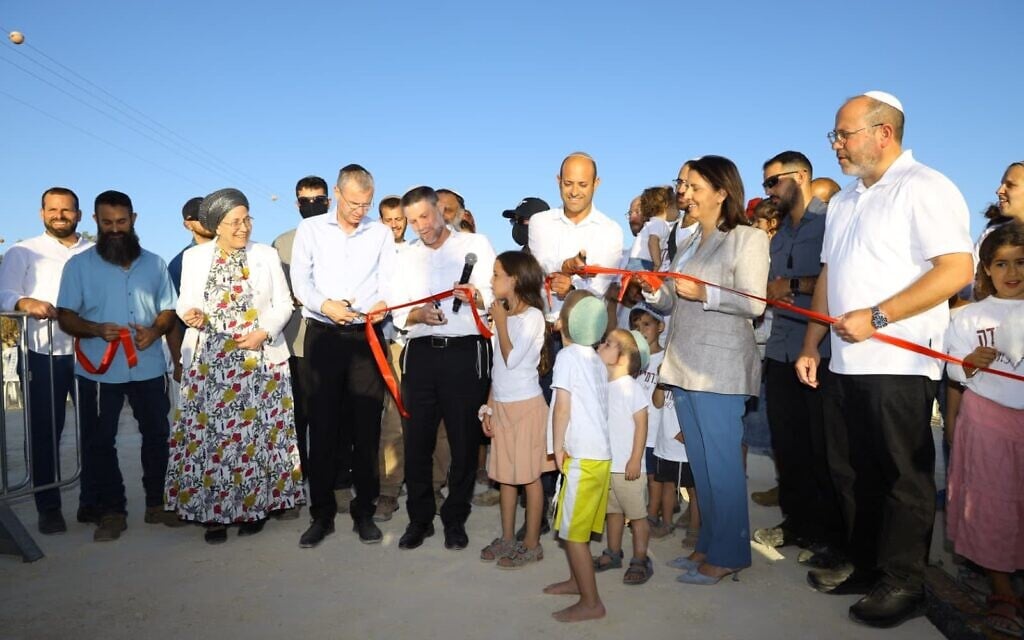
Two new West Bank settlements were inaugurated on Sunday in the region west of Hebron in the south of the territory, in the presence of cabinet ministers and other dignitaries.
An event held by the Mount Hebron Regional Council celebrated the establishment of Makeda and Karmei Yehudah in the southern West Bank, where new inhabitants have taken up residence.
The event also celebrated the coming establishment of Meged and Maale Einav, in the same region.
0:00 / 0:00
Promoted: Theatron Hotel and Residences

The new settlements were approved by the government in a series of cabinet resolutions over the past two years. The current government has approved the establishment, or retroactive legalization, of 104 new settlements over its four-year term, almost doubling the number of formally approved settlements in the West Bank.
Not all 104 settlements have been built and inhabited, however.
Get The Times of Israel's Daily Edition by email and never miss our top stories
By signing up, you agree to the terms
Finance Minister Bezalel Smotrich, Justice Minister Yariv Levin, Science Minister Gila Gamliel, and Settlements Minister Orit Strock were all present at the inauguration ceremony in Karmei Yehudah on Sunday.
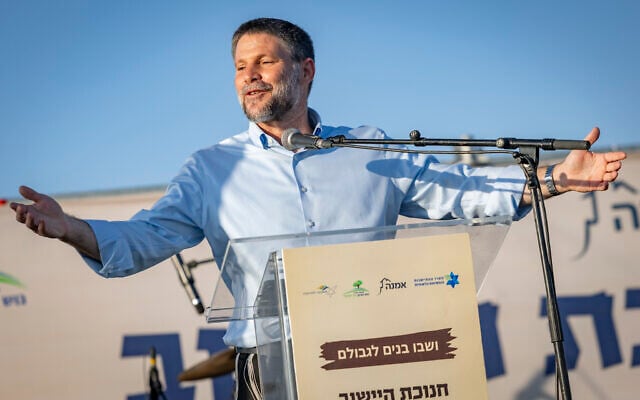
“We are continuing the settlement revolution, which means uprooting the terrible idea of establishing a terror state in the heart of the State of Israel,” said Smotrich, who, in his additional role as minister in the defense ministry, has spearheaded the government’s massive expansion of the West Bank settlements.
Smotrich claimed that the establishment of new settlements in the southern West Bank would create a “security belt” for cities inside sovereign Israel, such as Kiryat Gat, Kiryat Malachi, and Beersheba.
International opposition to the expansion of Israel’s West Bank settlements has been growing in recent weeks, with the British government imposing sanctions on the settlements earlier this month.
British Foreign Secretary Ed Miliband said the sanctions were a response to the huge expansion of settlements by the current government, the advancement of the highly controversial E1 project between East Jerusalem and Maale Adumim, as well as the severe violence perpetrated by settler extremists against Palestinian civilians, which Miliband said the government had failed to tackle.
Canada, France, Denmark, Finland, Iceland, Ireland, Norway, Poland, Portugal, Spain, and Sweden said, soon after the announcement of the UK sanctions, that they too would restrict trade with West Bank settlements, or consider doing so.
Help us report truthfully on social media

As a multimedia journalist, my job is to take the quality, fact-based journalism produced by The Times of Israel newsroom and make it accessible across every platform — from Instagram posts to podcasts to short-form videos.
This is how many, especially young people, consume news these days. But misinformation is rampant on social media. Our team at ToI produces accurate, responsible short-form reporting on Israel and the Jewish world.
If you believe in the importance of factual social media journalism, please consider joining our reader support group, The Times of Israel Community. Your financial support is essential to sustain responsible multimedia reporting.
— Gabriella Jacobs, multimedia journalist
Support our work Support our work Already a member? Sign in to stop seeing this
If you’d like to comment, join
The Times of Israel Community.
KioskNews shows a cleaned-up reading view extracted from the publisher’s page — the original always lives on their site, not ours.