Uncertainty now a standing condition of global economy: Finance minister Nirmala Sitharaman
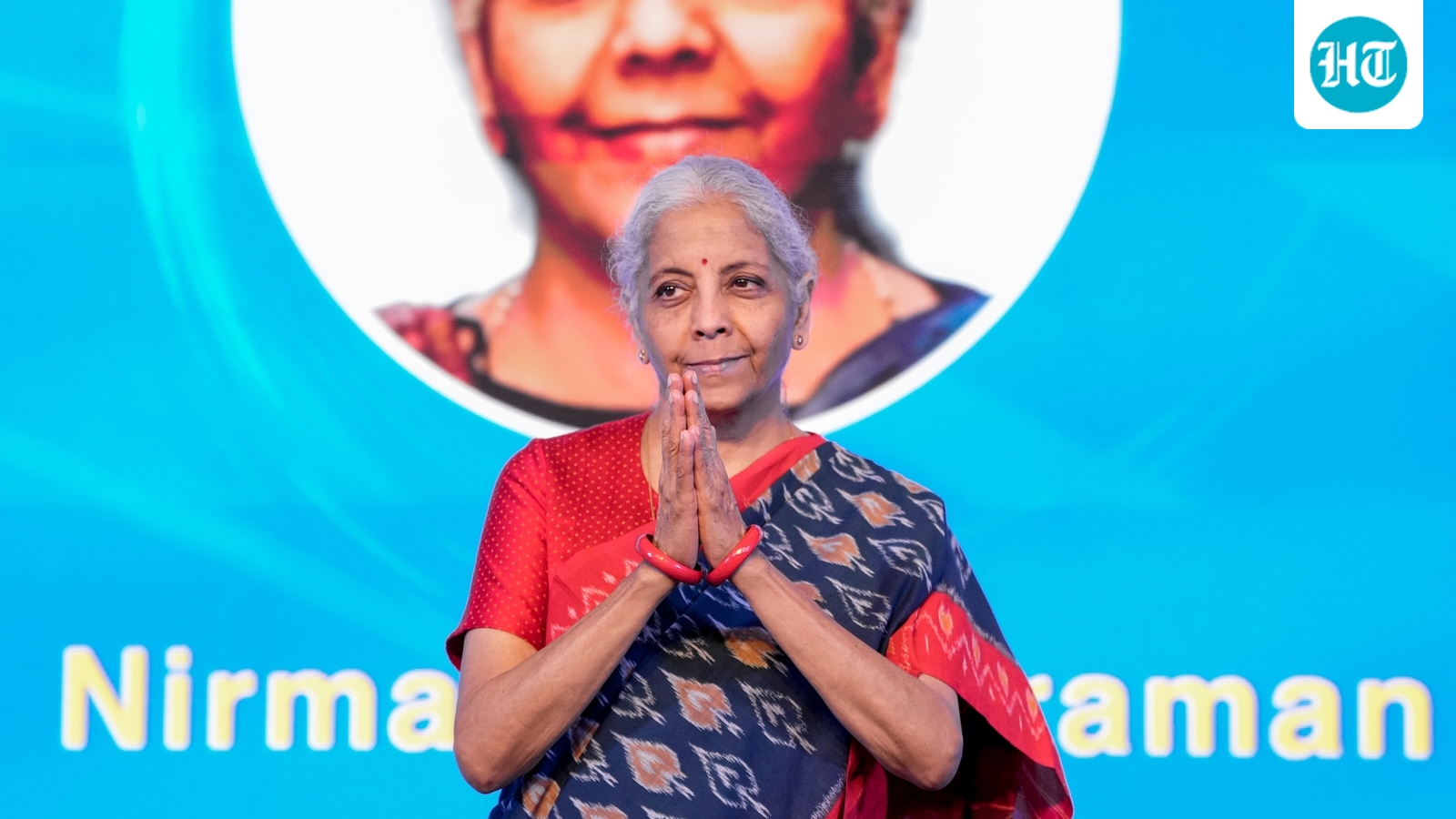
Uncertainty is now a standing condition of the global economy and policy must be designed around it, Union finance minister Nirmala Sitharaman said on Saturday, adding that national security requires structural autonomy in strategic inputs and robust, economical supply chains that replace fragile single-source dependencies with domestic operational depth.
Global uncertainty requires a new policy approach
India needs to keep building resilience as it goes along because it is not a one-time exercise, she said, citing the National Critical Mineral Mission, the Rare Earth Corridors, the India Semiconductor Mission 2.0 and small modular reactors (SMRs) as policy responses to impending challenges.
Speaking at the Kautilya Economic Conclave in New Delhi on the theme “Resilience in an Age of Flux”, she said: “Resilience is the capacity to absorb a shock without losing the growth path, and to retain the policy space to meet the next shock when it arrives. The evidence of resilience lies largely in the counterfactual, in the outcomes that did not materialise — an inflation spiral that did not take hold, queues that did not form at fuel outlets, banking stress that did not surface and a fiscal correction that was never forced.”
The Indian economy has endured sustained global headwinds as the government consciously built a resilient system layer by layer from 2014, Sitharaman said, adding that India remains the fastest-growing major economy in the world, with retail inflation range-bound and no deviation from fiscal prudence.
Also read: Development gains must reach all; it's necessary for democracy, youth's faith in it: Vice president
Key indicators show economic resilience
The economy remained resilient despite unrelenting global shocks in the last four years, she said. The world economy has been battered by a series of disruptions since March 2020: the Covid-19 pandemic, the wars between Russia and Ukraine and between Israel and Hamas, the US-Iran war that led to blockades of key sea routes, and ongoing trade disruptions from the weaponisation of tariffs.
She presented key macroeconomic indicators to show the economy’s resilience. India’s real GDP grew 7.8% in the first quarter of 2026-27; retail inflation stood at 4.82% in August, well below the Reserve Bank of India’s upper limit of 6%; the current account deficit was 0.5% of GDP in the first quarter; banks’ gross non-performing assets (NPAs) were at multi-decadal lows; and foreign exchange reserves stand at about $766 billion, she said.
Also read: Global debt, AI risks among 5 financial stability threats, says RBI Governor Malhotra
Oil dependence remains a major vulnerability
India faced both older vulnerabilities, such as crude oil price volatility, and newer ones, such as global trade barriers. The conflicts involving Russia, Ukraine and Iran, and the disruption around the Strait of Hormuz, added a new kind of shock, one that threatened the physical movement of oil and gas as well as their prices, she said.
India, which imports more than 88% of the crude oil it refines, saw extreme volatility in crude prices. Benchmark Brent crude, at $22.74 a barrel on March 31, 2020, soared to $104.71 on March 31, 2022, and has since swung between $70 and $100 in response to geopolitical developments. It was at $102.25 a barrel on Friday (October 2).
Also read: India must engage with its archive of economic ideas
Quantity shocks test state capacity, Sitharaman says
“A price shock can be cushioned with monetary and fiscal tools. But a quantity shock tests buffer stocks and the reach of delivery systems, and therefore the capacity of the state itself,” she said. The conclave is named after Kautilya, who she said wrote the world’s earliest treatise on economic policy and statecraft 2,300 years ago.
India withstood the global headwinds on the strength of its economic fundamentals even as global public debt rose to nearly 94% of GDP in 2025 and is projected to reach 100% by 2029, a level previously seen only after the Second World War, she said, citing the IMF’s April report. India came through this “remarkably well with its fundamentals intact and strengthening”, the minister said.
KioskNews shows a cleaned-up reading view extracted from the publisher’s page — the original always lives on their site, not ours.