Dakota Johnson Plays Marilyn Monroe in a New Film You Probably Haven't Heard About

David is a Senior Editor at Collider focused primarily on Lists. His professional journey began in the mid-2010s as a Marketing specialist before embarking on his writing career in the 2020s. At Collider, David started as a Senior Writer in late 2022 and has been a Senior Editor since mid-2023. He is in charge of ideating compelling and engaging List articles by working closely with writers, both Senior and Junior, as well as other editors. Occasionally, David also reviews movies and TV shows and writes episode recaps. Currently, David is also writing his second novel, a psychological horror satire that will, hopefully, be picked up for publication sometime next year.
Sign in to your Collider account
At the 2026 Busan International Film Festival, two-time Academy Award nominee Maggie Gyllenhaal presented her new short film, Flesh Impact. Commissioned by the Korean luxury car brand Genesis and described as a celebration of Marilyn Monroe in what would have been her 100th anniversary, the short film debuted at Venice and is now, slowly, making the film festival rounds, with Gyllenhaal ready to discuss both it and its iconic, timeless subject.
At first glance, the idea of a luxury brand hiring an acclaimed filmmaker to make a short film about the biggest star that Hollywood has ever seen might seem like an elaborate, albeit not particularly interesting, way to sell a car. Yet, Flesh Impact is not exactly concerned with Genesis; in fact, its main thematic interests lie not only in Monroe, but also in the two leading actresses at its center and, more importantly, in the nature of acting itself. That such a project could be the result of such a commission is interesting in and of itself, but it could also signal a new avenue for filmmakers to realize their art, especially at a time when some of our greatest are having trouble finding the necessary funding to make their ambitions come to life.
'Flesh Impact' Is a Proper Showcase for Ellen Burstyn
I'll be honest, Flesh Impact is not at all what I was expecting. Described by Genesis as "a love letter to one of cinema’s most enduring icons," the 17-minute short "honors Marilyn Monroe’s singular power to challenge convention and captivate the world across generations." Based on that description alone, you can hardly blame me for expecting... well, a car commercial. You know the type: gorgeous actress drives a fancy car while monologuing about stuff like fate and liberty and charting one's course. It's not unheard of for top talent to accept these gigs, either—every Super Bowl brings some Oscar winner or another in increasingly elaborate commercials full of gimmicks (this year, it was the Jurassic Park trio for Xfinity, and two years ago, it was Scorsese himself for Squarespace).
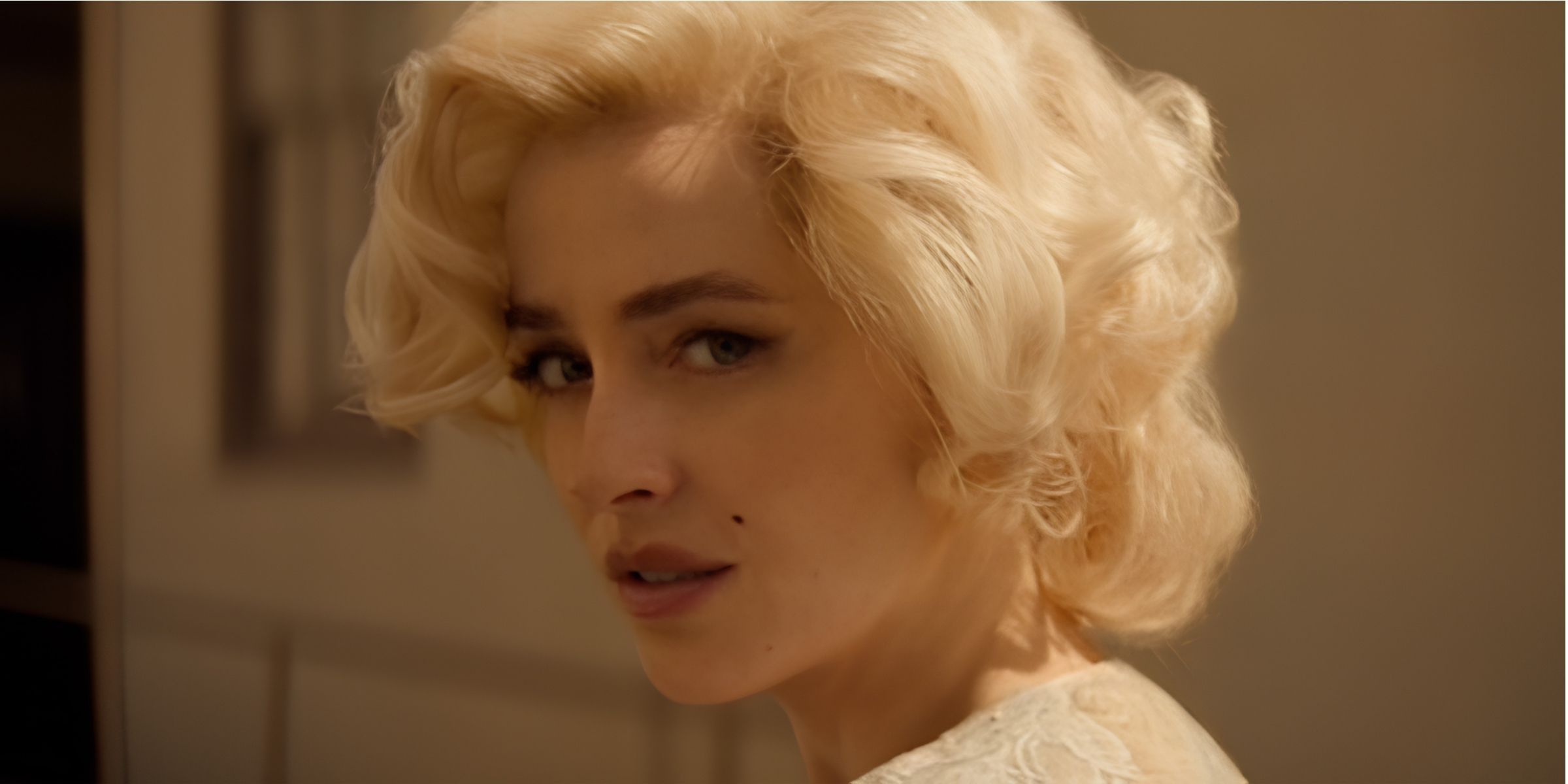
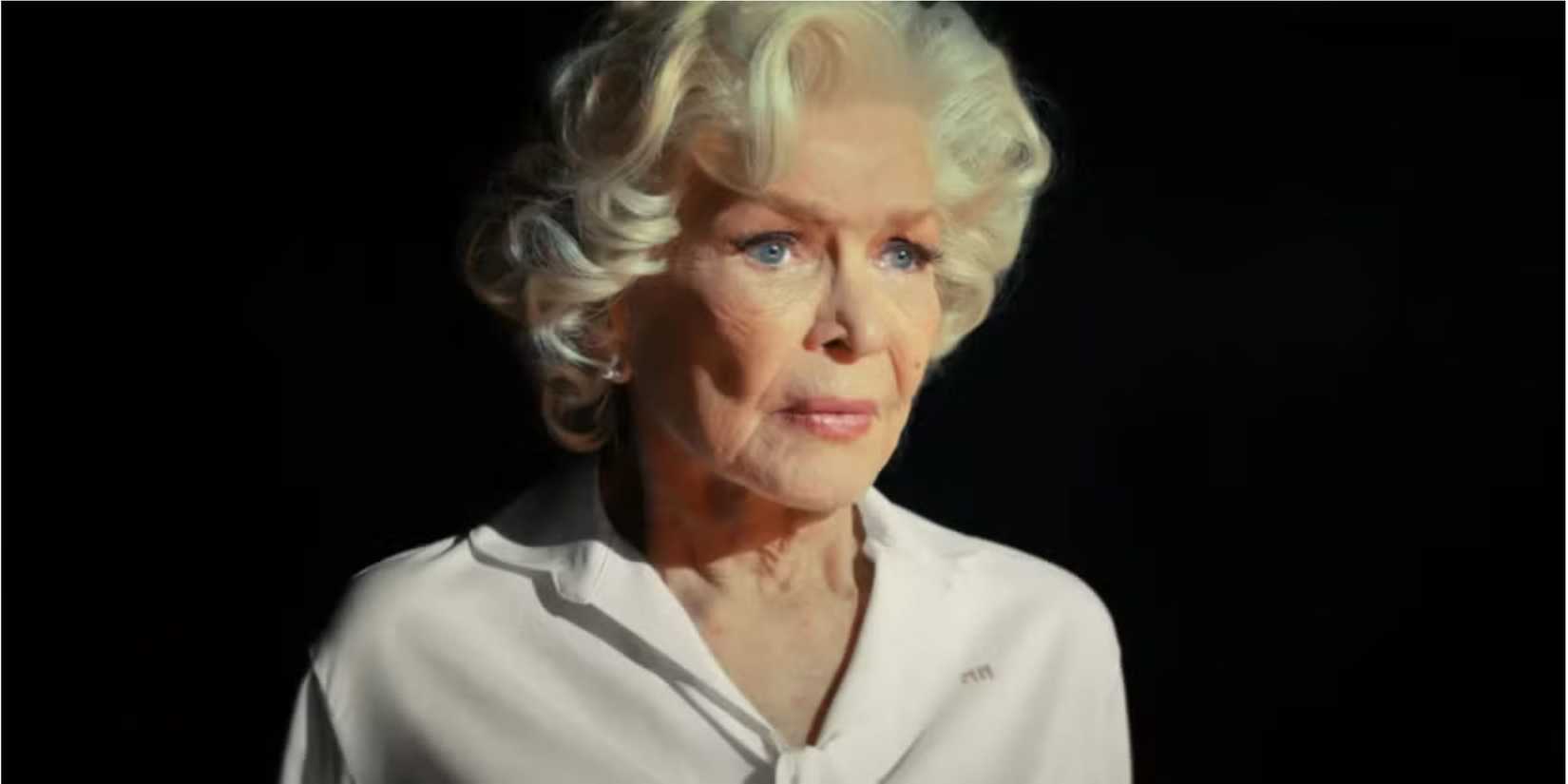
Imagine my surprise, then, when I instead got what I can only describe as a phantasmagoria of Marilyn Monroe, a melancholy rumination on the all-consuming nature of acting, mostly set in a gloomy theater with a minimalist approach in every conceivable way. The car barely factors in the short, making a quick appearance at the beginning and the end. Dakota Johnson plays young Monroe, but she's only sporadically utilized—if she has more than three minutes of total screen time, I'd be surprised. Instead, the entire focus is on Ellen Burstyn playing an older version of Monroe as she auditions for a haughty director (Gyllenhaal's husband, Peter Sarsgaard) and his assistant (The Pitt's Spideh Moafi).
Here is where things get truly meaty. Indeed, more than a eulogy of acting, and dare I say, more than an examination of Monroe's legacy, Flesh Impact works best as a love letter to Ellen Burstyn. For starters, it's a proper acting showcase for the 93-year-old legend, to the point where, if Academy rules allowed it, I'd seriously consider her a contender in the Best Supporting Actress category; she's that good. Gyllenhaal's tender, biting, angry screenplay gives her enough juicy material to explore, and the camera is entirely entranced by her ghostly apparition, but it's Burstyn's sheer talent, her overwhelming screen presence, that compels the most. For most of the short, she's standing alone on the stage, and we are transfixed by her: no gimmicks, no yelling, no need for bells and whistles.
What else could be expected from the woman who gave us Alice Hyatt, Chris MacNeil, and Sarah Goldfarb, other than her level best? Through Burstyn, Gyllenhaal delivers a powerful indictment of acting, or, in the director's own words, "the way we consume actors." There's no better subject than Monroe to deliver that message, and everyone involved understands it. Wisely, Burstyn and Gyllenhaal make this older version of Marilyn wise rather than wistful: there is a weariness to her tone, but from acceptance rather than defeat, and while the words themselves are angry, Burstyn's tone isn't. It's a fascinating approach that makes Flesh Impact, essentially a 17-minute monologue, a thoughtful and ultimately memorable examination of what it truly means to be a star.
'Flesh Impact' Was Always About Creative Freedom

When describing Flesh Impact, Genesis was very open about their desire to give Gyllenhaal complete creative freedom. From the get-go, the team aimed to have a writer-director to make the experience "even more authentic and even more special." Gyllenhaal was hesitant to accept the project, being mostly unfamiliar with Monroe's oeuvre and unsure if she'd have anything to add to her story. Finally, she settled for a story about Marilyn "between her big moments," and the project took shape from there.
Now, yes, Gyllenhaal has been very open about Genesis' request to use AI to transform Johnson into a younger Monroe, but she has also been very clear about them respecting her decision not to do it once she discarded the idea and opted for a more human approach. At Busan, she went further into it: "What I needed to try to do was imagine (Monroe's) internal life, and covering Dakota's face did the absolute opposite of that." Thus, what we have here is a company fully committed to supporting a filmmaker's vision from top to bottom, both out of respect for Monroe and a genuine appreciation for the arts.
Indeed, Genesis is already partnering with The Gotham Film & Media Institute to "provide finishing funds for three (3) NYC-set narrative/scripted short films in the final stages of production and/or distribution." The company is slowly getting more involved in the arts, already making a change beyond Flesh Impact. There is an interest and an active desire to create, and while it has begun with a short, it doesn't have to end there.
'Flesh Impact' Could Pave the Way for New Avenues of Filmmaking

We live at a time when some of our biggest geniuses can't get enough money to bring their visions to life. John Waters has opened up about abandoning an adaptation of his novel Liarmouth because of a lack of funding. Lily Wachowski can't get her $10 million thriller off the ground for similar reasons. Hollywood might slowly be turning into a monopoly before our eyes, and many filmmakers could potentially see their creative freedom limited. And yet, we also live at a time when a luxury brand is willing to go all-in on a ghostly and introspective rumination on stardom from a female writer-director, which begs the question: is it time to look elsewhere for funding?
Then again, it's not the same to fund a small-scale, 17-minute short compared to a $10 million thriller, but an abundance of funding sources has never been a rarity in Hollywood—the average mid-budget movie has multiple production companies involved. For now, Genesis has no plans to go into another major production, choosing to focus "on its existing film projects, including the launch of Flesh Impact in honor of Marilyn Monroe’s centenary celebration.” They will also be launching an FYC campaign for the short, and if they play their cards right, they could very well secure the nomination.
If the Oscars do indeed happen, and with the company's proven interest in the arts, who is to say Genesis won't return with another short movie or, dare we imagine, something more ambitious? And who is to say other companies won't see the opportunity ahead and follow suit? Filmmaking has always been a business of adaptability: when the studio system collapsed, new studios emerged, and when their time in the sun ended, the indie boom of the '90s happened. Directors and writers always go where the money is, and if Hollywood isn't providing it, perhaps other companies will. Genesis might be the first, but hopefully they won't be the last.
KioskNews shows a cleaned-up reading view extracted from the publisher’s page — the original always lives on their site, not ours.