Top 20 UPSC Current Affairs Pointers of the past week | September 7 to 13, 2026
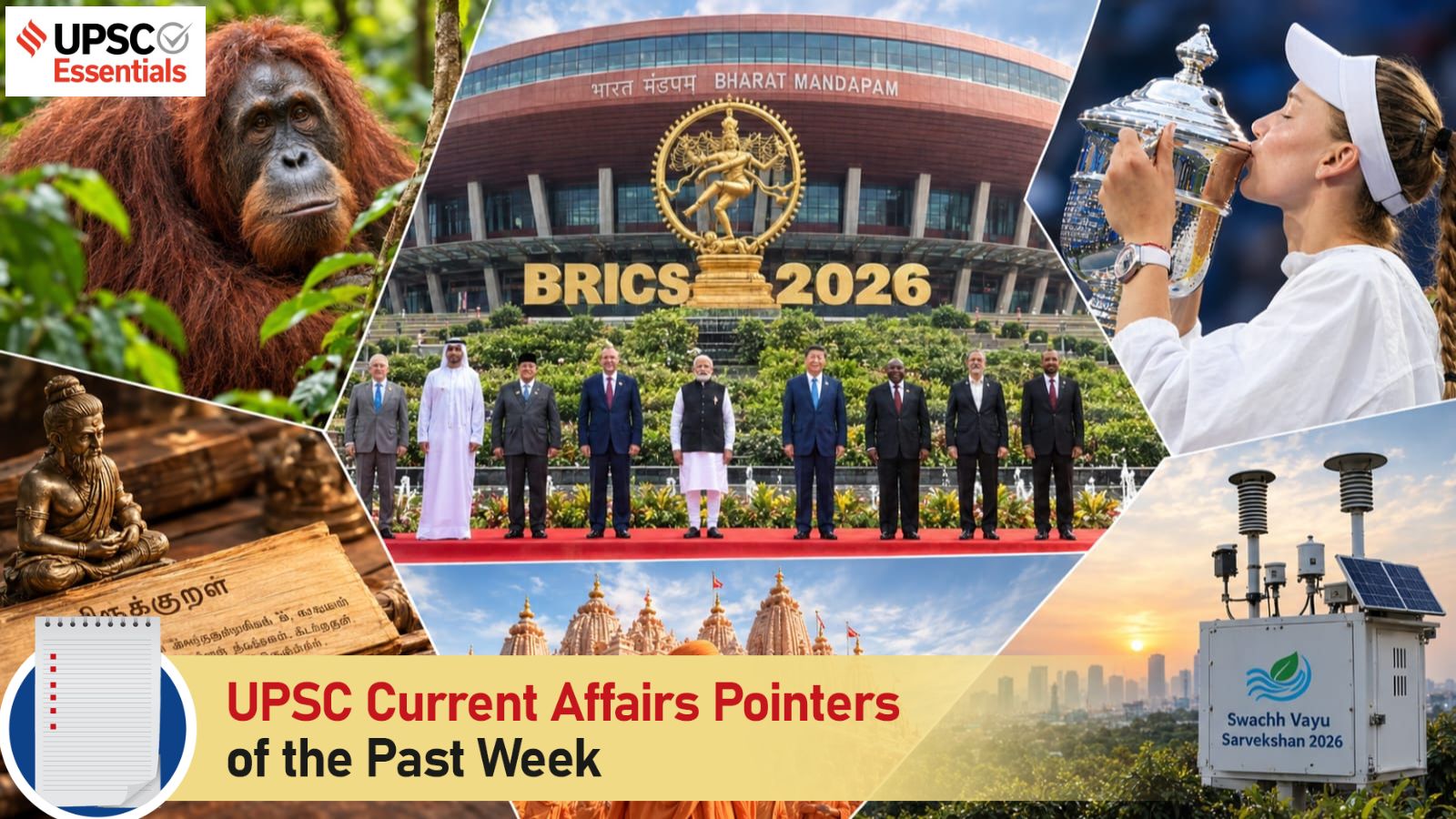
Every Monday, we bring you UPSC Current Affairs Pointers—a concise, exam-focused guide to help you stay ahead in your Prelims and Mains preparation.
(FYI: The data provided in these reports can be used to substantiate your Mains answer and create a broad understanding of the topic.)
— The 2026 ‘Swachh Vayu Sarvekshan’ rankings were declared in the national capital on September 7 and National Green Tribunal (NGT) chairperson Justice Prakash Shrivastava conferred the honours on all winning cities and towns. Awards were also conferred for the first time for municipal wards that have improved their air quality.
— Swachh Vayu Sarvekshan is an annual assessment of 130 cities under the National Clean Air Programme (NCAP). Launched in 2022-23, it is an initiative of the Ministry of Environment, Forests and Climate Change (MoEFCC).
— Efforts in waste management, road dust control, dust management from construction and demolition waste, and reductions in vehicular and industrial pollution are key parameters used to assess cities for final ranking. Improvements in the reduction of particulate matter 10 concentrations are given only a 2.5 per cent weightage.
— Cities and towns are divided into population-based categories: million-plus cities, cities with 3-10 lakh population, and cities with population under 3 lakh. A cash prize and mementoes are awarded to the top three cities or towns.
Story continues below this ad
— The NCAP was launched in January 2019 and covers 130 cities. The target for these cities is to reduce particulate matter (PM) 10 concentration by up to 40 per cent by 2025-26 compared with 2019-20 levels.
— Lucknow, the capital of Uttar Pradesh, topped the million-plus population category in the 2026 ‘Swachh Vayu Sarvekshan’ for its efforts to improve air quality.
— Indore, India’s cleanest city, secured the second spot, while Jabalpur finished third in the million-plus cities category. Meanwhile, Chennai, Jamshedpur, Kota, Kolkata, and Madurai ranked in the bottom five in this category, while Delhi and Mumbai ranked 30th and 37th, respectively.
— Last year, Indore topped the million-plus population category, followed by Jabalpur, while Agra and Surat jointly secured third place.
Story continues below this ad
— In the category of cities with a population between 3-10 lakh people, Rourkela topped, followed by Firozabad and Guntur in joint second place, and Amravati in third place.
— In category 3 – cities with less than 3 lakh people – Kalinga Nagar won the first position, Angul the second, and Talcher got the third place.
Art & Culture
• Swaminarayan Sampraday
— The Gujarat-based Bochasanwasi Akshar Purushottam Swaminarayan Sanstha (BAPS) ran into controversy in Paris after the Eiffel Tower was closed on September 7 following a staff protest over allegations that women employees were asked to step away from their posts during a visit by the sect’s delegation on September 5. BAPS is a sub-sect within the Swaminarayan tradition.
 An outside view of the BAPS Swaminarayan Hindu Mandir in Bussy-Saint-Georges, near Paris, France — the country’s first traditional Hindu mandir — during the idol consecration ceremony. (Handout via PTI Photo)
— Founder of the Swaminarayan Sampraday, Sahajanand Swami was born Ghanshyam Pande in Chhapaiya village near Ayodhya in 1781. He founded the Swaminarayan sect in Gujarat after being initiated as Sahajanand Swami in 1802 as a disciple of Swami Ramanand, and came to be known as Lord Swaminarayan.
Story continues below this ad
— Seen as one of Hinduism’s many bhakti traditions and as reestablishing “Sanatan dharma”, the sampraday then branched out into the Vadtal (Nadiad) and Ahmedabad sects (Gadi), founded by two of Sahajanand Swami’s nephews. Sahajanand Swami was a celibate and had no heirs, Raymond Brady Williams and Yogi Trivedi wrote in the book Swaminarayan Hinduism.
— The major sub-sects of Swaminarayan Sampraday are the: Shree Swaminarayan Vadtal, BAPS, the Maninagar Shree Swaminarayan Gadi Sanstha, the Swaminarayan Gurukul, Sokhda.
• Dogri script
— Dogri has long been written in Devanagari, With its own script falling into disuse, now, civic authorities in Jammu are attempting to revive Dogri by putting up signboards at prominent locations and institutions.
Story continues below this ad
— Dogri is an Indo-Aryan language, a major branch of the Indo-European language family that includes Hindi, Bengali and Punjabi, and belongs to the Western Pahari group, a cluster of related languages found mainly in the western Himalayas.
— Dogri is primarily spoken by the Dogras, the original inhabitants of Jammu and Kashmir’s Jammu division, besides smaller groups in the adjoining states of Punjab and Himachal Pradesh, and Pakistan-occupied Kashmir.
— According to the 2011 census, Dogri was the primary language of nearly 2.6 million people in India. It was recognised as one of the 22 scheduled languages of India under the Eighth Schedule in 2003 and declared one of the official languages of the Union Territory of Jammu & Kashmir in 2020.
— Notably, Namey Dogra Akhar is a modified version of Takri, the original Dogri language script that had been used until the reign of Maharaja Gulab Singh.
Story continues below this ad
• Thirukkural
— Prime Minister Narendra Modi gifted Russian President Vladimir Putin a translated version of the traditional Tamil text Thirukkural during their bilateral meeting on September 11.
— The text, authored by the poet-philosopher Thiruvalluvar (also known as “Valluvar”), is considered a seminal work of ancient Tamil literature and philosophy.
— Thirukkural, which translates to “sacred verses” or “sacred couplets” in English, consists of 1,330 stanzas or couplets, each of seven words called “kurals”. These are arranged into 133 chapters, each containing 10 couplets.
— Regarded as an influential work on ethics, Thirukkural is divided into three books:
Story continues below this ad
(i) The Book of Virtue (Dharma), dealing with morality (aram) and values of an individual. It has 38 chapters.
(ii) The Book of Polity, which is filled with teachings regarding materialism (porul) and socio-economic values. This has 70 chapters.
(iii) The Book of Love, which details teachings of love (inbam). It has 25 chapters.
— Thirukkural was first published in English in 1840. Since then, it has been translated into more than 60 different languages. The edition that Modi gifted Putin is in Russian, translated by Naira Mkrtchyan. It was published this year by the Central Institute of Classical Tamil as part of its Thirukkural translation series.
Story continues below this ad
International Cooperation
• BRICS New Delhi Declaration
— The 18th BRICS Summit was held on September 12–13, 2026, in New Delhi. The official theme for the Summit is Building for Resilience, Innovation, Cooperation, and Sustainability.
— The BRICS grouping on September 12 adopted the New Delhi Declaration, laying out common positions on issues ranging from trade and terrorism to artificial intelligence and institutional reform.
— Set against the backdrop of tariffs, trade tensions, and geopolitical fragmentation, the grouping expressed its opposition to unilateral trade restrictions amid efforts to ease cross-border payments and investments across BRICS countries.
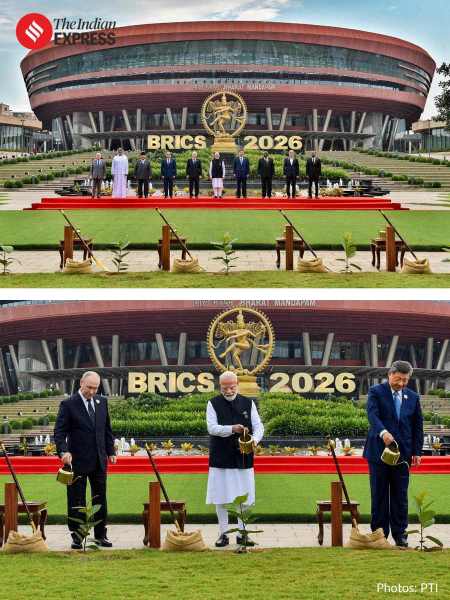
— The declaration also contained several India-specific outcomes, from harsher language on cross-border terrorism to new cooperation mechanisms spanning digital public infrastructure, health and finance.
— At the BRICS Leaders’ Summit, Prime Minister Narendra Modi proposed establishing a ‘Seafarers’ Emergency Support Network’ to provide timely assistance and ensure the safety of personnel working at sea.
— The BRICS nations announced four new agriculture initiatives, including the establishment of Agroecology and Regenerative Agriculture for Climate Resilience and Productivity and Digital Agriculture.
— The leaders also agreed to the establishment of a collaborative, non-binding, and farmer-centric BRICS AGRIN (Agro-Inputs, Genetic Resources, and Information Network), while welcoming the launch of a Global Forum on Farmers’ Rights in Seed Systems.
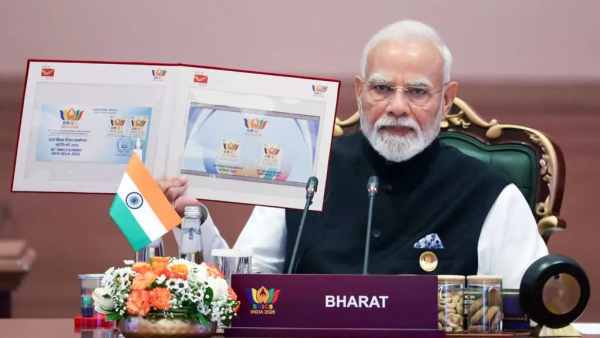 Prime Minister Narendra Modi launched two commemorative postage stamps marking two decades of BRICS during the 18th BRICS Summit at Bharat Mandapam in New Delhi. (Narendra Modi Photo Gallery/ANI Photo)
— The New Delhi Declaration agrees to support the establishment of a network of training hubs and centres of excellence (CoEs) for mental health, with Bengaluru-based National Institute of Mental Health and Neuro Sciences (NIMHANS) being the coordinating centre.
— The New Delhi Declaration acknowledges the significant progress in finalising the amendment to the BRICS Remote Sensing Satellite Constellation (RSSC) Agreement for including new space agencies.
BRICS Summit 2026: Key Initiatives Announced
THE SUMMIT
18th BRICS Summit, New Delhi
India hosted the 18th BRICS Summit as the grouping marked its 20th year. The New Delhi Declaration achieved consensus on divisive issues while avoiding direct triggers, with China set to host the next summit.
18th
Summit edition
45
Pages in declaration
20
Years since founding
AGRICULTURE & SCIENCE
New cooperation initiatives
BRICS nations announced initiatives spanning climate-resilient farming and expanded space cooperation.
🌱
Agroecology & Regenerative Agriculture
For climate resilience and productivity across member nations.
◆
Digital Agriculture
New initiative for technology-driven farming practices.
●
BRICS AGRIN
Farmer-centric, non-binding Agro-Inputs, Genetic Resources and Information Network; Global Forum on Farmers' Rights in Seed Systems also launched.
★
Space Council & RSSC Expansion
New BRICS Space Council drafted; Remote Sensing Satellite Constellation amended to include new space agencies, with focus on debris mitigation.
GOVERNANCE & SOCIAL
Reform proposals and social initiatives
PM Modi proposed mechanisms to sustain BRICS momentum, alongside new social-sector cooperation.
⟳
Continuity & Implementation Mechanism
Proposed by PM Modi to sustain momentum across chairships via the Troika (past, current, incoming chairs).
▲
BRICS Reform Roadmap
10 proposals for global governance reform, to be finalised by the next summit, focused on Representation, Responsiveness and Rule-making.
⚓
Seafarers' Emergency Support Network
PM Modi's proposal for distress alerts, medical aid, family communication and evacuation support at sea.
✚
NIMHANS as Nodal Body
Bengaluru's NIMHANS to coordinate a network of BRICS Centres of Excellence for mental health.
— To keep track of the initiatives, the Prime Minister proposed a ‘BRICS Continuity and Implementation Mechanism.’ This would enable the follow-up of all initiatives and outcomes through the Troika (the troika refers to a framework comprising past, current and incoming chairs of the grouping).
• East-West oil pipeline
— Saudi Arabia has temporarily shut its East-West oil pipeline after multiple attacks on the crucial network on September 10 , raising fresh concerns over global oil supplies already strained by disruption in the Strait of Hormuz.
— The pipeline, also called Petroline, is one of the most important Hormuz-bypass routes for exporting Saudi Arabian crude. Saudi authorities described the shutdown as a precautionary measure.
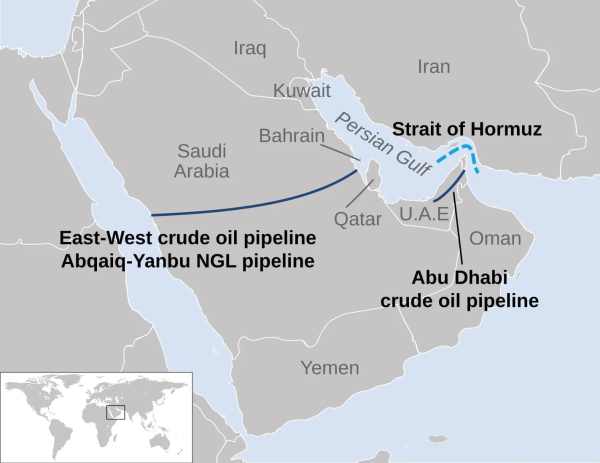 The East-West pipeline. (U.S. Energy Information Administration)
— The East-West Pipeline runs roughly 1,200 km across Saudi Arabia, from the Abqaiq oil processing centre in the kingdom’s oil-rich east to the Red Sea port of Yanbu in the west. From Yanbu, oil tankers usually sail east to Asia through the Bab el-Mandeb, while those headed west go through the Suez Canal.
— Operated by Saudi Aramco, the pipeline allows Saudi Arabia to move crude oil overland from its main producing region to the Red Sea, rather than shipping it from terminals on the Persian Gulf through the Strait of Hormuz.
Polity
• 3-year roadmap and a vision document for narcotics control
— Terming drug menace the country’s biggest national fight after ending Naxalism, Union Home Minister Amit Shah on September 6 unveiled a three-year roadmap and a vision document for narcotics control, with an aim to achieve a “drug-free India” by 2029.
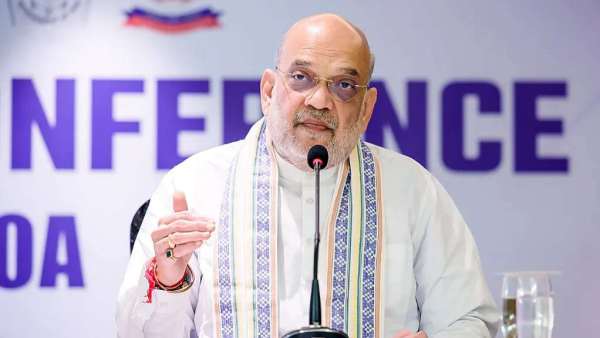 Union Minister for Home Affairs and Cooperation, Amit Shah, addresses a press conference on narcotics control, in Panaji on September 6. (PIB Photo Gallery/ANI Photo)
— Shah said a ‘four-pillar’ roadmap vision document has been prepared to achieve the target. These pillars include intelligence and operation-based enforcement, precursor and synthetic drugs control, demand and harm reduction, and capacity building and coordination.
Economy
• Dedicated Freight Corridor (DFC)
— Among the projects that Prime Minister Narendra Modi inaugurated in Vadodara on September 8 were the last three sections of the Western Dedicated Freight Corridor (WDFC), together covering 326 kilometres and developed at a cost of over Rs 20,700 crore.
— These three sections between Gujarat and Maharashtra — New Sanand (N)-New Makarpura, New Umbergaon-New Saphale, New Saphale-New Jawaharlal Nehru Port Trust (JNPT) — mark the completion of the 1,506-km WDFC, which runs from JNPT in Navi Mumbai to Dadri (Uttar Pradesh) near Delhi.
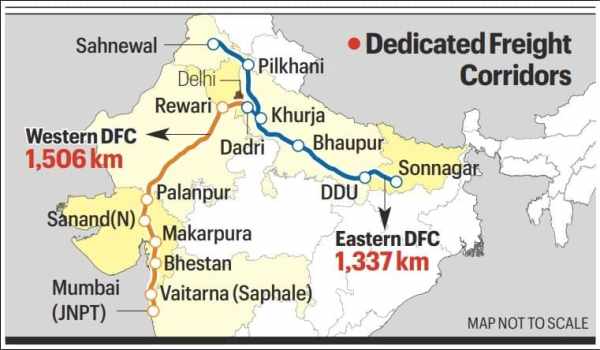 Currently, a total of about 426 freight trains run on both corridors daily.
— DFC, special freight corridors, are one of the biggest infrastructure projects undertaken by the Railways. Currently, a total of about 426 freight trains run on both WDFC and Eastern Dedicated Freight Corridor (EDFC) corridors daily.
— The 1,337-km EDFC runs from Ludhiana (Punjab) to Sonnagar (Bihar), and caters mostly to coal and mineral traffic from eastern India. The EDFC has two distinct segments — an electrified double-line segment of 936 km between Sonnagar (Bihar) and Dadri (UP), and an electrified single-track segment of 401 km between Ludhiana (Sahnewal) in Punjab and Khurja in UP.
— Due to their separation from the passenger network, the DFCs offer reduced transit time, less cost, and last mile connectivity at certain places. In Indian Railways, freight revenue plays a crucial role in subsidising passenger travel, with freight services accounting for over 65 per cent of the Railways’ total earnings.
— Notably, in its Budget this year, the government announced plans for a third corridor, connecting Dankuni in West Bengal to Surat in Gujarat. The detailed project report is being prepared.
Science and Technology
• Google’s India-first artificial intelligence models for agriculture
— Recently, Google has launched India-first artificial intelligence models for agriculture. Google DeepMind’s AnthroKrishi team has developed advanced satellite-based AI models that generate agricultural insights at scale and provide near real-time mapping and monitoring of agricultural fields and crops.
— The two models are Agricultural Landscape Understanding (ALU) and Agricultural Monitoring and Event Detection (AMED), and they are designed to generate field-level agricultural intelligence.
— ALU leverages satellite imagery and machine learning to draw agricultural boundaries of fields, the basic unit of agriculture and essential in creating meaningful insights. Similarly other landscape elements like water bodies and vegetation can be identified, which can help with drought contingency planning.
— AMED tracks crop types, sowing, and harvesting stages across 12 crops, leveraging six years of data refreshed twice a month to provide near-real-time crop monitoring. These datasets are accessible via APIs and visual layers integrated into Google Earth, despite the coverage being limited to India.
— The data for ALU model is refreshed roughly every 6 months. The AMED model data, which builds upon ALU, is refreshed more frequently, approximately every 15 days, to provide more timely insights.
• India’s first mainstream plug-in hybrid SUV and PHEV
— MG Hector Tomahawk is India’s first mainstream plug-in hybrid SUV. Unlike battery electric vehicles (BEVs) such as the Tesla Model S or the Tata Nexon electric that need to be plugged in before the battery is discharged, technologies such as HEVs and PHEVs bring together the best of both worlds.
— For instance, HEVs, or conventional hybrid electric vehicles combine a conventional internal combustion engine (ICE) system, like in a regular petrol car, with an electric propulsion system to produce a hybrid drivetrain that substantially lowers fossil fuel usage.
 PHEV (Image: US Dept of Energy)
— The PHEVs, or plug-in hybrid electric vehicles have a hybrid drivetrain that uses a combination of the internal combustion engine (ICE) and electric power for motive power, but is backed by rechargeable batteries, quite like the HEVs.
— A plug-in hybrid car has a comparatively bigger battery and offers a longer electric range than a traditional HEV. PHEV combines the positive attributes of internal combustion (range on long journeys) with those of plug-in electrics (a cleaner engine that typically costs less to run) in a single vehicle, resulting in a combination of features superior to those of a regular HEV.
Defence
• Sagar Manthan
— Kolkata-based Garden Reach Shipbuilders and Engineers (GRSE) Ltd on September 9 launched ‘Sagar Manthan’, an indigenous ocean research vessel (ORV) being built for the National Centre for Polar and Ocean Research (NCPOR), Union Ministry of Earth Sciences.
— In a major boost to India’s capabilities in deep-sea exploration and scientific research, the Rs 840-crore research vessel is expected to be ready for use by early 2028.
— ‘Sagar Manthan’ is a 89.5-m long and 18.8-m wide ORV with a gross tonnage of 5,900 tonnes, and speed of up to 14 knots at 90% maximum continuous rating (MCR). The vessel was launched at the GRSE’s Rishi Bankim Shipyard in Kolkata. The launch comes just five months after the keel-laying of the vessel.
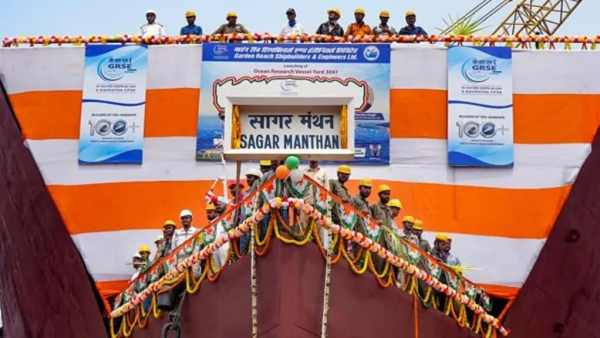 Officials during the launching ceremony of Ocean Research Vessel (Yard 3041), officially named ORV Sagar Manthan, at the Rishi Bankim Shipyard, in Kolkata. (PTI Photo)
— Once delivered, the ORV will be capable of underway swath multibeam as well as geophysical seismic surveys in coastal seas and deep waters at a maximum depth of 6 km. The vessel will also be able to carry out conductivity, temperature and depth (CTD) profiling and water sampling operations such as biological sampling using vertical and horizontal methods through various nets.
— The research vessel will also effectively carry out surface and deep-sea mooring and data buoy operations, seabed sampling using corers and grabs as well as rock dredging with chain bag dredges. The vessel will also undertake underway atmospheric observations, surface meteorological and current measurements and collect upper air data.
Health
• Endometriosis
— India’s first genome-wide study of the Endometriosis (where tissue lining the uterus overgrows outside it) has found evidence that genetic susceptibility may play a role in Indian women, while also identifying genetic signals that could be particularly relevant to the Indian population.
— Endometriosis affects about 10% of women of reproductive age, according to widely cited estimates. Despite its prevalence, diagnosis is often delayed for years, with symptoms such as severe menstrual pain frequently normalised or dismissed.
— The study comes as the World Health Organization (WHO) is developing new guidelines on endometriosis management, reflecting the growing recognition of the disease as a major public health concern.
• “Gram-negative” bacteria
— A major study of hospitalised patients across India has found that infections caused by antibiotic-resistant “Gram-negative” bacteria are more likely to be fatal and more expensive to treat than infections caused by drug-susceptible strains.
— Gram-negative bacteria are a group of bacteria that can cause infections in different parts of the body, including the lungs, urinary tract, wounds and bloodstream. They include common hospital pathogens such as Escherichia coli (commonly known as E. coli), Klebsiella pneumoniae, Acinetobacter baumannii and Pseudomonas aeruginosa.
— These bacteria can be particularly difficult to treat when they develop resistance to antibiotics. One important group of antibiotics used for serious infections is carbapenems. When these bacteria become resistant to carbapenems, doctors have fewer effective medicines available to treat patients.
• SAT-1 Foot-and-mouth disease
— After around 60 years, a serotype of foot-and-mouth disease (FMD) is being reported again in parts of Europe and the Middle East. What makes this “outbreak” even more attention-worthy is that it is also appearing in countries where it has never been detected before.
— FMD SAT-1 is one of the seven serotypes of the foot and mouth disease virus. It has traditionally been associated with parts of Africa, which is why its detection in regions outside its usual range is significant.
— FMD is highly contagious, and it doesn’t need direct contact between animals to move from one place to another. The virus can spread from infected animals as well as through contaminated vehicles, equipment, footwear and animal products.
— For an infected animal, the illness can be painful and disruptive. It typically begins with fever, followed by fluid-filled blisters and sores in the mouth, on the tongue and around the feet.
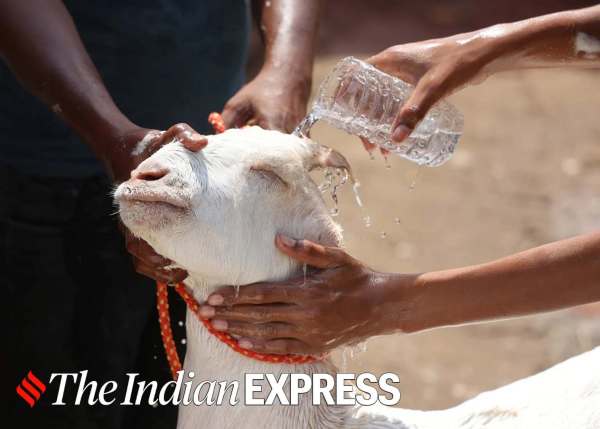 FMD affects cloven hoofed animals, including cattle, buffalo, pigs, sheep and goats. (Image: Express Archive)
— Importantly, FMD is not considered a significant human health threat, but its impact on livestock productivity, milk yields, farmer incomes and the wider agricultural economy can be substantial.
Environment
• Orangutans
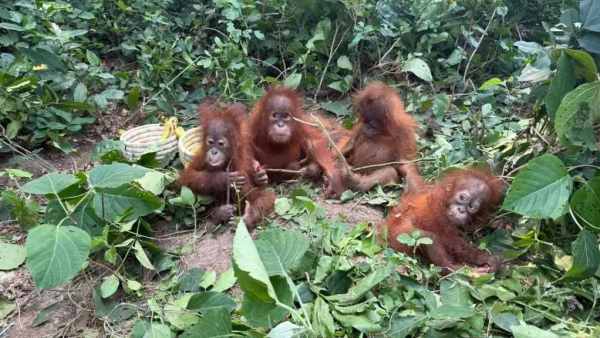 The orangutans were spotted near the Badapai village forest in Bhograi area of the coastal district.
— Residents near Badapai village in Balasore’s Bhograi area spotted five juvenile orangutans. Officials suspect the apes were brought into the state as part of an international wildlife-smuggling operation.
Field notes — great apes of the rainforest canopy
What are orangutans?
Asia's only great ape, and the largest tree-dwelling mammal on Earth — found nowhere in the wild except two islands, thousands of kilometres from where five juveniles were just found in an Odisha forest.
At a glance
Built for a life in the treetops
Orangutans spend nearly all of their lives above the forest floor, using extraordinary arm strength and grip to move hand over hand through the canopy rather than leaping like monkeys.
|
1–1.5 ft Height of a juvenile, like the five found in Odisha |
2.2 m Arm span of an adult male, nearly twice their standing height |
40 yrs Average lifespan in the wild |
55 yrs Maximum lifespan reached in captivity |
Native range
Two islands, and nowhere else
Wild orangutans exist only in the rainforests of Borneo and Sumatra in Southeast Asia. There is no natural land corridor connecting these islands to India — which is why officials say the Odisha sighting could not have been a natural migration.
|
Sumatra & Borneo The only two places wild orangutans exist — both in Southeast Asia |
Balasore, Odisha Where the five juveniles were found — roughly 2,700 km away |
The Balasore DFO's view "Chances of natural migration is less as there is no corridor link. It must be a human-induced act." |
— Orangutans are Asia’s only great apes and hold the title of the largest tree-dwelling (arboreal) mammals on earth. Native only to the rainforests of Borneo and Sumatra, these highly intelligent primates are currently facing a severe survival crisis, with all three species classified as Critically Endangered on the IUCN Red List.
Physical traits
Long arms, red hair, high intelligence
| Arboreal | The largest tree-dwelling mammal species on Earth |
| Great ape | Asia's only great ape — close relatives of chimpanzees and gorillas |
| Highly intelligent | Known for tool use, problem-solving, and complex social learning |
| Reddish coat | Shaggy, reddish-brown hair distinguishes them from other apes |
Conservation status
All three species are critically endangered
Habitat loss, poaching, and illegal trafficking have pushed every orangutan species to the brink. The IUCN Red List places all three in its highest risk category before extinction in the wild.
| Least concern | Vulnerable | Endangered | Critically endangered |
|
Bornean orangutan Found across Borneo; the most numerous of the three species, still in steep decline |
Sumatran orangutan Restricted to northern Sumatra; among the rarest great apes on the planet |
Tapanuli orangutan Identified only in 2017; fewer than 800 individuals remain in one forest patch |
| Source: The Indian Express reporting on the Balasore, Odisha orangutan rescue | IUCN Red List , Wildlife Crime Control Bureau |
• Loss and Damage Fund
— Nepal has suffered a catastrophic flash flood, with more than 1,000 dead, thousands still missing nearly 10 days later, and whole villages, bridges and roads swept away. Nepal’s foreign minister, Shishir Khanal, said the country has written to the UN’s fund for responding to loss and damage.
— The loss and damage fund is a global financial package to ensure the rescue and rehabilitation of countries facing the cascading effects of climate change.
— Notably, at the UN Climate Change Conference of Parties 2022 (COP27) in Egypt, an agreement was reached to create a fund that will help low-income developing countries offset the damage from natural disasters caused by climate change. Named the “Loss and Damage Fund,” this financial mechanism was designed to provide crucial support to vulnerable nations facing the brunt of climate-related challenges.
— During the inaugural plenary session of the (COP28) in Dubai, UAE, the participants made a historic decision to create a dedicated fund aimed at addressing and compensating for the losses and damages incurred due to climate change, and the Loss and Damage Fund was officially launched.
Sports
• Women’s Asia Cup 2026
— India has defeated Sri Lanka by 72 runs in the final of the Women’s Asia Cup 2026 at the Dubai International Cricket Stadium, Dubai, on September 13.
— This is India’s 8th Women’s Asia Cup title win.
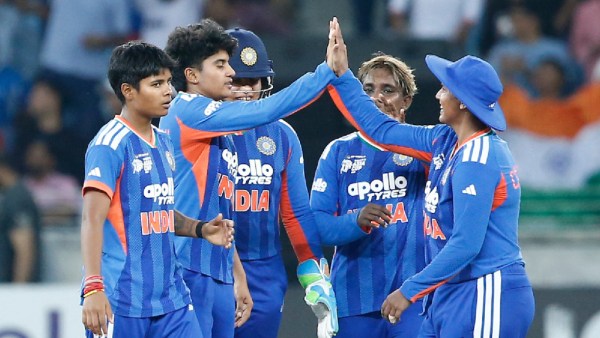 Indian players celebrates during The Final of the ACC Women’s T20 Asia Cup 2026 between India and Sri Lanka at Dubai International Cricket Stadium, Dubai, United Arab Emirates, on September 13, 2026. (CREIMAS)
• US Open 2026
— In women’s singles, Elena Rybakina beat defending champion Aryna Sabalenka 6-4, 5-7, 6-2 in the US Open final to win the title and become the women’s world No. 1 tennis player.
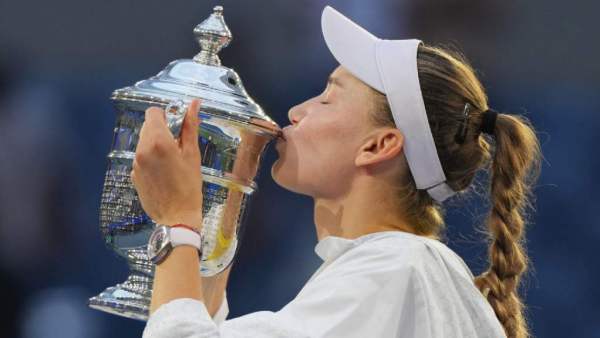 Elena Rybakina kisses the trophy after she won the women’s singles final of the U.S. Open tennis championships against Aryna Sabalenka in New York. (AP Photo)
— In men’s singles, Alexander Zverev beat Ben Shelton to win the US Open title. He also won the French Open earlier this year in June.
Persons in News
(Just FYI: Noting historical personalities’ anniversaries aids UPSC prep. UPSC often includes such personalities in questions, so revisiting their lives refreshes your static syllabus.)
• Ketaki Kushari Dyson
— Indian-born writer of diasporic literature Ketaki Kushari Dyson, who played a significant role in bringing Rabindranath Sagar’s work to a wider audience through English translations and research, has died in England, a close family friend said. She was 86.
— Her scholarly works included research on Nobel laureate Tagore, particularly his paintings. She has made a significant contribution to translating Tagore’s works into English. The most significant of her scholarly works was ‘Rabindranath O. Victoria Ocampo-r Sandhane,’ about Tagore’s association with Argentine writer Victoria Ocampo. Her body of work includes several poems, plays, and novels like ‘Nari, Nagari’ and ‘Jal PhunreAgun.’
Places in News
(Just FYI: The location of the place is important, considering that UPSC has asked several questions about places that were in the news, such as Aleppo and Kirkuk, in the 2018 UPSC Prelims. The best way to remember them is to plot them on a world map.)
• Perim island
— Iran-aligned Houthi forces have reached and taken control of Perim Island, also known as Mayun, in the Bab el-Mandeb Strait, in a major territorial advance that could put further pressure on one of the world’s most important shipping routes and Saudi Arabia’s alternative oil-export corridor, news agency Reuters reported.
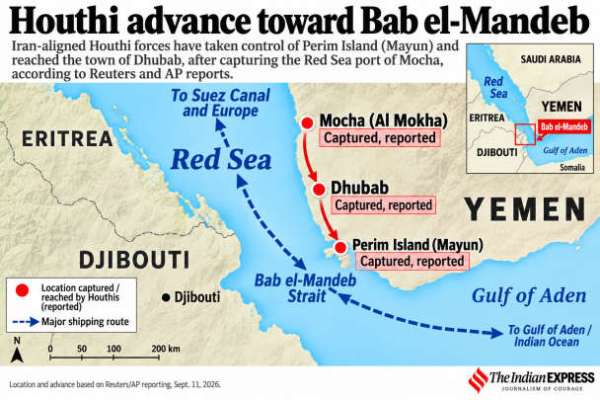
— The Mayun island is a small volcanic outcrop which lies about 3.5 km off Yemen’s western coast.
Test Your Knowledge
(Note: The best way to remember facts for UPSC and other competitive exams is to recall them through MCQs. Try to solve the following questions on your own.)
(1) Which one of the following makes a tool with a stick to scrape insects from a hole in a tree or a log of wood? (UPSC CSE 2023)
(a) Fishing cat
(b) Orangutan
(c) Otter
(d) Sloth bear
(2) The Constitution (71st Amendment) Act, 1992 amends the Eighth Schedule to the Constitution to include which of the following languages? (UPSC CSE 2024)
1. Konkani
2. Manipuri
3. Nepali
4. Maithilis
Select the correct answer using the code given below:
(a) 1, 2 and 3 only
(b) 1, 2 and 4 only
(c) 1,3 and 4 only
(d) 2.3 and 4 only
Answer Key
1. (b) 2. (a)
For your suggestions and feedback, write to Roshni.Yadav@indianexpress.com
Subscribe to our UPSC newsletter. Stay updated with the latest UPSC articles by joining our Telegram channel – Indian Express UPSC Hub, and follow us on Instagram and X.
🚨 Click Here to read the UPSC Essentials magazine for August 2026. Share your views and suggestions in the comment box or at manas.srivastava@indianexpress.com🚨
KioskNews shows a cleaned-up reading view extracted from the publisher’s page — the original always lives on their site, not ours.