Why are some animals so colorful? Blame this pigment.
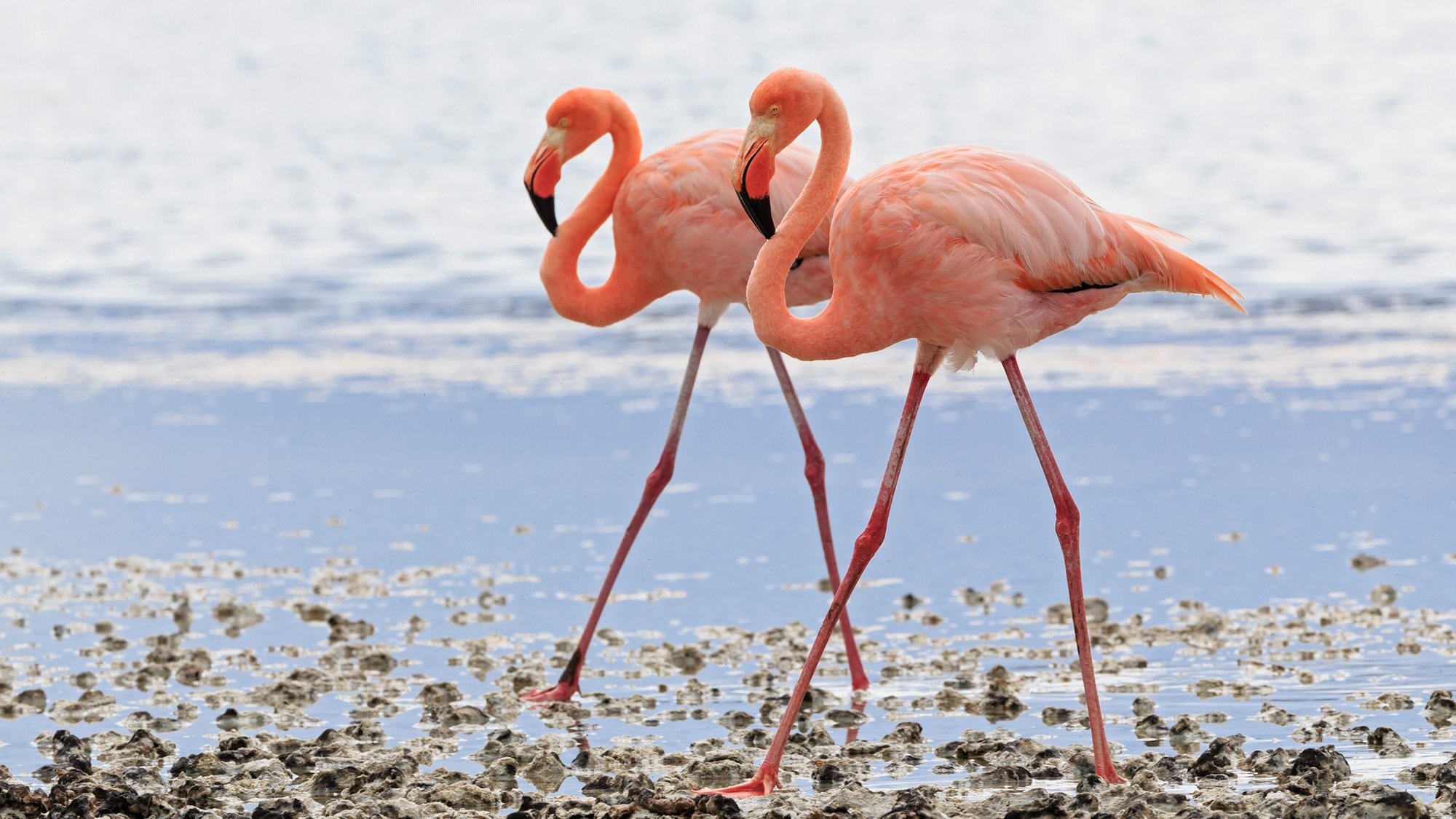
Ecuador’s Galapagos Islands are home to an incredible array of wildlife. Amid landscapes of black lava fields, scattered prickly pear cacti, lush highlands, and green mangrove fringes, you’ll spot lumbering land iguanas in striking shades of yellow, orange, and red, comical blue-footed boobies, and some of the pinkest flamingos around. But it turns out that these magnificent creatures aren’t born with their vibrant hues. They actually have to work for them!
To find out why some wildlife changes color according to their diets, and what these various tones and tints mean for survival, Popular Science turned to Jorge Alex Gutierrez Guerrero, an expedition leader on the Galapagos Islands’ Yacht Isabela II. Guerrero says it all comes down to naturally occurring pigments that play a major role in an animal’s immune system. They can even change the color of your skin!
What are carotenoids?
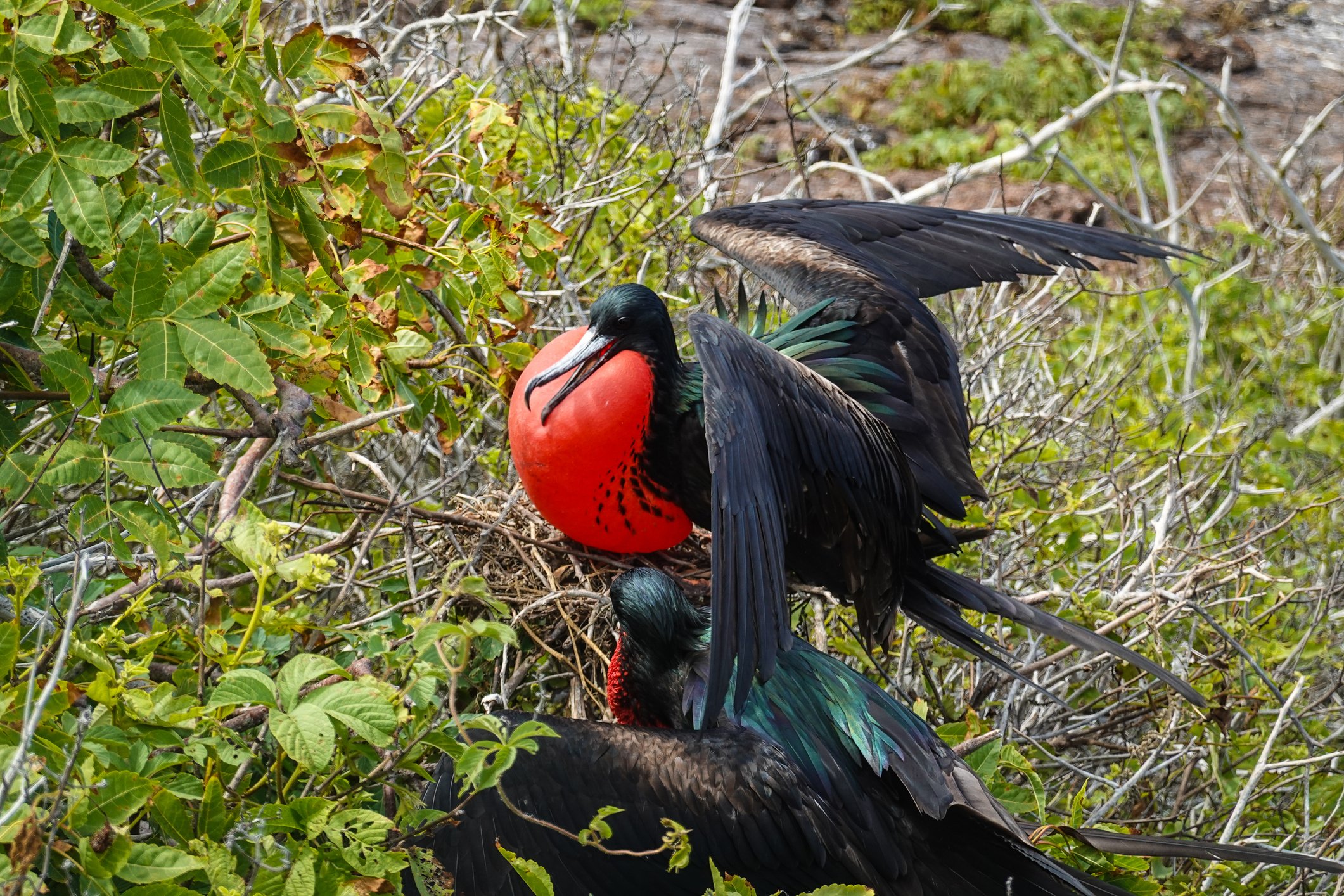
The colorful displays of Galapagos wildlife, including the bright cyan feet of blue-footed boobies and the impressive red throat pouch of magnificent frigatebirds that they inflate during courtship, are a direct result of their diet. Specifically, they result from the digestion of nature’s own punchy dyes known as carotenoids.
“Basically, carotenoids are natural pigments produced by plants, algae, and phytoplankton,” says Gutierrez. These organic chemical compounds play a vital role in nature. They help capture light for photosynthesis, which is how plants use sunlight to make their own food. They act as powerful antioxidants that can protect cells from damage. And they provide the vibrant colors that many animals, birds, and fish need to survive.
For instance, flamingos gradually lose their red pigmentation when their diet lacks carotenoids. According to Gutierrez, this is a perfect example of the “direct relationship between dietary carotenoids and coloration.”
How Galapagos animals get their colors
Wildlife in the Galapagos gets carotenoids primarily through their diets, since these are pigments that they can’t produce naturally. The archipelago’s land iguanas eat cactus flowers and leaves to obtain carotenoids, while blue-footed boobies consume fresh fish like sardines and anchovies to acquire them. Pink flamingos get their fill of carotenoids through algae and brine shrimp.
Once the wildlife digests and metabolizes these natural pigments, the colors of carotenoids, which primarily produce shades of red, orange, and yellow, begin to show in everything from skin and shells to feet and feathers. In many cases, the more brilliant the shades, the healthier the creature. While carotenoids don’t naturally create the color blue, the archipelago’s iconic blue-footed boobies get their turquoise feet from a mix of yellow carotenoid pigments and the collagen structure of their skin.
How other animals get their vibrant hues
Examples of the power of carotenoids even exist in our own backyards.
The sunny yellow coloring of an American goldfinch is a direct result of its carotenoid-rich diet of summer weeds and sunflowers, while northern cardinals get their brilliant red hue through carotenoid-heavy foods such as honeysuckle, hackberries, and seeds.
Why do animals need carotenoids?
Carotenoids aren’t a core nutritional necessity. However, they are an important source of vitamin A, a key component in reproductive health, good vision, and a strong immune system.
While the bulk of birds and animals get carotenoids through their diets, a few rare invertebrates, like spider mites and gall gnats, can create their own carotenoids. They do so through a rare genetic accident, likely caused by a virus or parasite. An ancestor of the spider mite and an ancestor of the gall gnat had close encounters with ancient fungi, causing a horizontal gene transfer. Essentially, horizontal gene transfer is the transmission of DNA between different organisms—and, in this case, species.
Every animal processes these pigments slightly differently. For some animals, carotenoids completely change the color of their features. Others simply absorb carotenoids without changing color at all.
Related 'Ask Us Anything' Stories
But all animals use carotenoids to fight off disease, such as boosting immune cells to destroy any harmful bacteria. Only healthy wildlife can spare excess carotenoids for bright skin, beaks, or feathers. So the more vibrantly hued birds, reptiles, and fish are, the healthier their immune system. They have enough carotenoids to spare for flashy colors.
For instance, blue-footed boobies with electric, turquoise-blue feet tend to be healthiest. In fact, boobies that go without food for a couple of days can end up with dull-colored feet. When animals get sick, they also lose their hue. First, their bodies divert carotenoids away from exterior features, like skin and feathers, and use them for fighting illness. Second, absorbing nutrients such as carotenoids becomes more difficult. Without carotenoids, an animal’s bright pigments will quickly fade.
Bright colors also come in handy during mating rituals
Carotenoids also play vital roles in mating rituals. When it comes to blue-footed boobies, “It’s very important for a female to find a male with the brightest blue feet, because she is choosing the best provider” for her offspring, says Gutierrez.
It’s a feature that these marine birds show off frequently in their oh-so-quirky mating dance, which includes an elaborate high-step strut. The bluer the feet, the more attractive males appear to their female counterparts.

The Blue Footed Boobies Mating Dance | Wild Love
What’s more, a famous 2006 scientific study on blue-footed boobies showed that females lay smaller eggs for males with duller feet. Basically, a female will put in less reproductive investment if her male isn’t up to par.
Why are animals in the Galapagos so colorful?
“Carotenoids are prominent all over the world,” says Gutierrez. “But they’re especially visible among wildlife in the Galapagos, because it’s a limited environment where the ecosystems are well-marked.” What Gutierrez means is that the archipelago is so geographically isolated and far from the coast of Ecuador, many species—like marine iguanas—have nowhere else to go. Even within the Galapagos, a large percentage of wildlife stick closely to their specific islands.
Another reason the animals here are so colorful? Because an overall lack of predators has allowed the wildlife to evolve without needing dull or camouflage coats to protect them.
Most of the archipelago’s carotenoids come from the ocean, or in the case of land iguanas and yellow-beaked Darwin’s finches, through cactus nectar and pollen.
Further afield, the iconic pink-orange flesh of Pacific Northwest salmon is a direct result of their carotenoid-rich diet—in their case, chowing down on krill and small shrimp. Roseate spoonbills, found across the mangrove swamps, mudflats, and wetlands of the U.S. Gulf Coast, get their rosy pink sheen from dining on crustaceans, crabs, and crayfish.
Can carotenoids make people change colors?
As to whether eating carotenoid-rich foods will change a person’s skin color, it’s definitely possible.
The best known example comes from consuming carrots. These vegetables are loaded with a red-orange carotenoid called beta-carotene, which our bodies convert into vitamin A.
But when we consume more beta-carotene than we need, the excess pigment starts circulating in our bloodstream and leads to a yellow or orange glow. “It’s mostly visible in your palms,” says Gutierrez.
Still, he says, don’t worry if you have a penchant for sardines and anchovies—the main diet of blue-footed boobies. Since humans process and metabolize these compounds differently, “you’re not going to turn blue, too.”
In Ask Us Anything, Popular Science answers your most outlandish, mind-burning questions, from the everyday things you’ve always wondered to the bizarre things you never thought to ask. Have something you’ve always wanted to know? Ask us.
KioskNews shows a cleaned-up reading view extracted from the publisher’s page — the original always lives on their site, not ours.