Chap who coded Google’s Pac-Man clone reveals how the game freaked out Firefox
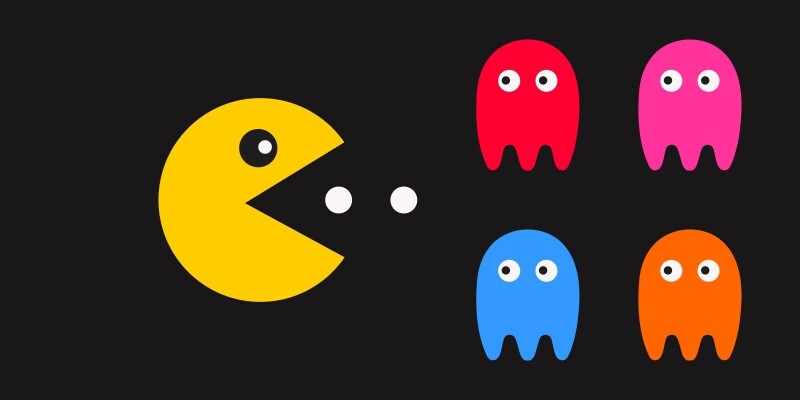
A designer named Marcin Wichary has revealed the story of how he freaked out a decent slab of the world’s Firefox-using population with Pac-Man.
Wichary has held senior design roles at Figma, Medium, and Google. As he wrote here, in 2010 Google decided to celebrate the 30th anniversary of Pac-Man by changing its logo at Google.com to a playable version of the game.
The Google of 2010 could still mention its motto of the time, “Don’t be evil,” without making anyone who heard it guffaw incredulously. The company’s frequent changes to the logo on its homepage – called Google Doodles, and which persist to this day – were still a notable part of net culture.
REG AD
Wichary got the job of building the playable logo, and tweaking Pac-Man to replace its usual maze with a course that instead navigated around the letters GOOGLE.
REG AD
“It was, frankly, a terrifying proposition,” Wichary wrote. “The homepage was then a very important destination, and my job title was only adjacent to ‘software engineer.’ But I started researching the game and recreating it all in HTML and CSS."
Google wanted a full Pac-Man experience, including sound, "because so many of Pac-Man’s sounds are beyond iconic: the starting melody, the waka-wakas, the death jingle."
Wichary began work before Google sought permission from Pac-Man’s owner Namco, because the search giant was “planning to wow them with a close-to-finished doodle.”
“The project was … going really well. I had fun coding the game and we seemed to have fun playing it. Namco eventually got onboard, too,” he wrote.
Google liked the game work so much, higher-ups decided it would be a great idea to have it start automatically if visitors to google.com stayed idle for ten seconds.
The designer liked that idea. “If there was anything scary about it at the time, it was only the thought of my code getting even more exposure – but I wasn’t worried about distraction, since the homepage was not a destination page you would ever linger on.”
What Google didn’t realise was that some people lingered on the home page without ever knowing they were there.
Those people used the Firefox browser with an extension called CoolPreviews that let users hover over a link to see a preview of a web page.
REG AD
“The extension would quietly start at the same time Firefox was opened,” Wichary explained. “And it would immediately, in the background, invisibly and unbeknownst to the user, open a website.”
That website was Google’s home page, which now featured an auto-playing and version of Pac-Man that CoolPreviews users simply did not expect.
Which explained why, not long after setting the Pac-Man doodle live, Google received plenty of praise, but also reports about computers making strange noises due to CoolPreviews invisibly opening the noisy game.
“I pushed a patch within hours,” Wichary wrote, explaining that he added a mute button and a requirement to click something to make the game and its noises start. CoolPreviews couldn’t make those clicks, so the phantom Pac-Man sounds went away.
“Ironically, I don’t believe we ever heard of normal people being bothered by the autoplay – it seemed that indeed, few people stayed on the homepage for 10 seconds doing absolutely nothing,” Wichary wrote.
“The funny thing is that emergency live-patching [the] internet’s at the time most valuable homepage was perhaps the scariest part of that day for me, but that completely went over my sleep-deprived head,” he added.
Google changed Wichary’s title after this incident. His post shows an image describing him as “User experience designer. The Michael Bay of doodles.” ®
KioskNews shows a cleaned-up reading view extracted from the publisher’s page — the original always lives on their site, not ours.