Brethren a controlling sect, not a religion say former and current members
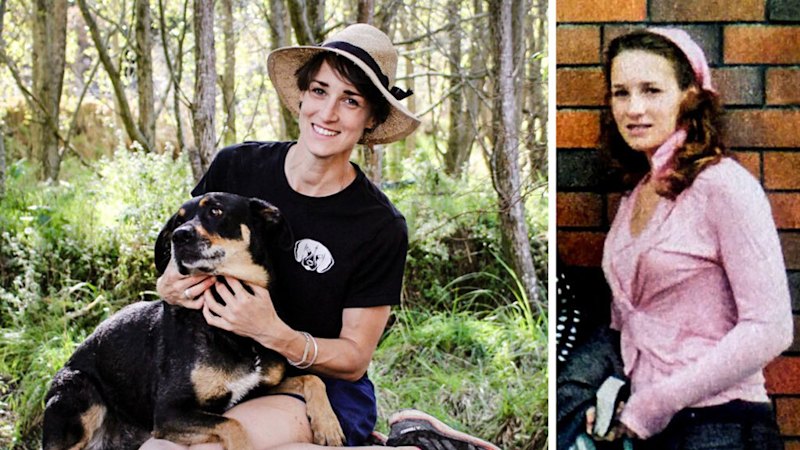
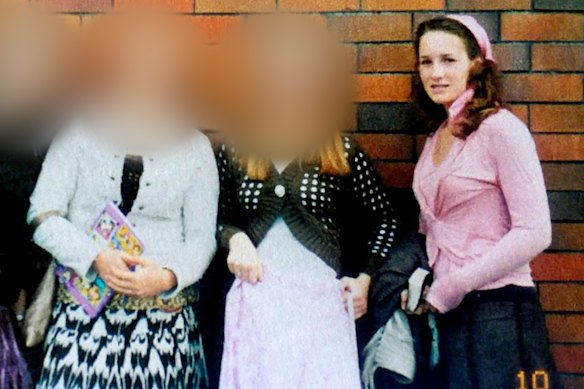
Lindy Jacomb was a naive 20-year-old member of the Exclusive Brethren, living at home with her family, when spiritual curiosity got the better of her.
So she wrote to her church’s global leader, the “Man of God”, Bruce Hales, and other elders, asking why she should stay in a sect whose teachings she’d begun to doubt.
“The aim of this letter is to summarise my questions and issues about the EB, [Exclusive Brethren],” Jacomb wrote to Hales in 2008. “It is an appeal for increased understanding.”
Why are we “so extreme” in shunning others, she asked, so that even excommunicated family members are treated as if they’ve died? Why do we insist we are the “one divinely accredited” church? Why is Hales considered infallible? Why must we only work for Brethren-owned companies? Why can’t we have pets?”
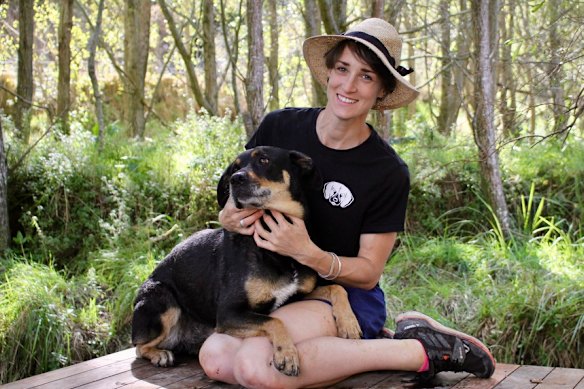
Jacomb got no answers, so left the church and was later excommunicated. Under orders from Hales, her parents cut off all contact with her. Her five siblings became strangers and she lost her job. Her friends cut her off and she was barred from church.
“It’s like jumping out of a plane into a pitch-black hole,” Jacomb says 18 years later. “You’re going into a terrifying and different world … a world you’ve been taught since birth to fear and hate.”
Six years later, Jacomb’s brother, Braden Simmons, emailed her with qualms of his own, but his messages were surveilled by his Brethren boss. Hales later preached to his global flock that Simmons should kill himself with poison, and the church – now known as the Plymouth Brethren Christian Church, or PBCC – excommunicated Simmons too.
On Friday, Bruce Hales will appear before a joint standing committee of parliament and argue that his is a mainstream religion.
The committee will quiz him about the Brethren’s secretive involvement in the last federal election campaign and its members’ activism on polling booths as well as alleged payments made to neo-Nazi affiliates and far-right figures to disrupt the prime minister’s events.
And he will be asked if the campaign was a highly co-ordinated, multimillion-dollar, undisclosed push to see Peter Dutton elected, driven by the church.
Hales had egged it on with a statement to his flock – later translated into a slogan on the campaign trail – that “Australia needed to be happy again, smiling again”.
His statement was followed by webinars conducted by Hales’s sons and played on repeat to activate the faithful.
Hales will, judging by his submission published by the committee on Wednesday, deny all this when he appears before the committee. He will not swear on the Bible – Brethren never do – but he will insist his is a mainstream church, that his flock acted of their own free will, and that, like other churches, he as leader cannot be held accountable for the self-motivated actions of his parishioners.
“I had no involvement in any members volunteering for any political party and was not aware this occurred until reporting appeared in the newspapers,” Hales said.
Church insiders speaking out for the first time, as well as those who have left Hales’s religion and felt the lash of its punishments, disagree.
“There is no way that level of organisation can happen within the PBCC on any topic without it being organised by Bruce and the boys,” wrote one insider, insisting on anonymity to protect their safety and that of their family. “If anyone attempted this … they would be shut down immediately.”
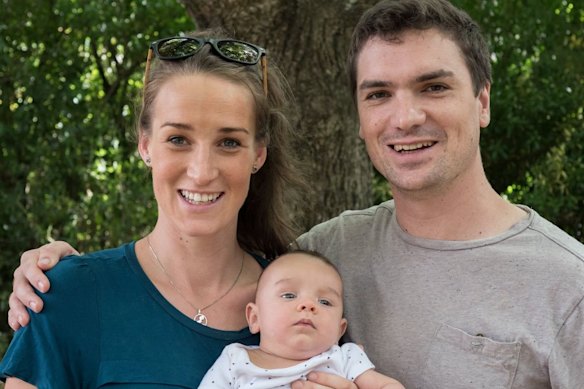
“We are confident,” wrote a group of 12 shunned members, including Simmons, in a letter to the committee this week, “that the genesis of the observed activities lay in a personal decision of Mr Bruce Hales. However, because of the unique doctrinal framework of the PBCC, any regulator seeking to construct an evidence-based response … faces unique challenges.”
Salted throughout Hales’s published ministry to his flock are references to authority, obedience and the danger of independent thought.
“Independence has no place – you can’t talk about independence because it’s not allowed for … get rid of it in your youth,” Hales preached in Leeds in 2011. “The idea of absolute authority is vested in the [Brethren] assembly … we have to submit to it so that no one, no one is greater than the assembly,” he said in 2004.
The Brethren assembly, he preaches, is all-encompassing: “The house of God would involve our whole lives ... you can’t take one part of your life, and say, ‘That’s something different from what I am in the assembly’,” he said in 2010.
“The overriding thing I would say is that you’ve got a system for everything.”
Jacomb says these doctrines are pummelled into Brethren members from birth. After she was ejected, Jacomb became for a time a Baptist pastor. She now runs a charity called Olive Leaf Network that helps people escaping high-demand organisations – what were formerly known as cults. She also helps people still trapped inside it because they fear the human cost of leaving.
“This is not about mainstream Christianity,” Jacomb says. “This group does not fit that category. Yes, people have a right to practise their religion, but they also should have the freedom to leave their religion if they want and not suffer harm, physical, mental, psychological, spiritual in doing so.”
She says the PBCC restricts where its members live, their education, travel, social connections, sexual life (all marriages are approved by Hales), and employment. It sucks huge financial resources, under pressure of social isolation, out of its members and their businesses to fund its “ecosystem” of global “charities” and investment funds.
“They might look like lovely white-collar businessmen who are upstanding citizens and living in quiet suburban homes, but that doesn’t mean there aren’t serious levels of coercive control going on,” Jacomb said. “It’s very challenging to wake society up that this can be a reality.”
It’s all enforced by the threat of shunning, and losing everyone you love.
Jacomb says the church’s spokesman, Lloyd Grimshaw, belled the cat on shunning when he gave evidence at the committee in August. Asked if church members voted, Grimshaw said they had not traditionally but that “it was never a test of fellowship”. His words suggest other matters are.
A test of fellowship, said Jacomb, was “an action taken that means you would be excommunicated because it was not aligned with the church’s doctrine”.
Asked about this, Grimshaw told this masthead that, “where an individual chooses to live outside the principles of our faith, they may, as a last resort, be ‘withdrawn from’”.
“Comparable practices exist in many faiths, including excommunication in the Catholic Church. Singling out one church for practices shared by many is not fair reporting. We ask that our members be treated with the same respect afforded to any other faith community.”
Jacomb’s excommunication made her persona-non-grata including with her own family. So when she started emailing her brother Braden Simmons in 2014, and his Brethren boss read those emails and informed the church elders, Simmons too was punished for breaching the “doctrine of separation”.
The following year, Hales took to the pulpit. Simmons’ contact with “opposers” – his sister – was “rotten poison,” he preached.
“He might as well get a shot of ... arsenic. How do you get arsenic into you?” Hales asked his flock. “He’d be better to take arsenic, or go and get some rat poison or something, take a bottle of it.”
“That would be better, to finish yourself off that way [rather] than having to do with the opponents of the truth.”
After Hales’s comments were printed and distributed globally to the 56,000-strong Brethren flock, Simmons says, “People treated me with kid gloves. I think they worried I was a mass murderer, that if they spoke to me I might cut their head off … You’re left with this enormous, quite bizarre stigma.”
Simmons insisted on meeting Hales face to face. When he did, he found the spiritual leader had nothing useful to say to him.
“It took me 48 hours to get shunned.”
On Friday, the committee will ask hard questions of Hales – which is unprecedented for a man who for decades has answered only inquiries of his own acolytes. His attempt to get out of the grilling failed.
At stake is not just his church’s reputation, but millions of dollars in tax exemptions.
Charities in Australia are prohibited from campaigning for political parties, and Hales’s church runs a dozen charities with hundreds of millions in assets. Research in the UK reveals the Brethren use these riches almost entirely for their own benefit. A finding that the church was involved in electioneering could seriously imperil these generous concessions.
A number of right-wing groups have leapt to Hales’s defence. Calling him to account is a threat to religious freedom, they say.
Turning Point USA, the controversial US right-wing organisation, called on the Trump government to lobby Australia over Hales’s questioning, with pastor Lucas Miles worried that, “If this approach succeeds against one church, it becomes a precedent of intimidation for all”.
The Coalition members of the committee have labelled Hales’s grilling a “witch-hunt”. The Anglican Bishop of South Sydney, Michael Stead, and his organisation, Freedom for Faith, say the Brethren is a simple “mainstream Christian denomination,” whose members “have as much right as any other Australian to participate in the electoral process”.
“Religious leaders (are not) automatically responsible for the political choices, associations or conduct” of their members, Freedom for Faith told members of the committee in an email. (Neither they nor the Coalition responded to recent questions about Hales’s long history of antisemitic comments.)
The alleged stunts organised by the Brethren with neo-Nazi associates were “straight out of the MAGA playbook,” said international expert on religious sects Steve Hassan, and part of a growing trend of “authoritarian cults pushing extremist agendas and mixing with the far-right”.
Extremism expert Josh Roose has called for the Brethren’s alleged use of neo-Nazi associates to tail and heckle politicians on the campaign trail to be investigated, and teal donor Climate 200 has referred the church to the charity regulator for investigation.
In comments to The Australian this week, Hales said, “The truth will prevail”. A group of 12 former members of the church hope so.
Two signatories to the letter have already given evidence to the electoral matters committee. Ben Woodbury agreed everyone should have the right to support a political party, but, “the level of coercion behind it … isn’t accounted for”. Cassie Davies said, “this was not typical individual political participation; it was structured and directed”.
In their letter this week, the group wrote there was no chance Hales’s sons and their acolytes brought thousands of Brethren members together to campaign without his assent. This was a church endeavour, they say, and the fate of one young Brethren man proves it.
The man, who this masthead has chosen not to name to protect his privacy, was in Australia from the United Kingdom last year and was involved on the Brethren campaign trail. Shocked at what he was hearing, he secretly recorded a co-ordinating meeting, then leaked the audio to former church members. The recording found its way to this masthead.
The man was immediately put on a flight back to England, where his local priests passed an assembly judgment to have him kicked out of his family home and separated from his parents. He told this masthead at the time this was “because of the audio I recorded”. Church elders called him a “traitor”.
Eighteen months later, the ex-members say in their letter, the young man is still living in a small caravan in his parents’ backyard. He has limited contact with them or anyone else.
If, they ask, his transgression was election-related and the election had nothing to do with the church, why is he being punished under church religious law?
“The PBCC continues to hold him in that position today,” the ex-members wrote, “even as it proclaims no involvement in the activities he revealed.”
Asked about this question, the church spokesman provided no answer.
Start the day with a summary of the day’s most important and interesting stories, analysis and insights. Sign up for our Morning Edition newsletter.
KioskNews shows a cleaned-up reading view extracted from the publisher’s page — the original always lives on their site, not ours.