Should Poll Body Appointments Be Referred To Larger Bench? Top Court Split
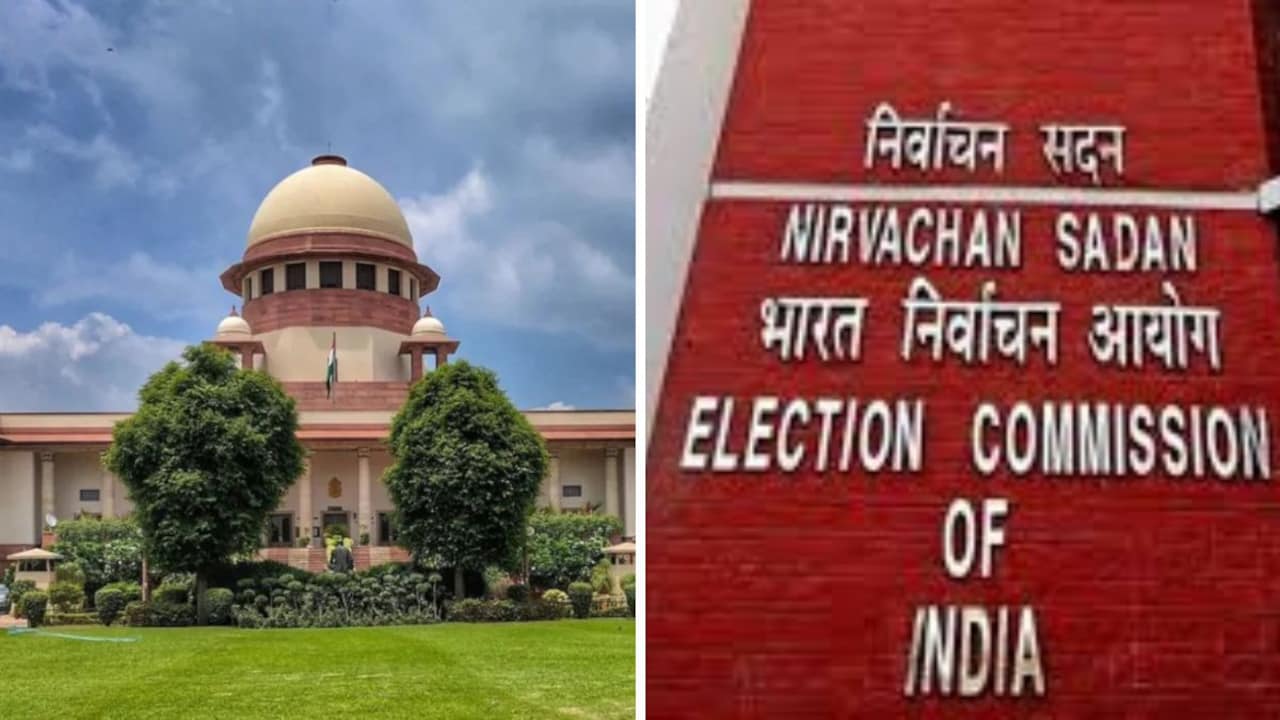
The Supreme Court today gave split opinions on whether petitions challenging the validity of a 2023 law that excludes the Chief Justice of India from the panel to select the Chief Election Commissioner (CEC) and Election Commissioners (EC) should be referred to a larger bench.
The bench comprising Justice Dipankar Datta and Justice Satish Chandra Sharma held divergent views after hearing the matter for five days.
"Had we delivered a unanimous verdict, it would have been in the interest of institutional solidarity. Unfortunately, there is a difference of opinion. Due to this difference, I had to write a more detailed order," Justice Datta said.
He had declined the Centre's submission that the petitions raised seminal questions of constitutional importance and should be referred to a five-judge Constitution bench.
Justice Sharma disagreed with this view.
Both judges, however, agreed to send the matter - on the administrative side - to Chief Justice of India Surya Kant for a decision on setting up a Constitution bench, and also whether such a bench could be made into a permanent one for deciding constitutional issues.
"The present case demands a perspective that considers the possibility that this court's opinion could remain effective and relevant long after the immediate dispute has concluded," Justice Datta said. It is crucial to dispel a misconception that has been allowed to persist, he said, adding the oft-repeated phrase 'judges appoint judges' is a myth.

Vested interests have propagated this perception through motivated narratives and they have often drawn sustenance from certain controversial judgments concerning judicial appointments, Justice Datta said.
He made the collegium's mention in the context of the matter he was hearing - which was about petitions challenging the constitutional validity of excluding the Chief Justice of India from the selection panel for appointing CEC and ECs.
On March 2, 2023, in a landmark verdict aimed at insulating the appointment of the CEC and ECs from the executive's interference, a five-judge Constitution bench had ruled that their appointments will be made by the President on the advice of a committee comprising the Prime Minister, the Leader of the Opposition in the Lok Sabha and the Chief Justice of India.
Justice Datta cited a cricket analogy on the executive's influence in the appointment of election commissioners. "If the team that is to bat selects the umpire itself, questions regarding impartiality will inevitably arise. Even if the umpire makes the correct decision, their impartiality will remain under a cloud of suspicion," he said.

"Such an umpire would always be suspected of being loyal to that team. The process of appointing election commissioners should also be free from such a situation, ensuring there is no doubt regarding their independence and impartiality," the judge said.
The sum of Justice Datta's observations was that for the ECI to be independent it had to be out of bounds of the executive's control.
"Free and fair elections depend on a truly independent ECI. It is not enough for the ECI to be independent; it must appear to be independent," he said.
The split verdict comes on a day the Indian Express newspaper in a report said two election commissioners "objected on record" several decisions taken by the poll body allegedly without their knowledge. In a statement, the ECI today said all decisions taken by it in the last one year were unanimous and that "differing views and observations are a normal part of deliberation in any institution."
KioskNews shows a cleaned-up reading view extracted from the publisher’s page — the original always lives on their site, not ours.