6 Books From 2005 That Are 10/10 Masterpieces
Don’t call a book important and leave it at that. Important how? Did somebody's stupidity make you furious? Did you get attached to a person you initially despised? Did a particular sentence catch you so completely off guard that you had to read it again? If all you've got is a prize citation and a few impressive adjectives, you're selling the book terribly. Tell me what happened when you actually read the damn thing.
And 2005 is a year worth fighting over. The literary variety is almost ridiculous, but so is the difference between admiring a book and feeling personally attached to it. I want the kind of writing that can change my opinion halfway through a chapter, make an apparently insignificant gesture unforgettable, or leave me missing characters who never existed. These six books have earned that affection in wonderfully different ways.
6 'Team of Rivals' (2005)

Abraham Lincoln wins the 1860 Republican presidential nomination against three considerably more established politicians, then does something almost outrageously clever. He brings William Seward, Salmon Chase, and Edward Bates into his cabinet. These men wanted his job. Some barely respected him. Yet Lincoln understood that their abilities could help preserve a country heading toward civil war. Doris Kearns Goodwin reconstructs those complicated relationships in Team of Rivals, tracing the personal histories and political ambitions that shaped one of America's most consequential presidencies.
Forget the marble statues for a moment. Goodwin gives us Lincoln surrounded by proud, difficult, enormously ambitious human beings. Seward initially assumes he'll be the dominant figure in the administration, yet gradually becomes one of Lincoln's closest allies. Chase continues entertaining presidential ambitions of his own. Lincoln manages these personalities through patience, political intelligence, and an astonishing ability to understand wounded pride without surrendering his authority. I find that fascinating. He could have surrounded himself with admirers. Instead, he chose people capable of challenging him, sometimes infuriatingly. Goodwin makes leadership look considerably harder, and far more impressive, than simply being the smartest man in the room.
5 'The Year of Magical Thinking' (2005)
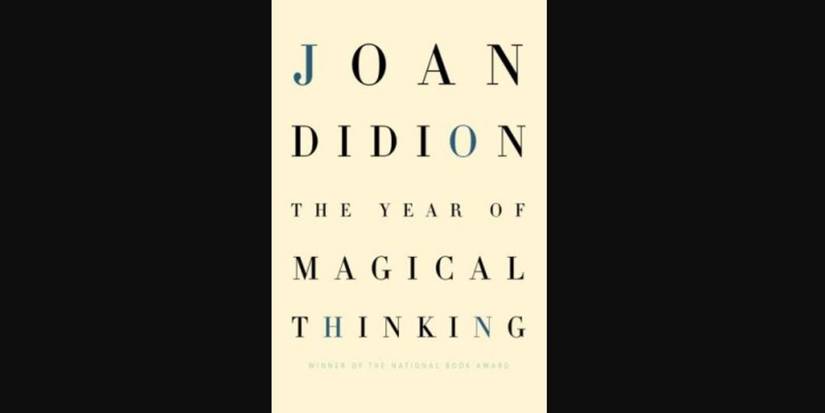
The Year of Magical Thinking begins with an ordinary evening that becomes unbearable to contemplate. Joan Didion and her husband, writer John Gregory Dunne, have returned home from visiting their critically ill daughter Quintana in the hospital. They're about to have dinner when John suddenly collapses and dies. Their marriage has lasted nearly forty years. Now Didion must confront his death while continuing to fear for their daughter's survival. She writes about the months afterward with an extraordinary precision that somehow makes the grief even more painful.
And then there are John's shoes. Didion cannot bring herself to give them away because some irrational part of her believes he might return and need them. I haven't forgotten that detail since encountering it. Here is one of America's sharpest analytical minds, fully aware that her husband is dead, unable to surrender something as ordinary as his footwear. The memoir's extraordinary honesty comes from her willingness to examine that contradiction without making herself sound foolish. She searches medical records, reconsiders conversations, and revisits familiar places as though understanding enough might somehow change what happened. I would recommend this to anyone who thinks grief is a feeling people simply learn to control.
4 'The Book Thief' (2005)

The Book Thief follows Liesel's friendships, her relationship with her foster family, and the danger surrounding Max Vandenburg, a Jewish man they secretly shelter in their basement. Death narrates the story, which should tell you something about the emotional ordeal awaiting you. Liesel Meminger steals her first book from the snow beside her younger brother's grave. She cannot even read it. Soon afterward, she's sent to live with foster parents Hans and Rosa Hubermann in Nazi Germany, where her growing love of words becomes an essential source of comfort.
I would defend Hans Hubermann with my entire heart. He's a house painter who plays the accordion, teaches Liesel to read, and possesses the extraordinary courage to remain kind when kindness becomes dangerous. Markus Zusak, who wrote the novel, makes the simplest moments precious. Hans painting words on the basement wall so Liesel can learn them. Rudy Steiner desperately wanting a kiss. Max creating a story for Liesel over the pages of a book associated with Nazi ideology. Those gestures become profoundly important in a society using language to justify persecution. Death tells us enough about the coming losses that every happy afternoon feels borrowed. God, I wanted those afternoons to last longer.
3 'The Girl with the Dragon Tattoo' (2005)
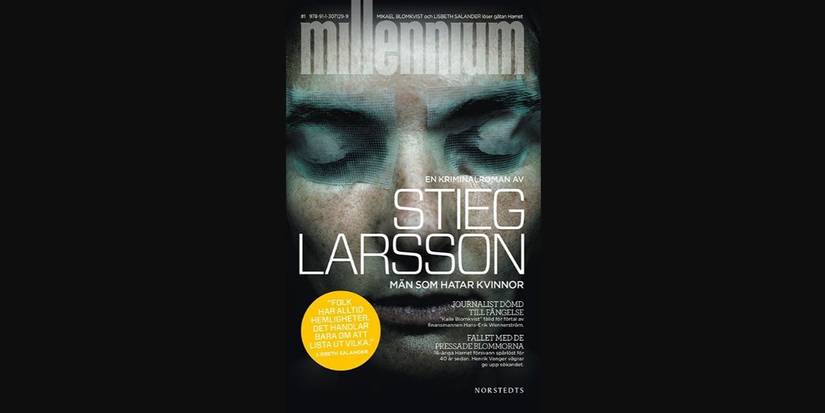
A wealthy industrialist hires disgraced journalist Mikael Blomkvist to investigate the disappearance of his niece Harriet Vanger, who vanished decades earlier from an island occupied by members of her powerful family. Blomkvist eventually joins forces with Lisbeth Salander, an extraordinarily gifted researcher and hacker whose life has been shaped by abuse and institutional control. The Girl with the Dragon Tattoo turns their investigation into a disturbing exploration of family secrets, corruption, and violence against women.
Lisbeth is the reason I keep returning to Stieg Larsson's novel. She's brilliant, distrustful, occasionally infuriating, and thoroughly uninterested in making herself agreeable to people who assume they understand her. Her research methods become increasingly important as Blomkvist discovers horrifying patterns connecting Harriet's disappearance to older crimes. But Lisbeth's personal experiences make the story's larger concerns impossible to treat as intellectual abstractions. Her legal guardian exploits his authority over her, and the consequences are deeply disturbing. Larsson makes the Vanger family mystery absorbing enough to consume an entire weekend, while the treatment of Lisbeth forces us to consider how easily respectable institutions can protect dangerous men. She deserves a world that doesn't require constant vigilance to survive.
2 'On Beauty' (2005)

Howard Belsey can spend hours explaining why another person's interpretation of a painting is intellectually ridiculous. Unfortunately, he has considerably less understanding of the woman he's been married to for decades. A professor at a Massachusetts university, Howard is struggling with professional insecurity and the consequences of an affair when his academic rival Monty Kipps moves nearby. Their families become increasingly entangled through friendship, romantic attraction, and conflicting beliefs about race, class, and culture. On Beauty follows the resulting domestic chaos with astonishing wit.
But I want to talk about Kiki, Howard's wife, because Zadie Smith gives her a dignity that makes the supposedly sophisticated people surrounding her look embarrassingly small. Kiki's friendship with Monty's wife Carlene develops around a painting by Haitian artist Hector Hyppolite. Carlene wants Kiki to have it, yet after her death, Monty disregards that wish. The painting becomes another possession controlled by people who claim to understand its value. Smith is merciless about intellectual hypocrisy, particularly Howard's ability to discuss beauty while treating his marriage so carelessly. Near the end, he stands before an audience unable to deliver a lecture on Rembrandt. Kiki is there. Their uncertain exchange of smiles says more about love than his carefully constructed theories ever could.
1 'Never Let Me Go' (2005)
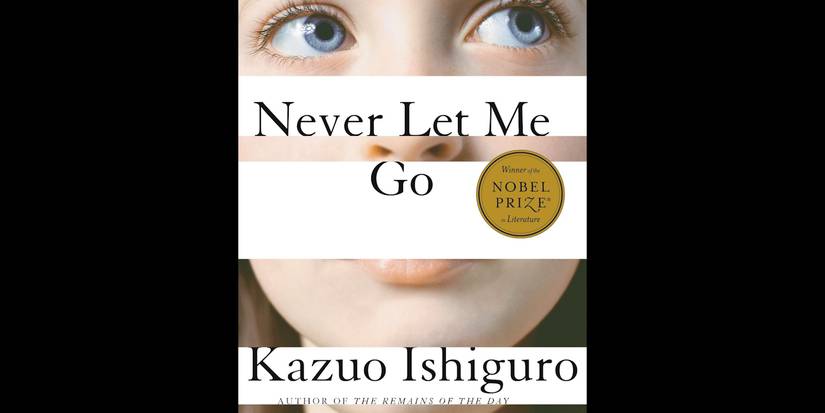
Never Let Me Go follows Kathy into adulthood as she remembers the people she loved and the possibilities they were never permitted to pursue. Kathy H. remembers her childhood at Hailsham, an English boarding school where the students paint, write poetry, develop friendships, and worry about whether their teachers approve of them. Her closest companions are the possessive Ruth and sensitive, frequently misunderstood Tommy. Gradually, we understand that these children have been raised for a terrible purpose. Their futures have already been decided by a society that values what their bodies can provide more than the lives they might have lived.
There's a childhood moment involving a song that almost ruins me. Kathy listens to a cassette recording, holding a pillow against her chest and imagining she's embracing a baby. Madame, one of the adults connected with Hailsham, watches her from the doorway and begins crying. Kathy cannot understand why. Much later, that memory acquires an almost unbearable significance. Kazuo Ishiguro wrote this novel. And it’s honestly the kind where the horror is inseparable from how calmly everybody discusses it.
Collider Exclusive · 8 Questions · 2 Minutes Which Agatha Christie Character Are You? Poirot · Marple · Ariadne Oliver · Hastings
Answer eight quick questions and we will tell you which one you are. Christie is the best selling novelist in history and she only ever needed about four kinds of person to do it, all of whom are still turning up on screen a century later.
🥚Poirot(33 novels)
🧶Miss Marple(12 novels)
🍎Ariadne Oliver(8 novels)
🎖Hastings(8 novels)
01
How tidy is your home? Pick the one that sounds most like you.
02
How would your friends describe you? Be honest.
03
How do you work out what somebody is really like? One answer only.
04
Pick a snack. No wrong answers here.
05
How do you handle a long train journey? Pick the closest answer.
06
How do you feel about being underestimated? Pick the closest answer.
07
What is your role in a group project? Think about work.
08
How would you want to be described in a book? Last one. This is the one that decides it.
The Drawing Room, After Dinner You Are…
Toni Collette and Kit Harington are shooting a new Miss Marple and 20th Century has several more Christies in development, so the drawing room is busier than it has been in decades. Here is which of them you are, and the case for yours being the best.
Hercule Poirot
Order, method, and a quiet confidence that you are the cleverest person present. Poirot is a retired Belgian police officer who solves murders by sitting still and thinking, and who is vain enough to make the reveal a performance every single time.
- You need things to be in their right place and you are not remotely sorry about it.
- David Suchet played him for twenty four years and filmed every single Poirot story Christie wrote.
- Kenneth Branagh has made three as director and star, from Orient Express in 2017 to A Haunting in Venice.
- Your flaw is that the performance of being right can get in the way of simply being helpful.
Miss Marple
People tell you things because they cannot imagine you being a threat. Marple solves murders by comparing everybody to somebody she once knew in St Mary Mead, which sounds like a joke until you notice it works every time, because human beings are not as original as they think.
- You are the quietest person in the room and you leave knowing the most.
- Joan Hickson is still the definitive television Marple, and Christie herself wrote to her hoping she would one day play the part.
- Toni Collette and Kit Harington are making a new Marple film, announced this summer.
- Your risk is that people only work out how formidable you are once it is far too late.
Ariadne Oliver
You have far too many ideas and roughly a fifth of them are excellent. Ariadne Oliver is a successful crime novelist who is sick of her famous foreign detective and keeps saying so, which is Christie writing about Christie and getting away with it completely.
- You think out loud, change your mind twice, and arrive somewhere nobody else would have found.
- She was Christie's own stand-in, right down to being tired of the detective who made her rich.
- Tina Fey played her opposite Branagh in A Haunting in Venice and gave her the comic timing the part always wanted.
- Your flaw is that fourteen ideas take as long to sort through as they do to have.
Captain Hastings
You are steady, decent and the reason the difficult genius has anybody at all. Hastings narrates the early Poirot novels, misses most of the clues, and is the only character in the books that Poirot is unambiguously fond of, which tells you what he is really for.
- You are the one who turns up, which sounds small and is not.
- Christie gave him the narrator role so readers would have somebody to be as lost as they were.
- Hugh Fraser played him across the ITV series and made him warm rather than slow, which earlier versions never managed.
- Your weakness is taking people at their word, which is lovely right up until it is not.
KioskNews shows a cleaned-up reading view extracted from the publisher’s page — the original always lives on their site, not ours.