The 10 Best Neo-Noir Movies in Film History

Andrea M. Ciriaco is a long-time script reader and former entertainment editor who specializes in classic movies and Hollywood history. She was a student film critic at Kent State University for three years and worked at Warner Bros Studio in Burbank and The Safran Company for several years. Based on her vast taste and range of knowledge, many consider Andrea to be a walking IMDb who knows dozens of underrated movies and is a vital assesst to any trivia night. While movies are her expertise, Andrea is also a diehard fan of iconic shows including The Sopranos, Boardwalk Empire, Rod Serling's The Twilight Zone, Will & Grace and South Park. Some of her favorite filmmakers are Walt Disney,John Huston, Fritz Lang, Alfred Hitchcock, John Ford, Mel Brooks, Quentin Tarantino, Martin Scorsese and Howard Hawks.
Sign in to your Collider account
The classic film noir genre was born in the shadows of post-World War II disillusionment, defined by rain-slicked pavement, cynical detectives, and doomed antiheroes who try to navigate their way through a world stripped of moral clarity. By the end of the 1960s, classic film noir movies started to fade from the screen, but as Hollywood evolved, the genre was revitalized by a new generation of filmmakers creating what we know today as the neo-noir genre.
Neo-noir took those timeless archetypes of betrayal, paranoia, and moral rot and dragged them into the harsh sunlight, updating classic tropes with modern anxieties, explicit edge, and bolder storytelling. From sun-drenched Los Angeles land grabs and technological advancements in surveillance to surreal suburban nightmares and comic inversions of the hard-boiled detective, the genre has produced some of the most compelling cinema of the past half-century. Out of all the potential contenders, including Chinatown, Body Heat, and Blue Velvet, these are the ten best neo-noir movies that represent the absolute summit of the genre, each redefining what it means to get lost in the dark.
10 'The Conversation' (1974)

Francis Ford Coppola’s The Conversation is a marginalized neo-noir that shifted the genre's focus away from physical violence and toward technological alienation and psychological paranoia. Gene Hackman delivers an underappreciated performance as Harry Caul, a renowned surveillance expert who begins to suspect that his latest client is planning to murder a young couple. Winner of the Palme d'Or at Cannes, The Conversation replaces fedoras and revolvers with reel-to-reel tape recorders, masterfully capturing the dark side of American surveillance culture that was thriving at the time of the film's release.
The Conversation is a neo-noir triumph because it turns sound into a complex mystery puzzle and draws the audience into an unsettling world of uncertainty and unwavering suspense. Through pioneering sound design, Coppola builds an oppressive atmosphere, showing that total access to information does not grant understanding, leaving its protagonist trapped in a nightmare of his own guilt and neuroses. The Conversation received several awards and nominations, notably three Academy Award nominations for Best Picture, Best Director, and Best Original Screenplay.
9 'Mystic River' (2003)
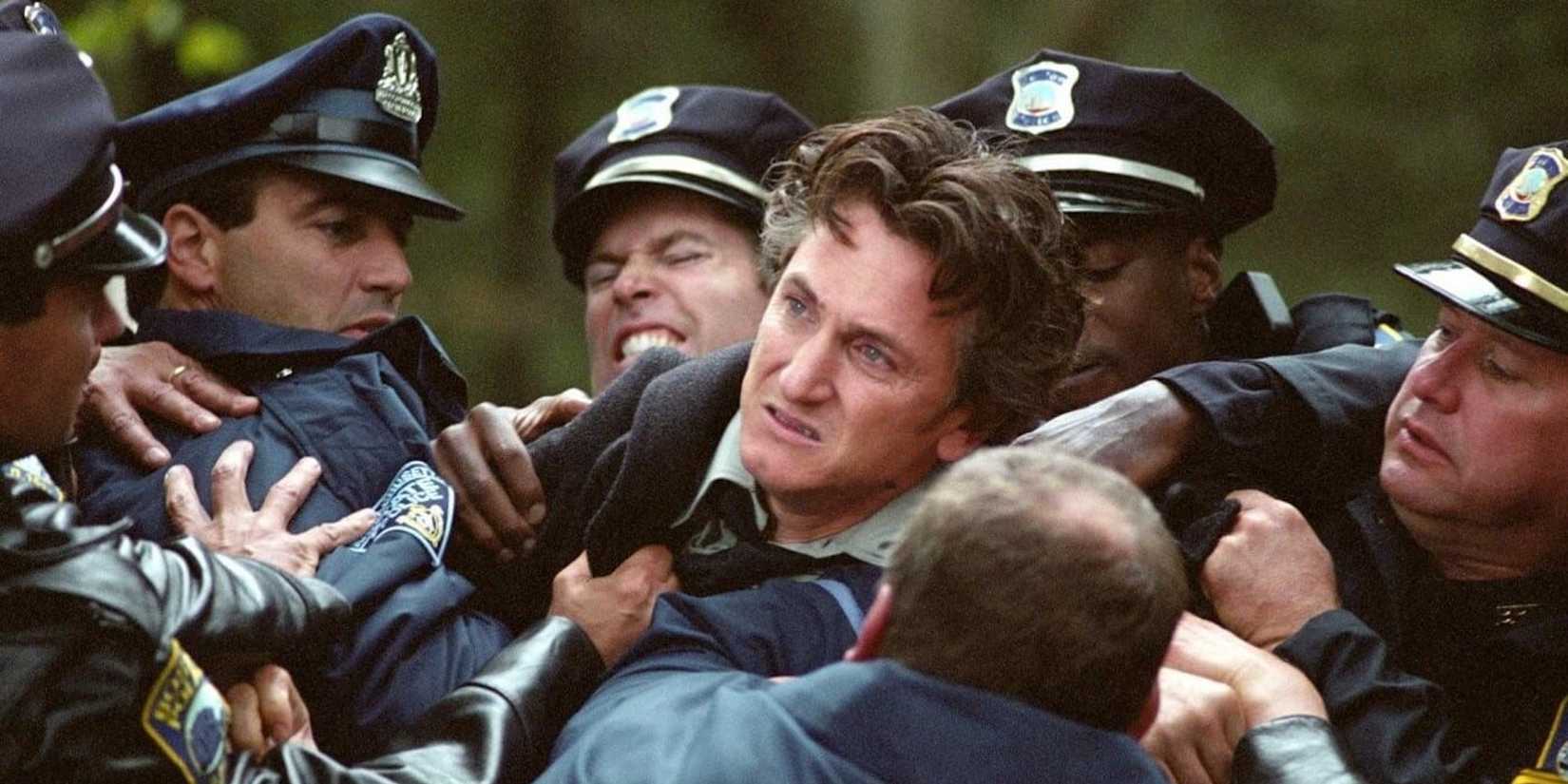
Clint Eastwood's Mystic River is a haunting modern tragedy and gritty neo-noir based on Dennis Lehane's 2001 novel of the same name. Set in a working-class Boston neighborhood, the story centers on three childhood friends whose lives were fractured after one of them, Dave (Tim Robbins), was abducted and abused as a boy. Decades later, they are reunited when the teenage daughter (Emmy Rossum) of Jimmy (Sean Penn), an ex-con, is brutally murdered, leading the grieving father to question everyone around him until he finally takes matters into his own hands.
Mystic River is an essential neo-noir that focuses on the enduring weight of trauma rather than stylized violence, making it one of the most emotionally devastating contributions to the genre. Eastwood's restrained direction lets the tragedy unfold naturally, delivering a heartbreaking look at how paranoia, grief, and revenge corrupt an entire community. Mystic River earned six Oscar nominations, including Best Picture and Best Director, and went on to win for Best Actor for Penn and Best Supporting Actor for Robbins.
8 'The Big Lebowski' (1998)


Jeff Bridges stars in The Coen Brothers' The Big Lebowski as Jeffrey "The Dude" Lebowski, an unemployed slacker in Los Angeles whose peaceful life of bowling and White Russians is shattered when thugs mistake him for a millionaire with the same name and ruin his rug. When "The Dude" seeks compensation from his wealthy namesake, he gets dragged into a convoluted kidnapping scheme involving nihilists, avant-garde artists, and pornographers, all while aided by his hot-headed bowling buddy Walter (John Goodman).
The Big Lebowski is a brilliant comic inversion of classic hard-boiled detective stories like Raymond Chandler’s The Big Sleep and is a fitting (and clever) homage to the classic film noir genre. The movie ultimately earns its neo-noir crown for taking the traditional detective formula and placing a completely passive, permanently stoned protagonist at the center. Though initially a box-office disappointment, The Big Lebowski has since become one of the most celebrated comedy cult classics in film history, essentially cementing its place as one of the best neo-noirs.
7 'The French Connection' (1971)
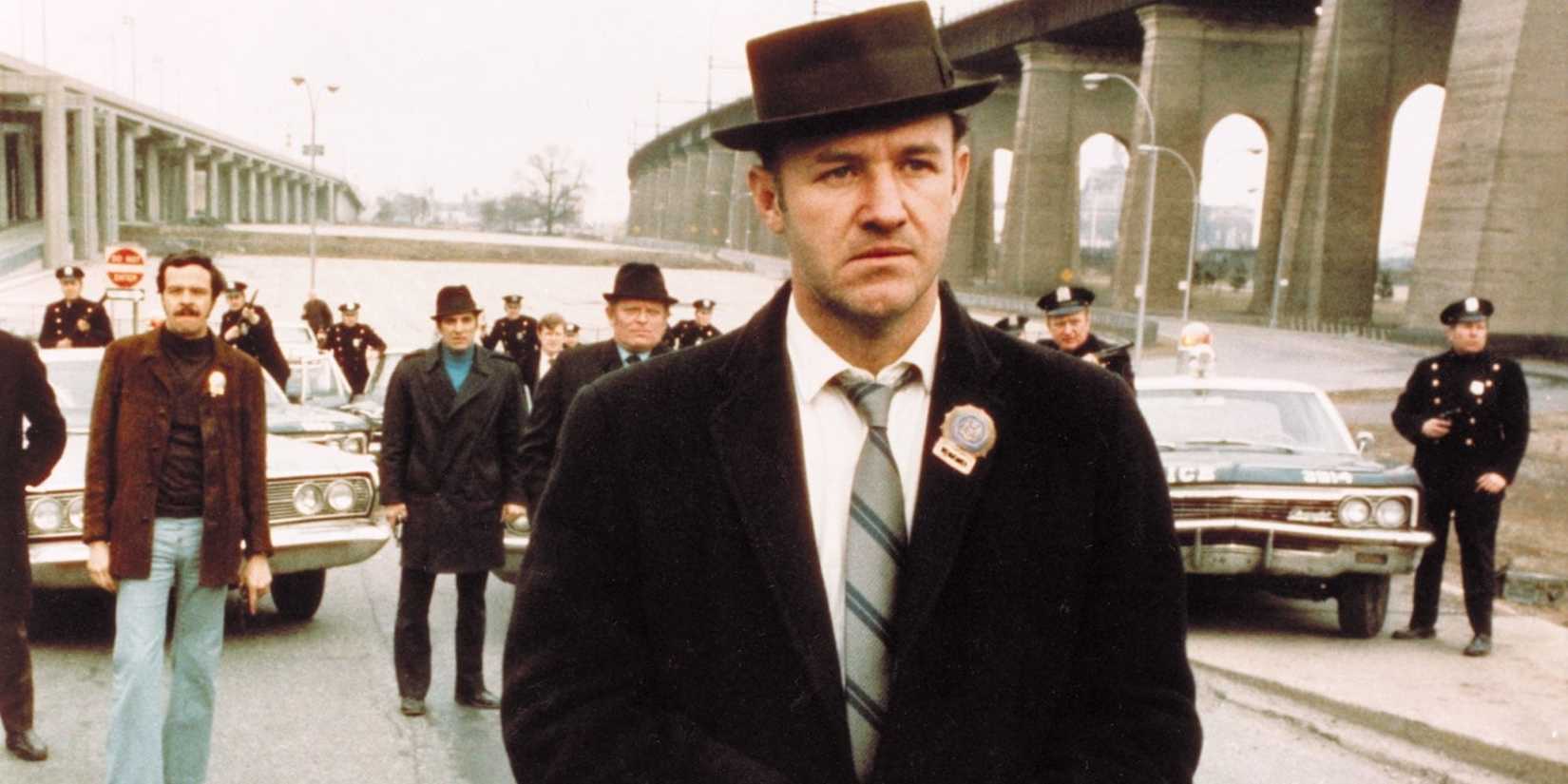
William Friedkin's The French Connection is an edgy neo-noir that completely reinvented the crime genre by stripping away studio gloss in favor of raw, documentary-style realism, ultimately establishing how action, police procedural work, and noir themes could merge in a gritty, contemporary setting. Based on the true story of an international heroin smuggling ring, the story follows NYPD narcotics detectives Jimmy "Popeye" Doyle (Gene Hackman) and Buddy Russo (Roy Scheider) as they track a massive drug shipment entering New York from Marseille.
Hackman and Scheider both deliver powerhouse performances that refrain from overshadowing each other, creating a balanced dynamic that doesn't diminish the individual makeup of their characters. The film earns its neo-noir legacy through its bleak worldview, proving that an officer's obsession can be just as destructive as the criminal enterprise he pursues, solidifying its ranking as one of the greatest neo-noirs of all time. The French Connection went on to win five Academy Awards, including Best Picture, Best Director, and Best Actor for Hackman's unprecedented performance.
6 'Pulp Fiction' (1994)
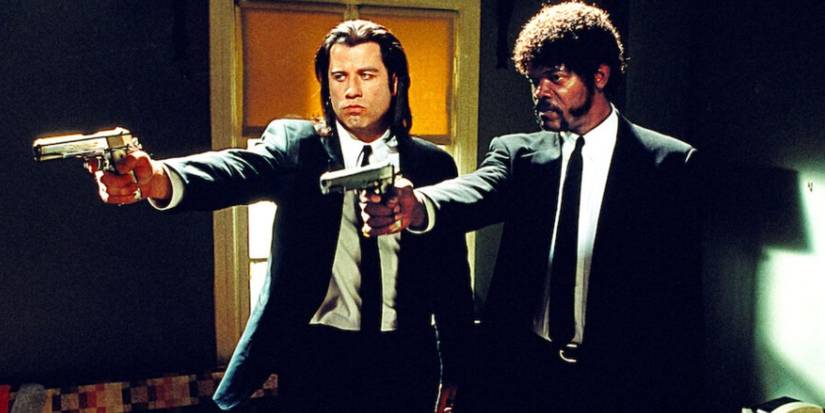
Quentin Tarantino's signature masterpiece Pulp Fiction was a cultural watershed moment that breathed vibrant energy into hard-boiled crime fiction by combining non-linear storytelling, sharp dialogue, and pop-culture references, completely reshaping the landscape of 1990s cinema. The movie weaves together multiple storylines of several characters who are each somehow involved in the criminal underbelly of Los Angeles and features a star-studded cast including John Travolta, Samuel L. Jackson, and Uma Thurman.
Pulp Fiction elevates neo-noir by subverting narrative structure, shuffling time so dead characters reappear and plotlines resolve out of order, placing it in its own category of cinematic brilliance. Tarantino methodically strips away traditional noir gloom and replaces it with bright pop-art visuals and an eclectic soundtrack while still retaining core themes of the genre such as redemption, fate, and morality in a chaotic, crime-infested world. Pulp Fiction earned seven Academy Award nominations, including Best Picture, Best Actor, and Best Supporting Actor, and went on to win for Best Original Screenplay.
Collider Exclusive · Villain Personality Quiz Which Criminal Mastermind Would Be Your Nemesis? Lecter · Joker · Moriarty · Chigurh
Four of the finest criminal minds ever put on screen. One of them would look at you and see something worth their time. Eight questions decide which one comes for you, why they picked you, and what they would want when they arrived.
🍷Lecter
🃏Joker
♟️Moriarty
🪙Chigurh
01
What would a criminal mastermind notice about you first? Great villains choose their opponents carefully. Something about you got their attention.
02
How do they make first contact? The introduction tells you everything about what is coming next.
03
What do you actually believe about right and wrong? Every nemesis is really an argument about the thing you believe most.
04
What finally gets under your skin? Everybody has a pressure point. Finding yours is the whole plan.
05
They have made their move. How do you fight back? This is the part of the film where the audience finds out who you are.
06
What would they use against you? A good villain never brings a weapon you have not already handed them.
07
What do they actually want from you? The money is never the point. Something else always is.
08
How does it end between the two of you? Eight questions in, this is the one that decides who comes for you.
The Case File Is Complete Your Nemesis Is…
Four criminal masterminds. One of them was always going to be yours. Here is who comes for you, why they picked you out of everyone available, and what they want from the encounter.
Hannibal Lecter
Your nemesis does not want to beat you. He wants to know you completely, and he is patient enough to wait for it. The frightening part is how good the conversation is.
- Lecter is the most dangerous kind of opponent: the one who finds you interesting. He never raises his voice, because he has never needed to.
- You keep a great deal to yourself and you are careful about what you show. That reserve is exactly the door he would knock on.
- The films understood something other thrillers missed. The horror is not the violence. It is being perfectly understood by the wrong person.
- He would be unfailingly polite about all of it. That is the worst part.
The Joker
Your nemesis is not after money, territory or revenge. He is after a demonstration, and you are the person he has chosen to prove his point on.
- The Joker only picks opponents who believe in something. Your decency is not a defence against him. It is the entire reason he showed up.
- He has no plan you can predict and nothing you can take away, which removes every tool you would normally reach for.
- His whole argument is that you are one bad day away from being him, and you would spend the rest of your life proving him wrong.
- He would call it a magic trick. You would call it the worst night of your life.
Moriarty
Your nemesis respects you, which sounds flattering until you work out what it means. He chose you because nobody else was worth his time.
- Moriarty is the original criminal mastermind, the template every later one borrows from: a mind the equal of the hero's, pointed the wrong way.
- You enjoy being the cleverest person in the room. He is counting on exactly that, and he has already built the room.
- This is the rare nemesis who would be genuinely disappointed if you lost badly. He needs the game to be worth playing.
- It ends the way these things always end. Two people, one problem, and only one way down.
Anton Chigurh
Your nemesis has no personal interest in you whatsoever, and that is precisely what makes him unsurvivable. You are not a rival. You are a stop on the way.
- Chigurh does not negotiate, gloat or explain. He arrives, he asks one question, and the answer was decided long before you opened your mouth.
- You trust yourself to handle things. He is the one problem in the world that has no interest in how capable you are.
- No Country for Old Men rewrote the screen villain by removing the thing audiences quietly rely on: the sense that talking might work.
- Call it. He will wait.
5 'Blue Velvet' (1986)
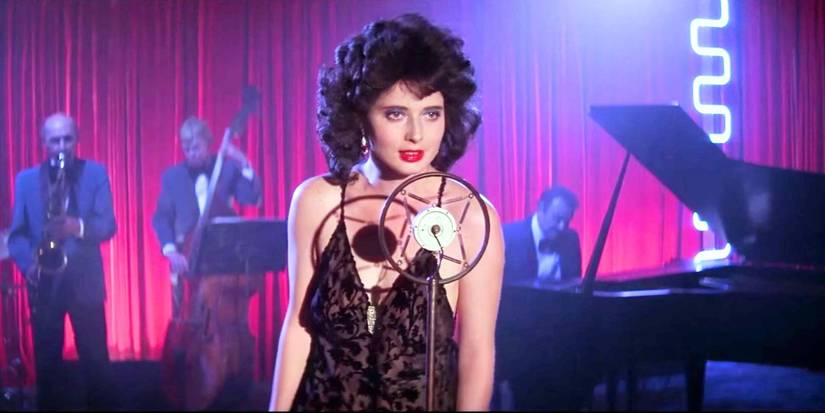
David Lynch's Oscar-nominated neo-noir Blue Velvet is a groundbreaking film that dismantles the wholesome myth of mid-century American suburbia by blending a conventional detective story with surrealism and psychological horror. The story centers on a college student, Jeffrey Beaumont (Kyle MacLachlan), who, after discovering a severed human ear in a field in his quiet hometown, finds himself in a criminal underworld where he becomes obsessed with a mysterious lounge singer, Dorothy Vallens (Isabella Rossellini), who is trapped under the control of a violent and insane criminal, Frank Booth (Dennis Hopper).
While the overall cast delivers exceptional performances, Hopper’s unhinged performance as Booth ultimately steals the show, creating an unforgettable villain who forces both the protagonist and the viewer to confront their own unbecoming tendencies. Lynch contrasts white picket fences with perversion and nightmare logic, ultimately redefining the boundaries of both modern independent cinema and the neo-noir genre. Lynch's masterpiece excels as a neo-noir by using classic mystery tropes to explore the raw, subconscious desires lurking beneath the polite society of small-town America, making Blue Velvet one of the greatest neo-noirs of the 1980s.
4 'Body Heat' (1981)
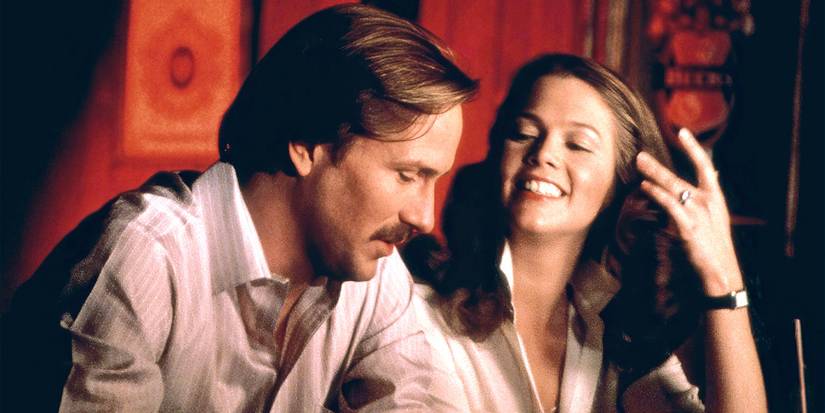
Lawrence Kasdan's sexpot neo-noir Body Heat single-handedly revitalized the film noir genre for 1980s audiences and is regarded as an unofficial remake of Billy Wilder's iconic noir classic, Double Indemnity. Set in a small Florida town during a suffocating heatwave, the film follows Ned Racine (William Hurt), a slick but dim-witted lawyer and bachelor with low morals, whose life spirals when he begins a passionate affair with Matty Walker (Kathleen Turner), a gorgeous married woman, which quickly evolves into a ruthless plot to murder her husband for his fortune.
By taking the plot foundations of 1940s classic noirs and infusing them with explicit sexuality, vivid color, and modern sensibilities, Kasdan crafted the definitive erotic neo-noir with Body Heat. Hurt and Turner are the epitome of sex appeal and deliver stellar performances that provide the film with a relentless intensity. The movie also stands out for its twist within a twist as well as Turner's powerhouse performance, which set the standard for the modern, cold-blooded femme fatale. Body Heat succeeds by honoring every classic noir marker while modernizing the atmosphere, solidifying it as one of the most influential contributions to the neo-noir genre.
3 'L.A. Confidential' (1997)

L.A. Confidential is a flawless adaptation of James Ellroy’s famous novel and is widely celebrated as one of the most masterfully structured detective stories ever brought to the silver screen. Set in the 1950s in Los Angeles, the movie follows LAPD officers Ed Exley (Guy Pearce), an ambitious careerist; Bud White (Russell Crowe), a hot-headed officer with a personal crusade to protect women; and Jack Vincennes (Kevin Spacey), a celebrity-obsessed detective working with a tabloid rag, who, while investigating a multiple homicide, uncover a massive conspiracy involving prostitution rings, drugs, and high-level police brass.
L.A. Confidential shines by capturing both the golden shine and hidden sleaze of Hollywood, proving that complex, multi-layered detective narratives could still flourish in modern cinema. The movie was both a critical and commercial success and received nine Academy Award nominations, including Best Picture, Best Director, and Best Cinematography. L.A. Confidential went on to win two of its nominations for Best Adapted Screenplay and Best Supporting Actress for Kim Basinger, whose performance as the blonde bombshell, Lynn Bracken, is regarded as one of the best femme fatales in the neo-noir genre.
2 'Taxi Driver' (1976)

Martin Scorsese's Taxi Driver is a masterpiece of psychological neo-noir that captures the profound urban decay and moral isolation of post-Vietnam War America, and is recognized today as a landmark study in narrative ambiguity and character breakdown. Robert De Niro stars as Travis Bickle, an insomniac and honorably discharged Marine who takes a job driving a taxi in New York City, but as he cruises through the city's neon-lit underbelly, his mental state begins to deteriorate, curdling his loneliness and isolation into severe paranoia.
Taxi Driver seamlessly translates noir's traditional "lonely detective" archetype into an unstable vigilante fantasy that also sheds light on the immense psychological trauma that many veterans faced after serving and endured in silence. Accompanied by Bernard Herrmann’s sultry jazz score and Scorsese’s nightmarish visuals, Taxi Driver forces the audience into the mind of a disturbed antihero, offering a brilliant commentary on media sensationalism and violent retribution. Despite some initial backlash, Taxi Driver was still a success and earned several Academy Award nominations, including Best Picture and Best Actor, and is considered by many to be a staple in the neo-noir genre.
1 'Chinatown' (1974)

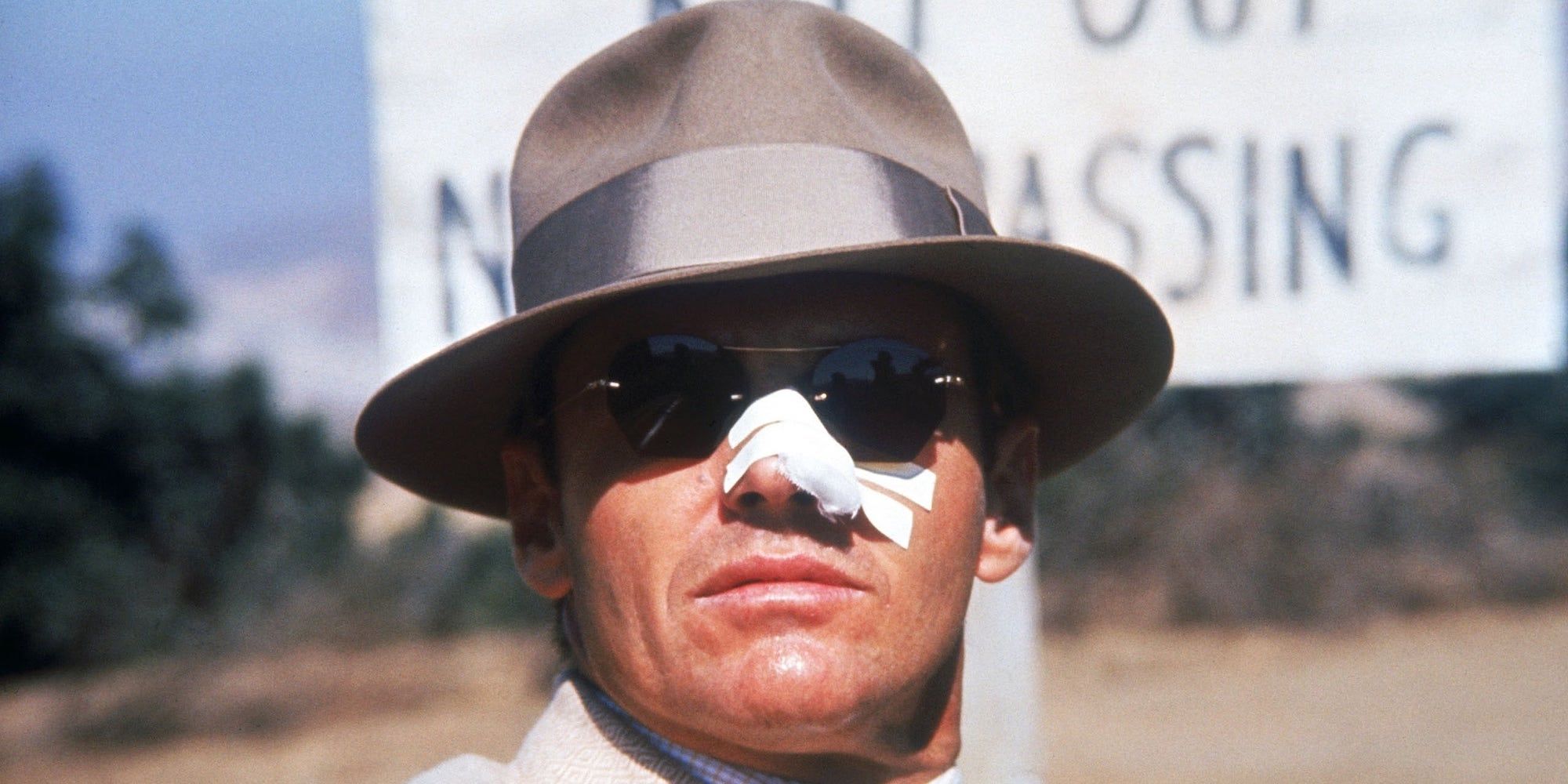
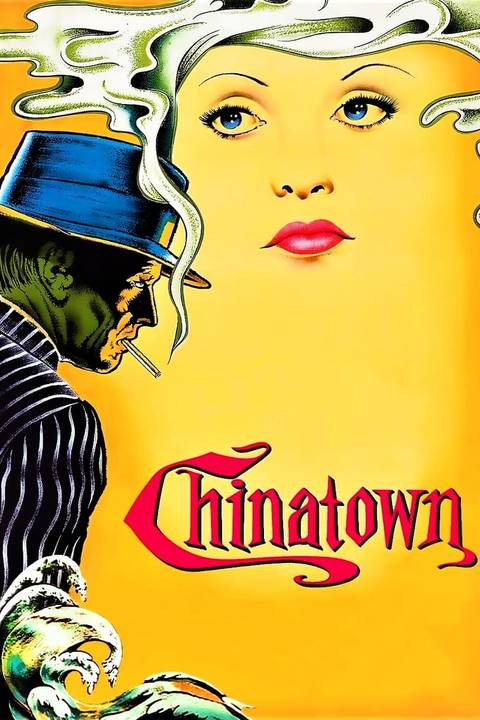
Directed by Roman Polanski and written by Robert Towne, Chinatown stands as the absolute gold standard of the neo-noir genre and is known for shattering the conventions of classic noir films to present an uncompromising critique of systemic power and institutional rot. Set during the 1930s in Los Angeles, Jack Nicholson stars as J.J. "Jake" Gittes, a suave private investigator who becomes entangled in a web of deep-seated corruption, manipulation, and real estate fraud that is somehow connected to a mysterious woman (Faye Dunaway) and her powerful and wealthy father, Noah Cross (John Huston).
Chinatown is a definitive neo-noir that replaces traditional dark, rainy alleyways with sun-drenched Southern California landscapes, proving that noir is a cynical state of mind rather than just a lighting choice. The movie was a major success and earned eleven Oscar nominations, including Best Picture, Best Director, and Best Actor, but despite its overwhelming nominations, it went on to only win for Best Original Screenplay for Towne. The film's iconic closing line, "Forget it, Jake. It's Chinatown," defines the entire philosophy of the genre: a world where bad actors thrive, individual morality is helpless, and the system always wins, making Chinatown the quintessential neo-noir.
Chinatown
- Release Date
- June 20, 1974
- Runtime
- 130 minutes
- Director
- Roman Polanski
- Writers
- Robert Towne
KioskNews shows a cleaned-up reading view extracted from the publisher’s page — the original always lives on their site, not ours.