Grants, incentives to be given to employers that redesign jobs for flexible work: Jasmin Lau
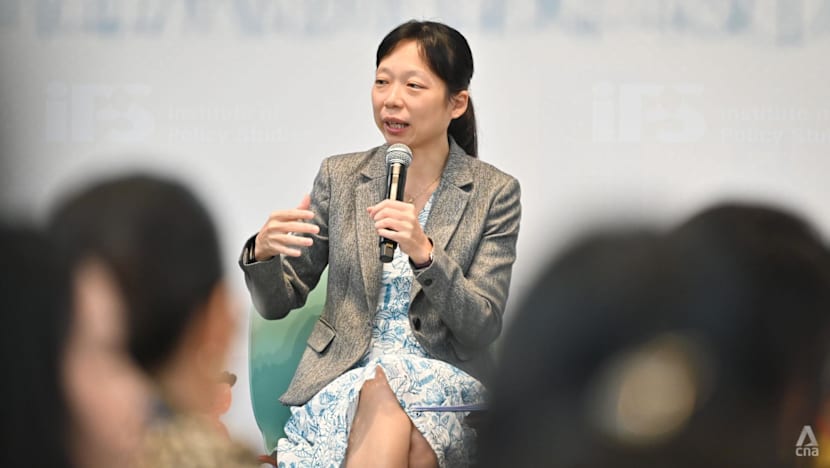
The government is studying which sectors to begin rolling out the policy, but workers in such roles must be prepared for their salaries to vary according to their work output, said Acting Manpower Minister Jasmin Lau.
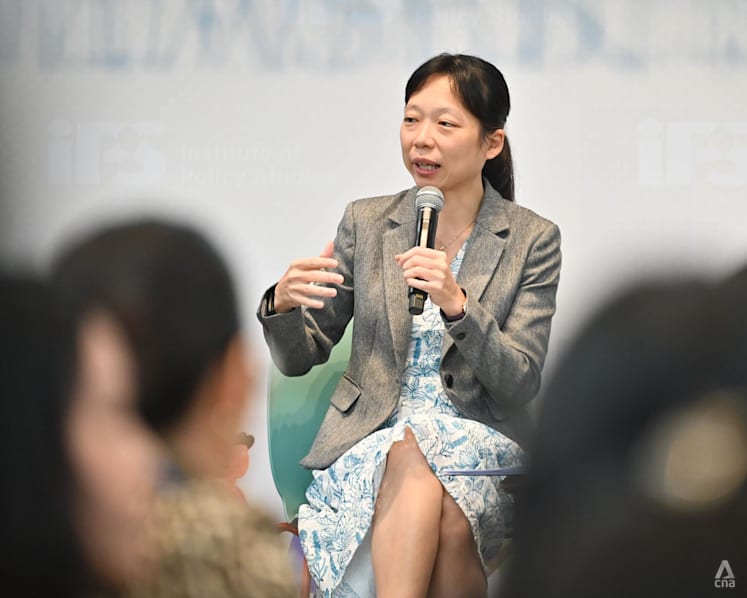
Acting Minister for Manpower Jasmin Lau (left) at the IPS Young Singaporeans Conference 2026 on Oct 14, 2026. (Photo: CNA/Alyssa Tan)
New: You can now listen to articles.

This audio is generated by an AI tool.

14 Oct 2026 07:48PM
SINGAPORE: Singapore will give grants and incentives to employers who redesign job roles around flexible arrangements, said Acting Minister for Manpower Jasmin Lau on Wednesday (Oct 14).
While the government is still studying which sectors to begin rolling out the policy, Ms Lau said that workers in such roles must understand that they may also get paid differently based on the tasks, outputs and outcomes that they deliver.
“We are working on a couple of ideas around flexible load jobs. Different people out there use different terms – some call it fractional jobs, and some people just say it's part-time jobs.
“But basically, we're trying to see whether there's a way to help employers redesign their work,” said Ms Lau at the Institute of Policy Studies’ (IPS) Young Singaporeans Conference 2026.
This means employers would have to bundle the tasks differently, so that workers can each work at a different rhythm, she said during the event at Temasek Shophouse.
“It will come with grants and incentives for employers to do so. We don't expect it to be national scale right from the start, because it has to be tested with some employers in some sectors to see whether it works,” said Ms Lau, who is also senior minister of state for digital development and information.
The government is working out which industries and roles are most suited for such efforts and to start there first, she said.
Such an arrangement would go beyond just a marriage and parenthood policy or intervention, and would support anyone who needs flexibility in their working life, said Ms Lau, who is a member of the Marriage and Parenthood Reset Workgroup.
The workgroup, chaired by Minister in the Prime Minister’s Office Indranee Rajah, aims to tackle Singapore’s falling fertility rate and will look at factors such as financial costs, work-life support, caregiving, housing, healthcare, preschool and education.
It will release its findings by early next year.
“And it also doesn't have to be permanent. You do these job roles for the period of time that you need, and when you are done with your caregiving duties, or your kids are older, or unfortunately your parents have passed on and you're returning back to the workforce fully, then you move on to a different role,” she said.
“RIGHT TO DISCONNECT”
Ms Lau also addressed the issue of the emerging workplace norm of having the “right to disconnect”, including in the public service.
She called it an “extremely useful practice”, but cautioned against being too prescriptive in dictating working hours for everyone.
“This is personal to me. As a mother of young children, I cannot work during certain hours. Some people can work all the way until 7pm and then go home and then do their own thing,” said Ms Lau, who is a mother of two.
“I can't, because I try to pick up the kids from preschool, and so I shut off work for a while. But I come back to work at 10 or 11 or 12, whatever hours I can do it.
“So I don't want also that we end up in the situation that people lose this flexibility, because now suddenly we're not allowed to work, and it's seen as not kosher to work at certain hours.”
The public service, being a large employer, can be a good role model for this “right to disconnect”.
The leaders must practise it, such as not expecting employees to respond on weekends.
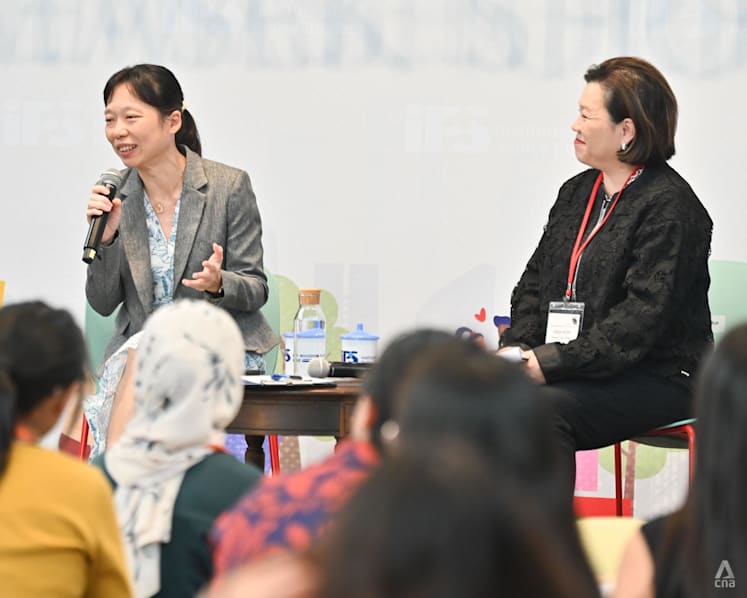
Ms Lau acknowledged that the current state of the world may cause young people to have self-doubts.
“I think all of us in this time and space feel the pressures of stress, work, lots of anxieties about what's going to happen, anxieties about what the world is turning out to be – which looks nasty all round – and also you feel unsure about yourself whether you can really become the best version of yourself. If you can't, then why would you have another new version of you?” she said.
However, she said that the journey into partnership, marriage and then parenthood is “extremely beautiful” and comes with a “combination of heartache, sometimes tears … sometimes indescribable joy”.
“You can't put it in words, and I think it makes for such a great life adventure,” said Ms Lau.
She shared that when she meets elderly people in neighbourhoods and asks them what they think of most often, they tell her most of the time that they think about their children and wish they could see them in their childhood again.
“They never talk about their work, careers, their houses. Never,” said Ms Lau.
HUGELY PERSONAL ISSUE
In her opening remarks, Ms Lau said that anything about family, parenthood and having children is "hugely personal" and that she did not like to talk about it as national policy.
"Every time we talk about it as national policy, we are told, 'don't preach to young people what you want them to do, whether people are having children or not is personal, and it's not something that the government should get involved in'," she said.
Ms Lau said that while she has gone through the joys of parenting, that does not mean that everybody will make the same choice, adding that it comes from her “very specific individual personal context”.
She added: "To me, actually if we didn't have children anymore, then I shouldn't be in this job, none of us should care anymore about topics like housing or the future or the environment, because there is no Singapore.
“There is no point in all of this if we didn't have a next generation or grandchildren come after us.
"We might as well just say we'll have a good life while we can, and then the future will figure itself out in whatever way people choose to do so. Then there's no purpose and meaning in any of us in public service, because there's no Singapore and there's no future."
She said that shaping the future of Singapore society is something that drives many in government, adding that some people, particularly women, feel very deeply about the issue of family and parenting.
KioskNews shows a cleaned-up reading view extracted from the publisher’s page — the original always lives on their site, not ours.