PATRICK K O’DONNELL: Revolution’s epic test showed strength of our Greatest Generation

A wilderness trek marked by rushing waterfalls, gorgeous fall foliage and optimism in the fall of 1775 soon transformed into a brutal struggle with starvation, torture and despair. What started out in late September as a high-spirited but long journey from New England through the Maine wilderness to invade Canada soon became a brutal test of survival that pushed members of America’s Greatest Generation to the limits of human endurance.
The Revolutionary War generation, America’s Greatest Generation, suffered untold struggles in their epic fight for the freedom and liberty that changed the world and that Americans still enjoy today. These ragtag colonists not only took on the greatest army and navy of their time. They also had to guard against sabotage from within by fellow Americans who did not favor independence from the Crown. Simultaneously, they faced violence from hostile Native Americans. And perhaps most deadly, they battled the ravages of nature and the American wilderness itself.
All these elements came into play in Col. Benedict Arnold’s ill-fated attempt to move his army from New England across the beautiful but rugged wilderness of Maine to attack Quebec. Spearheading that effort were the Continental Army’s first special operators, the riflemen. An advance team of 11 scouts, clad in hunting shirts, carried heavily laden canoes as they bypassed falls and marked trails and places for the bateaux, or flat-bottomed boats, along the way for the following army.
THE UNWINNABLE WAR AMERICA'S FOUNDING FATHERS FOUGHT AND WON CHANGED HUMAN HISTORY FOREVER
The scout team was made up of members from the 1st Pennsylvania Rifle Regiment. They and their leader, 35-year-old Lancaster native Lt. Archibald Steele, had been handpicked by Arnold for the expedition. These riflemen were some of the best shots in Washington’s army. Many had been long hunters who lived and hunted beyond the Allegheny Mountains and often had to battle Native Americans.
A 1786 oil painting by John Trumbull. It depicts the tragic death of the American Gen. Richard Montgomery at the Battle of Quebec, during the Invasion of Quebec, Dec. 31, 1775., as part of a major military operation by the Continental Army. (Photo by Pierce Archive LLC/Buyenlarge via Getty Images)
Their woodcraft, scouting abilities and expert marksmanship would allow them to pioneer many aspects of early American special operations. Now, their skills were being called upon to help mitigate the dangers inherent in trying to move an army through the wilderness.
WE SHOULD TELL REAL AMERICAN ADVENTURE STORIES TO TEACH OUR BOYS ABOUT HEROES
The full story of these remarkable riflemen and the role of the Pennsylvania Long Rifle in helping win the Revolutionary War can be found in my newest bestselling book, "Revolutionary Snipers: Washington’s Frontier Commandos Whose Marksmanship Forged A New Way of War and Helped Win the Revolution,"the third book in a trilogy on the elite units of the war.
This groundbreaking look at the Revolutionary War recounts the untold story of the Continental Army’s first soldiers in an immersive "Band-of-Brothers"-style narrative that puts the reader in the boots of these snipers who preceded today’s U.S. Army Special Operators.
Long lines of men hauling boats over strips of land between waterways are inherently vulnerable to ambush. Arnold hoped the advance work of his Revolutionary sniper scouts could mitigate the risk. In good weather and water, the men could travel 25 miles a day or more. Canoes, lightweight marvels of Native American engineering, could be carried by the men with ease. Steele’s canoe held five men with their weapons, equipment and provisions, while the remaining scouts rowed the second canoe.
The group would have to traverse several major rivers, lakes, ponds and mountains, on their staggering 350+-mile-journey over rugged but beautiful terrain. In contrast, the trailing army, over 1,000 strong, three battalions, one including two rifle companies, deployed more than 200 heavy, ungainly bateaux to traverse the rivers, ponds and lakes with the constant possible threat of Native American or British attack. The shallow-draft, flat-bottom craft measured approximately 22 feet in length, weighed hundreds of pounds and could carry about six men each as well as six hundred pounds of gear and supplies.
These clunky boats, constructed from green wood nailed to oak beams by locals of questionable loyalties would be one of the army’s many downfalls. The river water and exposure to the elements warped the green wood, compromising the seaworthiness of the craft. "The bateaux were so badly constructed that, whether in or out of them, we were wet. Could we have come within reach of the villains who constructed these crazy things, they would have fully experienced the effects of our vengeance." Necessary repairs caused costly delays.
It was early October before the riflemen reached the Great Carry, a 12-mile stretch of land and water that included three ponds between the Kennebec River and the Dead River. Rain turned the first part of the Great Carry into a quagmire of muck. "We were often half leg deep in the mud, stumbling over old fallen logs, one leg sinking deeper in the mire than the other, then down goes a boat and carriers with it, a hearty laugh prevails." Despite being wet and coated in mud from head to toe, the men kept their sense of humor, and the collective pain and grueling test of human endurance built an élan.
AMERICANS ONCE SURVIVED ON SQUIRREL PIE, WHISKEY AND HOMEMADE CHEESE AFTER BRITISH IMPORTS DRIED UP
However, weeks in the wilderness began to take a toll. The men suffered from the elements, constant toil and drinking contaminated water. They began to run out of food. Dysentery started to ravage the ranks, and carrying the sick became an added burden. To preserve their meager provisions, Arnold put the men on half-rations, but over 100 miles of uninhabited wilderness remained.
This groundbreaking look at the Revolutionary War recounts the untold story of the Continental Army’s first soldiers in an immersive band-of-brothers-style narrative that puts the reader in the boots of these snipers who preceded today’s U.S. Army Special Operators.
Misery continued to plague the mission. For three days, it rained, and a gale-force wind struck the men’s camp along the bank of the Dead River. The muddy river rose eight feet, uprooting trees, flooding the army’s camp and spoiling their meager supplies.
The water rose so high that it became nearly impossible to tell whether the men were traveling up the Dead River or one of the many streams that fed into it, which had become rivers themselves. In the rapids and swirling water, one bateau was wrecked and sank. A barrel filled with gold and silver coins, used to pay the men and to purchase supplies from the Canadians once they reached civilization, sank like a rock into the swirling torrent.
Facing sick men, diminishing provisions, a missing fortune, the onset of snow and freezing temperatures and the ever-present threat of hostile Native Americans or a British ambush, Arnold ordered a council of war to assess the situation. Eventually, he ordered a picked company of fit men to advance and find rations for the starving army in French settlements in the Chaudière Valley, scores of miles away, while the sick returned.
GEORGE WASHINGTON'S REMARKABLE PRAYER FOR AMERICA STILL RESONATES 250 YEARS LATER
Pressing forward in freezing rain, the exhausted expedition camped for the night, and the next day the riflemen and the remaining members of the force awoke to several inches of snow on the ground. The men tramped through deep snow, often sinking into a bog, unable to determine what was solid ground under the snow. The starving men had been reduced to a pint of flour per day for the past two weeks, starvation rations.
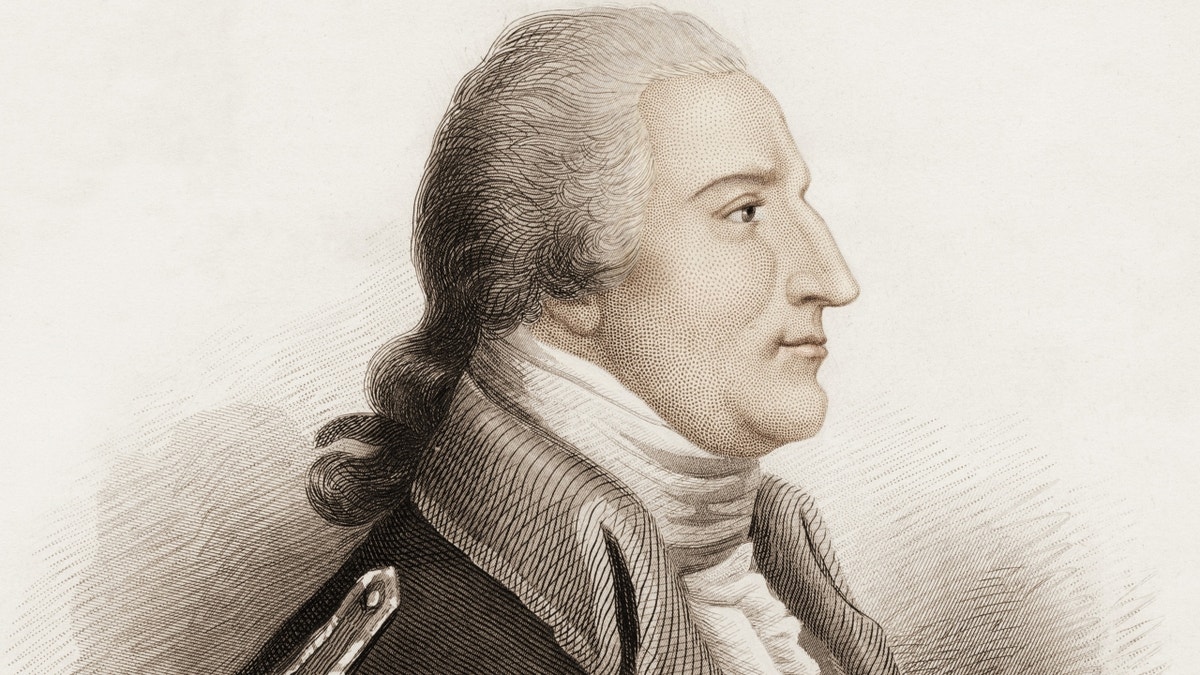
Col. Benedict Arnold was a prominent American leader before he defected to the British in 1780. (Getty Images)
As the sick and exhausted survivors began dropping out of the march, Arnold acted decisively to save his men. Using birchbark canoes, he set out ahead of the army with Lt. Steele and a few Revolutionary snipers.
THE '1776 DIET': WHAT AMERICANS REALLY ATE DURING THE NATION'S FOUNDING
Within several days, these frontier commandos encountered an individual who told Arnold they would be in the settlements in three days and have provisions for the men in six. The American officer sent back word that the men were to abandon their bateaux, and officers should distribute the remainder of their meager rations as they were expecting them to be replaced soon.
Like concentration camp inmates desperate for food, the riflemen eagerly wolfed down the rations — their first full meal in weeks. However, unbeknownst to many of them, the meal would be their last, as a wrong turn extended their journey longer than anticipated.
Eventually, survivors of the grueling march did emerge in early November after being subjected to such brutal conditions that some resorted to eating their own pet dog and others roasting the leather of their shot pouches.
Misery continued to plague the mission. For three days, it rained, and a gale-force wind struck the men’s camp along the bank of the Dead River. The muddy river rose eight feet, uprooting trees, flooding the army’s camp and spoiling their meager supplies.
They "staggered about like . . . drunken m[e]n" unable to stand without the support of their rifles. Despite the beauty of their surroundings, "Every object tended to dismay the heart, already too much oppressed. The light that shone upon it served but to render its dreary aspect more visible."
CLICK HERE FOR MORE FOX NEWS OPINION
Finally, hope appeared in the form of cattle driven along the river "hurried on by men with horses loaded with sacks." Arnold’s relief party had arrived. Ravenous from their additional days of starvation, the withered troops quickly butchered one of the cattle. Some waited for the meat to cook, others didn’t.
CLICK HERE TO DOWNLOAD THE FOX NEWS APP
The poorly clad skeletons gorged themselves on animal flesh. The wise resisted the pangs of hunger and had the wisdom to pace themselves. Starved men can kill themselves from excessive food intake. Tragically, many became sick, and several died a day or two later after finally reaching the end of their epic test of survival.
CLICK HERE TO READ MORE FROM PATRICK K. O'DONNELL
Patrick K. O'Donnell is a bestselling, critically acclaimed military historian and an expert on elite units. He is the author of 13 books, including his new, bestselling book on the Civil War: "The Unvanquished: The Untold Story of Lincoln’s Special Forces, the Manhunt for Mosby’s Rangers, and the Shadow War That Forged America’s Special Operations," to be released in May, 2024. "The Indispensables," "Beyond Valor," "First SEALs,", and "The Unknowns." O'Donnell served as a combat historian in a Marine rifle platoon during the Battle of Fallujah and often speaks on espionage, special operations, and counterinsurgency. He has provided historical consulting for DreamWorks' award-winning miniseries "Band of Brothers" and documentaries produced by the BBC, the History Channel, and Discovery. PatrickKODonnell.com @combathistorian
KioskNews shows a cleaned-up reading view extracted from the publisher’s page — the original always lives on their site, not ours.