Chris Selley: Finally, a pandemic-era leader admits people deserve an inquiry after some ‘insane’ reactions
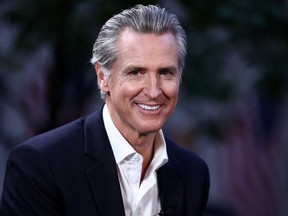
Gavin Newsom, governor of California and a potential Democratic candidate for president, is a hard man to like if you don’t already like him. His threat to gerrymander California’s electoral districts in Democrats’ favour unless Texas backed off a plan to do the same wasn’t very adult-ish, never mind presidential.
Sign In or Create an Account
Neither is his habit of mimicking/satirizing Donald Trump in his social media posts, which has been one of Newsom’s specialties. He famously posted a rendering of himself carved into Mount Rushmore. It’s too cute by a factor of 50 at least.
But Newsom did say something very interesting in a recent interview with CNN’s Jake Tapper: He criticized his own state’s response to the COVID-19 pandemic, which he oversaw.

Columnist Jesse Kline keeps you up to date with what’s happening in Israel and the effects of antisemitism on life here in Canada. Friday mornings.
By signing up you consent to receive the above newsletter from Postmedia Network Inc.
A welcome email is on its way. If you don't see it, please check your junk folder.
The next issue of Channel Israel will soon be in your inbox.
We encountered an issue signing you up. Please try again
“The idea that we closed beaches is insane, in hindsight,” Newsom said. And he lamented the number of school days missed, though that varied widely by district, with Los Angeles by far leading the way.
Tapper put it to Newsom: “There needs to be, like, a 9/11 Commission on COVID.”
Newsom agreed.
I have been arguing for precisely that in Canada, both federally and in the provinces, ever since COVID finally came off the boil for good. What did we do right? What did we do wrong? How has this affected relationships of all kinds? More important than anything, we need to examine how it affected kids. Mounting evidence suggests “a great deal, leaving permanent scars.”
Many Canadians will say, come on, we did so much better than the Americans in terms of deaths per capita. What more can we ask of a government, realistically? Why beat ourselves up? Why go through a long, expensive and “politicized” process? (As if the COVID restrictions weren’t political.)
Indeed, I don’t think I’ve ever come across anyone, other than myself, who both (a) strongly supports an inquiry and (b) doesn’t believe all or most COVID restrictions were unnecessary or unreasonable. Mostly, we just don’t want to know. I certainly have major complaints and questions about those restrictions, especially regarding their longevity. I would like to see those addressed at an inquiry.
And here’s an interesting thing for the “we did great, what’s to complain about?” crowd. California’s death toll was 2,846 people per million population. Even at 38th place among states, that’s worse than any Canadian province. But if provinces, especially Quebec, were to compare themselves to the U.S. states with the lowest death tolls, they might be surprised.
At 1,784 deaths per million, Utah lost 25 per cent fewer people per capita than Quebec did. Washington, D.C. even did slightly better than Quebec.
Among the most important, specific questions: B.C. closed schools for fewer days than any other province did. But its COVID death rate was less than Alberta’s, Saskatchewan’s, Manitoba’s and Quebec’s. What explains this?
Newsom hasn’t promised to do anything about any of this insanity-in-hindsight, and no doubt there is political calculation afoot as he eyes up a run at the White House. Although, 79 per cent of Democrats nationally think U.S. public-health officials did a good or excellent job responding to the pandemic, according to a Pew Research Center poll released last year, so it’s not clear who Newsom would be pandering to.
“Introspection” is probably overstating what we’re seeing here from Newsom. He doesn’t seem like the type. But it’s evidence of real live thought, at least, from a Democrat in what was a pretty lockdown-happy American state. And he focused on what are obviously the most important questions, which are about education.
What did we do to our kids? Did keeping them home make sense at the time as a risk-to-reward benefit? Does it make sense in hindsight? Ontario students lost an average of 135 school days between 2020 and 2022, the Fraser Institute reported in 2023, which was the most among the provinces. Student achievement levels in the province today are alarming. Absenteeism is dismal. Anecdotally, certainly, there seems be an unusual plague of semi-feral childrenwreaking havoc the GTA — kids exactly the age you would think might really have suffered during the pandemic.
National Post
cselley@postmedia.com
Join the Conversation
This website uses cookies to personalize your content (including ads), and allows us to analyze our traffic. Read more about cookies here. By continuing to use our site, you agree to our Terms of Use and Privacy Policy.
KioskNews shows a cleaned-up reading view extracted from the publisher’s page — the original always lives on their site, not ours.