The 10 Greatest Epic Sci-Fi Movies of the Last 100 Years, Ranked

Michael Block is a 14 time GLAM Award nominated writer, producer, and host of the podcast Block Talk. Throughout his time in the entertainment industry, he has worked on and off Broadway as a stage manager, written several produced plays, critiqued hundreds of theatrical performances, drag and cabaret shows, and has produced events randing from drag competitoons to variety concerts!
On Block Talk, he interviews nightlife personalities, covers the wide world of entertainment through features, ranking episodes, and recaps ALL of Drag Race, as well as Dragula and Survivor. He has interviewed hundreds of RuGirls that span the globe at DragCon NYC, DragCon LA, and DragCon UK.
In his free time, he makes one-of-a-kind jewelry and gift baskets with his mom. He is a proud member of the LGBTQ+ community.
Sign in to your Collider account
It may sound wild, but the science fiction genre in cinema has been around for more than a century. Over the past 100 years, sci-fi has welcomed audiences to some of the most profound and incredible storytelling, with stories that range from space sagas to time travel thrillers. Indeed, the genre has pushed our imagination to fascinating places.
With a vast net of styles within this sprawling umbrella, the sci-fi epic has proven to be an audience favorite. These stories feature large-scale storytelling with extraordinary stakes and expansive worlds. From game-changing space operas to technology-infused wonders, the sci-fi epics of the last 100 years have been incredibly influential and important to pop culture and entertainment at large.
10 'Stalker' (1979)

Though it may not often appear in the same conversation as many of the subsequent titles, Stalker is unlike the traditional sci-fi epic. The Soviet film by Andrei Tarkovsky is set in a bleak, desaturated city next to the Zone, a guarded, forbidden area where normal laws of physics do not work. A man known as the "Stalker" (Alexander Kaidanovsky) makes a living by illegally leading people through the traps and anomalies of the Zone. The goal is to reach the Room at the center of the Zone, where it is rumored to make a person's deepest wish a reality. But for each individual who enters the Room, they soon learn that it grants their actual subconscious wish rather than what they think they want.
Replacing the typical tropes of the genre, Stalker is a masterful exploration of humanity. Using a mysterious, post-apocalyptic wasteland, Tarkovsky opens up existential concepts. Through a triad of archetypes, each individual represents a different aspect. The Stalker is faith and devotion, the Writer (Anatoly Solonitsyn) is art and inspiration, and the Professor (Nikolai Grinko) is science and rationalism. At its core, Stalker tells a tale about the true horrors of true desire. Holding a 100% score on Rotten Tomatoes, Stalker remains a highly influential work of art.
9 'Interstellar' (2014)

Unafraid to go to the edge to make a masterpiece, Christopher Nolan's foray into epic science fiction came with Interstellar. Set in a dystopian near-future where the planet's ecosystem is dying as the blight leaves humanity with dwindling food and oxygen, former NASA pilot turned farmer Cooper (Matthew McConaughey) is recruited to pilot a mission through a wormhole near Saturn to find a new habitable planet. While traveling near the black hole, time moves differently, causing a real-time strain on Cooper's connection to his growing children.
Developed alongside theoretical physicist Kip Thorne, Nolan ensured that the science was plausible in order to make the human-driven narrative hit home. Rather than an overly clinical story, Interstellar anchors the cosmic stakes with a heartbreaking father-daughter bond. A masterpiece in direction, Nolan used practical sets and real miniature models to give the project tangibility. Hans Zimmer's classically tinged score operates as a ticking clock that gives it a feeling of grandeur. Interstellar is a philosophically ambitious epic where human survival, sacrifice, and love transcend dimensions.
8 'Dune: Part Two' (2024)

Lifting Frank Herbert's novel to epic proportions, Denis Villeneuve did the unthinkable: he turned the seemingly unfilmable story into a brilliantly visceral masterpiece. While the first film set the tone, Dune: Part Two elevated the story to new heights. Picking up where the first film left off, it tells the story of Paul Atreides (Timothée Chalamet) as he fights alongside the native Fremen, where he begins to be worshiped as their prophesied messiah. He then comes into conflict with the Harkonnens, setting the stage for a massive galactic holy war.
The film faithfully takes Herbert's iconic book and turns the second part into a cautionary tale about charismatic leaders and religious fanaticism. While Paul arises as a hero in the first part, he emerges as an individual on a tragic descent, torn between personal revenge and his dark destiny. With extraordinary technical craft, Villeneuve miraculously builds a colossal world where the sandy deserts of Arrakis and the monochromatic grit of Giedi Prime feel immersive. It's the perfect setup for the highly anticipated Dune: Part Three.
7 'Blade Runner' (1982)
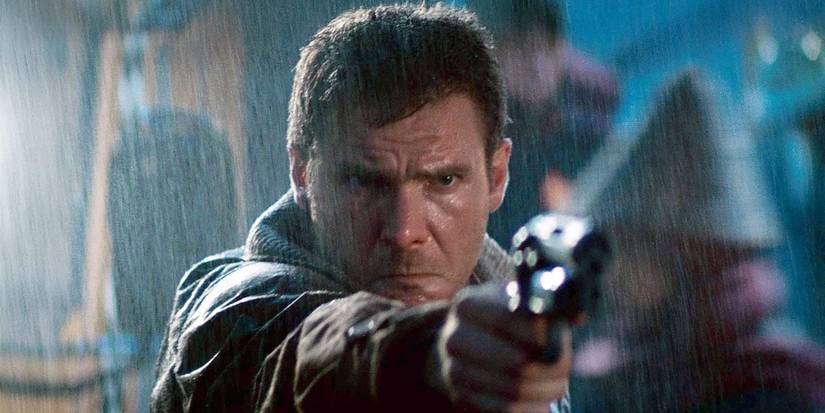
With two iconic roles in his arsenal, Harrison Ford continued his crusade of brilliant projects with 1982's Blade Runner. Directed by Ridley Scott, the Philip K. Dick film adaptation is a neo-noir sci-fi thriller set in a dystopian Los Angeles in 2019. The Tyrell Corporation bioengineers synthetic humans known as replicants, but after a violent mutiny, they are banned on Earth. Rick Deckard (Ford), a burnt-out blade runner, is tasked with retiring four fugitive replicants, including the rogue Roy Batty (Rutger Hauer). Falling in love with an experimental replicant, Rachael (Sean Young), who doesn't know she's one, Deckard is forced to battle with questions of empathy, identity, and his nature.
Unlike the glossy science fiction films prior, Blade Runner represented a visual revolution. The rain-drenched, neon-lit, decaying Los Angeles redefined science fiction design. Scott and designer Syd Mead established a newfound blueprint of how to depict a high-tech, low-life urban jungle in the genre. Blade Runner flipped the script in its examination of what it means to be human. It doesn't offer any easy answers, even forcing Deckard to question his identity. With a haunting synthesized score and masterful imagery, Blade Runner changed the science fiction genre forever.
Collider Exclusive · Sci-Fi Personality Quiz Which Sci-Fi Hero Are You Most Like? Paul Atreides · Captain Kirk · Princess Leia · Ellen Ripley · Max Rockatansky
Five iconic heroes. Five completely different ways of facing an impossible universe. One of them shares your instincts, your values, and your particular way of refusing to back down. Eight questions will tell you which one.
🏜️Paul Atreides
🖖Capt. Kirk
✊Princess Leia
🔦Ellen Ripley
🔥Max Rockatansky
01
How do you lead when the stakes couldn't be higher? The way you lead under pressure is the most honest thing about you.
02
What is your greatest strength in a crisis? The quality that keeps you alive when everything else fails.
03
What is the thing you'd sacrifice everything else for? Your deepest motivation is your truest compass.
04
How do you relate to the people around you? Who you are to others under pressure is who you really are.
05
You're facing a threat that no one else believes is real. What do you do? How you respond when you're the only one who sees it defines everything.
06
What has your heroism cost you personally? Every hero pays. The question is what — and whether they'd pay it again.
07
How do you feel about the rules of the world you're in? Every hero has a relationship with the system. What's yours?
08
When everything is on the line, what keeps you going? The answer is the most honest thing about you.
Your Hero Has Been Identified Your Sci-Fi Hero Is…
Your answers point to the iconic sci-fi hero who shares your instincts, your values, and your particular way of facing the impossible.
Paul Atreides
You carry a weight most people would crumble under — the knowledge of what you're capable of, and the burden of what you might have to become.
- You see further ahead than others and you plan accordingly, even when the vision frightens you.
- You are driven by loyalty to your people and a sense of destiny you didn't ask for but can't escape.
- Paul Atreides is not simply a hero — he is someone who understands the cost of power and chooses to bear it anyway.
- That gravity, that willingness to carry what others won't, is exactly you.
Captain Kirk
You lead with instinct, warmth, and an absolute refusal to accept a no-win scenario — because you've always believed there's a third option nobody else has thought of yet.
- You take the mission seriously without ever taking yourself too seriously.
- Your crew would follow you anywhere, not because you demand it, but because you've earned it.
- Kirk's genius isn't tactical — it's human. He reads people, bends rules with purpose, and wills outcomes into existence through sheer conviction.
- That combination of warmth, audacity, and relentless optimism is unmistakably yours.
Princess Leia
You are the kind of person who holds the line when everyone else is losing faith — not because you're fearless, but because giving up simply isn't something you're capable of.
- You lead through conviction. Your voice carries because your belief is unshakeable.
- You gave up everything ordinary the moment you chose the cause, and you've never looked back.
- Leia is not a supporting character in her own story — she is the moral centre of the entire rebellion.
- That same fierce, principled, unbreakable core is what defines you.
Ellen Ripley
You are not reckless, not grandiose, and not particularly interested in being anyone's hero — you just refuse to stop when it matters.
- You see threats clearly, you document the truth even when no one listens, and when the time comes you handle it yourself.
- Ripley's heroism is earned, not performed. She doesn't have a speech — she has a flamethrower and a plan.
- You share her composure under the worst possible pressure, and her refusal to pretend the monster isn't there.
- When it counts, you don't flinch. That's everything.
Max Rockatansky
You have been through fire that would break most people — and what came out the other side is something the world underestimates at its peril.
- You don't ask for help, don't need validation, and don't wait for anyone to tell you the rules no longer apply.
- Your loyalty, when it finally arrives, is absolute — but it's earned in silence and tested in action, not in words.
- Max is not a nihilist. He is someone who lost everything and found, against his will, that he still has something worth protecting.
- That bruised, stubborn, ultimately human core is exactly yours.
6 'Avatar' (2009)

Having already brought sci-fi favorites to the big screen, James Cameron set the tone for the 21st century with the groundbreaking cinematic wonder Avatar. The monumental sci-fi epic tells the story of a human military-corporate organization known as RDA that aims to mine the planet of Pandora as Earth's resources are depleting. Scientists have created genetically engineered human Na'vi hybrids known as Avatars to interact with the locals. Jake Sully (Sam Worthington), a paraplegic former Marine, embarks on a scouting mission where he learns the ways of the Na'vi, falls in love with Neytiri (Zoe Saldaña), and soon becomes their protector as the RDA seeks to destroy their planet.
Though the plot may feel derivative, Cameron reshaped the sci-fi epic genre. Pandora served as the beacon of meticulously detailed worldbuilding, a brilliantly immersive planet where Cameron mastered every element with detail, from the bioluminescent flora to the extraordinary Hallelujah Mountains. Ensuring the audience feels connected to this world allows the social commentary about unchecked corporate greed and environmental destruction to ring true. A technical landmark, Avatar pushed the bounds of sci-fi epics while building its own franchise in the process.
5 'Metropolis' (1927)

It might be hard to imagine, but we're nearing the 100th anniversary of the film that shaped science fiction forever: Metropolis. Directed by Fritz Lang, the German expressionist silent film tells the story of a futuristic, sharply divided dystopian city where the wealthy live in luxury towers above the ground, ruled by ruthless businessman Joh Fredersen (Alfred Abel), as the overworked laborers live deep in the underworld. Joh's son Freder (Gustav Fröhlich) falls in love with Maria, a gentle worker and spiritual leader who preaches peace. But after mad scientist Rotwang (Rudolf Klein-Rogge) creates a robotic double of Maria (Brigitte Helm), the workers are incited to riot, destroying the machines that power the city.
Metropolis established the visual and thematic blueprint for nearly every futuristic cinematic narrative that followed. The story introduced the first on-screen humanoid robot while exploring artificial intelligence, mass surveillance, and automation. With a stark social commentary, the film's ability to predict a terrifying future makes it quite a profound work of art. Through core themes of class conflict and the battle between technology and humanity, Metropolis is forever remembered for its remarkable statement: "The mediator between the head and the hands must be the heart."
4 'Alien' (1979)

Thanks to Alien, we learned that in space, no one can hear you scream. And Ridley Scott made us all scream. The sci-fi horror thriller follows the seven-member crew of the commercial spacecraft Nostromo. After being awakened from cryosleep by their ship's computer, Mother, they are forced to investigate a distress signal from a nearby moon where they stumble upon a derelict alien spacecraft. The ship is then breached and infiltrated by aliens known as Xenomorphs, which pick off the crew one by one, except the lone survivor, Ellen Ripley (Sigourney Weaver).
Mixing blue-collar industrial realism with unmatched creature imagery and dread, Alien introduced new possibilities in the science fiction realm. It thrives on slow-building tension, dark shadows, and minimal visibility, and by the time the giant Xenomorph, crafted by artist H.R. Giger, comes into view, the fear is unmatched. Alien revolutionized the sci-fi protagonist by making Ripley a resourceful survivor who outwits the alien threat through quick wit, intellect, and pure grit rather than action-hero clichés. It opened up the doors for future female protagonists in the sci-fi universe.
3 'The Matrix' (1999)
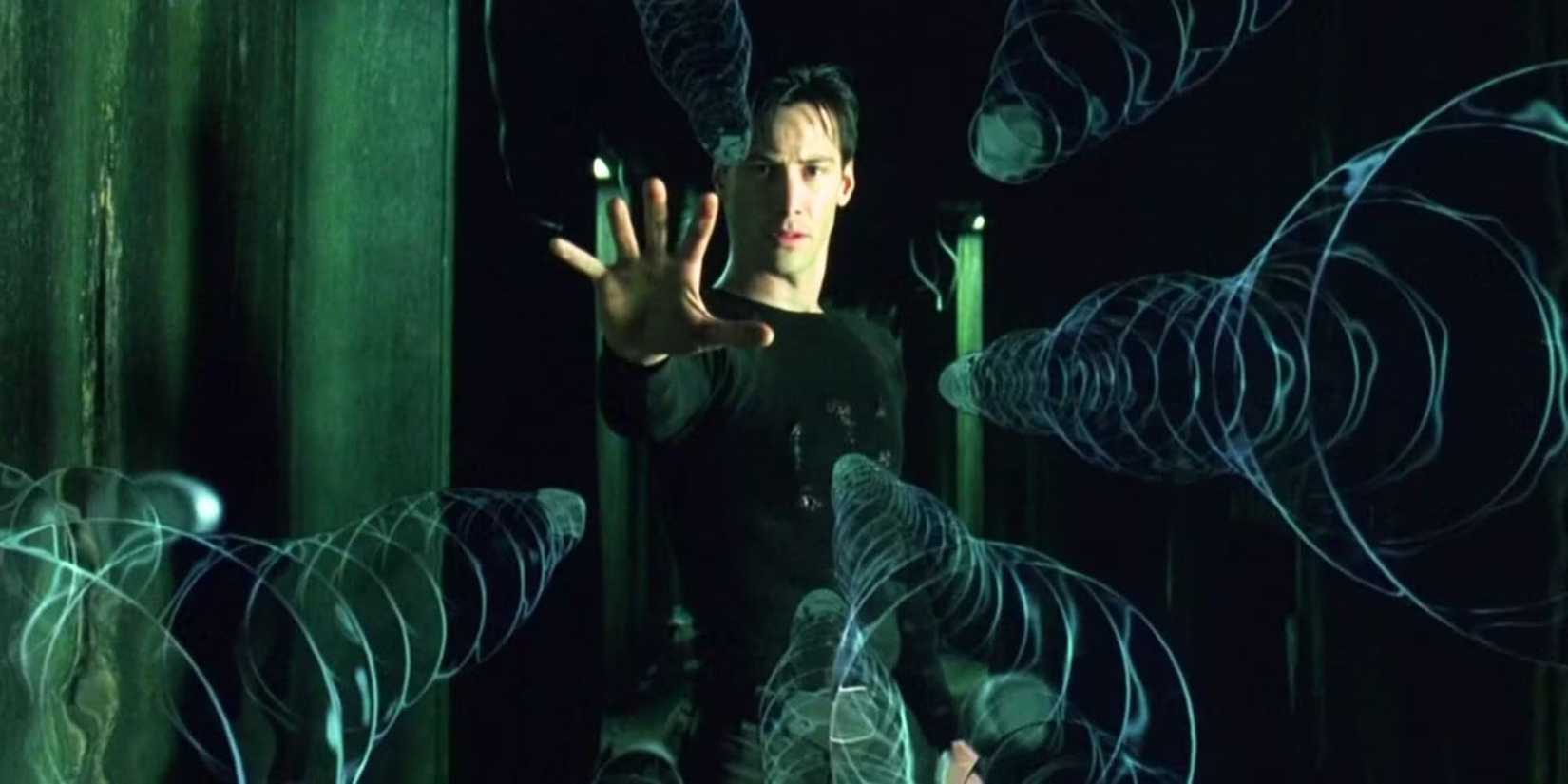
The millennium ended with a bang thanks to the game-changing sci-fi action masterpiece, The Matrix. Directed by the Wachowskis, the film follows computer hacker Neo (Keanu Reeves) as he discovers that the everyday world is merely a simulation created by intelligent machines. Recruited by Morpheus (Laurence Fishburne) and Trinity (Carrie-Anne Moss), Neo is a prophesied figure who can manipulate the Matrix and liberate humanity from the machines.
Combining philosophy, martial arts, gun-fu, and groundbreaking visual effects, The Matrix became the gold standard for every sci-fi film that arrived in the 21st century. It is best remembered for introducing the concept of bullet-time, a signature slow-motion technique that allowed cameras to move around frozen or slow-moving action. Marrying a sleek cyberpunk aesthetic with the balletic choreography of wire-fu, The Matrix became a fusion of genres. The Wachowskis used the film as a meditation on free will versus control. It may be a work of science fiction, but as time clicks on, it's seemingly getting closer to a potential reality.
2 'Star Wars: Episode V—The Empire Strikes Back' (1980)

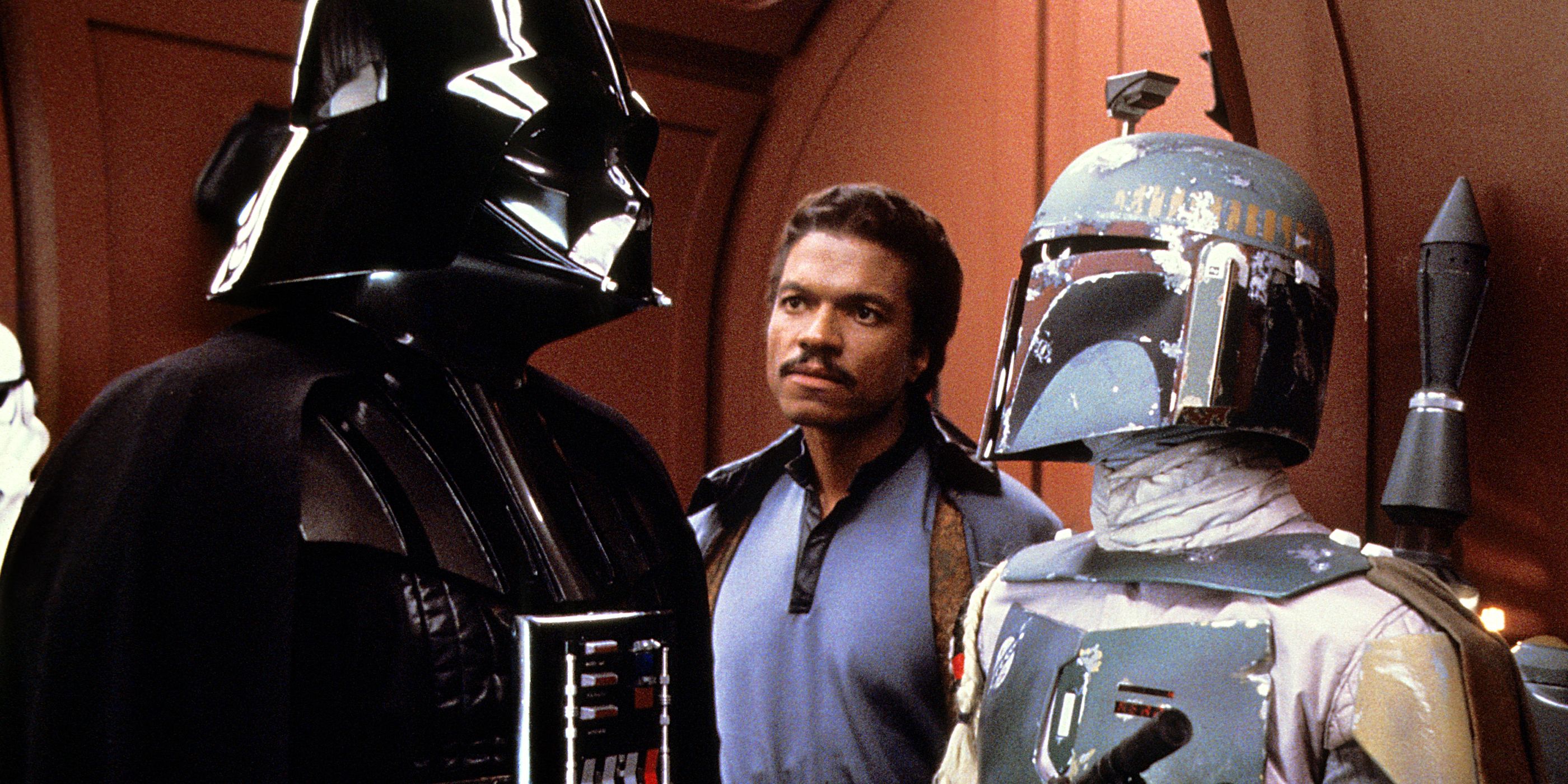
Rarely are sequels better than the original. Then George Lucas released Star Wars: Episode V—The Empire Strikes Back. Expanding the mythology and lore from the original film, the second film follows the Rebel Alliance as they try to survive a massive counter-attack by the evil Galactic Empire following the destruction of the Death Star. Meanwhile, Luke Skywalker (Mark Hamill) travels to the swamp planet Dagobah to begin his training with Jedi Master Yoda (Frank Oz) to learn to master the Force and take on Darth Vader (James Earl Jones).
Unlike many Hollywood films, Star Wars: Episode V—The Empire Strikes Back thrives by telling a story where it's not a guarantee that the good guys win, establishing a tale where heroes suffer and fail. In doing so, it moves away from straight space adventure into a philosophical dissertation about the complex nature of evil. The film expands the galaxy far, far away through instantly iconic characters, scenes, and battles. Between introducing characters like Yoda and Boba Fett (Jeremy Bulloch) and John Williams' memorable "Imperial March," The Empire Strikes Back remains the gold standard for the middle chapter in a trilogy.
1 '2001: A Space Odyssey' (1968)
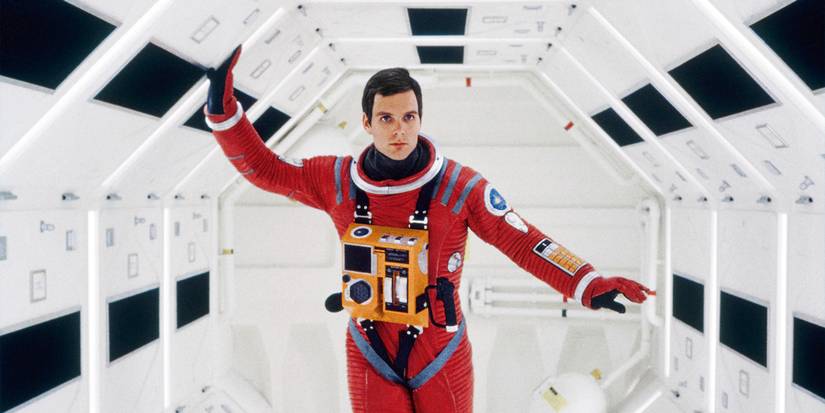
Not only is it an influential science fiction film, but 2001: A Space Odyssey is considered one of the greatest films ever made. Directed by Stanley Kubrick, the epic film explores human evolution, artificial intelligence, and our place in the universe through a sprawling story told in four parts. From the dawn of man to a mission to Jupiter, 2001: A Space Odyssey links the very first tool, a bone, to the ultimate tool, artificial intelligence, questioning how evolution and technology influenced one another.
Written alongside Arthur C. Clarke, Kubrick used profound philosophical ambition and technical realism to take on existential themes beyond the present. Spanning millions of years, the narrative allows for open-ended interpretations that have been debated for generations. Though the film arrived in 1968, Kubrick's ideas about where that technology was heading were eerily prophetic. A masterpiece of visual storytelling, 2001: A Space Odyssey transformed science fiction into high art.
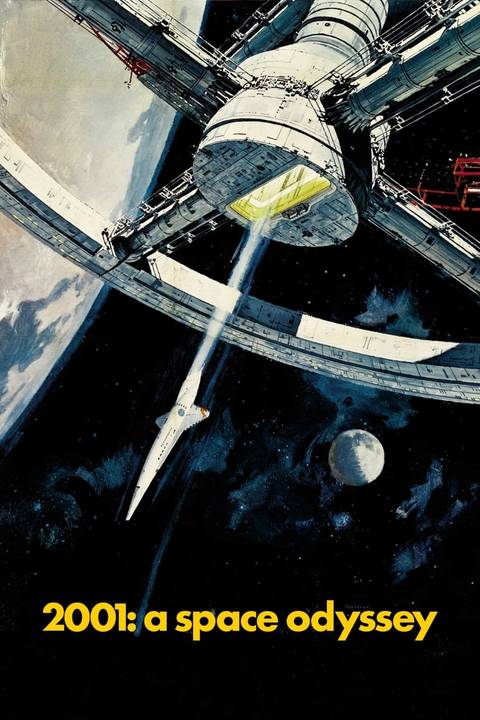
2001: A Space Odyssey
- Release Date
- April 10, 1968
- Cast
- Keir Dullea, Gary Lockwood, William Sylvester, Douglas Rain, Daniel Richter, Leonard Rossiter, Margaret Tyzack, Robert Beatty, Sean Sullivan, Bill Weston, Ed Bishop, Glenn Beck, Alan Gifford, Ann Gillis, Edwina Carroll, Penny Brahms, Heather Downham, Mike Lovell, John Ashley, Jimmy Bell, David Charkham, Keith Denny, Jonathan Daw, Péter Delmár, Terry Duggan
- Runtime
- 149 minutes
- Director
- Stanley Kubrick
- Writers
- Stanley Kubrick, Arthur C. Clarke
KioskNews shows a cleaned-up reading view extracted from the publisher’s page — the original always lives on their site, not ours.