Victoria’s 2026 state election could have ‘great consequences’ for politics across Australia. What do voters need to know?
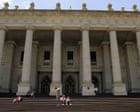
Antony Green has covered elections for decades. But the ABC’s former election analyst says the result of the Victorian election will have “greater consequences for the course of national politics than any state election in my lifetime”.
Labor is chasing an unprecedented fourth consecutive term in Victoria under the premier, Ben Carroll – the party’s third leader in four years.
The Liberals, under Jess Wilson, are hoping to turn years of internal division into an electoral breakthrough but to get there the Coalition need to hold all their seats and pick up 16 more.
Further complicating their pathway to victory is One Nation, which, if polling holds, could end up with the balance of power in the lower house. It means for the first time, Pauline Hanson’s party could have a say on who governs a state – and on what terms.
So, how does it all work and what do voters need to know?
When does voter registration close and the Victorian election campaign officially begin?
The parties may have been campaigning for weeks but the election formally kicks off on 3 November. At 6pm the election writs will be issued and the government will enter caretaker mode. This means it must avoid making any major decisions or commitments.
The electoral roll then closes at 8pm. Australian citizens aged 18 and over who have lived at their Victorian address for at least one month must enrol to vote via the Australian Electoral Commission website. While the AEC manages the electoral roll, the election is overseen by the Victorian Electoral Commission.
The VEC expects almost 4.7 million Victorians to be enrolled for this election – the state’s biggest number of voters yet.
Voting above the line has changed – what does it mean?
Three legislative changes have occurred since the 2022 election. The first adjusted various electoral timelines and processes, the second was a major overhaul of Victoria’s political donation laws in June after the high court ruled its previous laws were unconstitutional. But the most significant change for voters is the abolition of group voting tickets for the upper house, which passed parliament in August.
Under the old system, voters could only choose one party above the line on the ballot paper, with their preferences then allocated by the party if it was knocked out during counting.
Now, voters must number at least five party groups above the line, in order of preference, or at least five individual candidates below the line.
The VEC will send more than 3m voter information guides to Victorian households to explain the change.
The VEC will also use computers to mark voters off the electoral roll, rather than relying on paper rolls. The process has been trialled at byelections.
How to vote: from early voting to postal votes and election day
Victorians will have several ways to cast their ballot:
-
Election day voting: Saturday 28 November, with polling places open from 8am to 6pm.
-
Early voting: available to anyone, opens 17 November and closes 27 November, with voting centres open from 9am to 6pm, except on Sundays.
-
Postal voting: eligible voters must meet specific criteria and apply by 8pm on 3 November, opens 4 November and closes 6pm 25 November.
-
Low-sensory voting: for neurodivergent voters and those with sensory needs, with a location in each district to open on 17 November, from 10am to 4pm.
-
Braille voting: blind or vision-impaired Victorians can register for a braille ballot before 5pm on 2 November by calling 131 832 between 9am and 5pm, Monday to Friday, or emailing braille@vec.vic.gov.au.
-
Telephone-assisted voting: for blind, low-vision or motor-impaired Victorians who need help casting their vote. Registration and voting opens on 18 November, from 9am to 6pm every day of early voting and 8am to 6pm on election day.
-
Mobile voting program: VEC teams are expected to visit 400 locations including hospitals, aged-care facilities, homeless shelters and prisons for those who cannot easily cast their vote.
The VEC expects about 60% of Victorians will vote early this election.
What about AI content, misinformation and truth in advertising?
The VEC has a limited role in responding to the growing volume of misinformation and disinformation – including material generated by AI.
The electoral commissioner, Sven Bluemmel, says the VEC can address misinformation about the electoral process itself but it doesn’t have the power to respond to false claims about candidates, political parties or their policies. This is because there are no truth-in-political-advertising laws in Victoria.
The commission maintains a misinformation register on its website, helping voters identify and check false claims about the election process.
Bluemmel says the VEC is also preparing for the possibility that misinformation could increase after the US midterm elections on 3 November.
How will the vote count work?
Counting the votes could be more complicated than usual, particularly if three-way contests between Labor, the Coalition and One Nation play out across multiple electorates.
In each lower house seat, there are two counts. In the first, ballot papers are sorted according to first preference. Then there’s an indicative two-candidate-preferred count, or 2CP. This estimates how the vote would fall between the two candidates expected to finish with the most support after preferences are distributed.
But identifying those two candidates is becoming increasingly difficult.
The VEC draws on polling, analysis of preference flows and results from previous elections to determine the indicative 2CP in each seat. It will not publish this before election day to avoid influencing voter behaviour.
The indicative count doesn’t determine the winner. The final result is established through the formal distribution of preferences, after which the VEC confirms the margin between the two candidates who remain. This usually occurs a few weeks after election day as the VEC has to wait for all postal votes and ballots cast outside the electorate to be returned.
So, when will we know the result?
“No one’s leaving early – let’s put it that way,” Bluemmel says.
Polling places close at 6pm on election day, with initial results from some smaller voting centres expected to come through about 7pm. But results from larger voting centres and early votes are not expected until between 9pm and 10pm.
If the election is as close as polling suggests, the result could remain unresolved on election night. The last time this happened was in 2010 – when Labor’s John Brumby didn’t concede until the Monday after polling day.
Counting will continue on Sunday and into the following weeks. The election writs must be returned, with results declared and the names of successful candidates published, by 19 December.
What happens if there’s a hung parliament?
If neither Labor nor the Coalition reach a 45-seat majority in the lower house, it will be up to the major parties to negotiate with members of the crossbench (independents or minor-party MPs) to form what’s called a minority government.
This can only occur if the crossbenchers agree to provide confidence (voting with the government on no-confidence motions to keep them in power) and supply (helping them to pass budget and appropriation bills so the state has funding to keep running).
KioskNews shows a cleaned-up reading view extracted from the publisher’s page — the original always lives on their site, not ours.