Chinese troops line up for Russia’s Tsentr-2026 exercise as military ties tighten
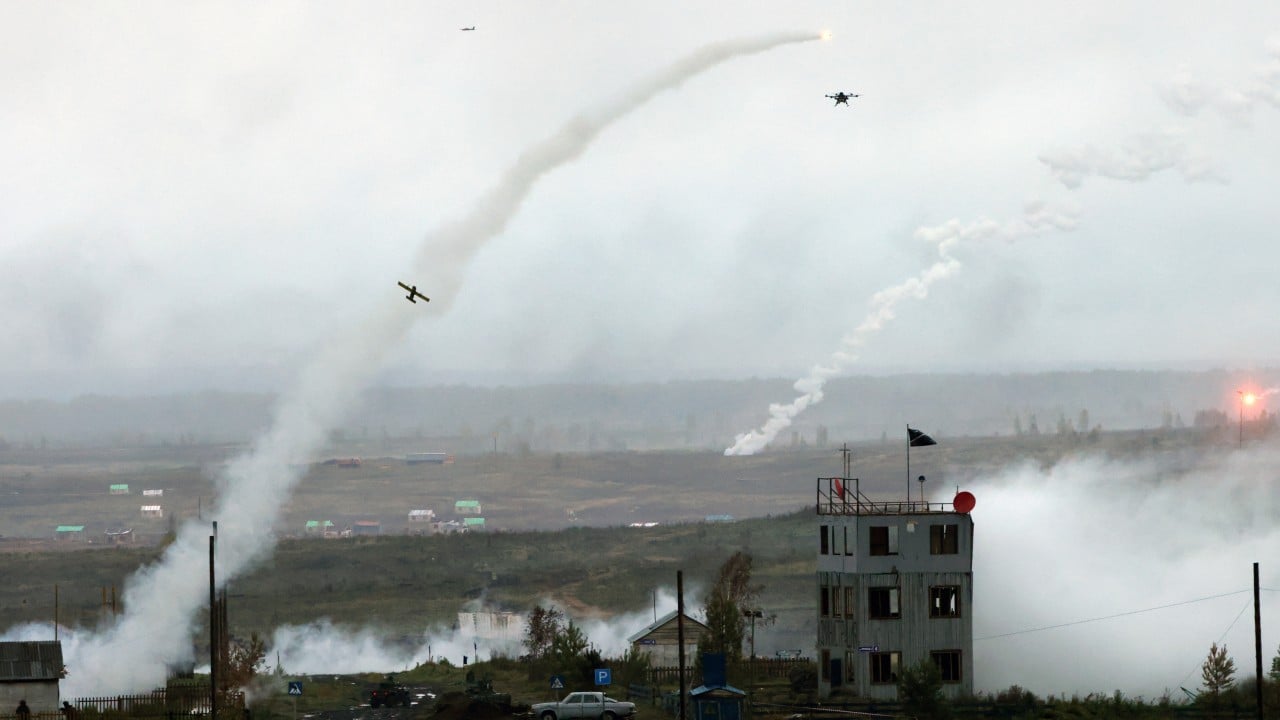
Chinese troops have taken part in a mass multinational exercise in Russia featuring new anti-drone and ground robot systems – drills that Russian state media said “applied lessons” from the Ukraine war.
The troops were among more than 47,000 military personnel involved in the Tsentr-2026 – or Centre-2026 – drills in the central western Chelyabinsk region from Monday until Saturday.
The Russian Ministry of Defence said the strategic command-and-staff exercise applied combat lessons from the Ukraine war to “repel external aggression in the Central Asian direction”.
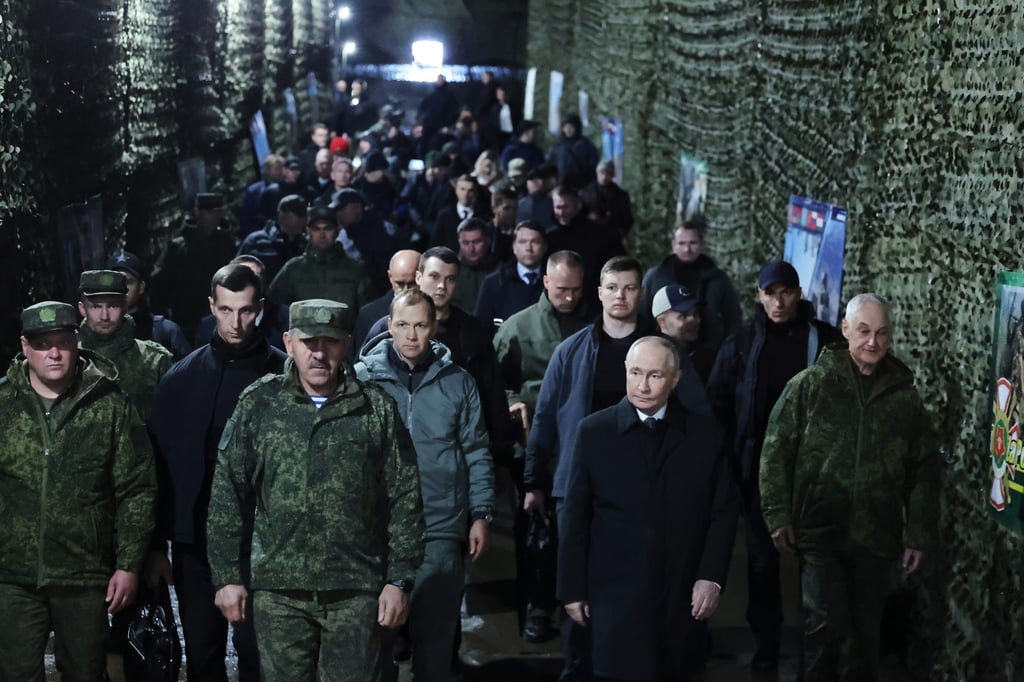
Russian President Vladimir Putin observed the drills at the Chebarkul Training Ground on Friday and met foreign military attaches, state news agency Tass reported.
During the exercise, the People’s Liberation Army (PLA) trained alongside troops from Russia, Belarus, Pakistan, Kazakhstan, Kyrgyzstan, Mongolia and Tajikistan, the PLA Daily, the mouthpiece of China’s military, reported.
The report said the Chinese troops were deployed to the exercise via a combination of road, rail and air transport.
They took part in reconnaissance and guidance, coordinated obstacle breaching, coordinated attacks, and battlefield first aid exercises with troops from other nations during the preparatory stage, it said.
The execution phase began with command and control exercises, followed by live-fire drills organised into three operational stages, focusing on actions such as multidimensional reconnaissance, integrated information and firepower strikes, target guidance, multi-axis assaults, and rapid pursuit and destruction of the enemy, it said.
The PLA Daily said the drills’ operational planning and live-fire manoeuvres helped to “consolidate multilateral traditional friendship and improve joint action capabilities”, while allowing the Chinese military to test its logistical reach, troop deployment capability, and combined arms coordination in unfamiliar terrain.
According to Chinese state broadcaster CCTV, the PLA deployed a combination of Type 99A main battle tanks with drones, uncrewed ground vehicles and helicopters, during the exercise, showcasing its growing integration of crewed and unmanned systems.
The PLA deployed drone swarms to provide precise target data to ground combat groups, with tactical unmanned aerial vehicles, armed helicopters and unmanned ground combat vehicles coordinating strikes against targets, the report said.
Multiple waves of firepower assaults were launched against enemy defensive positions using a “small-group, multi-waves” tactic.
The report also said that all the troops involved in the exercise were stationed underground to avoid drone strikes.
State-owned news agency Sputnik said the drills featured mass drone use, ground robots, electronic warfare, precision weapons, mobile assault units, and newer systems, including Geran-4/5 drones, Zarya lasers and the Izdeliye 347 missile system, offering a glimpse of how rapidly drone, counter-drone warfare had evolved, driven by the Ukraine war.
The Centre-2026 exercises are the latest manifestation of China-Russia military cooperation, which has progressed from periodic, heavily scripted war games to highly complex joint deployment operations involving advanced hardware and deep command integration.
The drills cap a busy summer for the two militaries.
In late June, Chinese and Russian air forces conducted their 11th joint strategic air patrol over the Sea of Japan. And in late July, the navies of the two countries wrapped up a joint maritime patrol following a mission in the Pacific Ocean, an operation explicitly aimed at improving joint operational capabilities.
Beijing and Moscow maintain that they do not have a formal military alliance but these regularised air and naval patrols, combined with large-scale land exercises, reflect a shift towards deeper strategic coordination.
For the PLA, which has not engaged in major combat operations in decades, training alongside battle-tested Russian forces offers access to crucial operational experience from the Ukraine war, especially drone warfare.
KioskNews shows a cleaned-up reading view extracted from the publisher’s page — the original always lives on their site, not ours.